

If you have ever tasted a bowl of Mango Sago Pudding at a dim sum restaurant or a Southeast Asian dessert shop, you already know that it is one of the most refreshing, creamy, and satisfying sweets you can put in your mouth. The great news is that you do not need a professional kitchen or any baking skills to make it at home. This recipe comes together in 15 active minutes and uses just 8 simple ingredients you can find at any grocery store.
What makes this Mango Sago Pudding so special is the combination of textures. You get the silky smoothness of blended fresh mango and coconut milk alongside the satisfying chewiness of small tapioca pearls, all finished with chunks of ripe mango on top. It is the kind of tropical dessert that feels luxurious without being complicated. It is also naturally gluten-free and easy to adapt for different dietary needs, which makes it a crowd-pleaser at summer parties, family dinners, and potlucks.
Why Mango Sago Pudding Is Perfect for Summer
Mango Sago Pudding originates from Hong Kong and has become one of the most beloved desserts across East and Southeast Asia. The dish gained global popularity through dim sum culture and has since become a staple in Filipino, Thai, and Singaporean home cooking as well. If you enjoy exploring comfort food from this part of the world, you will also love our spicy tteokbokki recipe for an easy, street-food style main to serve before this dessert. In 2026, it is trending heavily on TikTok and Pinterest as a visually stunning, photogenic dessert that looks far more impressive than the effort it requires.
Unlike heavy cream-based puddings or baked custards that require precise temperature control and hours of resting, this Mango Sago Pudding is genuinely forgiving. The mango puree base does most of the flavor work on its own, meaning even a slightly imperfect technique still produces a delicious result. It is the ideal recipe for beginner home cooks who want a dessert that looks like it came from a restaurant.
Ingredients That Make It Irresistible
- Small sago or tapioca pearls: The smaller the better for this recipe. Small pearls cook faster and distribute more evenly through the pudding. Do not use large boba pearls as they overpower the texture balance.
- Ripe mangoes: This is the most critical ingredient. Use Alphonso, Ataulfo (honey mango), or any variety that is deeply golden, very soft when pressed, and intensely fragrant at the stem. Underripe mangoes make a pale, bland pudding no matter how much condensed milk you add.
- Full-fat coconut milk: Not coconut cream, not light coconut milk. Full-fat canned coconut milk gives the pudding its signature silky richness and tropical aroma. Shake the can well before opening.
- Sweetened condensed milk: Adds sweetness and a fudgy creaminess that blends beautifully with the coconut milk. You can adjust the amount based on how sweet your mangoes are.
- Vanilla extract: Just one teaspoon rounds out the tropical flavor and prevents the coconut milk from tasting flat.
- Salt: A small pinch of salt amplifies all the other flavors. Never skip it in a sweet recipe.
The Secret to Perfect Chewy Sago Pearls
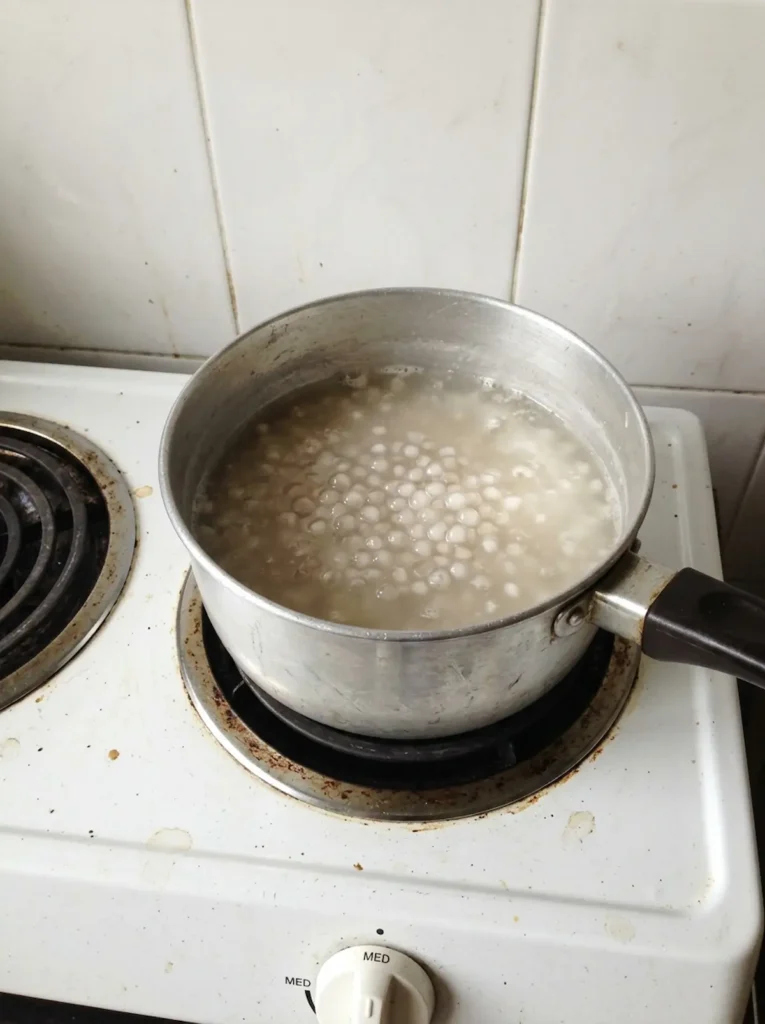
The biggest mistake people make with Mango Sago Pudding is undercooking the sago. Raw or partially cooked sago has a chalky white center that tastes starchy and unpleasant. Properly cooked sago pearls are fully transparent, springy, and slightly sticky. The key is to bring your water to a full rolling boil before adding the pearls, stir immediately to prevent clumping, then keep the heat at a gentle simmer for the full 15 to 20 minutes. When done, drain and rinse under cold running water right away to stop the cooking and remove excess starch.
How to Choose the Ripest Mangoes
Squeeze the mango gently. A ripe mango yields slightly under light pressure, similar to a ripe avocado. Smell the stem end. A strong, sweet, almost floral fragrance means the mango is at its peak. Color alone is not reliable because different mango varieties ripen at different colors. For the best Mango Sago Pudding, buy your mangoes 2 to 3 days before you plan to cook and let them ripen at room temperature on your counter, not in the refrigerator.
How to Make Mango Sago Pudding
Below is everything you need to make the creamiest, most flavorful Mango Sago Pudding of your life. Follow the steps closely for the first attempt, then feel free to adjust the sweetness and consistency to your personal taste on the next round.
Print
Mango Sago Pudding Recipe: Creamy Tropical Dessert in 15 Minutes
- Total Time: 25 minutes
- Yield: 4 servings 1x
Description
Creamy Mango Sago Pudding made with ripe mangoes, chewy sago pearls, coconut milk, and condensed milk. This quick tropical dessert is refreshing, easy to make, and perfect for warm days.
Ingredients
1/2 cup small sago or tapioca pearls
2 cups water
2 large ripe mangoes, diced
1 cup full-fat coconut milk
1/2 cup sweetened condensed milk
1 tsp vanilla extract
1 pinch salt
Extra mango chunks, for topping
Instructions
1. Bring water to a rolling boil in a medium saucepan.
2. Add sago pearls and stir immediately to prevent sticking.
3. Reduce heat and simmer until the pearls turn mostly transparent.
4. Drain and rinse the cooked sago under cold water.
5. Blend diced mango, coconut milk, condensed milk, vanilla, and salt until smooth.
6. Fold the cooked sago into the mango mixture and stir well.
7. Spoon into glasses or bowls and top with extra mango chunks.
8. Chill for 30 minutes if desired, then serve cold.
Notes
Use very ripe mangoes for the sweetest flavor and smoothest texture.
Small sago pearls work best for a creamy spoonable pudding.
For a dairy-free version, swap condensed milk for coconut cream and a liquid sweetener.
This dessert can be stored in the refrigerator for up to 3 days.
- Prep Time: 10 minutes
- Cook Time: 15 minutes
- Category: Dessert
- Method: Boil & Blend
- Cuisine: Asian
Nutrition
- Serving Size: 1 glass
- Calories: 285
- Sugar: 30g
- Sodium: 45mg
- Fat: 12g
- Saturated Fat: 10g
- Unsaturated Fat: 1g
- Trans Fat: 0g
- Carbohydrates: 42g
- Fiber: 2g
- Protein: 3g
- Cholesterol: 8mg
Keywords: mango sago pudding, mango sago recipe, mango tapioca pudding, coconut mango dessert, easy mango dessert
Cooking the Sago
Boil with confidence. Bring 2 cups of water to a full rolling boil in a medium saucepan before you add a single pearl. The moment you add the sago to anything less than actively boiling water, it begins to stick to itself and the pan. Add the pearls and stir immediately with a silicone spatula or wooden spoon.
Check for doneness. After 15 minutes, press a pearl against the side of the pot with your spoon. If you see any white chalky dot in the center, keep cooking and check every 2 minutes. When every pearl is completely transparent and springy, drain immediately through a fine mesh strainer and rinse under cold running water for 30 seconds.
Building the Mango Base
Blend smooth and taste as you go. Add your diced mango, full-fat coconut milk, condensed milk, vanilla, and salt to a blender. Blend on high for 60 full seconds until the mixture is completely smooth with no fibrous mango threads remaining. Taste the puree before combining it with the sago. If it needs more sweetness, add condensed milk one tablespoon at a time. If it tastes too rich, add a splash of cold water or extra fresh mango.
Assembling and Serving
Combine gently and chill if time allows. Fold the cooled sago pearls into the mango puree base and stir until evenly distributed. Spoon into individual serving glasses or a large bowl. Top generously with fresh mango chunks. Serve immediately for a room-temperature tropical dessert, or refrigerate for 30 minutes for a cold, refreshing version that is especially welcome on a hot day. Both versions of this Mango Sago Pudding are equally delicious.
Make-Ahead and Storage Tips
One of the best things about this Mango Sago Pudding is that it is genuinely better when made ahead. The sago pearls absorb a small amount of the mango puree overnight, which makes the texture even creamier and more cohesive than a freshly assembled bowl. Store in an airtight container in the refrigerator for up to 3 days. Do not add the fresh mango topping until just before serving, as cut mango releases juice and discolors after sitting in the pudding.
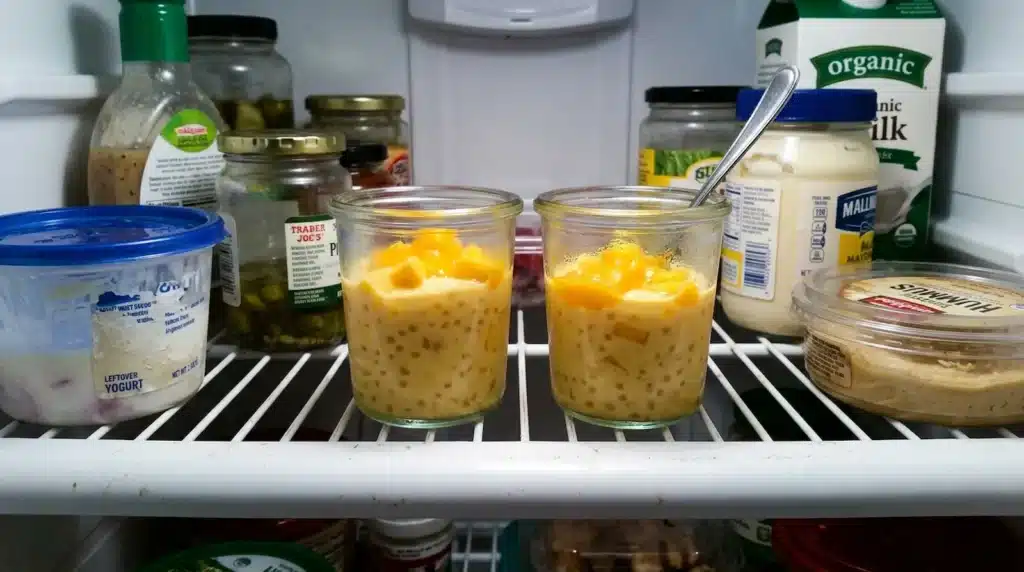
The mango puree base can be made up to 48 hours ahead and stored separately in the refrigerator. The cooked sago pearls can be stored in cold water in the refrigerator for up to 24 hours. Drain and rinse them right before combining with the base for the freshest texture. Do not freeze this dessert because the sago pearls become hard and unpleasant after thawing.
Serving Suggestions and Variations
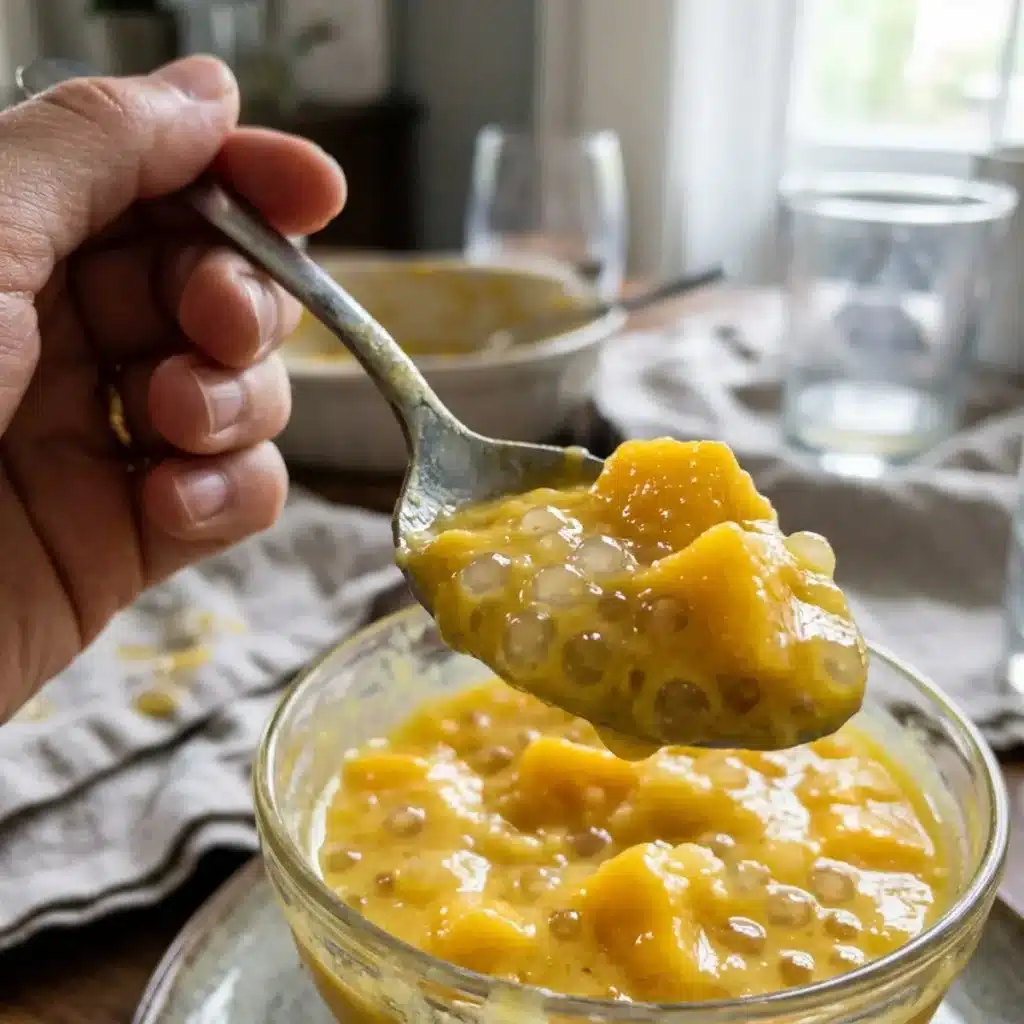
- Classic style: Fresh mango chunks only. This is the traditional Hong Kong way and highlights the pure tropical flavor without distraction.
- Toasted coconut: Add 2 tablespoons of toasted shredded coconut on top for crunch and extra coconut depth alongside the creamy base.
- Passion fruit drizzle: Spoon fresh passion fruit pulp directly over the top for a tart, tangy contrast that cuts through the richness.
- Mixed berry topping: Scatter fresh blueberries, raspberries, and strawberries for a vibrant color contrast that makes this dessert look spectacular at dinner parties.
- Dairy-free version: Replace condensed milk with full-fat coconut cream plus 3 tablespoons of maple syrup for a completely plant-based result that loses nothing in flavor.
- Low-sugar version: Use 1 tablespoon of condensed milk and 1 tablespoon of liquid stevia instead of the full amount. Very ripe mangoes are naturally sweet enough that the reduction is barely noticeable.
FAQ: Mango Sago Pudding
What is the difference between sago and tapioca pearls?
Sago pearls come from the sago palm starch, while tapioca pearls come from cassava root starch. They look almost identical when dry and cook in the same way for this recipe. Both work equally well in Mango Sago Pudding and produce the same chewy, springy texture. The flavor difference is negligible once combined with the mango and coconut base.
Can I use frozen mango instead of fresh?
Yes. Thaw the frozen mango completely and drain excess liquid before blending. Frozen mango tends to be slightly less sweet and aromatic than fresh ripe mango, so taste the puree after blending and adjust with a little extra condensed milk if needed. The texture of the final pudding will be just as creamy.
Why are my sago pearls still white in the center?
This means they are undercooked. Return them to boiling water and continue cooking in 2-minute increments, checking each time. Every stove and every brand of sago pearls cooks at a slightly different rate. The only reliable test is the press-and-look method: press a pearl against the side of the pot and look for any white center. When every pearl is fully transparent, they are done.
Can I make Mango Sago Pudding without coconut milk?
Yes. Substitute whole dairy milk or oat milk for a lighter, less tropical version. The flavor will be noticeably different but still delicious. If using dairy milk, reduce the condensed milk slightly since dairy milk is naturally richer than coconut milk in savory notes.
How far ahead can I make this dessert?
You can prepare the mango puree base up to 48 hours ahead and the cooked sago pearls up to 24 hours ahead, both stored separately in the refrigerator. Combine them on the day of serving. Fully assembled Mango Sago Pudding keeps well in the refrigerator for up to 3 days. Add fresh mango topping only just before serving.
Is Mango Sago Pudding gluten-free?
Yes. All of the core ingredients sago pearls, mango, coconut milk, condensed milk, and vanilla are naturally gluten-free. Always check your condensed milk label if you have a severe gluten sensitivity, as some brands may process in shared facilities.
A Dessert Worth Making Every Week
Once you make this Mango Sago Pudding for the first time, it will become a permanent part of your summer dessert rotation. It is the kind of recipe that people ask you for after tasting it, the kind that makes guests think you spent hours in the kitchen when the entire active work took less than 15 minutes. According to Healthline, mangoes are rich in vitamins C and A, folate, and antioxidants, meaning this beautiful dessert comes with genuine nutritional value alongside its incredible flavor. WebMD also notes that tapioca-based foods are easy to digest and gentle on the stomach, making this pudding a smart choice for anyone who wants a satisfying sweet treat without digestive discomfort.
Serve it at your next summer gathering, make it for a weeknight treat, or prep a batch on Sunday and eat it all week from the refrigerator. However you choose to enjoy your Mango Sago Pudding, the combination of tropical mango, silky coconut, and chewy sago pearls is one that never gets old.
Tried this Mango Sago Pudding recipe? Leave a star rating and a comment below telling us which mango variety you used and how it turned out. We read every single comment and love hearing your kitchen wins!