

If you want cookie dough you can eat by the spoonful, the safest version starts with two changes: leave out the eggs and treat the flour before mixing. That gives you the classic flavor and texture of edible cookie dough without the two main raw-ingredient risks.
This guide shows you exactly how to make edible cookie dough safe without eggs, how to handle the flour correctly, and how to keep the texture soft instead of gritty. You will also get practical mix-in ideas, storage tips, and a few food-safety links so you can make it with confidence.
Why This Version Is Safe
Raw cookie dough is usually unsafe because of raw eggs and uncooked flour. The CDC warns that eating raw flour, eggs, or dough can cause food poisoning, while the FDA specifically advises against trying to heat treat flour at home because home methods may not reliably kill bacteria.
That means the safest approach for edible cookie dough is to use commercially heat-treated flour or a flour substitute made for raw eating, then skip the eggs completely. For egg-free dough, milk, cream, or a little yogurt can help bind the mixture without introducing the same risk profile.
If you want to understand the safety issue directly, read the CDC guidance here: CDC raw dough safety.
Ingredients You Need
This edible cookie dough recipe uses simple pantry ingredients, but the balance matters. The sugar creates the cookie-dough flavor, the butter gives it richness, and the milk adds just enough moisture to bring everything together.
- 1 cup all-purpose flour, heat-treated or commercially heat-treated
- 1/2 cup unsalted butter, softened
- 1/2 cup packed brown sugar
- 2 tablespoons granulated sugar
- 2 tablespoons milk, plus more as needed
- 1 teaspoon vanilla extract
- 1/2 teaspoon salt
- 1/2 cup mini chocolate chips
If you need a classic flour-based starting point, see this related post on pumpkin bars with cream cheese for a baked dessert texture reference. For another simple mix-and-serve style sweet, try chia jello recipe. And if you like no-bake treats, this 3 ingredient banana muffins post gives another easy approach.
How To Make It
Start by making sure your flour is safe to use. If you buy commercially heat-treated flour, you can use it straight away. If you are using regular flour, follow the package or brand guidance rather than guessing with a home shortcut.
- In a large bowl, beat the softened butter, brown sugar, and granulated sugar until creamy and slightly fluffy.
- Add the vanilla extract, salt, and milk, then mix again until smooth.
- Stir in the heat-treated flour a little at a time until the dough thickens.
- Fold in the mini chocolate chips.
- If the dough looks too stiff, add milk 1 teaspoon at a time. If it feels too soft, add a spoonful of flour until the texture holds.
- Chill for 10 to 15 minutes if you want a firmer spoonable dough.

Flour Safety Tips
Flour is the ingredient people often forget about, but it matters just as much as eggs. The FDA explains that raw flour can contain harmful bacteria, and it specifically says not to try home heat-treating flour as a safety fix.
The easiest safe route is to buy flour that is already labeled heat-treated or designed for no-bake use. If you are using a trusted store-bought edible cookie dough flour, keep the packaging until after you finish the recipe in case you need to check the label again.
For more food-safety detail, see the FDA flour guidance here: FDA flour safety guide.
Texture Fixes That Help
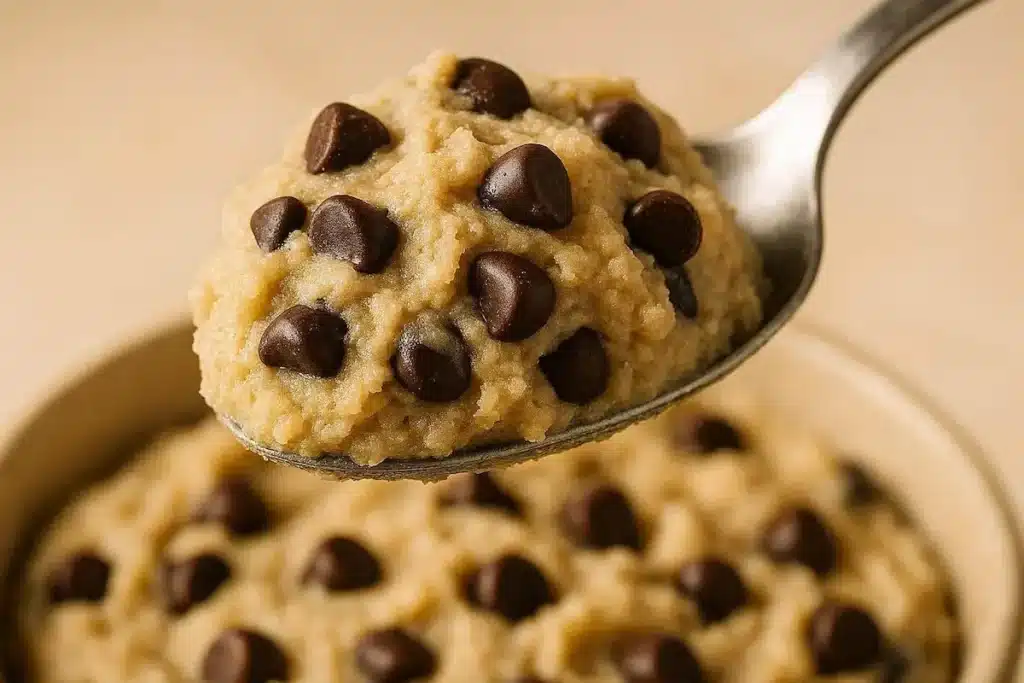
Edible cookie dough should taste rich and scoopable, not dry or sandy. If the dough tastes floury, it usually needs a little more vanilla, salt, or milk rather than more sugar.
If the dough is greasy, the butter may have been too warm. Chill it briefly, then stir again before adding more liquid. If it is too soft, add one tablespoon of flour at a time until it holds shape.
If you enjoy simple dessert bases, you may also like Jillian Michaels protein jello and vegan jello as other easy texture-first sweets.
Mix-In Ideas
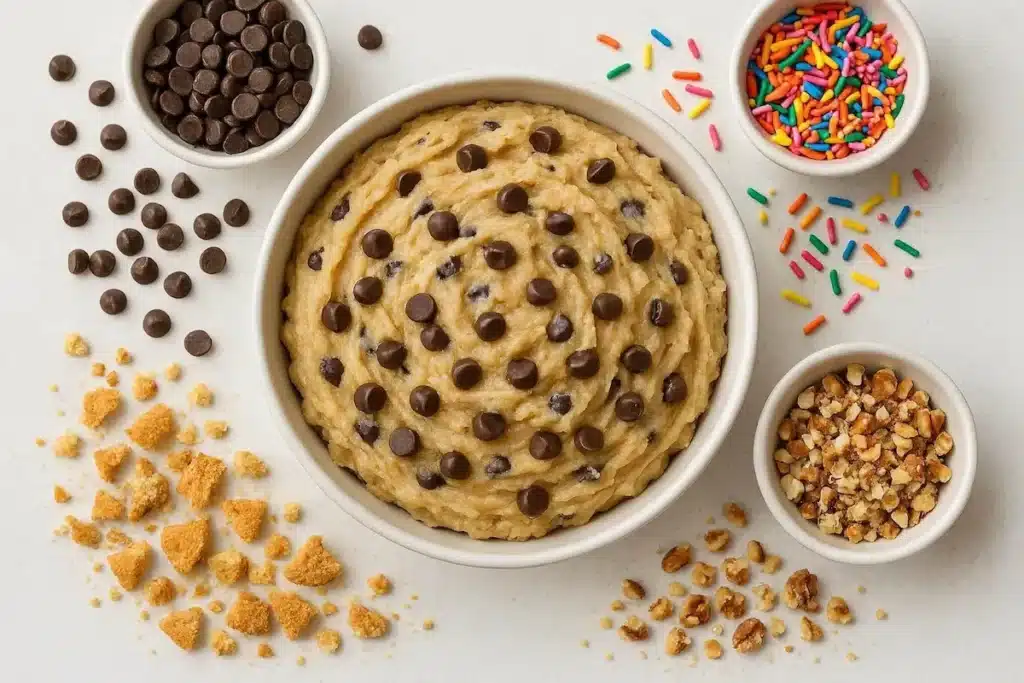
Chocolate chips are the classic choice, but edible cookie dough works well with lots of mix-ins. Keep additions small so the dough still feels like cookie dough instead of trail mix.
- Mini chocolate chips.
- White chocolate chips.
- Crushed Oreos.
- Rainbow sprinkles.
- Mini peanut butter cups.
- Chopped toasted nuts, if your audience does not need a nut-free version.
If you want more no-bake inspiration, the ingredient approach in this jellied fruit snack style recipe shows how simple add-ins can carry a dessert. For another easy sweet snack, try berry spinach smoothi as a lighter comparison point.
Storage and Serving
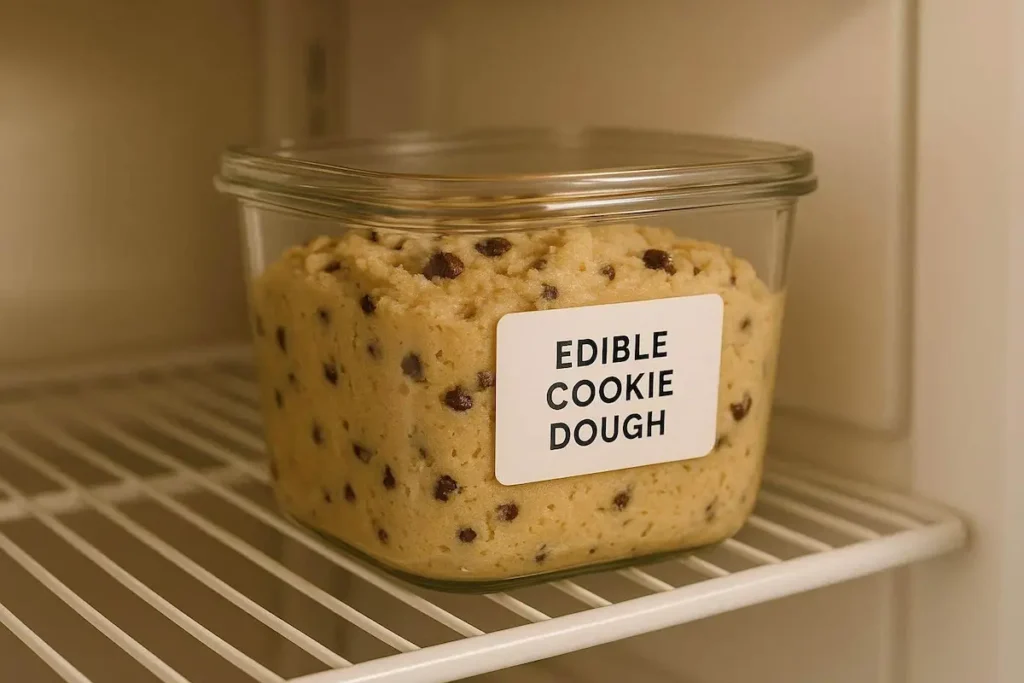
Store the cookie dough in an airtight container in the refrigerator for up to 4 days. Let it sit at room temperature for a few minutes before serving if you want a softer texture.
You can also roll it into bite-sized balls and chill them for a grab-and-go snack. If you are serving children, keep the portion small and make sure the flour used is truly safe for raw eating.
The CDC also reminds consumers not to let children play with or eat raw dough made from uncooked flour, which is another reason a clearly safe edible version matters so much.
Frequently Asked Questions
Can I eat cookie dough without eggs?
Yes, you can eat cookie dough without eggs if the flour is also handled safely. The dough should use heat-treated flour or flour specifically made for raw recipes.
Do I have to heat-treat flour at home?
No. The FDA advises against trying to heat-treat flour at home because home methods may not reliably make it safe. Store-bought heat-treated flour is the better option.
What can I use instead of eggs in cookie dough?
Milk, cream, or a little yogurt can replace eggs in edible cookie dough. They help bind the ingredients and create a smooth texture without adding raw egg risk.
Why does my cookie dough taste like flour?
It usually needs more vanilla, salt, or a bit more sugar to round out the flavor. A small splash of milk can also help soften the taste.
How long does edible cookie dough last?
Most eggless edible cookie dough keeps well in the refrigerator for about 4 days in a sealed container. For best texture, stir before serving.
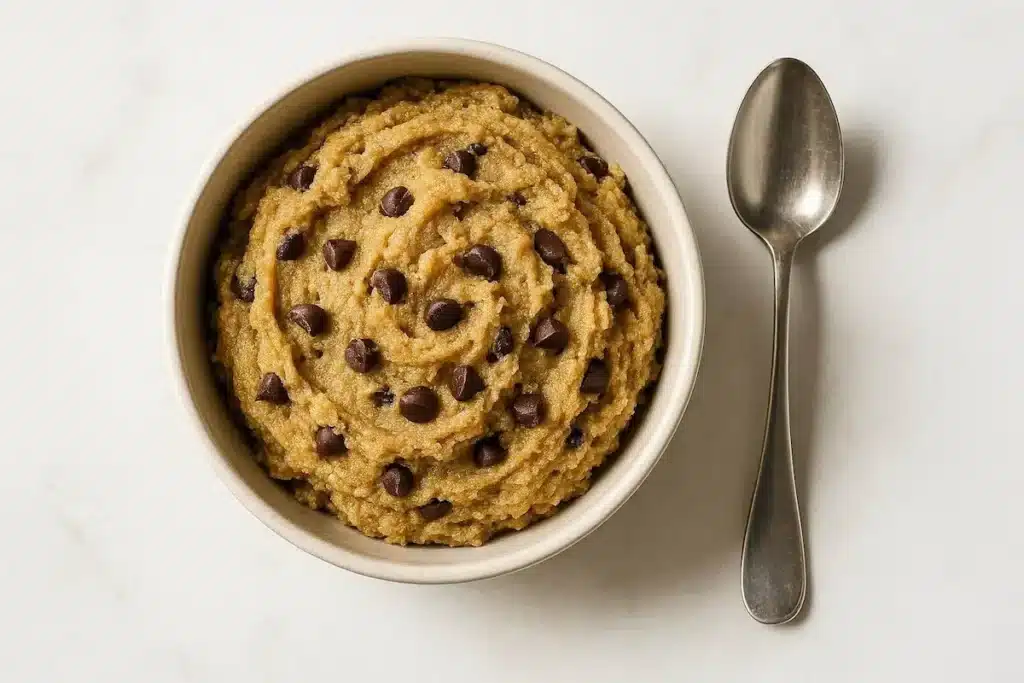
This recipe is exactly the kind of thing I love making for my own home: simple, fun, and full of comfort. When you need a sweet treat that feels nostalgic but still respects food safety, this eggless cookie dough is one of the easiest ways to bring a little joy to the table.
About Lily Jason
Lily Jason is the chef and recipe creator behind FastFlavorBites, where she makes quick, family-friendly recipes with bold flavor and simple steps. She is a mom, home cook, and kitchen storyteller inspired by her grandmother’s cooking and her daughter Nouha. Based just outside Atlanta, she creates practical recipes that help busy families cook with confidence.