
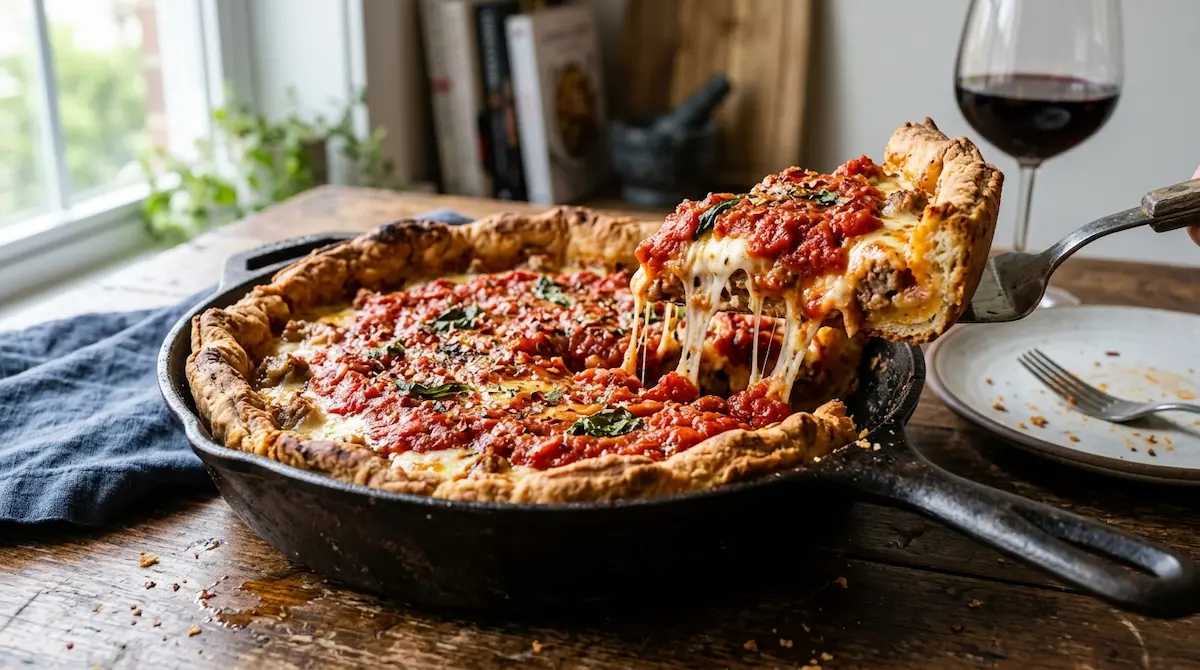
This chicago deep dish pizza recipe gives you a crisp, buttery crust, a thick layer of cheese, and a rich tomato sauce baked into a true deep-dish style pizza. It is written for home cooks who want the classic texture without guesswork, using practical steps that make the dough, sauce, and pan assembly easier to manage.
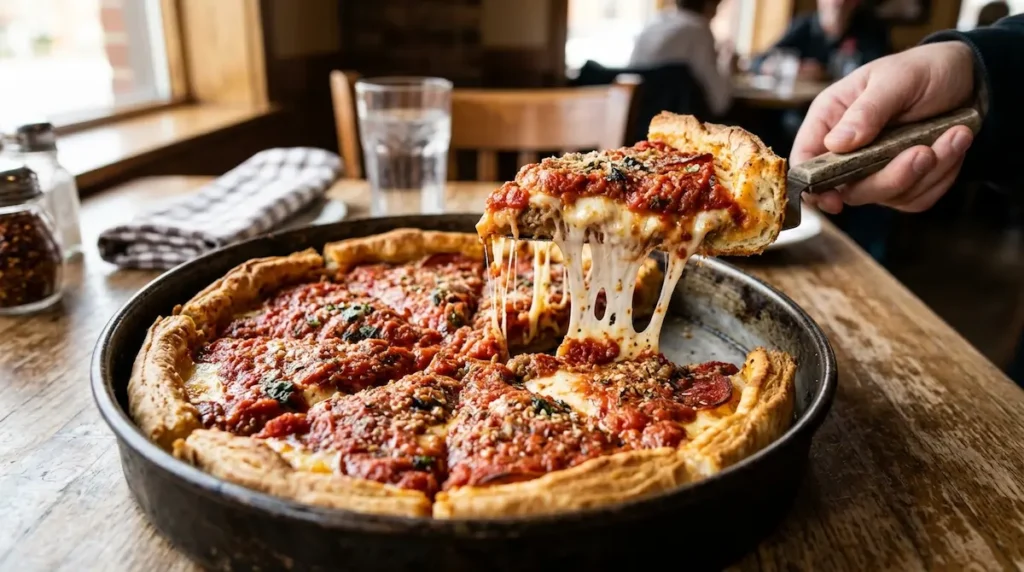
Chicago deep dish is more than a pizza with extra toppings. The crust is sturdy enough to hold sauce and cheese, the filling is layered in reverse, and the bake time is long enough to develop a browned edge and a clean slice. This chicago deep dish pizza recipe walks through each part so the finished pie tastes balanced, not heavy.
For another hearty dinner idea, you can also see Best Lasagna.
Why Deep Dish Works
A good chicago deep dish pizza recipe depends on three things: a dough with enough fat to stay tender, a sauce that is cooked down until thick, and a pan that holds the sides tall enough to support the layers. For dough safety, the FDA reminds home cooks that flour is a raw food and should never be tasted uncooked. That structure is what gives Chicago pizza its fork-and-knife feel.
The butter in the crust adds flavor and helps the dough bake into a flaky shell. Mozzarella goes on the bottom so it melts without overcooking, while the sauce stays on top and protects the cheese from drying out. When the filling is built correctly, the pizza slices cleanly instead of collapsing.
Ingredients You Need
This version of the chicago deep dish pizza recipe uses standard pantry ingredients and a cast iron or deep pizza pan. The dough includes flour, yeast, warm water, salt, sugar, butter, and olive oil. The sauce uses crushed tomatoes, onion, garlic, butter, oregano, basil, and a small amount of sugar.
For the filling, use low-moisture mozzarella, Italian sausage, and optional pepperoni. A little parmesan on top adds sharpness and helps the finished pizza brown well. If you want mushrooms or peppers, cook them first so they do not release too much water into the pan.
For a quick dough-reference article, see Fast Naan Recipe.
Step-by-Step Method
Make the dough
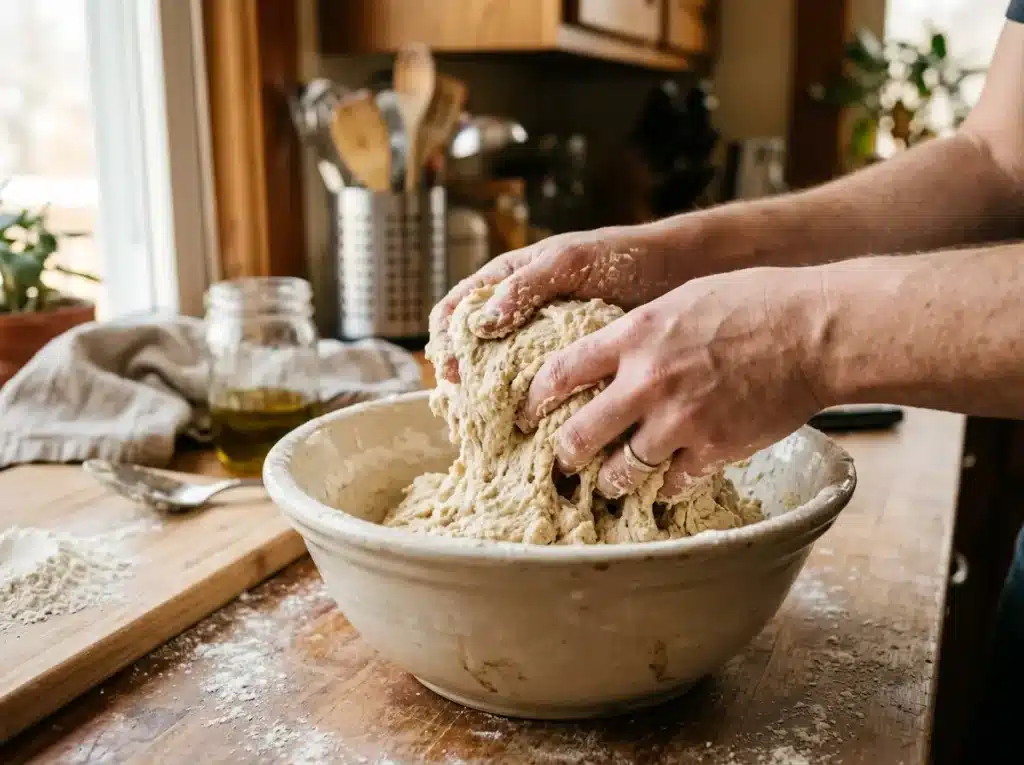
Start by blooming the yeast in warm water with a little sugar until it looks foamy. Mix the flour, salt, and softened butter, then add the yeast mixture and olive oil. Knead just until the dough comes together, then let it rise until doubled.
Once the dough has proofed, press it into a ball and rest it briefly before shaping. This helps the gluten relax so it stretches more easily in the pan. In a deep dish pizza recipe, that short rest makes the crust less likely to snap back while you work.
Cook the sauce
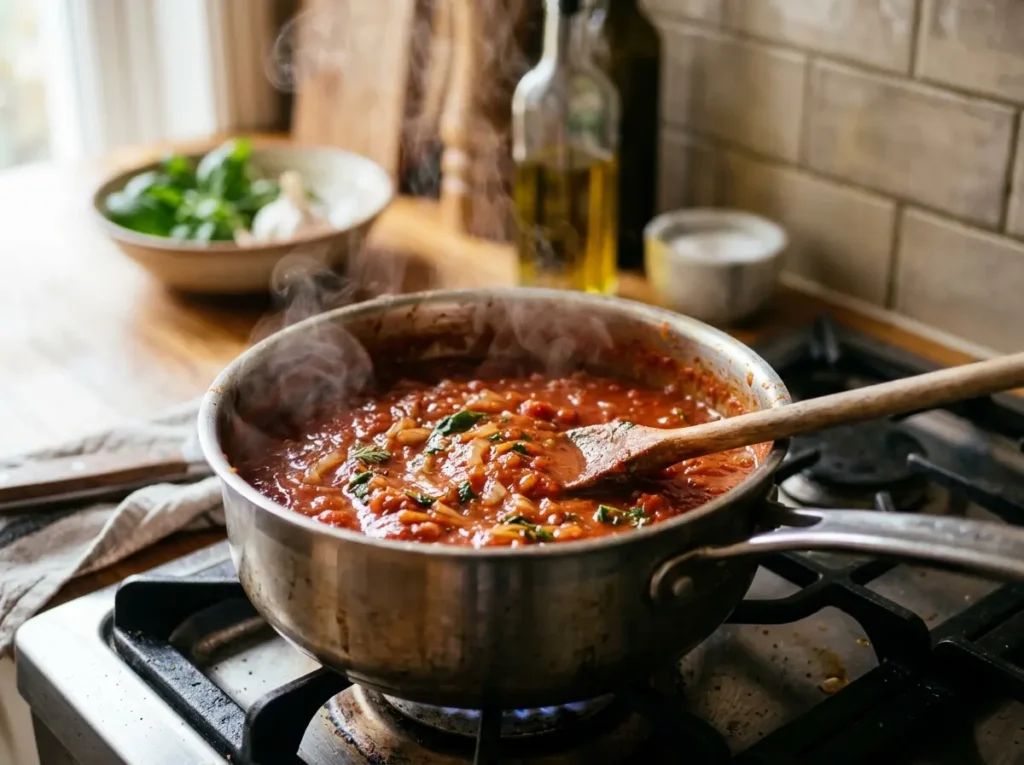
Melt butter in a saucepan, then cook onion and garlic until fragrant. Add crushed tomatoes, oregano, basil, sugar, and salt, then simmer until the sauce is thick enough to spoon. The goal is a sauce that tastes rich but does not soak the crust.
Thick sauce is one of the most important parts of this chicago deep dish pizza recipe. If the sauce is watery, the crust softens and the slice gets messy. A slow simmer solves most of that problem before the pizza ever goes into the oven.
Build the layers
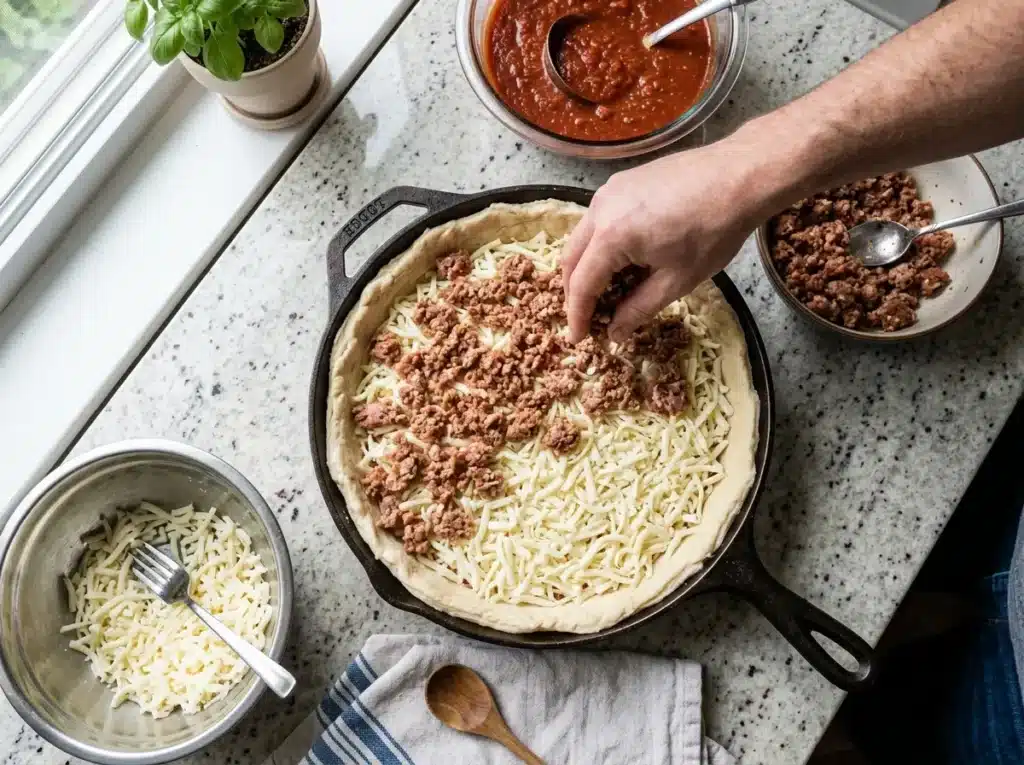
Brush the pan with butter or oil, then press the dough up the sides and across the bottom. Layer slices of mozzarella first, then sausage and any other fillings, and finish with sauce on top. This layering order is what keeps the crust crisp while the cheese melts underneath.
Do not overfill the pan. A deep dish pizza should feel generous, but it still needs room to expand and brown. If you pack the pan too tightly, the center can stay wet even when the crust looks done.
Bake until browned
Bake the pizza until the crust is deeply golden and the filling is bubbling. Let it rest before slicing so the cheese and sauce can settle. In a Chicago deep dish pizza recipe, that rest time is just as important as the bake itself.
Use a sharp knife or spatula to release the edges before serving. The finished pizza should hold its shape, but the cheese still needs a minute to firm up. That is how you get clean slices instead of a cheesy slide.
Helpful Tips
If your dough feels tight, let it rest for 10 more minutes before pressing it into the pan. If your sauce looks thin, simmer it longer rather than adding more flour or cornstarch. And if your pizza browns too quickly, move it to a lower rack and cover the edge lightly with foil.
This chicago deep dish pizza recipe also improves with make-ahead planning. The sauce can be made earlier in the day, and the dough can chill briefly after rising if you need to pause before assembling. That makes the recipe feel much less rushed.
For a related savory meal idea, you can also visit Corned Beef and Cabbage Recipe.
Storage and Reheating
Leftover deep dish pizza keeps well in the refrigerator for a few days. Reheat slices in the oven or air fryer so the crust turns crisp again. The microwave works in a pinch, but it softens the bottom crust more than the other methods.
If you plan to store several slices, place parchment between them so the cheese does not stick together. You can also wrap individual pieces tightly and freeze them for later. This makes the recipe useful for meal prep, not just a weekend project.
FAQ
What makes Chicago deep dish different?
Chicago deep dish uses a tall, buttery crust, sauce on top, and a layered build that holds cheese and fillings inside the pan.
Can I make this without sausage?
Yes. You can leave out the sausage or replace it with mushrooms, peppers, spinach, or another cooked topping that does not release much water.
Why is my deep dish pizza soggy?
The most common cause is sauce that is too thin or vegetables that release too much moisture. Reduce the sauce longer and pre-cook watery toppings.
Can I make the dough ahead of time?
Yes. You can make the dough earlier in the day and let it rest in the refrigerator before shaping and baking.
How do I know when it is done?
The crust should be deeply golden around the edges, the sauce should bubble, and the center should feel set rather than loose.
Final Notes
A great chicago deep dish pizza recipe depends on patience more than complexity. When the sauce is thick, the dough is rested, and the pan is layered correctly, the result is a satisfying pizza with real Chicago character.
For the best texture, serve it warm from the pan after a short rest. That is the point where the crust stays crisp, the cheese stays stretchy, and the sauce still tastes bright. It is the simplest way to bring a classic deep dish pizza to the table at home.
Disclaimer: This recipe is for informational use and does not replace professional dietary advice.