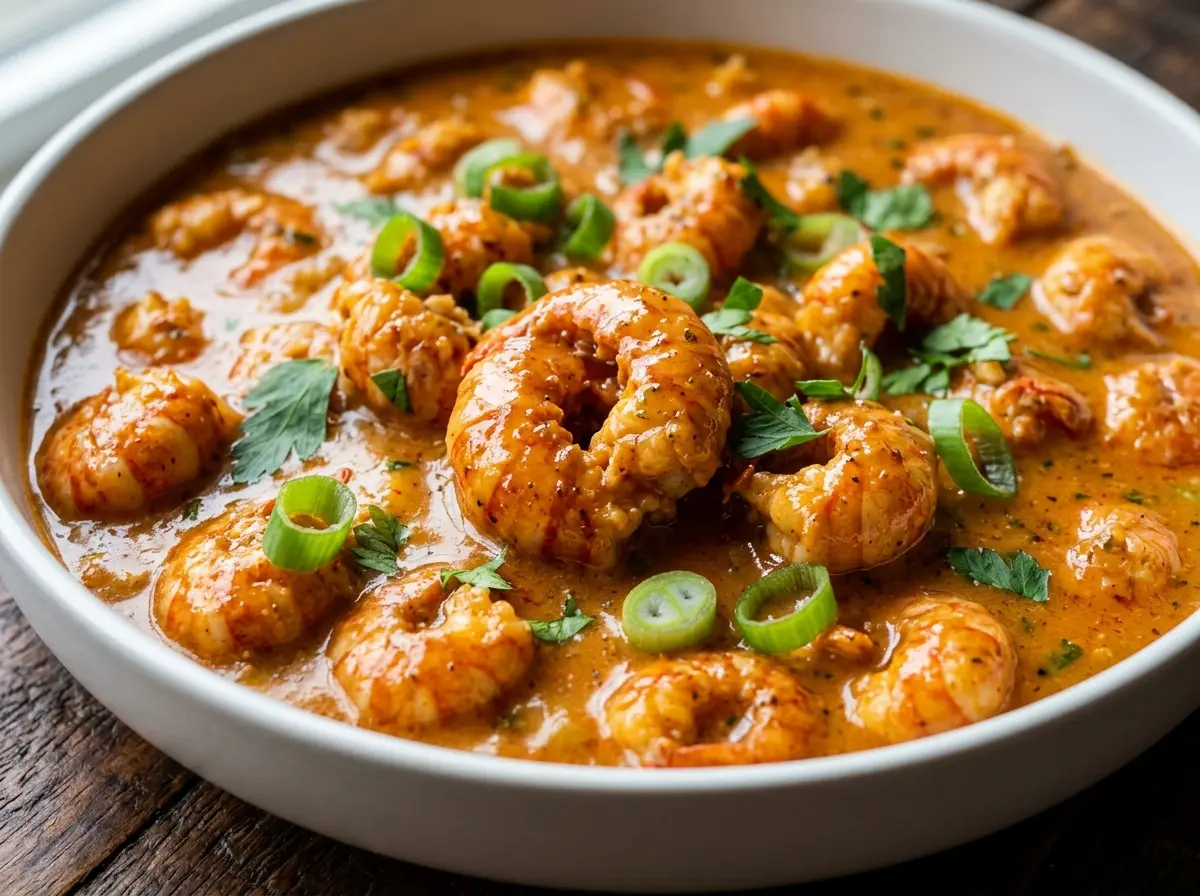
What is crawfish etouffee? Crawfish etouffee is a classic Louisiana Cajun and Creole dish of tender crawfish tails smothered in a rich butter-based sauce made with the holy trinity of onion, bell pepper, and celery, served over white rice. The word etouffee means smothered in French. It originated in Breaux Bridge, Louisiana in the 1950s and remains one of the most iconic dishes in Southern cooking. A proper crawfish etouffee takes 45 minutes from start to finish and requires no special equipment beyond a heavy skillet.
Crawfish Etouffee: Quick Version
- Melt butter and build a light blonde roux with flour over medium heat for 3 to 4 minutes.
- Add the holy trinity of onion, bell pepper, and celery and cook until softened, about 5 minutes.
- Add garlic, Cajun seasoning, and stock. Simmer 10 minutes until the sauce thickens.
- Fold in crawfish tails and cook 5 to 7 minutes until heated through. Never overcook the crawfish.
- Finish with butter, green onions, and parsley. Serve immediately over hot white rice.
Crawfish Etouffee Recipe: 5 Secrets to Get It Right
The first time I made crawfish etouffee I completely ruined the roux. I panicked and turned the heat too high trying to rush a blonde roux into existence, ended up with something dark and bitter, and called it a night. Nouha ate cereal for dinner that evening. Not my finest hour in this kitchen.
The second attempt I slowed down, read three Louisiana food writers I respect, and figured out exactly where I had gone wrong. The roux is not the intimidating part. It is the most forgiving part once you understand the temperature and the patience it needs. Everything else in this dish practically builds itself.
By the third attempt Nouha had two bowls and asked me to put it on the weekly rotation. This crawfish etouffee guide covers everything you actually need: the authentic Louisiana origin, the holy trinity, the roux method, the Cajun versus Creole difference, three variations, five mistakes that ruin the dish, and the one finishing move that takes it from good to genuinely great. If you love Southern-style rice dishes, our tteokbokki recipe uses a similar smothering technique with a completely different flavor profile.
What You Will Learn About Crawfish Etouffee
- The correct roux for crawfish etouffee is a light blonde roux cooked 3 to 4 minutes, not the dark gumbo roux which would overpower the delicate crawfish flavor.
- The holy trinity of onion, green bell pepper, and celery is the irreplaceable flavor base of every authentic crawfish etouffee.
- Cajun crawfish etouffee uses no tomatoes and more heat. Creole crawfish etouffee includes tomatoes and a lighter spice level. Both versions are covered here.
- The crawfish go in last and cook only 5 to 7 minutes. Overcooked crawfish turns rubbery and this is the single most important timing rule in the dish.
- A cold butter finish stirred in off the heat is the professional move that gives authentic crawfish etouffee its glossy, restaurant-quality sauce.
What Is Crawfish Etouffee
Crawfish etouffee is a Louisiana shellfish dish where crawfish tails are smothered in a thick, rich butter and stock sauce built on the holy trinity of onion, bell pepper, and celery. The word etouffee comes from the French word meaning smothered or suffocated, describing the technique of cooking ingredients low and slow under a lid in their own moisture and a rich sauce. It is served over long-grain white rice and is a centerpiece of both Cajun cuisine from the rural Acadiana bayou country and Creole cuisine from New Orleans.
The origin of crawfish etouffee traces to Breaux Bridge, Louisiana, which the Louisiana legislature officially designated in 1959 as the crawfish capital of the world. The dish is believed to have first appeared on restaurant menus there in the 1950s, though home cooks in the Acadiana region had been making versions of smothered crawfish for decades before. The technique of smothering shellfish in a roux-based sauce over rice is deeply embedded in the French Acadian cooking tradition that defines Louisiana bayou food culture.
The Cajun and Creole versions differ in two key ways. Cajun crawfish etouffee uses no tomatoes and a heavier hand with cayenne and black pepper for a richer and spicier result that reflects the rural bayou tradition. Creole crawfish etouffee includes diced tomatoes for slight acidity and is milder in heat, reflecting the New Orleans urban Creole tradition. Both versions use the holy trinity and both are served over white rice. The USDA FoodData Central crawfish nutritional database is the authoritative US government reference for the complete nutritional profile of Louisiana crawfish and shellfish.
Quick Answer: Crawfish etouffee is a Louisiana dish of crawfish tails smothered in a butter roux sauce with the holy trinity, served over white rice. It takes 45 minutes, uses one pan, and comes in Cajun and Creole versions. The Cajun version has no tomatoes and more spice. The Creole version includes tomatoes and is milder. Both are authentic and both are correct.
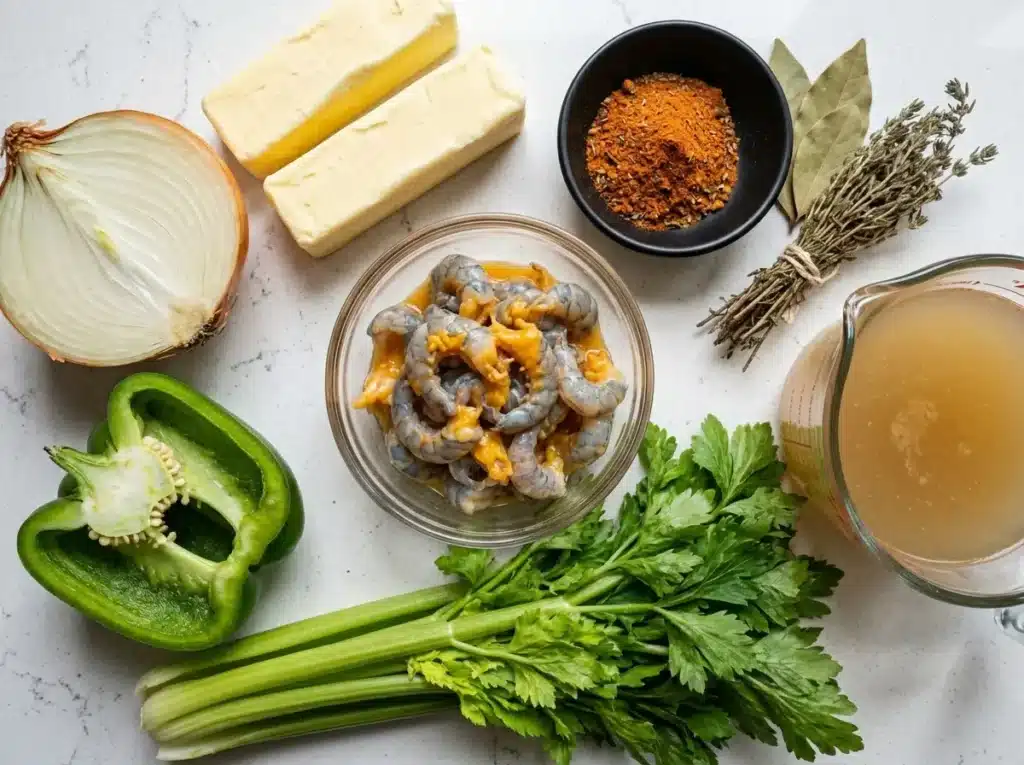
Crawfish Etouffee Ingredients
The Roux Base
- 4 tablespoons unsalted butter – builds the roux and carries seasoning into the sauce
- 3 tablespoons all-purpose flour – thickens the sauce to the classic smothered consistency
The Holy Trinity
- 1 large yellow onion, finely diced – the foundation of every Louisiana sauce
- 1 medium green bell pepper, finely diced – adds vegetal sweetness and color
- 3 stalks celery, finely diced – provides the aromatic backbone of Louisiana cooking
- 4 cloves garlic, minced – added after the trinity softens, never at the start
The Crawfish
- 1 pound Louisiana crawfish tails with fat – the fat is essential and carries most of the flavor
- If using frozen crawfish tails, thaw completely, drain, and keep the fat that separates during thawing
The Sauce
- 2 cups seafood stock or chicken stock – seafood stock deepens the crawfish flavor significantly
- 1 tablespoon Cajun seasoning – use Tony Chachere’s or make your own
- 1 teaspoon cayenne pepper – adjust to your heat tolerance
- 1 teaspoon dried thyme
- 2 bay leaves
- Salt and cracked black pepper to taste
- 1/4 teaspoon white pepper – adds a background heat different from cayenne
To Finish
- 2 tablespoons cold unsalted butter – stirred in off the heat for gloss and richness
- 4 green onions, thinly sliced – half stirred in, half as garnish
- 2 tablespoons fresh flat-leaf parsley, chopped – for freshness and color at the finish
- Hot sauce to taste – Crystal or Tabasco both work
To Serve
- 4 cups cooked long-grain white rice – cooked separately while the etouffee builds
For a gluten-free crawfish etouffee, replace the all-purpose flour in the roux with a 1:1 gluten-free flour blend. Our no-knead gluten-free bread pairs perfectly with this dish for a completely gluten-free Louisiana dinner.
How to Make Crawfish Etouffee Step by Step
Step 1: Build the Blonde Roux
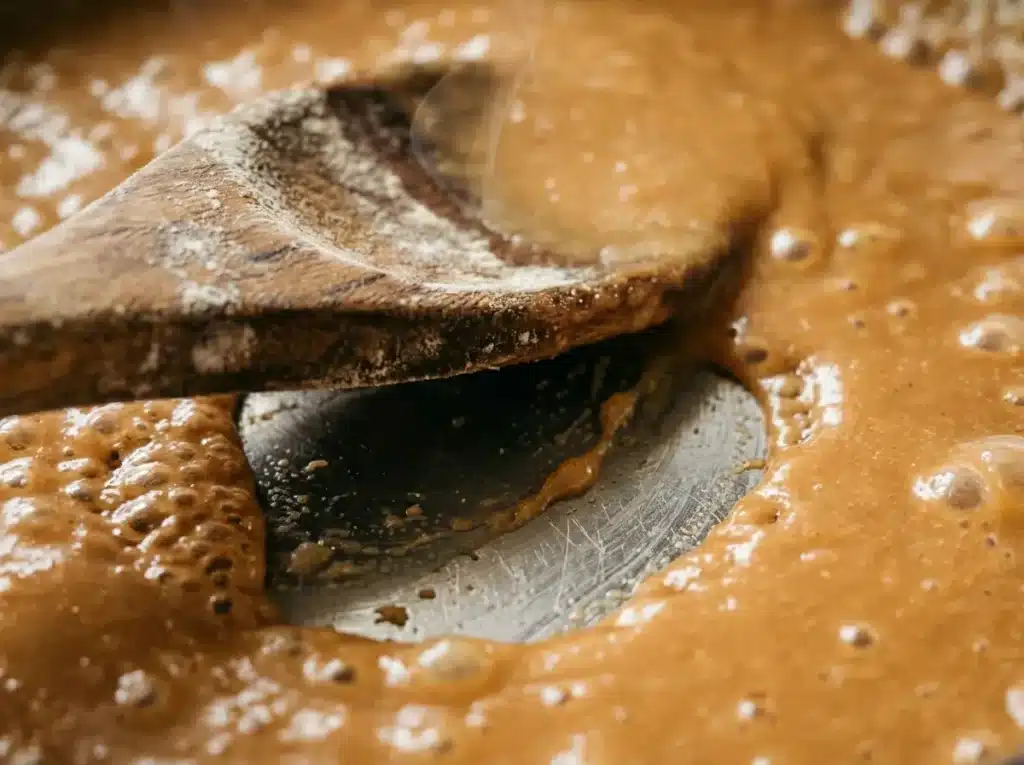
Melt 4 tablespoons of unsalted butter in a heavy-bottomed skillet or Dutch oven over medium heat. When the butter is fully melted and beginning to foam, add 3 tablespoons of all-purpose flour all at once. Stir constantly with a wooden spoon or flat whisk for 3 to 4 minutes until the roux turns a light blonde color like peanut butter and smells faintly nutty.
This is a blonde roux, not the dark chocolate roux used for gumbo. The critical rule for this step is medium heat only. Too high and the butter burns before the flour cooks. Too low and you get a pale floury paste that never develops the nutty aroma that makes the crawfish etouffee sauce taste deep and rich.
Step 2: Cook the Holy Trinity
Add the diced onion, green bell pepper, and celery directly to the roux. Stir to coat the vegetables in the roux and cook over medium heat for 5 to 7 minutes, stirring frequently, until the onion is translucent and the celery has softened. The vegetables release moisture as they cook which loosens the roux and prevents it from burning on the bottom of the pan.
Add the minced garlic in the last 60 seconds of this step. Garlic burns fast and bitter when added too early. Stir it in and cook just until fragrant before moving to the next step. The critical rule for this step is patience. Do not rush the trinity. The 5 to 7 minutes of softening here builds the flavor foundation that makes crawfish etouffee taste like it has been cooking for hours.
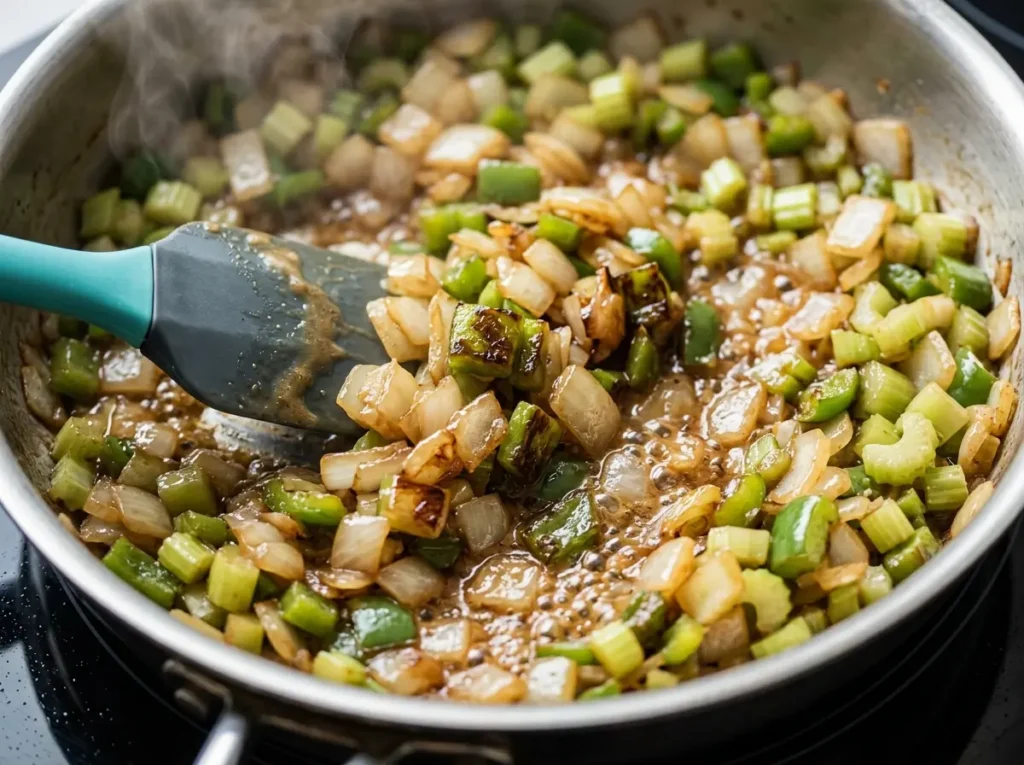
Step 3: Add Seasoning and Stock
Add the Cajun seasoning, cayenne, thyme, white pepper, and bay leaves directly to the pan and stir to coat the vegetables in the spices. Cook for 60 seconds to bloom the spices in the fat before adding liquid. You will smell the Cajun seasoning open up immediately when it hits the hot pan. That bloom moment is what makes the sauce taste seasoned through rather than seasoned on top.
Pour in the stock gradually, stirring constantly as you add it to prevent lumps from forming in the roux. Add the stock in a thin steady stream while stirring. Once all the stock is incorporated, bring the sauce to a gentle simmer and cook uncovered for 10 minutes, stirring occasionally, until it thickens to a consistency that coats the back of a spoon.
Step 4: Add the Crawfish Tails
Reduce the heat to medium-low before adding the crawfish. Add the crawfish tails along with all the fat from the package and stir gently to combine. The fat is orange-yellow in color and carries the deep crawfish flavor that defines authentic crawfish etouffee. Do not discard it.
Cook the crawfish in the sauce for 5 to 7 minutes only. The critical rule for this step is timing. Crawfish tails are already cooked when you buy them. You are heating them through and letting them absorb the sauce, not cooking them from raw. Every minute past 7 minutes at this stage makes the crawfish progressively more rubbery. Set a timer. When the crawfish are heated through and the sauce has tightened around them, remove from heat immediately.
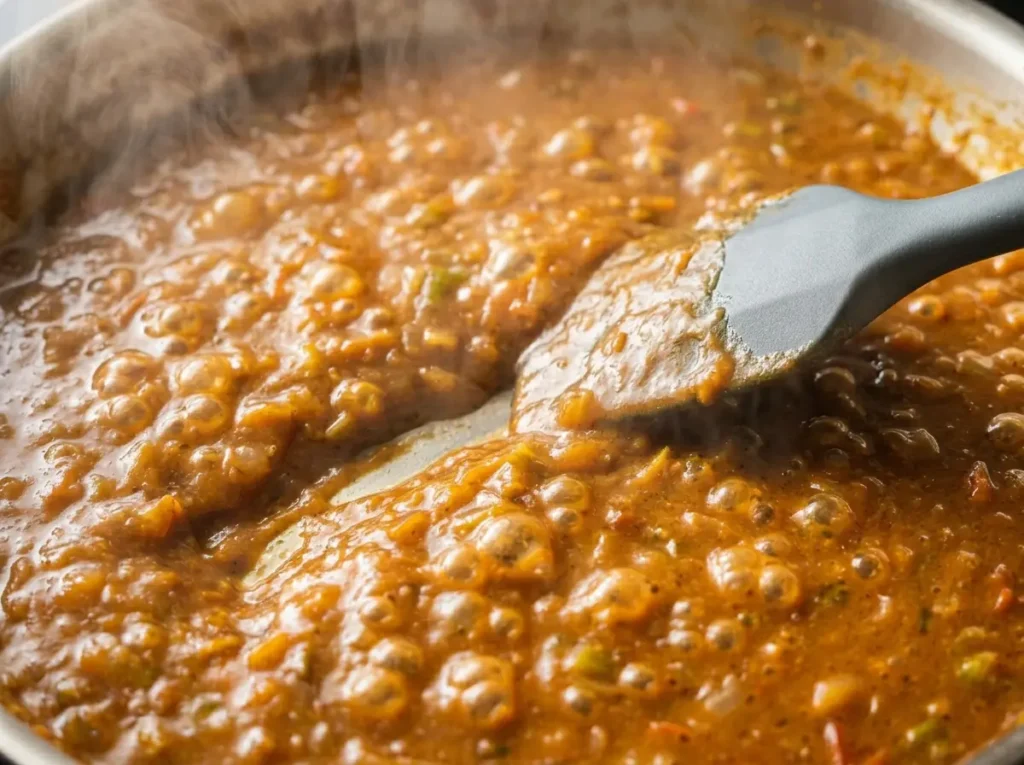
Step 5: Finish and Serve Crawfish Etouffee
Remove the pan from the heat. Add 2 tablespoons of cold unsalted butter cut into small pieces and stir until fully melted into the sauce. This cold butter finish is called monter au beurre in French cooking and it creates the glossy, restaurant-quality sauce finish that separates a great crawfish etouffee from a good one. The cold temperature of the butter emulsifies it into the sauce rather than breaking and pooling on top.
Stir in half the sliced green onions and half the chopped parsley. Remove and discard the bay leaves. Taste and adjust salt, cayenne, and hot sauce. Serve immediately over hot white rice, garnished with the remaining green onions and parsley. Crawfish etouffee does not hold well. Serve it the moment it is finished for the best texture and flavor.
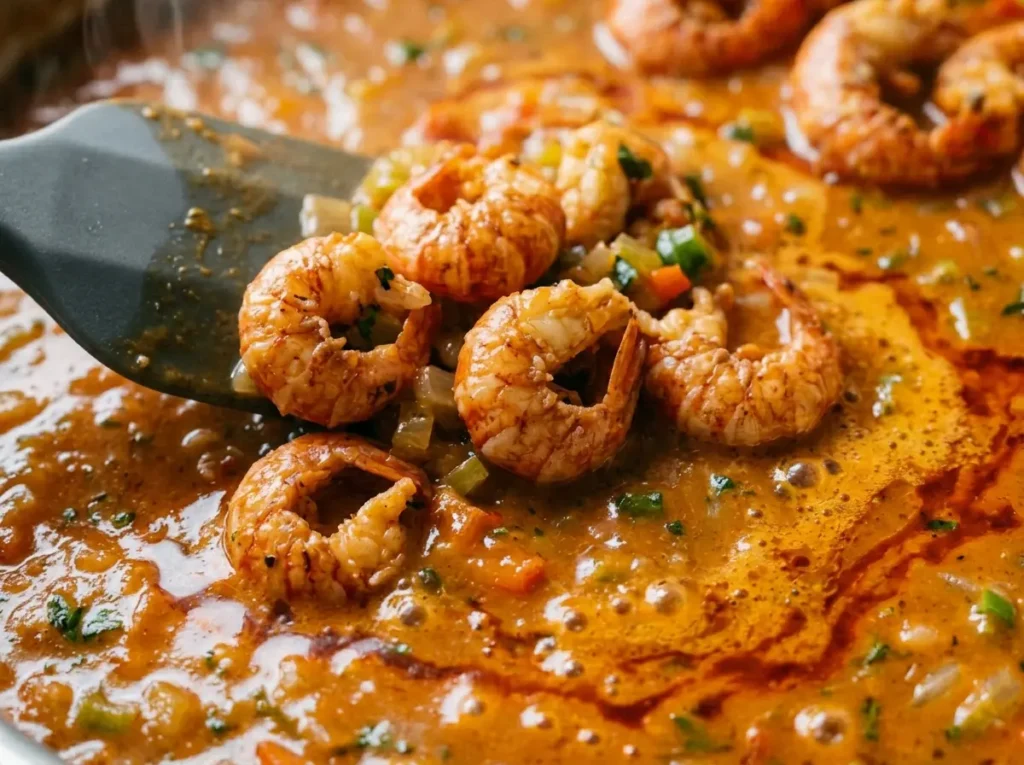

Crawfish Etouffee Recipe
- Total Time: 45 minutes
- Yield: 4 servings
Description
Authentic Louisiana crawfish etouffee made in one pan in 45 minutes with the holy trinity, a blonde roux, and Louisiana crawfish tails with fat. A Cajun and Creole classic served over white rice with a glossy cold butter finish. Rich, deeply spiced, and built from scratch with no shortcuts.
Ingredients
1 pound Louisiana crawfish tails with fat (never rinse off the fat)
4 tablespoons unsalted butter (for the roux)
3 tablespoons all-purpose flour
1 large yellow onion, finely diced
1 medium green bell pepper, finely diced
3 stalks celery, finely diced
4 cloves garlic, minced
2 cups seafood stock or chicken stock
1 tablespoon Cajun seasoning (Tony Chachere’s recommended)
1 teaspoon cayenne pepper (adjust to heat tolerance)
1 teaspoon dried thyme
2 bay leaves
1/4 teaspoon white pepper
Salt and cracked black pepper to taste
2 tablespoons cold unsalted butter (for the finish)
4 green onions, thinly sliced (half in sauce, half as garnish)
2 tablespoons fresh flat-leaf parsley, chopped
Hot sauce to taste (Crystal or Tabasco)
4 cups cooked long-grain white rice for serving
Instructions
1. Start your white rice now. Rice takes 18 minutes and the etouffee takes 30 to 35 minutes. Time them so both finish together.
2. Melt 4 tablespoons unsalted butter in a heavy-bottomed skillet or Dutch oven over medium heat. When the butter foams, add 3 tablespoons flour all at once. Stir constantly for 3 to 4 minutes until the roux turns light peanut butter color and smells faintly nutty. Medium heat only. Never high heat.
3. Add diced onion, green bell pepper, and celery directly to the roux. Stir to coat and cook over medium heat for 5 to 7 minutes, stirring frequently, until onion is translucent. Add garlic in the last 60 seconds only. Cook until fragrant.
4. Add Cajun seasoning, cayenne, thyme, white pepper, and bay leaves. Stir and cook 60 seconds to bloom spices in the fat. Pour in stock in a thin steady stream while stirring constantly to prevent lumps. Bring to a gentle simmer and cook uncovered for 10 minutes until the sauce coats the back of a spoon.
5. Reduce heat to medium-low. Add crawfish tails along with all the fat from the package. Stir gently to combine. Cook 5 to 7 minutes only until crawfish are heated through and sauce tightens around them. Set a timer. Do not overcook.
6. Remove pan from heat completely. Add 2 tablespoons cold unsalted butter in small pieces and stir until fully emulsified into a glossy sauce. Stir in half the green onions and half the parsley. Remove and discard bay leaves.
7. Taste and adjust salt, cayenne, and hot sauce. Serve immediately over hot white rice. Garnish with remaining green onions and parsley. Serve at once.
Notes
Never discard the crawfish fat. The orange fat in the package is where most of the flavor lives. Add every bit of it to the sauce with the crawfish tails.
Blonde roux only. This is not a gumbo. A dark roux will overpower the delicate crawfish flavor completely. Pull the roux at light peanut butter color after 3 to 4 minutes at medium heat.
Crawfish tails are already cooked. They need 5 to 7 minutes to heat through and absorb the sauce only. Every minute past 7 makes them progressively rubbery. Set a timer every time.
Cold butter finish off the heat. Remove the pan from the burner completely before adding the cold butter pieces. If the pan is still on the heat the butter separates instead of emulsifying into a glossy sauce.
Storage: refrigerate in an airtight container for up to 2 days. Reheat gently on the stovetop over low heat with a splash of stock. Never microwave.
Meal prep option: make the full sauce through Step 4 without adding the crawfish. Refrigerate the sauce for up to 3 days. Add fresh crawfish tails when reheating and cook 5 to 7 minutes.
Freezer option: freeze the sauce without crawfish tails for up to 2 months. Thaw overnight in the refrigerator before reheating and adding fresh crawfish.
For a gluten-free version, replace all-purpose flour with a 1:1 gluten-free flour blend.
For a lower-sodium version, make your own Cajun seasoning without salt and use unsalted butter throughout. Taste and salt only at the very end.
- Prep Time: 10 minutes
- Cook Time: 35 minutes
- Category: Main Course
- Method: Stovetop
- Cuisine: Cajun, Creole, Louisiana
Nutrition
- Serving Size: 1 bowl with rice
- Calories: 420
- Sugar: 3g
- Sodium: 890mg
- Fat: 18g
- Saturated Fat: 10g
- Unsaturated Fat: 8g
- Trans Fat: 0g
- Carbohydrates: 38g
- Fiber: 2g
- Protein: 28g
- Cholesterol: 185mg
Keywords: crawfish etouffee, crawfish etouffee recipe, authentic crawfish etouffee, Louisiana crawfish etouffee, Cajun etouffee, Creole etouffee, how to make crawfish etouffee, crawfish etouffee holy trinity, crawfish etouffee roux, crawfish etouffee over rice
Crawfish Etouffee Variations
| Version | Protein | Prep Time | Best For | Difficulty |
|---|---|---|---|---|
| Classic Cajun | Crawfish tails | 45 minutes | Authentic Louisiana experience | Intermediate |
| Creole Style | Crawfish tails | 45 minutes | Milder heat, tomato brightness | Intermediate |
| Shrimp Etouffee | Large shrimp | 30 minutes | Easy weeknight version | Beginner |
| Chicken Etouffee | Chicken thighs | 50 minutes | Budget-friendly family dinner | Beginner |
| Vegetarian Etouffee | Mushrooms and white beans | 35 minutes | Plant-based version | Beginner |
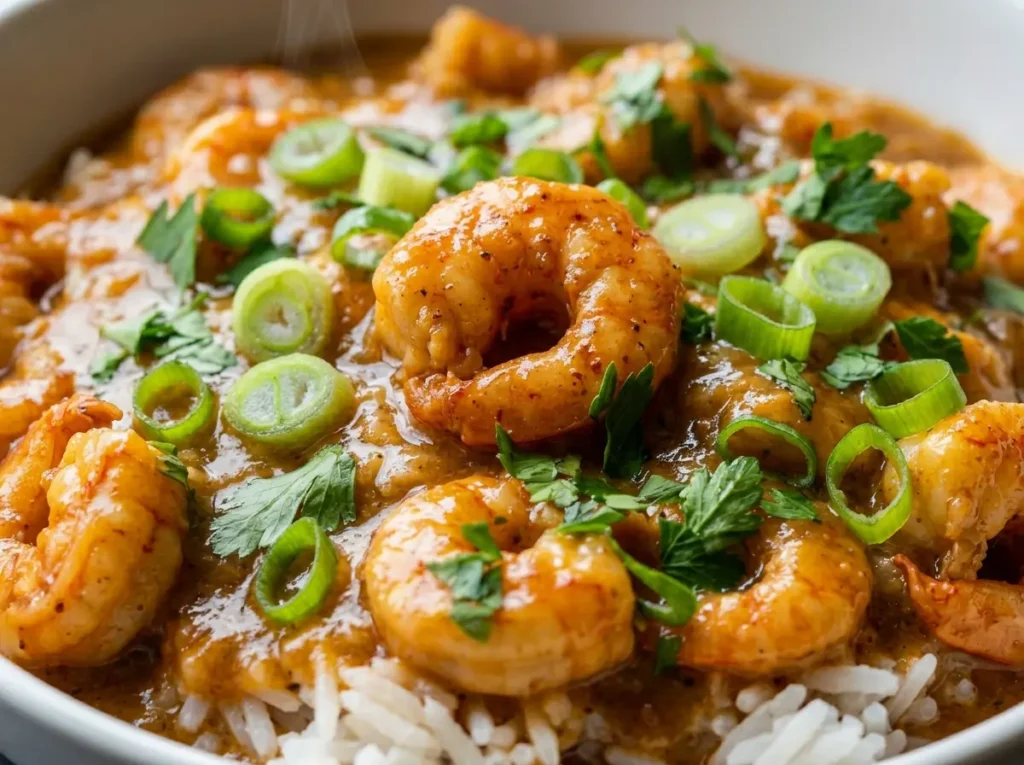
Nutritional values for each protein variation are referenced at the USDA FoodData Central nutritional database. For the shrimp version, our sheet pan quesadillas recipe makes the ideal companion dish for a complete Southern-inspired weeknight dinner.
5 Proven Benefits of Crawfish Etouffee
Crawfish etouffee is not a health food in the conventional sense. It is a rich, butter-forward dish that happens to contain some genuinely nutritious ingredients. Here are the five real nutritional benefits backed by the ingredient list.
Benefit 1: Crawfish are one of the highest-protein lowest-calorie shellfish available. A 3-ounce serving of cooked crawfish tails delivers approximately 14 grams of complete protein at only 70 calories, making them one of the most favorable protein-to-calorie ratios of any animal protein source. Crawfish also contain meaningful amounts of vitamin B12, phosphorus, and selenium. The protein in crawfish etouffee makes it a genuinely satisfying dish that supports muscle maintenance and satiety despite a modest serving size.
Benefit 2: The holy trinity delivers a meaningful vegetable contribution. Onion, green bell pepper, and celery together provide quercetin, vitamin C, folate, and dietary fiber in every serving of crawfish etouffee. Green bell peppers contain more vitamin C per gram than oranges. Celery provides phthalides that support healthy blood pressure. The holy trinity is not a garnish. It is a substantial part of the dish’s total nutritional value.
Benefit 3: Crawfish etouffee is naturally low in carbohydrates from the sauce itself. The etouffee sauce contains only 3 tablespoons of flour across 4 servings, contributing minimal carbohydrate load per serving from the sauce. The carbohydrate content of a full serving comes almost entirely from the rice, which is completely controllable by portion size. For a lower-carb version, serve over cauliflower rice. Our 90-30-50 meal plan shows exactly how to incorporate dishes like crawfish etouffee into a structured daily macro protocol.
Benefit 4: The dish provides meaningful amounts of zinc, copper, and selenium from the crawfish. These three trace minerals are consistently underconsumed in the average American diet. Selenium supports thyroid function and immune response. Zinc supports wound healing and immune cell production. Copper supports iron metabolism and connective tissue formation. One serving of crawfish etouffee delivers a meaningful contribution to the daily requirement for all three, as documented in the 2020-2025 Dietary Guidelines for Americans.
Benefit 5: Garlic and the spice blend provide meaningful antioxidant and anti-inflammatory compounds. The Cajun seasoning in crawfish etouffee typically includes paprika, cayenne, garlic powder, onion powder, thyme, and oregano, all of which contain phenolic antioxidants. Fresh garlic provides allicin, one of the most studied anti-inflammatory plant compounds. Thyme provides thymol and carvacrol with documented antimicrobial properties. The spice blend in this dish is not just flavor. It is a concentrated source of bioactive plant compounds.
Who Should Be Careful With Crawfish Etouffee
A well-made crawfish etouffee is safe for most healthy adults when consumed as part of a balanced diet. However, four groups should pay attention before eating this dish regularly.
People with shellfish allergies. Crawfish is a crustacean shellfish and one of the eight major food allergens recognized by the FDA. A shellfish allergy can cause reactions ranging from mild hives to severe anaphylaxis. People with any documented shellfish allergy should avoid crawfish etouffee entirely. The shrimp etouffee variation is not a safe substitute for someone with a shellfish allergy as shrimp is also a crustacean. The mushroom and white bean vegetarian version is the only safe alternative.
People managing sodium intake. Commercial Cajun seasoning blends like Tony Chachere’s are high in sodium. A full serving of crawfish etouffee made with commercial seasoning can contain 800 to 1200 mg of sodium depending on seasoning amounts and whether salted butter is used. People managing hypertension or on a low-sodium diet should make their own Cajun seasoning blend without salt and use unsalted butter throughout.
People managing cholesterol. Crawfish etouffee uses 6 tablespoons of butter across the recipe. Butter is high in saturated fat and people with elevated LDL cholesterol or cardiovascular disease should consume this dish in moderation. Reducing the butter finish and using olive oil for part of the roux fat reduces the saturated fat content meaningfully without significantly changing the flavor profile.
Young children under 3 years old. Crawfish tails can present a choking risk for very young children. The Cajun spice level of authentic crawfish etouffee is also too high for most children under 5. For a child-friendly version, omit the cayenne and white pepper entirely and reduce the Cajun seasoning to 1 teaspoon. Always consult a qualified healthcare professional before introducing shellfish to children with any family history of food allergies.
Why Crawfish Etouffee Is Worth Making at Home
Restaurant crawfish etouffee in New Orleans costs between $22 and $35 per serving. A home batch of crawfish etouffee serving four people costs approximately $20 to $28 in ingredients depending on where you source your crawfish tails. The flavor of a home-made crawfish etouffee, made with real crawfish fat and fresh holy trinity, is indistinguishable from a good restaurant version and in many cases better because you control every seasoning decision.
From a nutritional standpoint, crawfish etouffee delivers a complete protein at a very favorable calorie density when portioned reasonably. The 2020-2025 Dietary Guidelines for Americans recommend consuming 8 or more ounces of seafood per week for most adults, citing strong evidence that seafood consumption supports cardiovascular health, cognitive function, and reduced inflammation. A single serving of crawfish etouffee contributes meaningfully toward that weekly seafood target in a way that feels like genuine comfort food rather than a health obligation.
Nouha now requests crawfish etouffee at least twice a month. The fact that a dish this rich, this deeply flavored, and this deeply Southern fits into a weekly family dinner rotation is the clearest argument I can make for learning how to make it properly at home. For a structured weekly plan that incorporates protein-forward dishes like crawfish etouffee alongside lighter options, our Zepbound diet plan guide shows how to balance high-protein dinners across a full weekly meal structure.
Crawfish Etouffee for Your Weekly Meal Prep Routine
Crawfish etouffee is one of the better Louisiana dishes for meal prep because the sauce actually improves after 24 hours in the refrigerator as the flavors continue to meld. There are three practical approaches depending on how much time you have on your prep day.
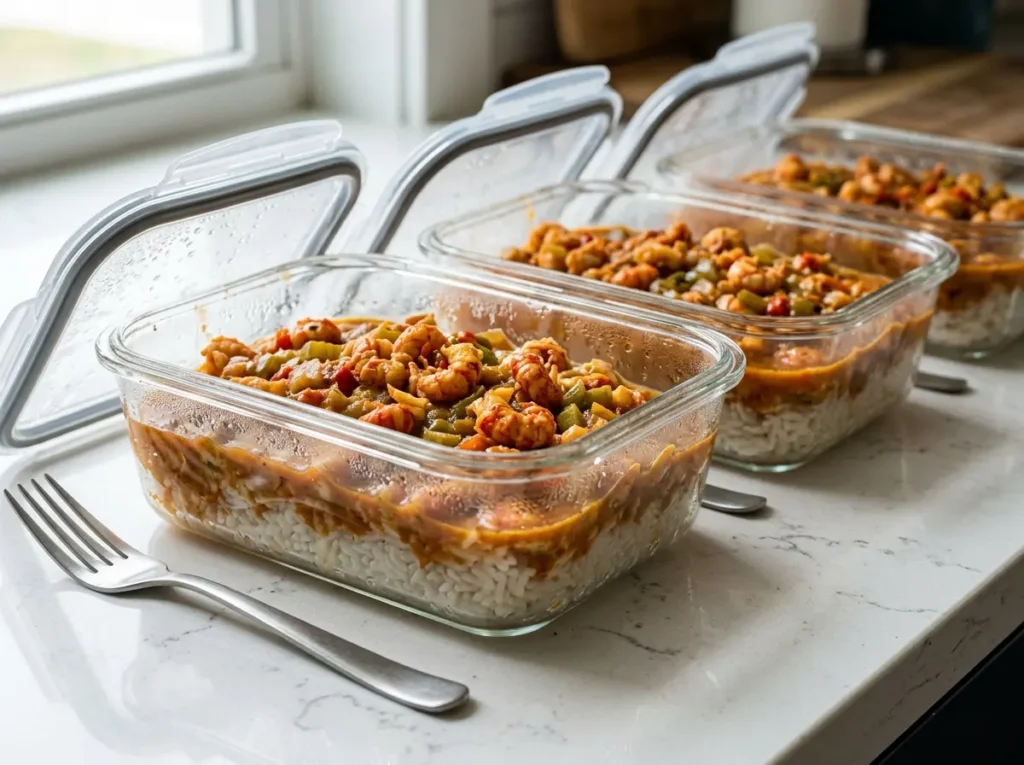
Sunday sauce method: Make the complete etouffee sauce through Step 3, stopping before you add the crawfish. Store the finished sauce in a sealed container in the refrigerator for up to 3 days. On the night you want to eat it, bring the sauce to a gentle simmer, add the crawfish tails, cook 5 to 7 minutes, finish with butter and green onions, and serve. This is the best meal prep approach because the sauce benefits from resting and the crawfish are always freshly cooked.
Complete batch method: Make the full crawfish etouffee including the crawfish and refrigerate for up to 2 days. Reheat gently over low heat with a splash of stock to loosen the sauce. Never microwave crawfish etouffee. The microwave makes the crawfish rubbery and breaks the butter emulsion in the sauce. Always reheat on the stovetop.
Shortcut option for busy nights: Keep a batch of the seasoned roux-and-trinity base in the freezer in a zip-lock bag for up to 3 months. On busy nights, thaw the base, add stock and bring to a simmer, add crawfish tails, and you have dinner in 15 minutes. Our kimchi for weight loss guide pairs well as a probiotic side dish alongside meal-prepped crawfish etouffee for a complete gut-supportive dinner.
5 Mistakes to Avoid With Crawfish Etouffee
I have made every one of these mistakes personally. The ruined roux on day one was just the beginning. Here are the five mistakes that ruin crawfish etouffee and exactly how to fix each one.
- Burning the roux. The most common mistake and the one that ends the entire cooking session. A dark bitter roux cannot be saved and must be thrown out. Medium heat only, constant stirring, and full attention for 3 to 4 minutes. If you smell burning at any point, the heat is too high. Start over rather than trying to use a burnt roux in the dish.
- Discarding the crawfish fat. The orange fat in the crawfish tail package is where most of the flavor lives. Many people rinse it off thinking it looks unappetizing. This is the single biggest flavor mistake you can make with crawfish etouffee. Add every bit of that fat to the sauce with the crawfish tails.
- Overcooking the crawfish. Crawfish tails are already cooked when purchased. They need 5 to 7 minutes to heat through and absorb the sauce, nothing more. The FDA guidelines on shellfish cooking confirm that commercially processed crawfish tails reach safe internal temperatures during processing. Every extra minute past 7 in the sauce makes them progressively more rubbery and less pleasant to eat.
- Using Cassia cinnamon instead of Ceylon. This one does not apply to crawfish etouffee specifically but it is worth stating clearly: if you are also making any of the spiced wellness drinks on this site, never substitute Cassia for Ceylon cinnamon in daily-use recipes. For the etouffee itself, using the wrong Cajun seasoning blend is the equivalent mistake. Make your own or use Tony Chachere’s Original Creole Seasoning for the most authentic flavor profile.
- Adding the butter finish while the pan is still on the heat. The cold butter finish must go in off the heat. If the pan is still hot when you add the cold butter, it separates into greasy pools instead of emulsifying into a glossy sauce. Remove the pan from the burner completely, let it sit 30 seconds, then add the cold butter pieces and stir vigorously.
Quick Tips That Actually Work
- Use a cast iron skillet or enameled Dutch oven for the best heat distribution and the most even roux development.
- Dice all your holy trinity vegetables before you start cooking. Once the roux is built you need to add the vegetables immediately and there is no time to stop and chop.
- Start your rice before you start the etouffee. White rice takes 18 minutes and the etouffee takes 30 to 35 minutes. Start the rice 15 minutes into the etouffee process so both finish at the same time.
- Taste and adjust salt only at the very end after all other seasoning is in. Cajun seasoning, stock, and crawfish fat all carry salt. Adding salt early almost always results in an oversalted dish.
- For more Louisiana-inspired comfort food on the same night, our burger bowl recipe makes an ideal companion dish that can be prepped while the etouffee sauce simmers.
Frequently Asked Questions About Crawfish Etouffee
What type of crawfish is best for crawfish etouffee?
Louisiana crawfish tails with fat are the best choice for an authentic crawfish etouffee. Louisiana crawfish have a sweeter, more delicate flavor than Chinese imported crawfish which are noticeably waterier and less flavorful. Fresh Louisiana crawfish tails in season from January to June are ideal. Frozen Louisiana crawfish tails available year-round are an excellent substitute. Always buy packages that include the crawfish fat, which is the orange material in the bag. Never buy pre-rinsed crawfish tails.
What goes on top of crawfish etouffee?
The classic garnish for crawfish etouffee is sliced green onions and chopped flat-leaf parsley. Both are stirred halfway into the finished sauce and the other half placed on top as garnish. A dash of Crystal hot sauce or Tabasco is the standard Louisiana table condiment that goes on top at serving. Some New Orleans restaurants add a small amount of freshly cracked black pepper and a lemon wedge on the side. Never add cheese to crawfish etouffee. It is not part of the authentic Louisiana tradition.
What sauce is used in crawfish etouffee?
The sauce in crawfish etouffee is a Cajun roux-based butter sauce built from a blonde roux, the holy trinity, seafood or chicken stock, and Cajun seasoning. It is not a cream sauce, not a tomato sauce, and not a cheese sauce. The Cajun version is a pure butter and roux sauce. The Creole version adds diced tomatoes for slight acidity. The sauce is finished with cold butter stirred in off the heat for gloss. No cream is used in an authentic crawfish etouffee.
Is cream used in crawfish etouffee?
No. Authentic crawfish etouffee does not use heavy cream. The sauce gets its richness from the butter roux and the cold butter finish, not from dairy cream. Many American restaurant versions add cream to thicken the sauce quickly, but this is a modern shortcut that changes the texture and flavor significantly. A proper roux-based crawfish etouffee sauce needs no cream. If your sauce is too thin, simmer it longer before adding the crawfish rather than adding cream.
Is a dark roux used in crawfish etouffee?
No. Crawfish etouffee uses a blonde roux, not the dark chocolate roux used in gumbo. A blonde roux is cooked for 3 to 4 minutes at medium heat until it reaches a light peanut butter color. A dark roux cooked for 30 to 45 minutes would overpower the delicate flavor of the crawfish entirely. This is one of the most important differences between etouffee and gumbo. Same technique, very different roux color, and a completely different flavor result.
What is the difference between Cajun and Creole crawfish etouffee?
Cajun crawfish etouffee originated in the rural Acadiana bayou country and uses no tomatoes, more cayenne, and traditionally lard instead of butter for a richer and spicier result. Creole crawfish etouffee originated in New Orleans and includes diced tomatoes for brightness, uses butter throughout, and has a milder heat level. Both use the holy trinity and both are served over white rice. Neither version is more authentic than the other. They represent two distinct Louisiana culinary traditions.
Can I use shrimp instead of crawfish in etouffee?
Yes. Shrimp etouffee is one of the most popular variations of crawfish etouffee and uses the identical sauce base and technique. Use large or extra-large shrimp peeled and deveined. Shrimp cook faster than crawfish tails so reduce the final cooking time to 3 to 4 minutes per side maximum. Shrimp etouffee has a slightly sweeter and less earthy flavor than the crawfish version but is equally delicious and significantly easier to source year-round in most US markets.
How do I store leftover crawfish etouffee?
Store leftover crawfish etouffee in an airtight container in the refrigerator for up to 2 days. Reheat gently over low heat on the stovetop with a splash of stock or water to loosen the sauce. Never microwave crawfish etouffee as the heat makes the crawfish rubbery and breaks the butter emulsion in the sauce. The sauce can be frozen for up to 2 months without the crawfish tails for best results. Add fresh crawfish when reheating from frozen.
Can I make crawfish etouffee without the holy trinity?
Technically yes but the result will not taste like an authentic crawfish etouffee. The holy trinity of onion, green bell pepper, and celery is the irreplaceable flavor foundation of the dish. Omitting any one of the three changes the flavor profile significantly. If green bell pepper is unavailable, red bell pepper can substitute in an emergency but changes the flavor noticeably. If celery is unavailable, fennel can substitute with a different aromatic result. Onion is non-negotiable and has no substitute in this dish.
Is crawfish etouffee good for weight loss?
Crawfish etouffee can fit into a weight loss diet when portioned correctly. The crawfish tails themselves are very low calorie at 70 calories per 3-ounce serving with 14 grams of protein. The butter in the sauce adds calories but also satiety. A single serving of crawfish etouffee over 1/2 cup of white rice contains approximately 380 to 420 calories with 28 to 32 grams of protein. The high protein content supports satiety and muscle maintenance. Serve over cauliflower rice to reduce the calorie count by approximately 100 calories per serving.
Nutritional Disclaimer
The content on fastflavorbites.com is for informational and educational purposes only and does not constitute medical or nutritional advice. Nutritional values are estimates sourced from USDA FoodData Central. Always consult a qualified healthcare professional before making significant dietary changes, especially if you have food allergies, shellfish allergies, specific health conditions, or are pregnant or nursing.
Make Crawfish Etouffee Tonight
Forty-five minutes. One pan. Five steps. That is the entire crawfish etouffee from cold ingredients to bowls on the table. The roux takes patience and a timer. The holy trinity takes a knife and 10 minutes of prep. The crawfish takes 7 minutes and a cold butter finish. Everything else is seasoning and rice.
Once you make it correctly the first time, this dish becomes one of the most reliable recipes in your weekly rotation. It reheats beautifully. It scales up easily for a crowd. It impresses every single person who has never had it before. Nouha now considers it a non-negotiable part of the monthly dinner calendar and she is not wrong.
For the complete Southern and Louisiana-inspired collection on the site, our gochujang eggs recipe makes a bold and fast weeknight companion dish when you want something spiced and satisfying alongside your etouffee prep routine.
Drop a comment below and tell us whether you made the Cajun version or the Creole version, and what Cajun seasoning brand you used.