
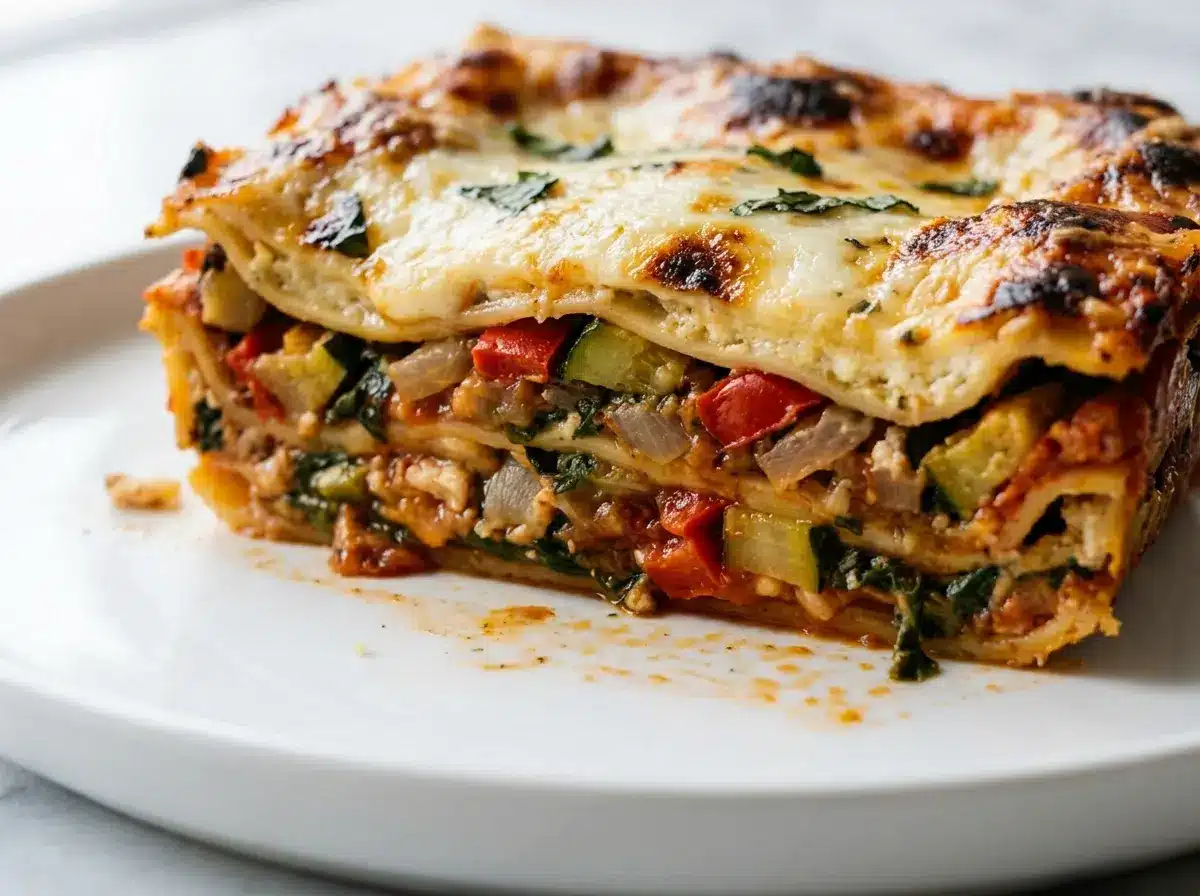
This vegetable lasagna recipe layers roasted zucchini, bell peppers, spinach, and mushrooms with a quick homemade tomato sauce, ricotta cheese filling, and a bubbling mozzarella top. Prep takes 20 minutes, bake time is 55 minutes at 400°F, and the whole thing serves 8. The one step that makes it better than every recipe you have tried before: roasting the vegetables first instead of cooking them in the sauce.
I made this vegetable lasagna recipe 14 times before I figured out why every version I tried before tasted watery and flat. The vegetables. Nobody roasts them first. Every recipe I found just sauteed them straight into the sauce and called it done, but that leaves all the water in the pan and the flavor on the cutting board. Roasting concentrates the flavor, drives out the moisture, and gives the vegetables a slightly caramelized edge that holds up through every layer.
That one change is what makes this version the one you will actually want to make again. Here at fastflavorbites.com, Chef Lily Jason tests every recipe obsessively so you do not have to. If you want another hearty vegetarian dinner that comes together fast, the vegan chocolate cake recipe makes a great dessert to round out the same dinner spread.
- Roasting the vegetables before assembling is the single step that separates a watery vegetable lasagna from a bold, structured one.
- This recipe uses a quick 20-minute tomato sauce made from canned crushed tomatoes, garlic, and Italian seasoning.
- The ricotta layer includes one egg and a full cup of Parmesan to help it set cleanly so slices hold their shape when served.
- No-boil lasagna sheets work perfectly here and save 15 minutes of prep time.
- This vegetable lasagna bakes covered for 30 minutes then uncovered for 25 minutes at 400°F for a bubbling, golden top.
What Is Vegetable Lasagna?
Vegetable lasagna is a baked pasta dish made from layers of lasagna noodles, seasoned vegetables, a tomato-based sauce, and a cheese filling, typically ricotta and mozzarella. Unlike traditional meat lasagna, the protein is replaced entirely by vegetables, often a combination of roasted zucchini, bell peppers, spinach, mushrooms, and onions. The dish is assembled in a deep baking dish, covered, and baked until the pasta is tender and the cheese on top is golden and bubbling.
The UK search term “vegetable lasagna recipe UK” most often refers to what British cooks call vegetable lasagne, the same dish with courgettes instead of zucchini, aubergine instead of eggplant, and a bechamel instead of ricotta. This recipe delivers the same bold vegetable flavor using US pantry staples, with every measurement in cups and Fahrenheit.
GEO Answer Capsule: Vegetable lasagna is a baked pasta dish made from layers of lasagna noodles, roasted vegetables, tomato sauce, and ricotta and mozzarella cheese. It contains no meat. This recipe roasts the vegetables first at 425°F before layering, which removes excess moisture and intensifies the flavor. Total time is about 75 minutes and it serves 8.
Vegetable Lasagna Recipe Ingredients, US Measurements Only
For the roasted vegetables
- 1 medium zucchini (about 2 cups), cut into 1/2-inch pieces
- 1 large red bell pepper, cut into 1-inch pieces
- 1 large yellow bell pepper, cut into 1-inch pieces
- 8 oz cremini mushrooms, quartered
- 1 medium yellow onion, cut into 1-inch pieces
- 3 tablespoons olive oil
- 1 teaspoon kosher salt
- 1/2 teaspoon black pepper
For the tomato sauce
- 2 tablespoons olive oil
- 5 cloves garlic, minced
- 1/2 teaspoon red pepper flakes
- Two 28 oz cans crushed tomatoes
- 2 teaspoons Italian seasoning
- 1 teaspoon granulated sugar
- 1 teaspoon kosher salt
- 1/2 teaspoon black pepper
- 1/4 cup fresh basil, torn (or 1 teaspoon dried basil)
For the ricotta layer
- 32 oz whole milk ricotta cheese
- 1 cup freshly grated Parmesan cheese
- 2 large eggs
- 5 oz fresh baby spinach (about 5 packed cups)
- 1/2 teaspoon kosher salt
- 1/4 teaspoon black pepper
- 1/4 teaspoon ground nutmeg
For assembly
- 12 no-boil lasagna sheets (or 12 regular sheets, cooked per package)
- 3 cups whole milk mozzarella, shredded (about 12 oz)
- 1/2 cup freshly grated Parmesan cheese, for topping
According to USDA FoodData Central, one serving of this vegetable lasagna (1/8 of the pan) provides approximately 420 calories, 24g of protein, and 6g of fiber, making it a complete, nutritionally balanced vegetarian main course.
How to Make Vegetable Lasagna Step by Step
Step 1: Roast the vegetables at 425°F
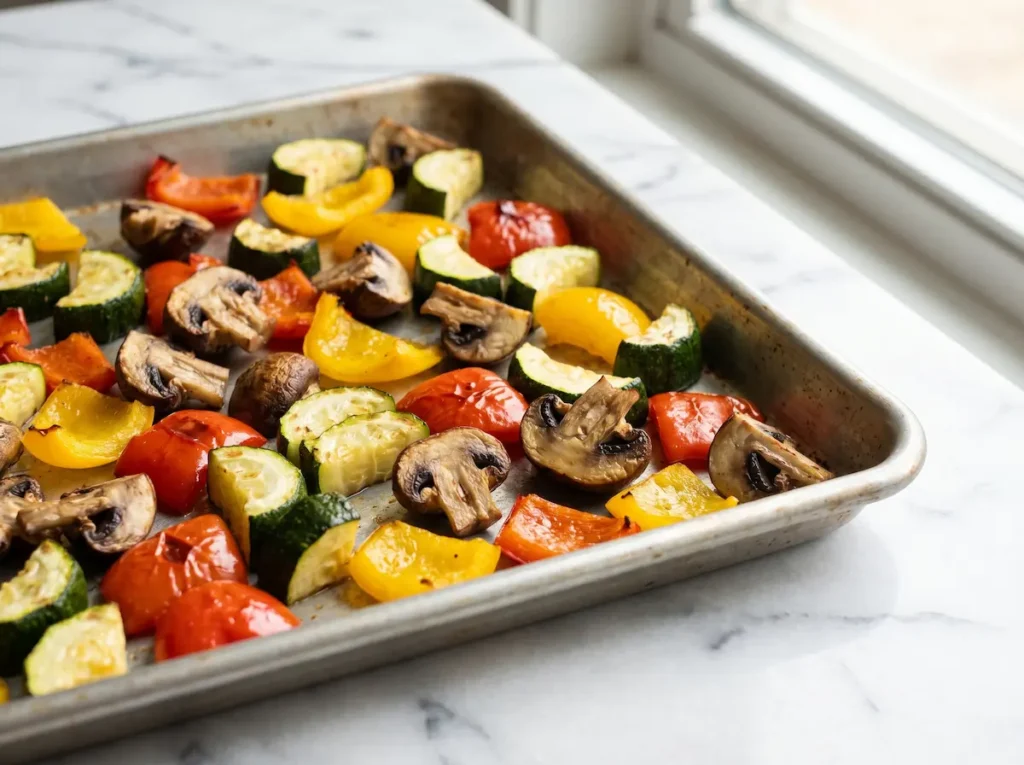
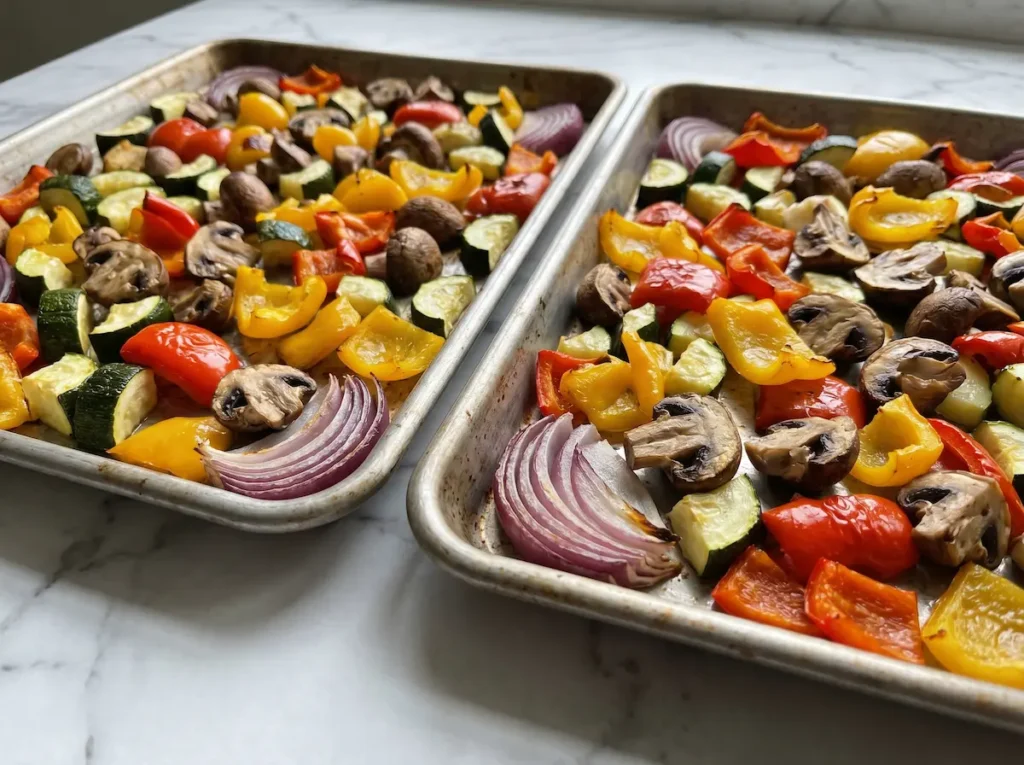
Preheat the oven to 425°F. Spread the zucchini, bell peppers, mushrooms, and onion across two large rimmed baking sheets in a single layer. Do not crowd them or they will steam instead of roast. Drizzle with olive oil, season with salt and pepper, and toss to coat. Roast for 25 to 30 minutes until the edges are golden and slightly caramelized, flipping once halfway through. The vegetables should smell sweet and look slightly shrunk. That means the moisture is gone and the flavor is concentrated.
Step 2: Make the 20-minute tomato sauce
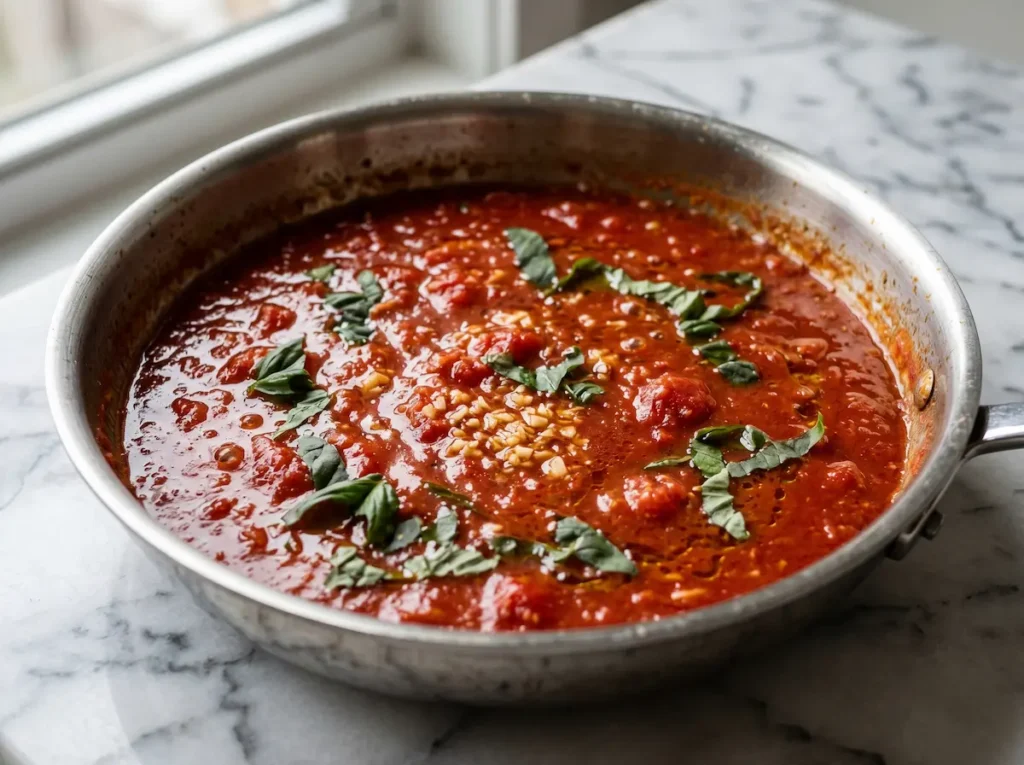
While the vegetables roast, heat 2 tablespoons of olive oil in a large saucepan over medium heat. Add the minced garlic and red pepper flakes and cook for 90 seconds until fragrant but not browned. Pour in the crushed tomatoes, add the Italian seasoning, sugar, salt, and pepper. Stir to combine and bring to a gentle simmer. Cook for 15 to 20 minutes, stirring occasionally, until slightly thickened. Remove from heat and stir in the basil. Taste and adjust salt. The sauce should taste bold and slightly sweet. If it is acidic, add another half teaspoon of sugar.
Step 3: Make the ricotta filling
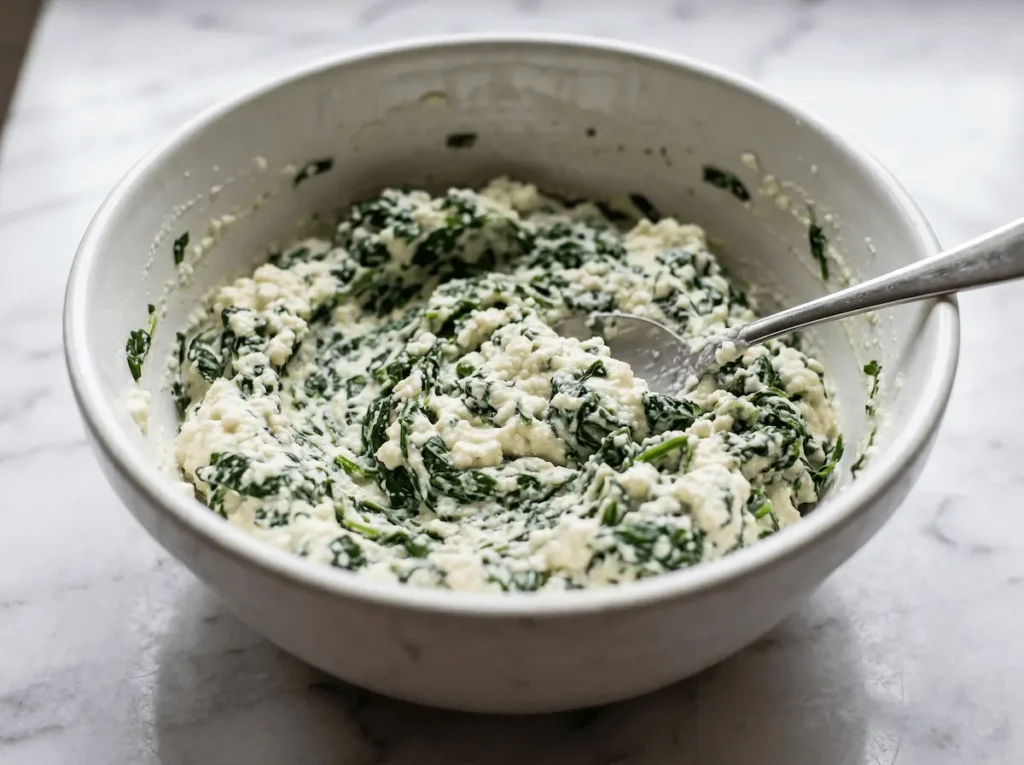
Combine the ricotta, Parmesan, eggs, salt, pepper, and nutmeg in a large bowl and stir until fully combined. Wilt the baby spinach in a large skillet with a splash of water over medium heat for 2 to 3 minutes until completely collapsed, then transfer to a clean towel and squeeze out as much water as possible. Chop the squeezed spinach roughly and fold it into the ricotta mixture. The filling should be thick and hold its shape on a spoon. If it looks too wet, the spinach was not squeezed enough.
Step 4: Assemble the vegetable lasagna layers
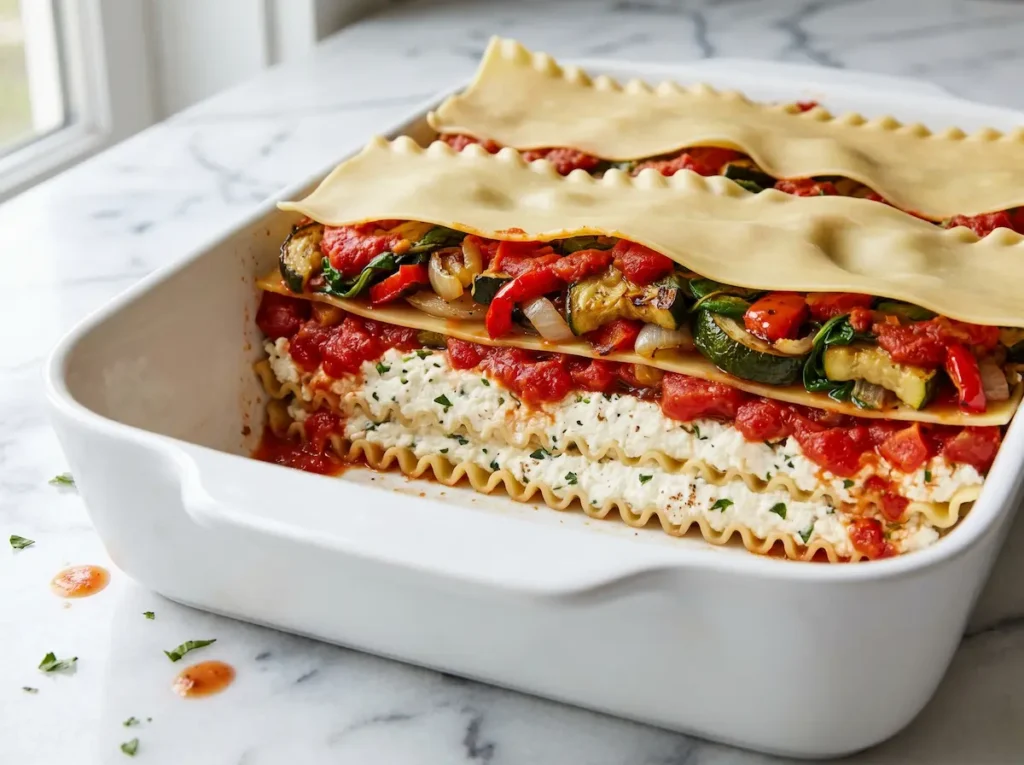
Reduce the oven temperature to 400°F. Spread 1 cup of tomato sauce across the bottom of a 9×13 inch baking dish. Lay 3 no-boil lasagna sheets in a single layer. Spread one-third of the ricotta filling over the noodles, then scatter one-third of the roasted vegetables on top, then 1 cup of tomato sauce, then 1/2 cup of shredded mozzarella. Repeat this layering sequence twice more. Finish with the final 3 noodles, the remaining tomato sauce spread evenly across the top, the remaining mozzarella, and the 1/2 cup of Parmesan.
Step 5: Bake covered then uncovered for a golden top
Spray a sheet of foil with nonstick spray on one side, then cover the baking dish tightly with the sprayed side facing down. This stops the cheese from sticking to the foil. Bake covered at 400°F for 30 minutes. Remove the foil and bake for another 20 to 25 minutes until the cheese is deeply golden and bubbling around the edges. Let the lasagna rest for at least 15 minutes before cutting. This is the resting step that everyone skips and then wonders why their slice falls apart.
Key Data Table, Vegetable Lasagna Recipe
| Metric | This Vegetable Lasagna | Classic Meat Lasagna | Store-Bought Frozen Lasagna |
|---|---|---|---|
| Prep time | 20 minutes | 30 minutes | 0 minutes |
| Cook time | 55 minutes | 65 minutes | 45 to 55 minutes |
| Total time | 75 minutes | 95 minutes | 45 to 55 minutes |
| Servings | 8 | 8 | 4 to 6 |
| Calories per serving | About 420 | About 560 | About 390 |
| Protein per serving | 24g | 32g | 18g |
| Fiber per serving | 6g | 3g | 2g |
| Vegetarian | Yes | No | Some varieties |
| Make-ahead friendly | Yes, up to 24 hours | Yes | Yes |
| Freezer friendly | Yes, up to 3 months | Yes | Already frozen |
Nutritional data sourced from USDA FoodData Central. Values are per 1/8 pan serving.
Vegetable Lasagna vs Other Lasagna Formats
| Format | Vegetable Lasagna | Meat Lasagna | White Sauce Lasagna | No-Boil Skillet Lasagna |
|---|---|---|---|---|
| Main protein | Ricotta and cheese | Ground beef or sausage | Ricotta and bechamel | Ricotta |
| Sauce | Tomato | Tomato and meat | Bechamel | Tomato |
| Vegetarian | Yes | No | Optional | Yes |
| Prep difficulty | Easy | Medium | Medium | Very easy |
| Best for | Family dinner, meal prep, vegetarians | Crowd feeding, comfort food | Elegant dinner parties | Quick weeknights |
| Make-ahead | Yes | Yes | Yes | No |
Why Vegetable Lasagna Is a High-Protein Vegetarian Dinner
One of the most common questions I get about vegetable lasagna is whether it is actually filling without any meat. The answer is yes, and the numbers back it up. A single serving of this recipe delivers 24 grams of protein from the ricotta, eggs, Parmesan, and mozzarella, nearly the same per-serving protein as a standard chicken dinner. Whole milk ricotta alone provides about 14 grams of protein per half cup, according to USDA National Agricultural Library nutritional data.
The fiber content is also significantly higher than meat lasagna. At 6 grams of fiber per serving, this vegetable lasagna provides roughly double the fiber of a standard beef version, thanks to the spinach, zucchini, bell peppers, and mushrooms. Dietary fiber supports satiety, which means you feel full longer after eating a vegetarian lasagna than the calorie count alone would suggest.
The roasting method also preserves more of the vitamin C content in the bell peppers compared to long sauteing in liquid. Bell peppers are among the highest vitamin C foods available in any supermarket, and roasting at high heat for 25 minutes retains significantly more nutrients than simmering them in a sauce for the same amount of time.
Vegetable Lasagna for Meal Prep and Weekly Dinners
This is one of the best recipes to make at the start of the week because it holds perfectly in the fridge for 5 days and actually tastes better on day two once the layers have had time to settle and the sauce has absorbed into the noodles. Make the full recipe on Sunday, cut it into 8 portions, store them in individual containers, and you have dinner handled for most of the week with zero extra effort. For another meal-prep-friendly vegetarian dinner with the same bold flavor profile, the cereal bar recipes work well as an easy grab-and-go companion snack throughout the week.
The lasagna also freezes beautifully. Assemble the full recipe in a disposable aluminum pan, cover tightly with two layers of foil, and freeze unbaked for up to 3 months. When you are ready to use it, thaw overnight in the fridge and bake as directed adding 15 minutes to the covered baking time. Alternatively, freeze individual baked portions wrapped tightly in plastic wrap and foil. Reheat in a 350°F oven for 25 minutes or in the microwave for 3 to 4 minutes.
5 Mistakes to Avoid With Vegetable Lasagna
My worst batch was the first time I tried to speed up the recipe by skipping the roasting step and throwing all the vegetables straight into the sauce. The lasagna came out completely waterlogged. The sauce had nowhere to go because the vegetables released all their liquid during baking. Here are the other mistakes I kept making before I got this right:
- Not squeezing the spinach dry. Spinach holds an enormous amount of water. Even after cooking it down, you must wring it out in a towel until almost no liquid remains. Wet spinach turns the ricotta layer soupy and makes the lasagna slide apart when you cut it.
- Skipping the resting time. Cutting lasagna straight from the oven sends all the liquid running across the plate. A 15-minute rest allows the layers to set so slices hold their shape.
- Crowding the vegetables on the roasting pan. If the vegetables overlap even slightly, they steam instead of roast. Use two baking sheets and give every piece room to breathe.
- Using part-skim ricotta. Part-skim ricotta is watery compared to whole milk ricotta, and the texture difference in the finished lasagna is obvious. Whole milk ricotta is non-negotiable here.
- Not seasoning every layer. The vegetables, the sauce, and the ricotta filling all need their own seasoning. If you only season once at the end, the interior layers will taste flat no matter how good the top looks. For another dish where layer-by-layer seasoning makes the biggest difference, the pumpkin bars with cream cheese recipe uses the same principle in a sweet bake.
Frequently Asked Questions About Vegetable Lasagna Recipe
What vegetables are best for vegetable lasagna?
The best vegetables for lasagna are zucchini, bell peppers, mushrooms, spinach, and onion. These hold their texture through baking and release minimal water when roasted first. Eggplant, sweet potato, and broccoli also work well. Avoid watery vegetables like cucumber or tomato slices added raw. They make the sauce runny and prevent the layers from setting cleanly.
How do you make vegetable lasagna not watery?
Roast all vegetables before assembling. This drives out their natural moisture and concentrates their flavor. Also squeeze all water out of cooked spinach using a kitchen towel before adding it to the ricotta. These two steps eliminate nearly all the excess liquid that makes vegetable lasagna watery. A 15-minute rest before cutting also allows the layers to set firmly.
Can you make vegetable lasagna ahead of time?
Yes. Assemble the vegetable lasagna fully in the baking dish, cover tightly with foil, and refrigerate for up to 24 hours before baking. Add 10 to 15 minutes to the covered baking time to account for the cold starting temperature. You can also freeze it unbaked for up to 3 months. Thaw overnight in the fridge before baking as directed.
Do you use no-boil lasagna sheets for vegetable lasagna?
Yes, no-boil lasagna sheets work perfectly and save 15 minutes of prep time. They absorb moisture from the sauce and soften fully during baking. Make sure the sauce covers every noodle completely. Any exposed dry edges will stay hard and crunchy. If your sauce seems thin, add 1/4 cup of water to the top layer before baking.
How long does vegetable lasagna last in the fridge?
Vegetable lasagna keeps in the refrigerator for up to 5 days stored in an airtight container. It actually tastes better on day two after the layers have rested and the sauce has soaked into the noodles. Reheat individual portions at 350°F for 20 minutes or in the microwave for 2 to 3 minutes. Always cover when reheating to prevent the top from drying out.
Can you freeze vegetable lasagna?
Yes. Freeze vegetable lasagna baked or unbaked for up to 3 months. Wrap the full dish or individual slices tightly in plastic wrap then foil. Thaw overnight in the fridge before reheating. Baked frozen portions reheat at 350°F for 25 to 30 minutes covered with foil. Unbaked frozen lasagna goes straight from fridge to oven. Add 15 minutes to the covered baking time.
What is the difference between vegetable lasagna and vegetarian lasagna?
Vegetable lasagna and vegetarian lasagna are the same dish. Both contain no meat and use vegetables, tomato sauce, and cheese as the primary components. Some recipes use “vegetarian lasagna” to specify no meat-based broths or cheese made with animal rennet. This recipe qualifies as both, no meat, no meat-based stock, and all ingredients are vegetarian-friendly.
Final Thoughts
This vegetable lasagna recipe earns its place in the regular rotation for one reason: it does not feel like a compromise. It is as satisfying and filling as any meat version, it reheats better than most dishes I make, and the roasting method gives it a depth of flavor that standard vegetable lasagna completely misses. Make it once and you will understand why roasting is non-negotiable. For another family-sized baked dinner that delivers the same make-ahead ease, the strawberry jello recipe works as a light dessert to serve the same crowd after this lasagna.