
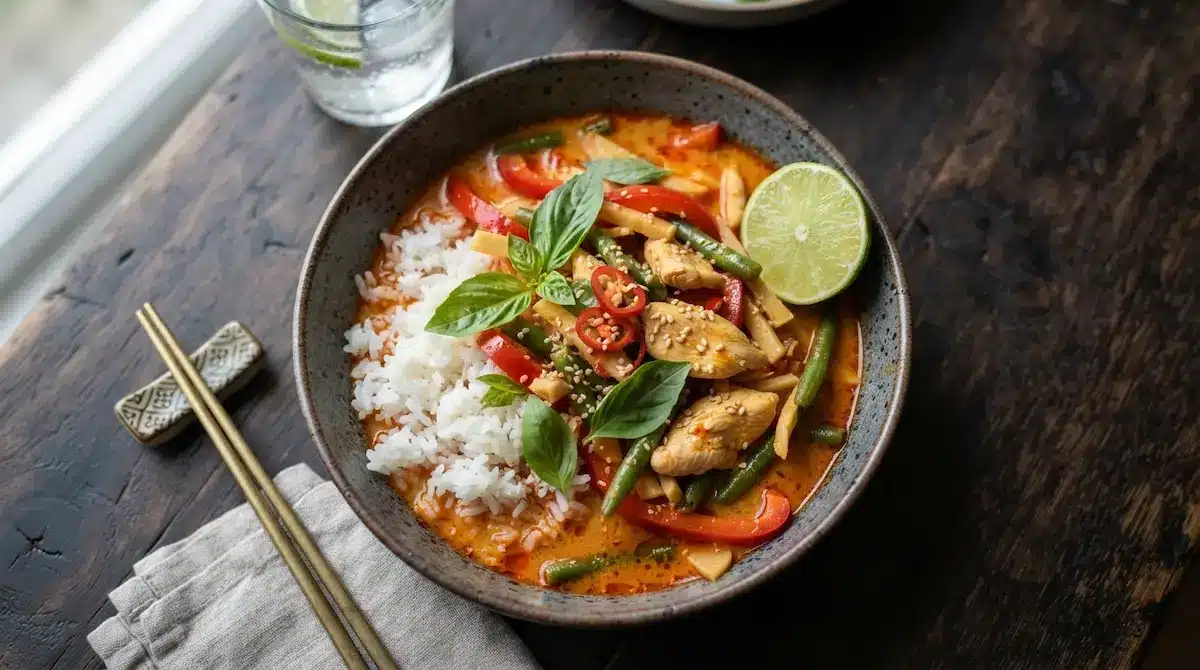
The first time I made this red thai curry recipe at home, the sauce broke on me. It went from a glossy, orange-red coconut sauce to something greasy and separated, with little oil pools floating on top. I almost gave up and ordered takeout instead.
Turns out the fix for this red thai curry recipe wasn’t a better ingredient list. It was a five-minute technique I’d been skipping: frying the paste in the thick coconut cream before adding any liquid. Once I started doing that, every batch of this red thai curry recipe came out silky, and it stayed that way even after reheating leftovers three days later.
This red thai curry recipe is the version I make on repeat now chicken thighs, a jar of red curry paste, one can of coconut milk, and whatever vegetables are in the crisper. It’s ready in about 30 minutes, and it tastes closer to what you’d get at a good Thai restaurant than anything I used to order in. If you’ve searched for a red thai curry recipe that actually works on the first try, this is the one I’d hand you.
Key Takeaways for This Red Thai Curry Recipe
- Fry the paste in coconut cream first this is the step that keeps a red thai curry recipe from breaking or tasting flat.
- Use full-fat, unshaken coconut milk so the cream and liquid separate naturally in the can.
- Chicken thighs hold up better than breast for a red thai curry recipe that simmers, since they stay tender instead of drying out.
- Balance the sauce at the end with fish sauce, a little sugar, and fresh lime this is what makes a red thai curry recipe taste “restaurant-made.”
- This red thai curry recipe is a template. Swap the protein or vegetables and the method stays exactly the same.
What Makes This Red Thai Curry Recipe Different
Most red thai curry recipe write-ups tell you to just dump curry paste into coconut milk and simmer. That works, technically. But the sauce usually ends up thin, and the paste never fully blooms, so you’re tasting raw spice instead of the deep, roasted flavor a good curry paste is capable of.
The difference in this red thai curry recipe is the order of operations. Full-fat coconut milk, left unshaken in the can, separates into thick cream on top and thinner liquid underneath. Frying the red curry paste in just that thick cream no liquid yet toasts the spices and lets the oil in the coconut cream bind with the paste’s natural oils. That’s the same technique Thai cooks call “cracking” the coconut cream, and it’s the reason restaurant curries taste rounder and richer than a quick weeknight version usually does.
It also means you don’t need a from-scratch curry paste to get a great result from this red thai curry recipe. A good store-bought red curry paste, treated right, gets you 90% of the way there.
Ingredients for This Red Thai Curry Recipe
- 1 can (13.5 oz) full-fat coconut milk, not shaken
- 3 tablespoons red curry paste (Thai Kitchen or Mae Ploy both work well)
- 1 tablespoon neutral oil (avocado or vegetable oil)
- 1 lb boneless, skinless chicken thighs, sliced into thin strips
- 1 small yellow onion, thinly sliced
- 1 red bell pepper, thinly sliced
- 1 cup green beans or snap peas, trimmed
- 1 tablespoon fish sauce
- 1 tablespoon light brown sugar
- 1 teaspoon fresh lime zest (or 2 kaffir lime leaves, if you can find them)
- 1 tablespoon fresh lime juice
- 1/2 cup fresh Thai basil leaves (regular basil works in a pinch)
- Cooked jasmine rice, for serving
- Optional: fresh cilantro and thinly sliced red chili, for garnish
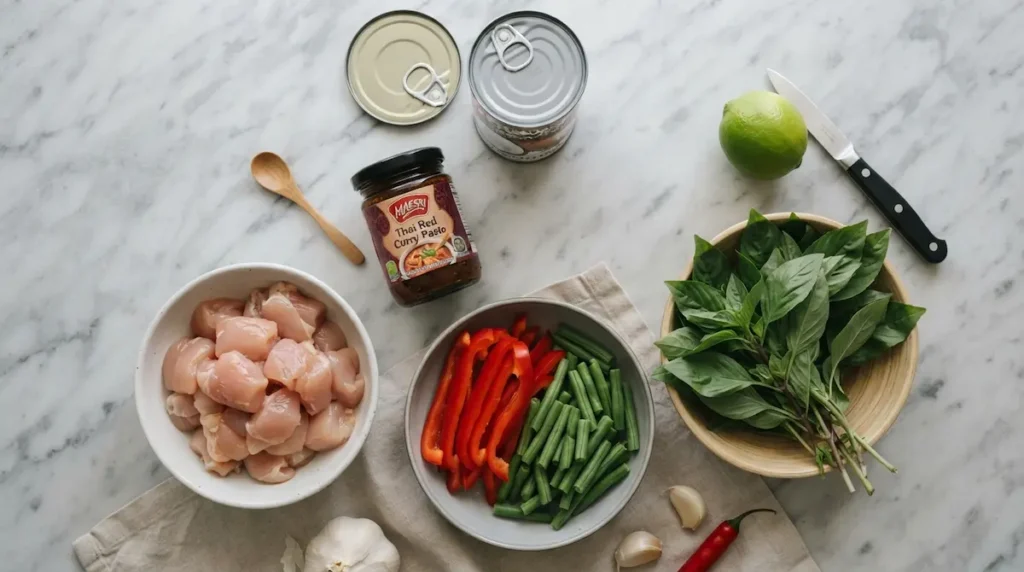
Swaps that work in this red thai curry recipe:
- Protein: swap chicken thighs for thinly sliced beef, shrimp (add in the last 3 minutes so it doesn’t overcook), or extra-firm tofu (press it first).
- Vegetarian/vegan: use tofu, sub fish sauce for soy sauce or tamari, and double-check your curry paste some brands include shrimp paste. If gluten is a concern, check whether your soy sauce is gluten-free before swapping it in.
- Vegetables: bamboo shoots, sliced zucchini, broccoli, mushrooms, or baby corn all work in place of or alongside the bell pepper and green beans.
- Spice level: start with 2 tablespoons of curry paste if you’re heat-sensitive; go up to 4 if you like it fiery.
How to Make This Red Thai Curry Recipe
- Open the coconut milk without shaking it. Scoop out the thick cream from the top into a large, cold skillet or wide pot. Set the remaining liquid aside.
- Fry the cream and paste together. Heat the skillet over medium heat. As the cream starts to melt and bubble, stir in the curry paste. Cook for 3–4 minutes, stirring often, until it’s fragrant and you see a thin layer of orange oil separating at the edges. This is the step that makes the whole red thai curry recipe work don’t rush it.
 The step that makes or breaks this red thai curry recipe: frying the paste in coconut cream before adding any liquid.
 - Add the chicken. Stir the sliced chicken thighs into the paste mixture and cook for 3–4 minutes, until the outside is no longer pink. For food safety, the chicken should reach a safe minimum internal temperature of 165°F by the time it finishes simmering in step 5.
- Pour in the remaining coconut milk. Add the reserved coconut liquid, fish sauce, and brown sugar. Stir to combine and bring to a gentle simmer.
- Add the vegetables. Stir in the onion, bell pepper, and green beans. Simmer uncovered for 8–10 minutes, until the chicken is cooked through and the vegetables are tender-crisp.
 Let the sauce simmer until the chicken is cooked through and the vegetables are tender-crisp.
 - Finish the sauce. Remove from heat. Stir in the lime zest and lime juice, then taste. Add a little more fish sauce for saltiness, sugar for balance, or lime for brightness, until it tastes right to you.
- Add the basil last. Stir in the Thai basil leaves right before serving they wilt almost instantly and lose their flavor if they sit in the hot curry too long. Basil goes in last stir it in right before serving so it doesn’t wilt and lose flavor.
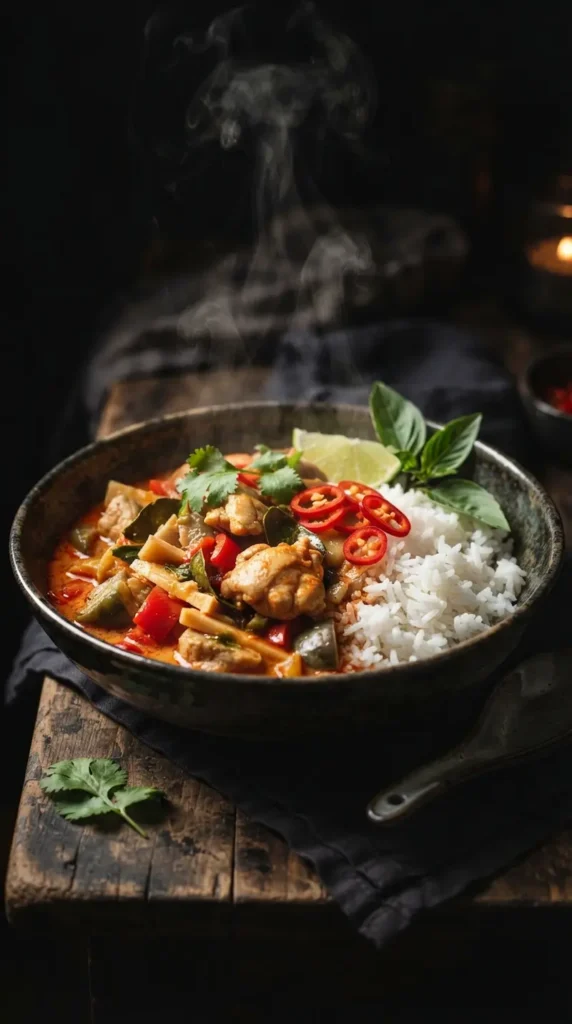
- Serve. Spoon your finished red thai curry recipe over jasmine rice and top with cilantro and sliced chili, if using.
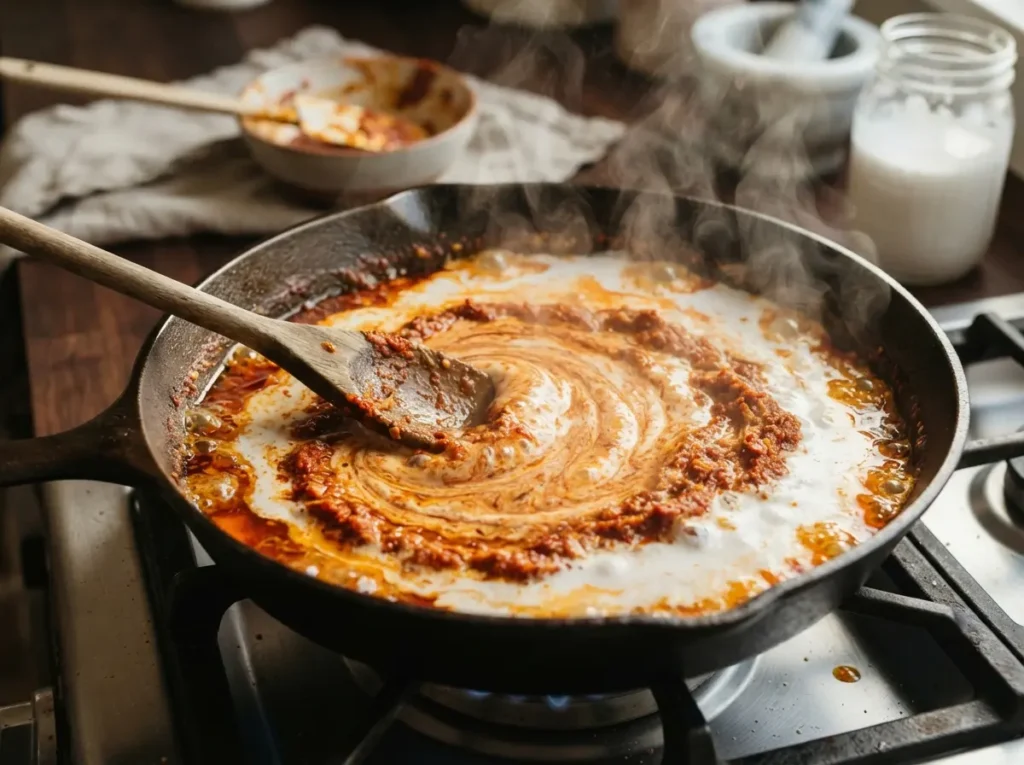 The step that makes or breaks this red thai curry recipe: frying the paste in coconut cream before adding any liquid.
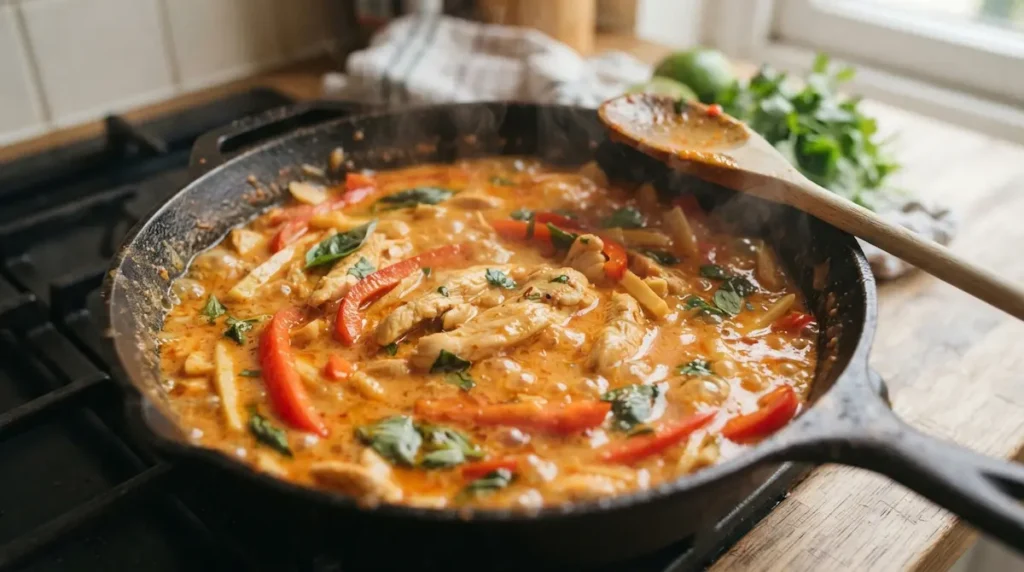 Let the sauce simmer until the chicken is cooked through and the vegetables are tender-crisp.
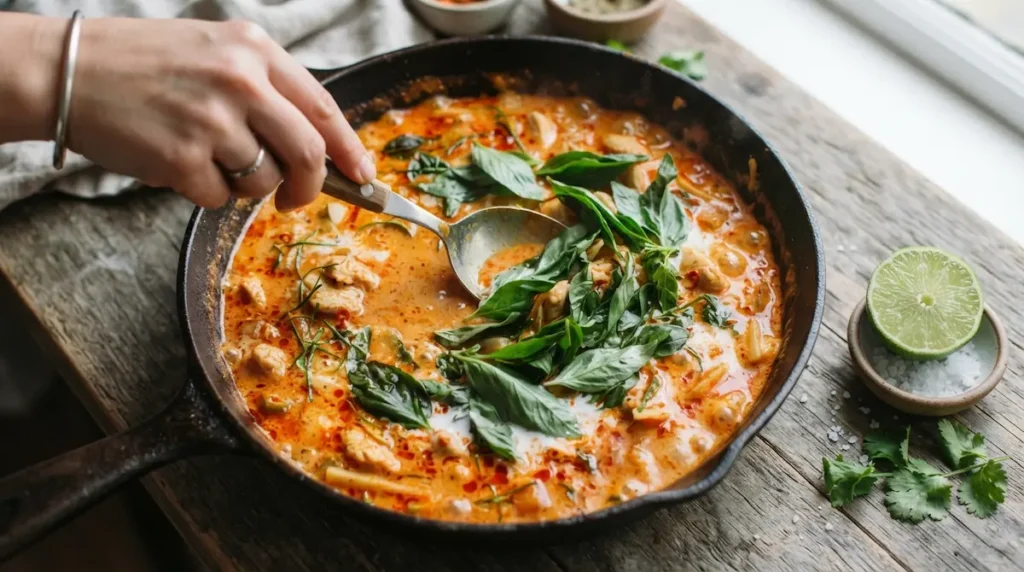 Basil goes in last stir it in right before serving so it doesn’t wilt and lose flavor.
Pro Tips for Restaurant-Quality Flavor
- Don’t shake the coconut milk can. You need the cream to separate on its own so you have something thick to fry the paste in.
- Taste your curry paste before you commit to the full amount. Brands vary a lot in heat and saltiness dab a little on a spoon first.
- Sear the chicken, don’t boil it. Letting it brown slightly in the paste before adding liquid builds flavor you can’t get any other way.
- Add delicate herbs and quick-cooking vegetables last. Basil, bean sprouts, and pea shoots should go in during the final minute, not the full simmer.
- A squeeze of lime at the very end wakes the whole dish up. Taste before and after you’ll notice the difference immediately.
Variations on This Red Thai Curry Recipe
- Red Thai Curry with Beef: use thinly sliced flank or sirloin steak, and add it slightly later in the process since beef cooks faster than chicken thighs.
- Shrimp Red Curry: swap in raw shrimp, added in the last 3 minutes of simmering so they don’t turn rubbery.
- Vegetarian/Vegan Red Thai Curry: use extra-firm tofu (pressed and pan-seared before adding to the sauce), swap fish sauce for tamari or soy sauce, and confirm your curry paste is fish-free.
- Instant Pot Red Thai Curry: use the sauté function to fry the paste in coconut cream as directed, then pressure cook chicken and firmer vegetables (like carrots or potatoes) for 5 minutes on high with a quick release. Stir in quick-cooking vegetables and basil after.
- Red Curry with Vegetables Only: skip the protein entirely and load up on bell peppers, snap peas, baby corn, and mushrooms. Pair it with other lighter dinner options if you’re keeping the week’s meals easier on the body.
Troubleshooting This Red Thai Curry Recipe
My sauce broke or looks greasy and separated.
This usually means the paste never fully “cracked” into the coconut cream, or the pot got too hot too fast. Lower the heat, add a splash of the reserved coconut liquid, and whisk gently until it comes back together. Going forward, make sure you’re frying the paste in cream alone (no liquid) over medium, not high, heat.
My curry is too thin.
Simmer uncovered for another 5–8 minutes to reduce the sauce. You can also stir in an extra spoonful of coconut cream, skimmed from the top of a second can, to thicken it without diluting the flavor.
It’s too spicy.
Stir in a spoonful of coconut cream or a splash of coconut milk to mellow the heat, and add a little extra brown sugar to round it out.
It’s too mild.
Add another 1/2 to 1 tablespoon of curry paste, but fry it briefly in a small pan first (with a spoonful of the sauce) before stirring it back in adding raw paste straight into a finished red thai curry recipe can taste harsh.
The flavor tastes flat.
This is almost always a seasoning issue, not a recipe issue. Add fish sauce for salt and depth, lime juice for brightness, and sugar for balance a little of each, tasted as you go.
Storage and Reheating Your Red Thai Curry Recipe
Let the curry cool to room temperature, then store it in an airtight container in the refrigerator for up to 4 days, following standard cold food storage guidelines. The flavor actually improves by day two, once the paste and coconut milk have had time to meld.
To reheat, warm it gently on the stovetop over medium-low heat, stirring occasionally, until just heated through. Add a splash of water or coconut milk if the sauce has thickened too much in the fridge. Avoid microwaving on high heat for long stretches, since it can cause the sauce to separate.
This red thai curry recipe also freezes safely for up to 2 months. Thaw it in the refrigerator overnight before reheating on the stove.
What to Serve With Red Thai Curry
- Steamed jasmine rice (the classic pairing, and the best for soaking up sauce)
- Coconut rice, for extra richness
- Cauliflower rice, if you’re keeping things lighter
- A simple cucumber salad with rice vinegar, for a cool, crunchy contrast
- If you’re building out a full Asian-inspired dinner spread, this pairs nicely alongside our bibimbap recipe, gochujang eggs, or tteokbokki on a night when you want a few dishes on the table
Frequently Asked Questions About This Red Thai Curry Recipe
What is red thai curry made of?
Red thai curry is made from red curry paste (chilies, garlic, lemongrass, galangal, and shrimp paste or fish sauce) simmered with coconut milk. Chicken, beef, tofu, or shrimp and vegetables are added, then the sauce is balanced with fish sauce, sugar, and lime.
Is red curry the same as red thai curry?
“Red curry” and “red thai curry” usually refer to the same dish. Some recipes labeled simply “red curry” use a milder, less traditional paste, while a red thai curry recipe made with authentic Thai chilies and aromatics will typically be spicier and more fragrant.
Why did my coconut curry sauce break or separate?
This happens when the curry paste isn’t properly fried into the coconut cream before liquid is added, or when the pot gets too hot too quickly. Frying the paste in unshaken coconut cream over medium heat, as described above, prevents this in any red thai curry recipe.
Can I make red thai curry less spicy?
Yes. Start with less curry paste (2 tablespoons instead of 3–4), and add more coconut cream or a little extra sugar to mellow the heat if it turns out spicier than you’d like.
Is red thai curry gluten-free?
Most red curry pastes and fish sauce are naturally gluten-free, but some brands add wheat-based ingredients, so it’s worth checking the label and if you’re swapping in soy sauce anywhere, check whether your soy sauce is gluten-free first. This red thai curry recipe as written contains no wheat-based ingredients.
Can I make this recipe vegan or vegetarian?
Yes. Use tofu instead of chicken, swap fish sauce for soy sauce or tamari, and choose a curry paste that doesn’t contain shrimp paste (check the label, since many do).
Conclusion
Red thai curry has a reputation for being tricky to get right at home, but the truth is it comes down to one technique: frying the curry paste in coconut cream before you add any liquid. Once that clicks, this red thai curry recipe becomes one of those dishes you can make from memory on a weeknight, using whatever protein and vegetables you have on hand.
If you try this red thai curry recipe, I’d love to hear how it turns out and if your sauce broke the first time too, you’re in good company. And if you’re looking for another easy, saucy dinner to add to the rotation, our crawfish etouffee recipe is a great next one to try.