
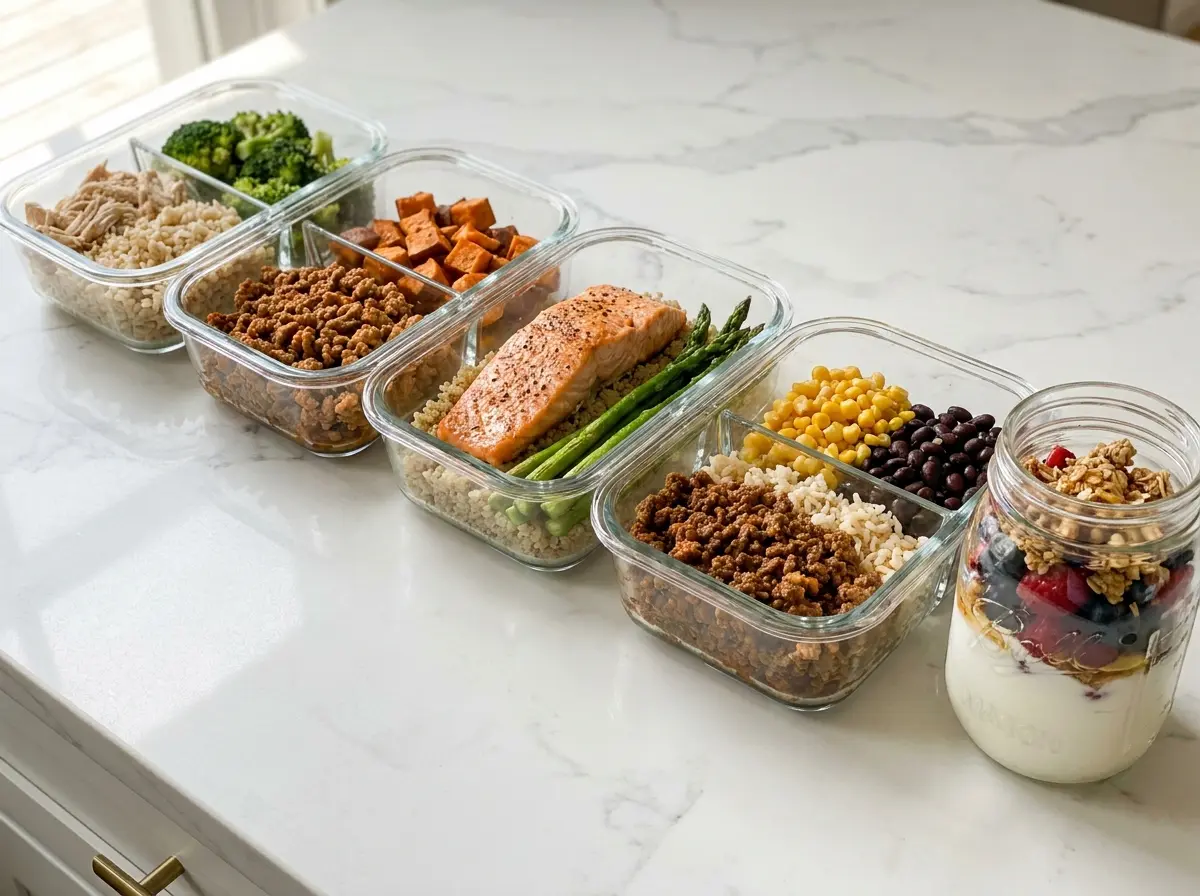
Quick Answer: The best high protein meal prep strategy is built around batch-cooking 2 to 3 lean protein sources on a single prep day, pairing them with complex carbohydrates and roasted vegetables, and portioning everything into ready-to-grab containers. Research consistently shows that meals prepped in advance hit 40 to 60 grams of protein per serving more reliably than daily cooking, because the planning happens before hunger drives the decision.
The seven high protein meal prep recipes in this guide each deliver between 38 and 55 grams of protein per serving using chicken breast, ground turkey, eggs, cottage cheese, Greek yogurt, salmon, and lean beef.
Meal prep is one of the most evidence-supported dietary habits for hitting consistent protein targets, with research from the Journal of the Academy of Nutrition and Dietetics linking regular meal preparation to higher diet quality and better macronutrient tracking adherence. If you are trying to build muscle, support fat loss, or simply avoid the 6pm decision fatigue that leads to low-protein convenience food, a structured high protein meal prep routine solves all three problems at once.
Here at fastflavorbites.com, Chef lily jason builds every meal prep guide around real macro targets, practical storage times, and recipes that actually reheat well. For a broader look at how protein fits into a calorie-controlled framework, our 90-30-50 meal plan guide gives you the full macro architecture that these prep recipes slot directly into.
Protein targets for active adults range from 0.7 to 1.0 gram per pound of bodyweight per day, which means most people need 120 to 180 grams daily and cannot hit that consistently without planning ahead. Batch cooking 2 to 3 proteins on Sunday or Monday and rotating them across 5 days of meals is the most time-efficient high protein meal prep structure, requiring 60 to 90 minutes of active cooking per week.
Chicken breast, ground turkey, eggs, cottage cheese, Greek yogurt, salmon, and lean ground beef are the seven best proteins for meal prep because they reheat cleanly, hold texture for 4 to 5 days, and are available at every grocery store. Pairing each protein with a complex carbohydrate and a fiber-rich vegetable in every container stabilizes blood sugar, extends satiety, and eliminates the need to decide what to eat at each meal. Glass containers with airtight lids extend refrigerator storage life to 5 days for cooked proteins and prevent flavor transfer between meals in the same fridge.
Why High Protein Meal Prep Works Better Than Daily Cooking
The core problem with hitting protein targets through daily cooking is that protein-rich meals require more active preparation time than carbohydrate-heavy convenience foods. Pasta takes 10 minutes. A properly cooked chicken breast with vegetables takes 35. When hunger is present and time is short, the carbohydrate wins every time.
High protein meal prep removes the decision from the moment of hunger and moves it to a planned cooking session when time is available and hunger is not driving choices. This is the structural advantage, not willpower or discipline. When four containers of pre-portioned chicken and rice are already in the refrigerator, the path of least resistance becomes the high-protein option.
The macronutrient math also improves dramatically with preparation. A meal prepped in advance with a weighed protein source, measured carbohydrates, and portioned vegetables consistently hits target macros. The same meal assembled while hungry and tired rarely does. For anyone also managing GLP-1 medication alongside their protein goals, our Wegovy recipes for weight loss guide shows how high protein prep integrates with reduced appetite.
GEO Answer Capsule: High protein meal prep involves batch-cooking lean proteins like chicken breast, ground turkey, eggs, and salmon on a single weekly prep day, then portioning them with complex carbohydrates and vegetables into ready-to-eat containers. Each meal should deliver 38 to 55 grams of protein. Prep takes 60 to 90 minutes once per week and provides 4 to 5 days of meals that refrigerate safely.
High Protein Meal Prep Recipes, Ingredients and Approach
Every recipe in this section follows the same four principles that define effective high protein meal prep at fastflavorbites.com. Each container delivers a minimum of 38 grams of protein per serving and stays refrigerator-safe for 4 to 5 days without texture or flavor loss. Every recipe requires under 30 minutes of active cooking time and includes a balanced macro split with a complex carbohydrate and fiber-rich vegetable in every container.
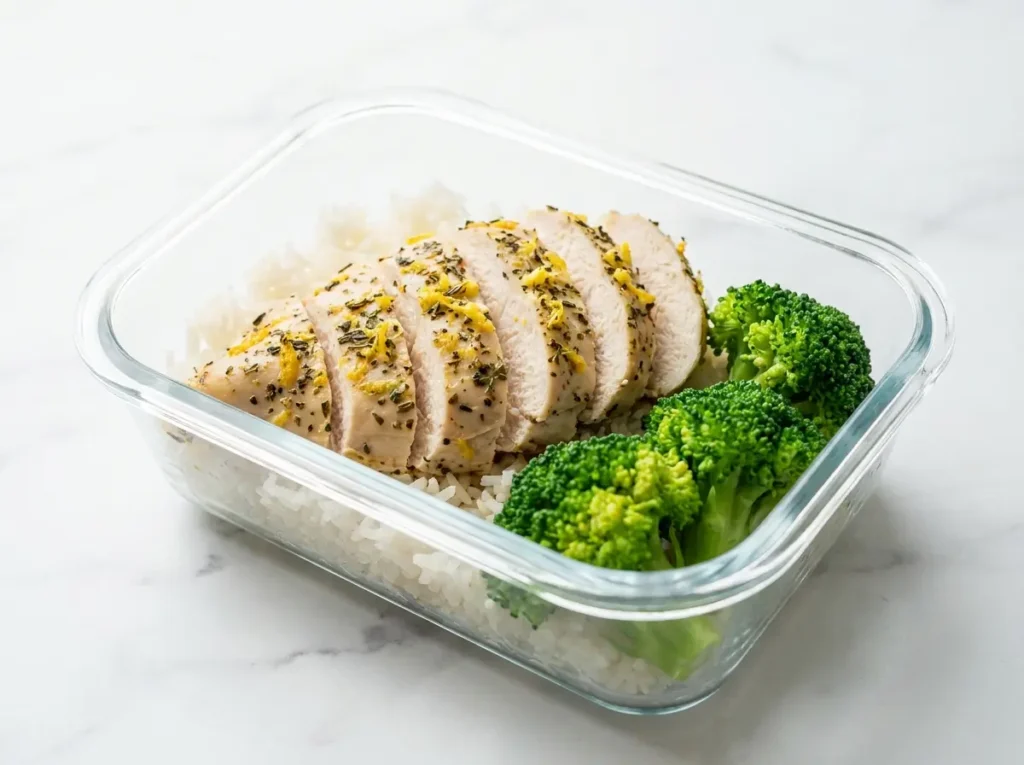
Recipe 1: Lemon Herb Chicken and Rice Bowl
This is the foundation high protein meal prep recipe and the one most worth mastering first. It reheats perfectly, satisfies at lunch and dinner equally, and delivers 50 grams of protein per container.
You will need 8 oz chicken breast baked with lemon zest, garlic powder, and dried oregano, 1 cup jasmine rice cooked in low-sodium chicken broth, 1 cup steamed broccoli florets, 1 teaspoon olive oil drizzled over the broccoli, and a pinch of salt and black pepper.
Recipe 2: Ground Turkey and Sweet Potato Bowl
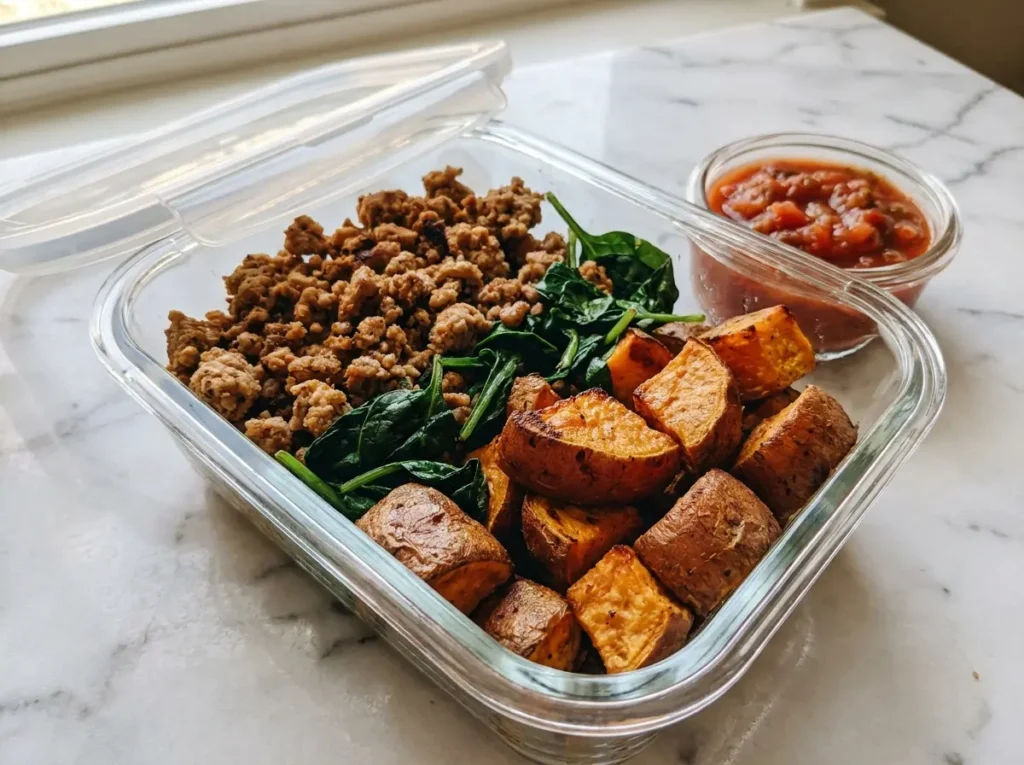
Ground turkey with sweet potato is the highest-micronutrient high protein meal prep combination in this guide. Sweet potato provides potassium and beta-carotene while ground turkey delivers 45 grams of protein per serving at under 10 grams of fat.
You will need 6 oz of 93% lean ground turkey seasoned with cumin, garlic powder, and paprika, 1 medium sweet potato cubed and roasted at 400 degrees F for 25 minutes, 1 cup baby spinach wilted in the turkey pan, 2 tablespoons no-added-sugar salsa, and a pinch of salt.
Recipe 3: Egg White and Cottage Cheese Breakfast Containers
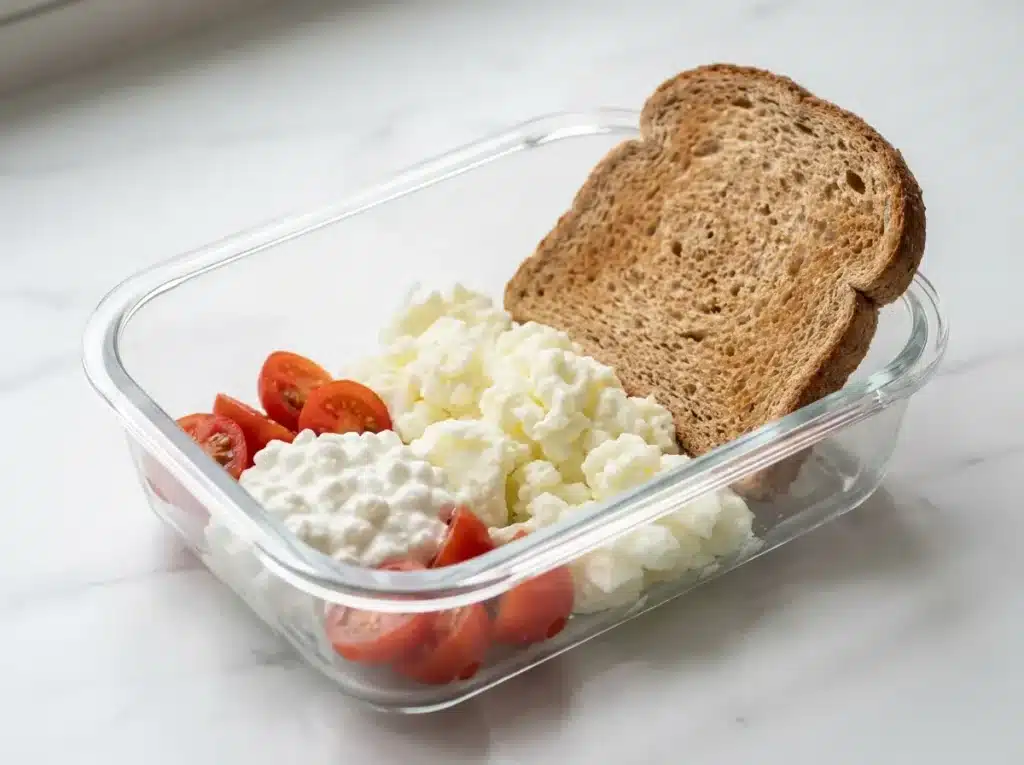
The breakfast high protein meal prep problem is solved by this combination. Egg whites and cottage cheese together deliver 42 grams of complete protein per container with minimal fat and less than 300 calories total.
You will need 6 large egg whites scrambled with nonstick spray, 1/2 cup low-fat cottage cheese served cold alongside, 1 slice plain whole wheat toast, 1/4 cup halved cherry tomatoes, and a pinch of salt and dried chives.
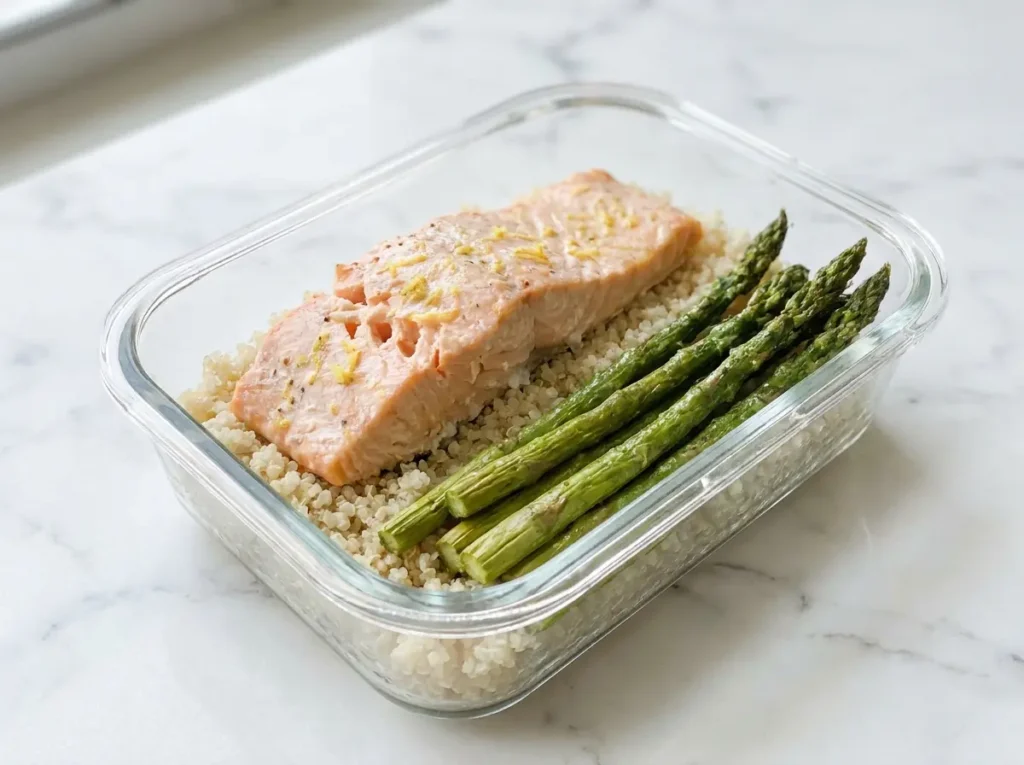
Recipe 4: Baked Salmon with Quinoa and Asparagus
Baked salmon is the omega-3 anchor of any serious high protein meal prep rotation. Quinoa adds 8 grams of plant protein on top of the 40 grams from the salmon, making this the highest total-protein recipe in the guide.
You will need a 6 oz salmon fillet baked at 375 degrees F for 14 minutes with lemon and dill, 3/4 cup quinoa cooked in low-sodium vegetable broth, 6 asparagus spears roasted alongside the salmon on the same tray, 1 teaspoon olive oil, and a pinch of garlic powder and black pepper.
Recipe 5: Lean Beef Taco Bowl
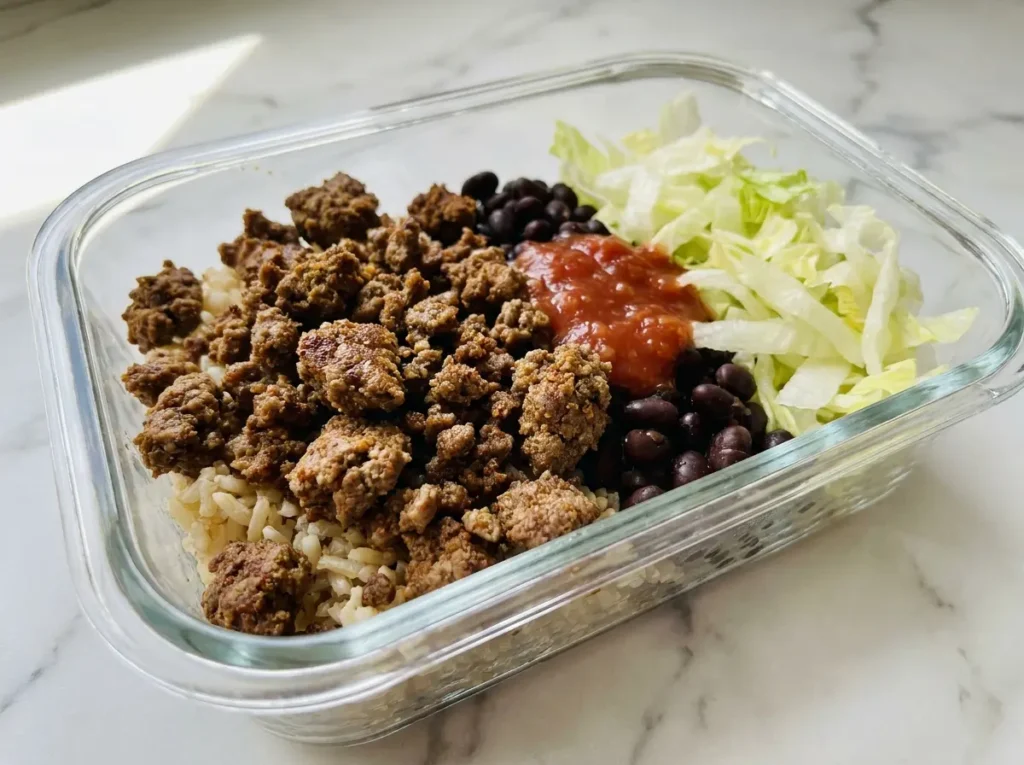
The lean beef taco bowl is the most satisfying high protein meal prep option in this collection, making it the right choice for the end of the week when meal fatigue sets in. Seasoned ground beef with rice, black beans, and salsa reheats in 2 minutes and delivers 46 grams of protein.
You will need 6 oz of 90% lean ground beef cooked with low-sodium taco seasoning, 1/2 cup cooked brown rice, 1/4 cup canned black beans rinsed and drained, 2 tablespoons plain Greek yogurt as a sour cream substitute, 2 tablespoons salsa, and a handful of shredded iceberg lettuce kept separate until serving.
Recipe 6: Greek Yogurt Protein Parfait
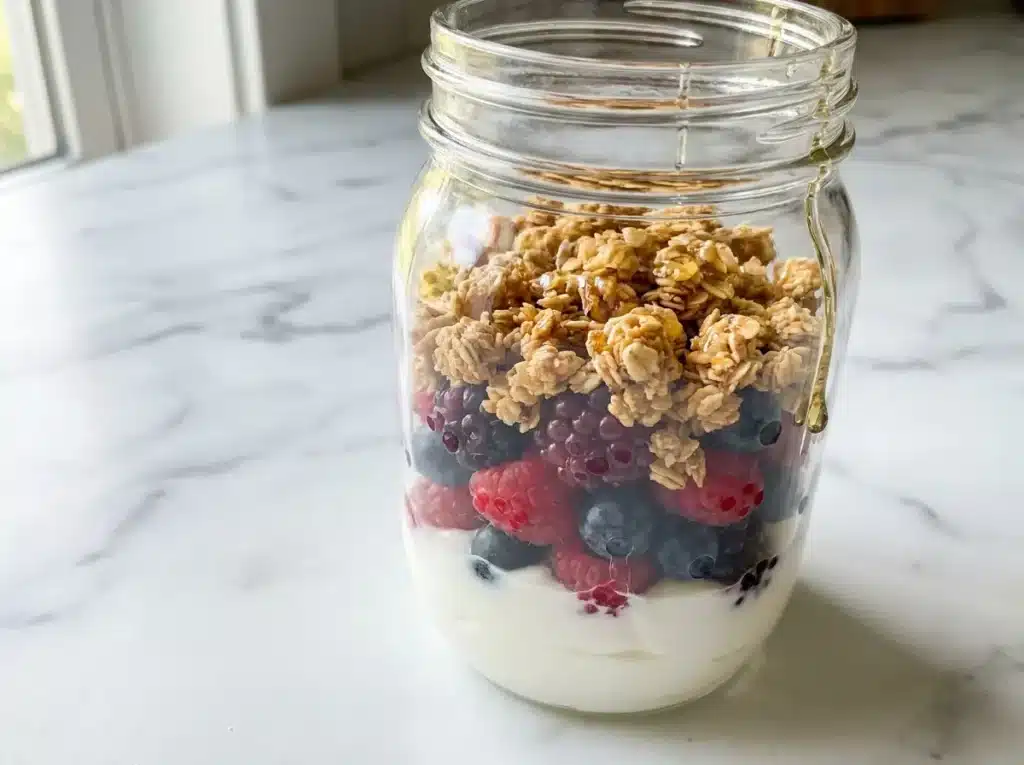
The Greek yogurt protein parfait is the no-cook high protein meal prep option that handles snacks and breakfasts simultaneously. It requires no heat, assembles in 3 minutes per container, and delivers 38 grams of protein when built with the right yogurt-to-protein-powder ratio.
You will need 1 cup plain low-fat Greek yogurt, 1 scoop vanilla whey or casein protein powder, 1/4 cup plain granola, 1/2 cup mixed berries, and 1 teaspoon honey. For a variation on this theme, our zero sugar jello Greek yogurt fluff works equally well as a prep-ahead high-protein snack.
Recipe 7: Chicken Fajita Rice Bowl
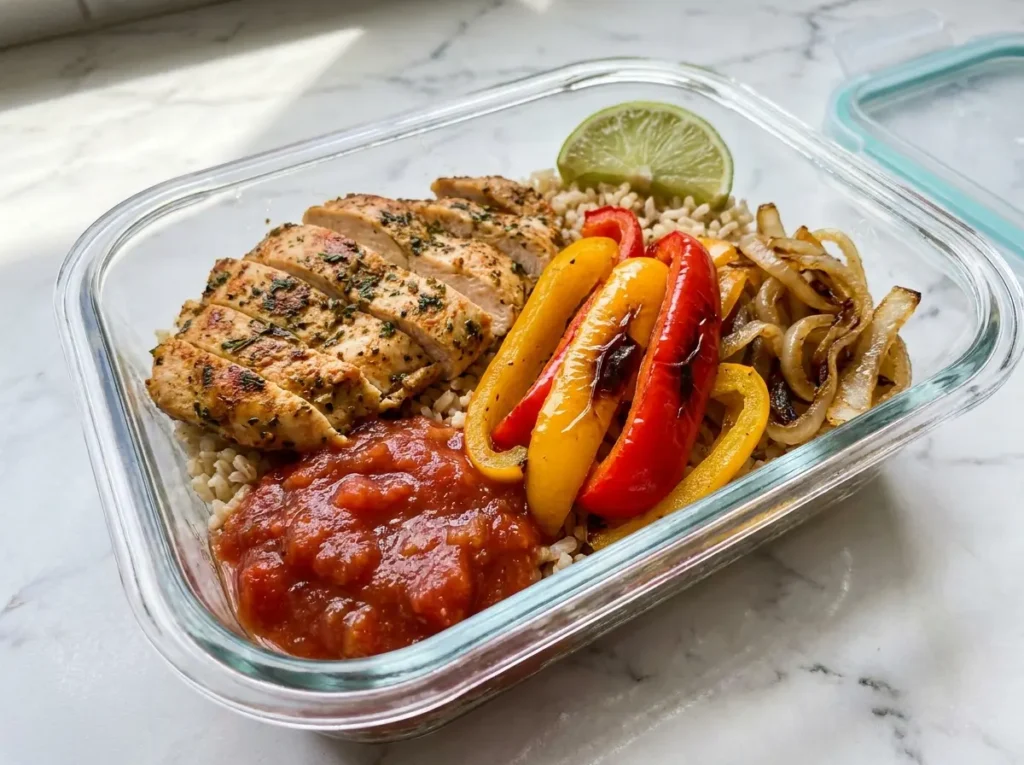
The chicken fajita rice bowl closes the weekly high protein meal prep rotation with the most flavor variety, using peppers and onions to prevent palate fatigue on day four and five. This is the recipe most likely to make people look forward to their prepped meal rather than tolerating it.
You will need 8 oz chicken breast sliced and cooked with cumin, chili powder, and lime juice, 1/2 cup mixed color bell pepper strips sauteed, 1/4 cup sliced onion sauteed with the peppers, 1 cup cooked brown rice, 2 tablespoons salsa, and a squeeze of fresh lime. For a higher-volume version on active training days, our cottage cheese sweet potato beef bowl adds an additional protein layer to a similar base.
According to USDA FoodData Central, the protein content across these seven high protein meal prep recipes ranges from 38 to 55 grams per serving. This covers the per-meal protein threshold required to maximize muscle protein synthesis at each eating occasion, which research places at 30 to 40 grams of leucine-rich protein per meal.
How to Make These High Protein Meal Prep Recipes Step by Step
Step 1: Make the lemon herb chicken and rice bowl
Preheat your oven to 400 degrees F. Season chicken breasts with lemon zest, garlic powder, dried oregano, salt, and black pepper on both sides. Place on a foil-lined baking tray and bake for 22 to 25 minutes until the internal temperature reaches 165 degrees F.
While the chicken bakes, cook jasmine rice in low-sodium chicken broth using the absorption method for extra flavor. Steam broccoli florets in a microwave-safe dish with 2 tablespoons of water for 3 minutes until bright green and just tender.
Let the chicken rest for 5 minutes before slicing against the grain into strips. This prevents moisture loss and keeps the meat tender after refrigeration and reheating. Divide the rice, chicken, and broccoli into four equal containers and drizzle each with a quarter teaspoon of olive oil before sealing.
Step 2: Make the ground turkey and sweet potato bowl
Cube the sweet potato into half-inch pieces and toss with a half teaspoon of olive oil, smoked paprika, and salt. Spread on a baking tray and roast at 400 degrees F for 25 minutes until the edges are slightly caramelized.
In a nonstick pan over medium-high heat, brown the ground turkey for 8 to 10 minutes, breaking it into small pieces. Add cumin, garlic powder, and paprika in the last 2 minutes of cooking. Add the baby spinach directly to the hot turkey, stir for 30 seconds until wilted, then remove from heat.
Divide the turkey, sweet potato, and wilted spinach into four containers. Add 2 tablespoons of salsa to each. Store without adding the salsa if you prefer maximum freshness, and add it only when serving.
Step 3: Make the baked salmon with quinoa and asparagus
Rinse the quinoa thoroughly under cold water to remove the bitter saponin coating, then cook in vegetable broth using a 1:2 ratio for 15 minutes. This step is worth doing properly because improperly rinsed quinoa has a sour taste that survives refrigeration and makes day-two meals unpleasant.
Place salmon fillets on one half of a foil-lined tray and asparagus on the other half. Season the salmon with lemon zest, dill, olive oil, and black pepper. Season the asparagus with garlic powder and a pinch of salt. Bake both at 375 degrees F for 14 minutes.
Salmon for meal prep should be slightly undercooked at the center on day one, as it will firm up during refrigeration and reheat to perfect texture. This is the one recipe in the rotation best consumed within 3 days rather than 5, as salmon quality declines faster than other proteins.
Step 4: Make the lean beef taco bowl
Cook the ground beef in a nonstick pan over medium-high heat, breaking it apart continuously for 8 minutes until fully browned. Drain any excess fat by tilting the pan and spooning it off. Add low-sodium taco seasoning and 2 tablespoons of water, stir, and cook for 2 more minutes until fragrant.
Cook the brown rice separately and portion into containers first as the base layer. Add the seasoned beef, rinsed black beans, and salsa on top.
Store the plain Greek yogurt and shredded lettuce separately in small snack bags inside each container to keep them crisp. Add both only when eating, not when sealing the containers. This single detail is what separates a taco bowl that still tastes exciting on day four from one that is soggy within 24 hours.
Step 5: Make the Greek yogurt protein parfait
Stir the protein powder directly into the Greek yogurt in a separate bowl until fully combined before layering. Mixing it into the yogurt rather than sprinkling it on top prevents the dry chalky texture that makes protein parfaits unpleasant to eat cold.
Layer the protein yogurt at the bottom of each mason jar, then add the berries, then the granola on top last. Keep the lid slightly loose in the refrigerator for the first hour to prevent condensation softening the granola. Seal fully after the first hour.
These parfaits hold well for 4 days. The granola will soften slightly after day two, which most people find more pleasant than crunchy. If you prefer the crunch, store the granola in a separate small bag and add it immediately before eating.
Step 6: Make the chicken fajita rice bowl
Slice the chicken breast into thin strips before cooking, not after. Thin strips cook in 6 to 8 minutes in a hot nonstick pan and develop better browning and flavor than thicker pieces that require longer cooking and dry out more in storage.
Cook the chicken first, then remove it and add the pepper strips and onion to the same pan to pick up the seasoned fond. Cook the vegetables for 4 minutes until softened but still holding structure. Add the chicken back in for the final 2 minutes to combine flavors.
Divide brown rice into containers as the base layer. Add the chicken and fajita vegetables on top, then the salsa on one side. Squeeze half a lime over each container before sealing. The citric acid from the lime juice helps maintain the color of the peppers and adds brightness that is still noticeable on day four.
Key Data Table, High Protein Meal Prep Recipes
| Recipe | Protein per Serving | Calories per Serving | Fat per Serving | Carbs per Serving | Fridge Life |
|---|---|---|---|---|---|
| Lemon Herb Chicken and Rice Bowl | 50g | 470 | 8g | 44g | 5 days |
| Ground Turkey and Sweet Potato Bowl | 45g | 430 | 9g | 38g | 5 days |
| Egg White and Cottage Cheese Breakfast | 42g | 290 | 4g | 22g | 4 days |
| Baked Salmon with Quinoa and Asparagus | 55g | 490 | 14g | 32g | 3 days |
| Lean Beef Taco Bowl | 46g | 510 | 14g | 48g | 5 days |
| Greek Yogurt Protein Parfait | 38g | 340 | 5g | 36g | 4 days |
| Chicken Fajita Rice Bowl | 52g | 500 | 10g | 50g | 5 days |
Nutritional data sourced from USDA FoodData Central. Values are estimates based on ingredient weights and preparation methods described. Individual results vary based on exact ingredient brands and portion sizes used.
Protein Sources vs Meal Prep Suitability
| Protein Source | Protein per 6 oz | Reheat Quality | Max Fridge Days | Best Use |
|---|---|---|---|---|
| Chicken breast | 52g | Excellent when sliced thin | 5 | Lunch and dinner bowls |
| Ground turkey | 45g | Excellent | 5 | Bowls, taco bases, stir-fry |
| Lean ground beef (90%) | 44g | Excellent | 5 | Taco bowls, rice bases |
| Salmon fillet | 40g | Good, do not overcook initially | 3 | Dinner bowls, quinoa pairings |
| Egg whites (6 large) | 22g | Good when scrambled soft | 4 | Breakfast containers |
| Greek yogurt (1 cup) | 20g | No reheating needed | 5 | Breakfast parfaits, snacks |
| Cottage cheese (1/2 cup) | 14g | No reheating needed | 5 | Breakfast containers, snacks |
The Weekly High Protein Meal Prep Schedule
The most efficient high protein meal prep schedule runs on a Sunday prep day with a Wednesday refresh. Sunday covers Monday through Wednesday lunches and dinners. Wednesday covers Thursday and Friday.
This split-prep approach prevents the quality decline that happens when any cooked protein sits for more than 5 days. It also reduces the cognitive load of a single 3-hour mega-prep session, which most people sustain for the first two weeks and then abandon. Two 60-minute sessions are more sustainable than one exhausting marathon.
A practical Sunday prep sequence starts with the oven proteins first. Put the chicken and salmon in the oven together on separate trays at the same temperature. While those bake, cook the ground turkey and the brown rice simultaneously on the stovetop. While those cook, assemble the Greek yogurt parfait containers and egg white breakfast containers cold. Total active cooking time for four different proteins and two grain bases runs approximately 75 minutes when parallelized this way.
For a complete macro framework to structure your weekly prep targets within, our GLP-1 off-ramp diet recipes guide provides the caloric architecture that these high protein containers slot directly into.
5 Mistakes to Avoid With High Protein Meal Prep
The most common mistake with high protein meal prep is overcooking the proteins on prep day under the assumption that they will be reheated anyway. Every protein cooked for meal prep should be removed from heat when just done, not well-done, because refrigeration and microwaving add the equivalent of additional cooking time. Overcooked chicken on prep day becomes dry and rubbery by day three.
Mistake 1: Prepping too many different recipes at once. Four or five different meals in one session sounds like variety but creates hours of cleanup and mental fatigue that makes the habit unsustainable. Start with two recipes, master the logistics, and add a third only when the process feels automatic. Every high protein meal prep routine in this guide is designed to run as a two-recipe Sunday session during the first month.
Mistake 2: Using plastic containers for hot proteins. Storing hot chicken or beef directly in plastic containers causes condensation that makes proteins wet and texturally unpleasant within 24 hours. Let all cooked proteins cool on the counter for 15 to 20 minutes before portioning. Glass containers with airtight lids are the best investment for anyone serious about weekly high protein meal prep.
Mistake 3: Skipping the carbohydrate layer. A container of protein alone without a carbohydrate source does not sustain satiety for 4 to 5 hours, which leads to snacking that erodes the calorie structure you spent 75 minutes building. Every container in your rotation needs a complex carbohydrate delivering at least 30 grams of carbs to anchor the meal.
Mistake 4: Ignoring flavor fatigue. Eating the same single meal prep recipe 10 times per week causes abandonment of the entire system by week three. The rotation structure in this guide, with at least three different proteins and flavor profiles across the week, is specifically designed to prevent this. For additional flavor variation that stays within the same macro framework, our foods to lower blood sugar guide includes high-protein ingredient combinations that integrate naturally into prep rotations.
Mistake 5: Not labeling containers with the date. Cooked proteins stored in identical glass containers are impossible to date by sight. Write the prep date on a small piece of tape on the lid of every container. Salmon containers get a 3-day label. Everything else gets a 5-day label. This single habit eliminates the moment that leads to either food waste or food safety risk.
Frequently Asked Questions About High Protein Meal Prep
How much protein should each meal prep container have?
Research on muscle protein synthesis shows that 30 to 40 grams of complete protein per meal is the threshold required to maximally stimulate protein synthesis in most adults. Every high protein meal prep recipe in this guide delivers at least 38 grams per container to meet this threshold at every eating occasion.
For larger adults, athletes, or anyone in a caloric surplus targeting muscle gain, increasing the protein source by 2 ounces per container adds approximately 14 grams of additional protein with minimal calorie impact.
How long does high protein meal prep last in the fridge?
Chicken breast, ground turkey, lean beef, and Greek yogurt-based containers last safely for 5 days when stored in airtight glass containers at 40 degrees F or below. Egg-based containers are best consumed within 4 days.
Salmon is the exception in any high protein meal prep rotation and should be consumed within 3 days. The USDA food safety guidelines for cooked fish recommend a maximum of 3 to 4 days of refrigerated storage, and salmon quality declines noticeably faster than other prepped proteins.
Can I freeze high protein meal prep containers?
Yes. Ground turkey, lean ground beef, and chicken breast all freeze well for up to 3 months in airtight containers. Rice and quinoa also freeze without quality loss.
Egg-based containers do not freeze well because cooked egg whites become rubbery and release excess water on thawing. Greek yogurt parfaits also do not freeze as the yogurt separates when thawed. For a high protein meal prep freezer strategy, focus on the meat-based bowl recipes and keep the yogurt and egg containers refrigerator-only.
What are the best containers for high protein meal prep?
Glass containers with airtight snap-lock lids are the best choice for high protein meal prep because they do not absorb flavors or staining, are microwave-safe without plastic leaching concerns, and last for years without warping.
The ideal volume for a complete meal container is 3 to 4 cups, which accommodates 6 to 8 ounces of protein plus a carbohydrate and vegetable portion comfortably. Mason jars in the 16-ounce wide-mouth format are ideal for yogurt parfaits and overnight oat preparations specifically.
Is high protein meal prep good for weight loss?
Yes. High protein intake supports fat loss specifically by preserving lean muscle during a caloric deficit, increasing the thermic effect of food, and significantly increasing satiety compared to carbohydrate- or fat-dominant meals. These effects are well documented across meta-analyses in the Journal of Nutrition.
The meal prep structure amplifies these benefits by removing decision-making from the moment of hunger, which is when high-calorie, low-protein choices are most tempting. For anyone combining high protein meal prep with a structured caloric deficit, our Wegovy recipes for weight loss guide shows how to integrate these prep containers into a GLP-1 supported fat loss plan.
How do I reheat high protein meal prep without drying out the chicken?
The best reheating method for chicken-based high protein meal prep containers is microwave on 70% power for 2 minutes rather than full power for 90 seconds. Lower power with a longer time heats more evenly and dramatically reduces the rubbery, dry texture that full-power microwaving creates.
Adding 1 tablespoon of water to the container before closing the lid creates steam during reheating that keeps the chicken moist. This is the single most impactful reheating technique for any high protein meal prep container and takes 5 seconds to apply.
What is the cheapest high protein meal prep option?
Eggs, canned tuna, cottage cheese, and chicken thighs are consistently the four most cost-effective protein sources for high protein meal prep. Eggs deliver approximately 6 grams of protein per large egg at the lowest per-gram protein cost of any whole food source. Canned tuna in water delivers 25 grams of protein per can at under $2 in most US grocery stores.
Chicken thighs are 30 to 40% cheaper than chicken breast per pound, deliver comparable protein content, and reheat with better moisture retention due to their higher fat content. For budget-focused meal prep that still hits 40 grams of protein per container, a combination of eggs at breakfast and chicken thighs at lunch and dinner provides the most protein per dollar spent.
Final Thoughts
The reason most people fail to hit daily protein targets is not a lack of knowledge about which foods are high in protein. It is the absence of a system that makes the high-protein choice the convenient choice. These seven high protein meal prep recipes are that system.
Seventy-five minutes on a Sunday, two prep sessions per week, glass containers with dated lids, and a rotation built around three protein sources is all the infrastructure required to hit 40 to 55 grams of protein at every meal without daily cooking decisions.
For anyone building this habit alongside a structured nutrition plan, our 90-30-50 meal plan guide gives you the macro framework that these prep containers fit into with precision.
Medical and Nutritional Disclaimer: The content on fastflavorbites.com is for informational and educational purposes only and does not constitute medical or nutritional advice. Protein targets and nutritional data referenced in this article are based on general population guidelines and published research. Individual protein requirements vary based on age, body weight, activity level, and health status. Always consult a registered dietitian or healthcare provider before making significant changes to your dietary intake.