
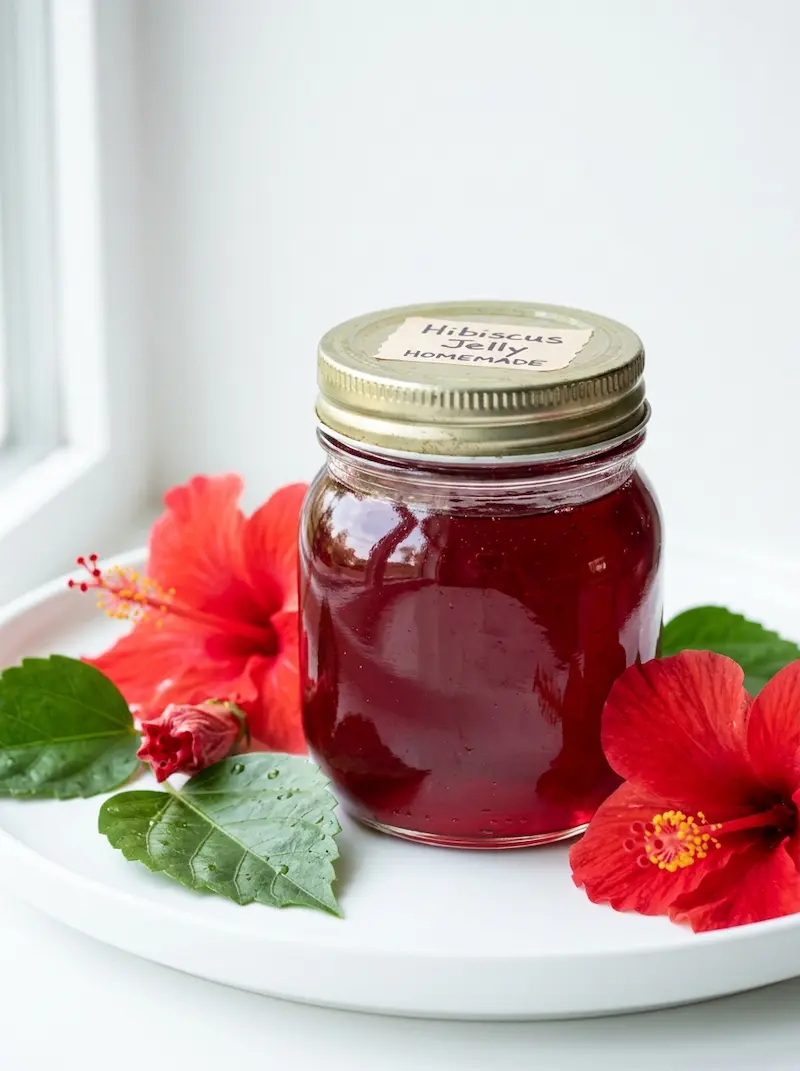
Hibiscus jelly is one of those old fashioned recipes that feels like it came straight out of a countryside kitchen, even if you are making it in a tiny modern apartment. It turns the deep ruby color of hibiscus or roselle flowers into a glossy, tangy spread that looks beautiful on toast, biscuits, or a simple buttered slice of bread. If you love trying new homemade preserves and flower jelly recipes, this vibrant option will quickly become a favorite.
In this guide, you will learn exactly how to make this jelly step by step, whether you are starting from dried hibiscus tea, fresh roselle calyces, or another edible hibiscus flower. We will cover an easy base recipe, a classic roselle variation, and simple ideas for using it at breakfast and in desserts. You will also find answers to common questions about hibiscus and health, including itchy scalp, anemia, mixing hibiscus with other herbs, and whether hibiscus tea can help with stress and cortisol.
What Is Hibiscus Jelly?
At its core, this is a sweet-tart jelly made from an infusion of hibiscus flowers, usually the red calyces of Hibiscus sabdariffa, also known as roselle. The calyces are the fleshy parts that surround the seed pods; when boiled, they release a deep red juice with a cranberry-like flavor that is perfect for jelly and jam. In many tropical regions, these same calyces are used to make hibiscus tea, also called sorrel, bissap, or agua de Jamaica.
Traditional roselle recipes often come from cultures where the plant is grown as a home garden crop and the calyces are harvested at the end of the season. They are rich in organic acids and colorful plant pigments, which help give the finished preserve its vibrant color and tart, refreshing taste. When combined with sugar and pectin, that infusion sets into a clear, jewel-toned gelee that looks stunning in jars or on a brunch table. You can read more about roselle itself on Wikipedia’s Roselle page, which explains how widely this plant is used in drinks and preserves.
Print
Hibiscus Jelly Recipe: Old-Fashioned Roselle Spread
- Total Time: 30 minutes
- Yield: 6 jars
- Diet: Vegetarian
Description
This hibiscus jelly recipe uses strong hibiscus tea, sugar, lemon, and pectin to create a glossy, tangy spread. It is an easy old-fashioned roselle-inspired jelly that looks beautiful in jars and on toast.
Ingredients
4 cups strong hibiscus tea (from dried petals or tea bags)
4 cups granulated sugar
1 packet powdered pectin (regular or low-sugar)
2 tablespoons lemon juice
Optional: 1 small piece vanilla bean or strip of orange peel
Instructions
1. Brew a strong hibiscus tea by steeping dried petals or tea bags in boiling water, then strain and measure 4 cups of the dark red liquid.
2. Wash jars and lids in hot, soapy water and keep them warm while you prepare the jelly.
3. Pour the 4 cups of hibiscus tea into a large pot, stir in the powdered pectin, and add the lemon juice and any optional flavoring.
4. Bring the mixture to a full rolling boil over medium-high heat, stirring often so it does not scorch.
5. Add the sugar all at once, stirring until it dissolves, then return to a full rolling boil for 1 to 2 minutes while stirring constantly.
6. Test the jelly on a cold plate; it should wrinkle slightly when pushed with your fingertip, showing it has set.
7. Remove the pot from the heat, skim off any foam, and carefully ladle the hot jelly into warm jars, leaving headspace.
8. Wipe jar rims, apply lids, and either refrigerate when cool or process in a boiling water bath according to safe canning guidelines.
Notes
For a roselle hibiscus jelly variation, simmer fresh roselle calyces in water, strain, and use that liquid instead of hibiscus tea.
Use organic sugar if you prefer a less refined option; the recipe still sets well with the right amount of pectin.
If you want a softer set, reduce the cooking time slightly after adding sugar.
This jelly is delicious on toast, biscuits, scones, cheesecake, or served with soft cheeses.
Always follow safe canning practices if you plan to store jars at room temperature.
- Prep Time: 10 minutes
- Cook Time: 20 minutes
- Category: Jelly & Jam
- Method: Stovetop, Canning
- Cuisine: American, Global
Nutrition
- Serving Size: 1 tablespoon
- Calories: 50
- Sugar: 12g
- Sodium: 0mg
- Fat: 0g
- Saturated Fat: 0g
- Unsaturated Fat: 0g
- Trans Fat: 0g
- Carbohydrates: 13g
- Fiber: 0g
- Protein: 0g
- Cholesterol: 0mg
Keywords: hibiscus jelly, hibiscus jelly recipe, roselle hibiscus jelly, hibiscus flower jelly, old fashioned hibiscus jelly
Ingredients for an Easy Hibiscus Jelly Recipe
This base recipe is designed to be simple and flexible. You can make it with dried hibiscus tea petals or with fresh roselle calyces if you are lucky enough to find them locally.
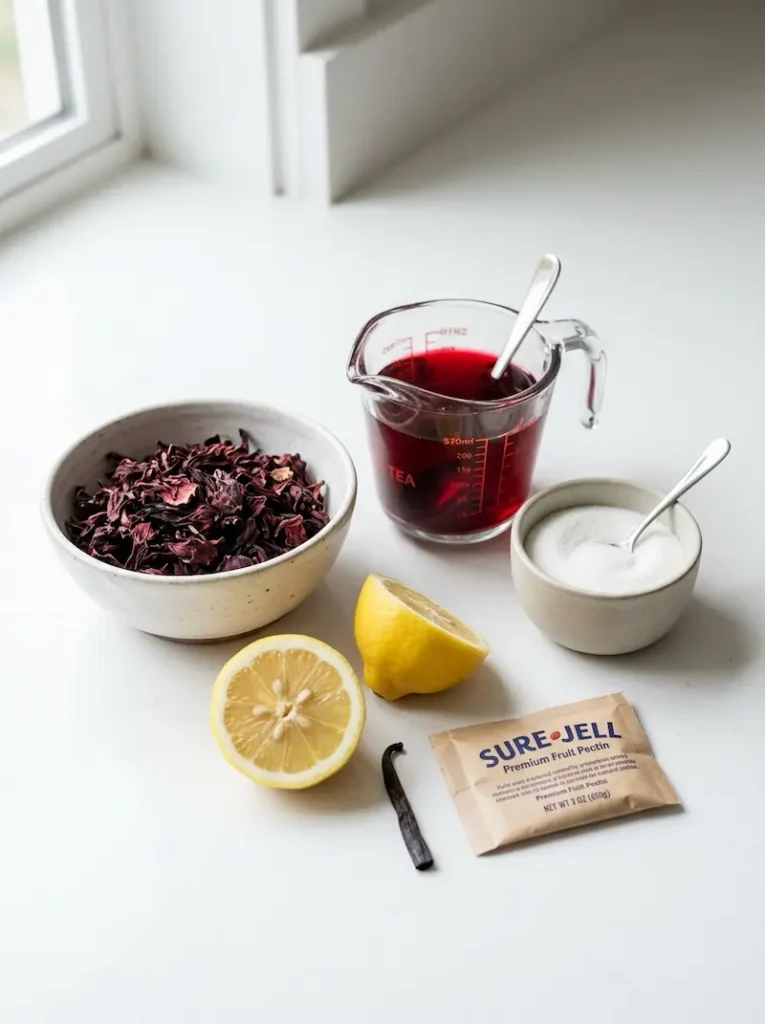
- 4 cups strong hibiscus tea (from dried petals or tea bags).
- 4 cups granulated sugar.
- 1 packet powdered pectin (low-sugar or regular, depending on your preference).
- 2 tablespoons lemon juice (for brightness and better set).
- Optional: a piece of vanilla bean, a strip of orange peel, or a small slice of ginger for depth.
If you use roselle calyces, you will simmer fresh or dried calyces in water, strain to get concentrated juice, and then proceed with the same method. Many classic versions use roughly equal parts strained roselle liquid and sugar, plus pectin, which helps the jarred spread firm up while still staying nicely spreadable.
How to Make Hibiscus Jelly (Step by Step)
This method works for dried hibiscus flowers or roselle tea. If you are using fresh calyces for a flower jelly recipe, you will steep those instead of petals, then strain.
- Brew a strong hibiscus infusion. Add 2 cups of dried petals or 8 tea bags to 5 cups of boiling water. Let steep for 10 to 15 minutes until the liquid is a deep, dark red. Strain and measure out 4 cups of the infusion to use as the base.
- Prepare your jars. Wash jars and lids in hot, soapy water and keep them warm. If you plan to water-bath can your jars for shelf storage, follow safe canning guidelines for sterilizing jars and processing times for your altitude.
- Combine tea and pectin. Pour the 4 cups of hibiscus tea into a large pot and whisk in the powdered pectin until dissolved. Add the lemon juice and any optional flavoring such as vanilla, ginger, or citrus peel.
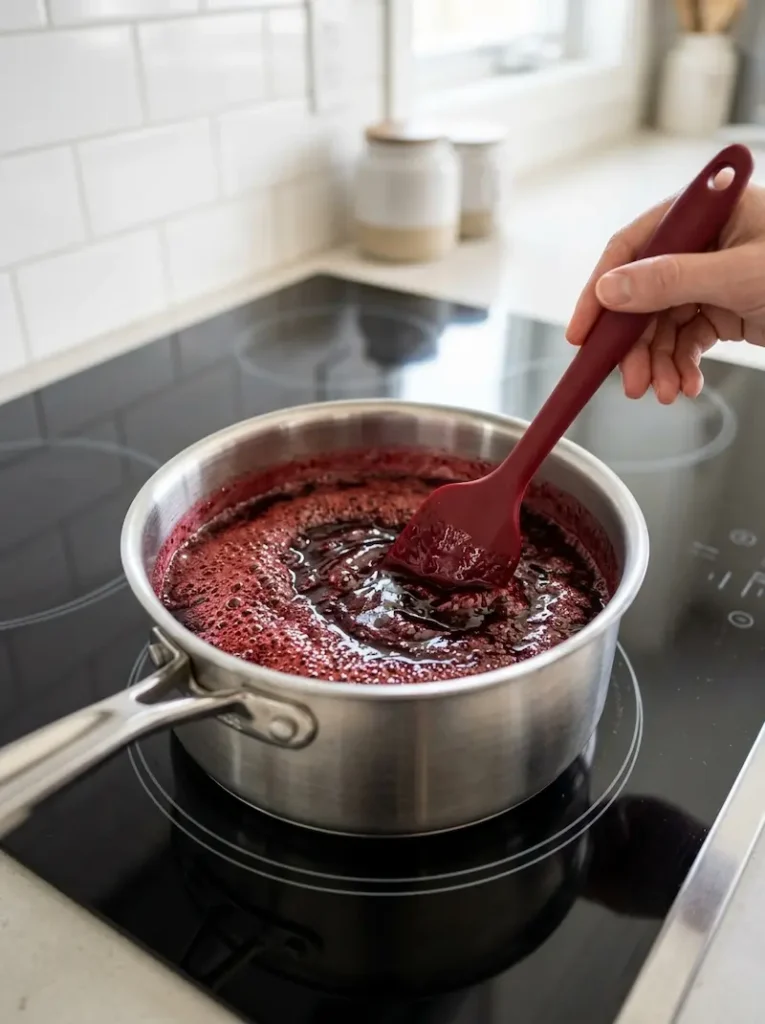
- Bring to a boil. Bring the mixture to a full rolling boil over medium-high heat, stirring frequently to prevent scorching.
- Add the sugar. Add the sugar all at once, stirring until completely dissolved. Return to a full rolling boil and cook for 1 to 2 minutes while stirring constantly. Skim any foam off the top if needed.
- Check for set. Use the spoon test or cold plate test; a small dab on a cold plate should wrinkle slightly when pushed with a fingertip.
- Jar the jelly. Remove from heat and carefully ladle the hot mixture into warm jars, leaving appropriate headspace. Wipe rims, apply lids, and either refrigerate or process in a boiling water bath according to tested guidelines.
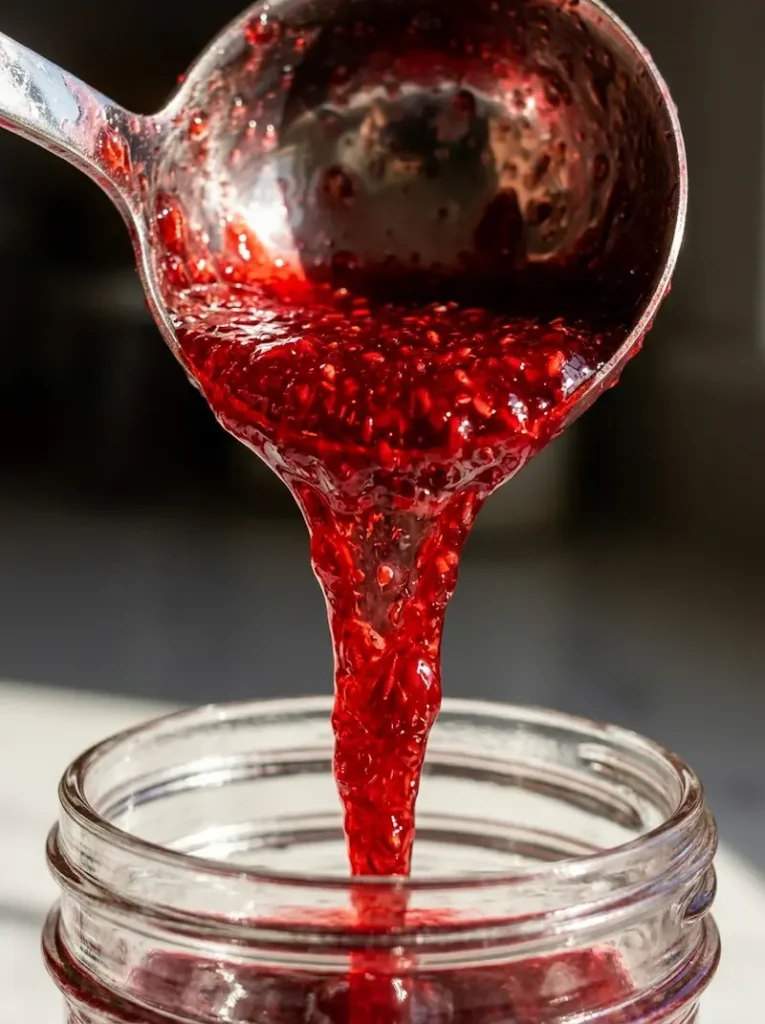
The result is a glossy, ruby-colored spread that keeps beautifully in the fridge and makes an impressive gift when packed into small jars. If you are looking for more fun jar recipes and clever gelatin-based treats once you master this, check out the collagen-style chia jello recipe on FastFlavorBites for another creative way to use plant-based flavors.
Roselle Hibiscus Jelly Recipe (Fresh Flower Version)
If you have access to fresh roselle plants, you can make a truly classic old fashioned version. Roselle has calyces that are commonly processed into jam and jelly in addition to tea. Here is a simple roselle-based variation inspired by traditional methods.
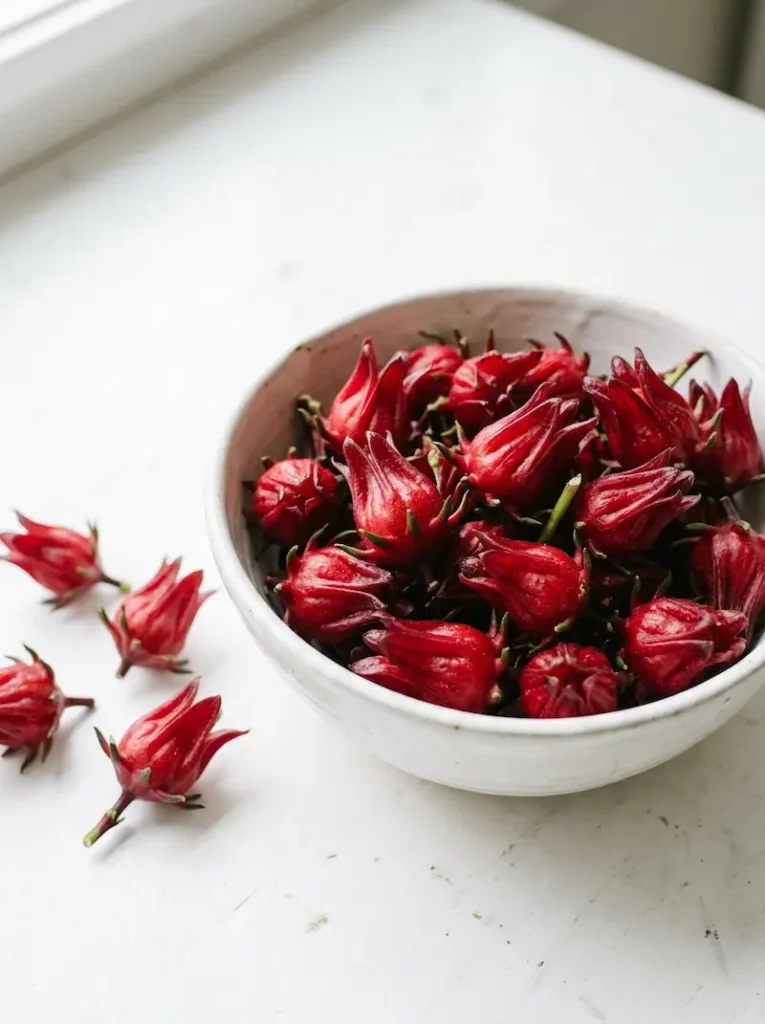
- 4 cups fresh roselle calyx petals (separated from seed pods).
- 4 cups water.
- 4 cups granulated sugar.
- 1 packet pectin (or use natural pectin in the seeds if following a tested recipe).
- 2 to 3 tablespoons lemon juice.
Simmer the roselle petals in water for about 10 to 15 minutes, then strain to extract the juice. Combine equal parts roselle liquid and sugar, add lemon, and cook with pectin until the mixture gels. This roselle variation gives you an old fashioned floral preserve with a flavor that sits somewhere between cranberry and sour cherry, with that signature tangy edge.
Hibiscus Jelly Spread Ideas
Once you have a batch of homemade jelly, there are many ways to use it beyond toast. Because of its bright acidity and floral notes, this spread pairs well with rich, creamy, or buttery foods. It is especially good on plain yogurt, vanilla ice cream, or even alongside a cheese board.
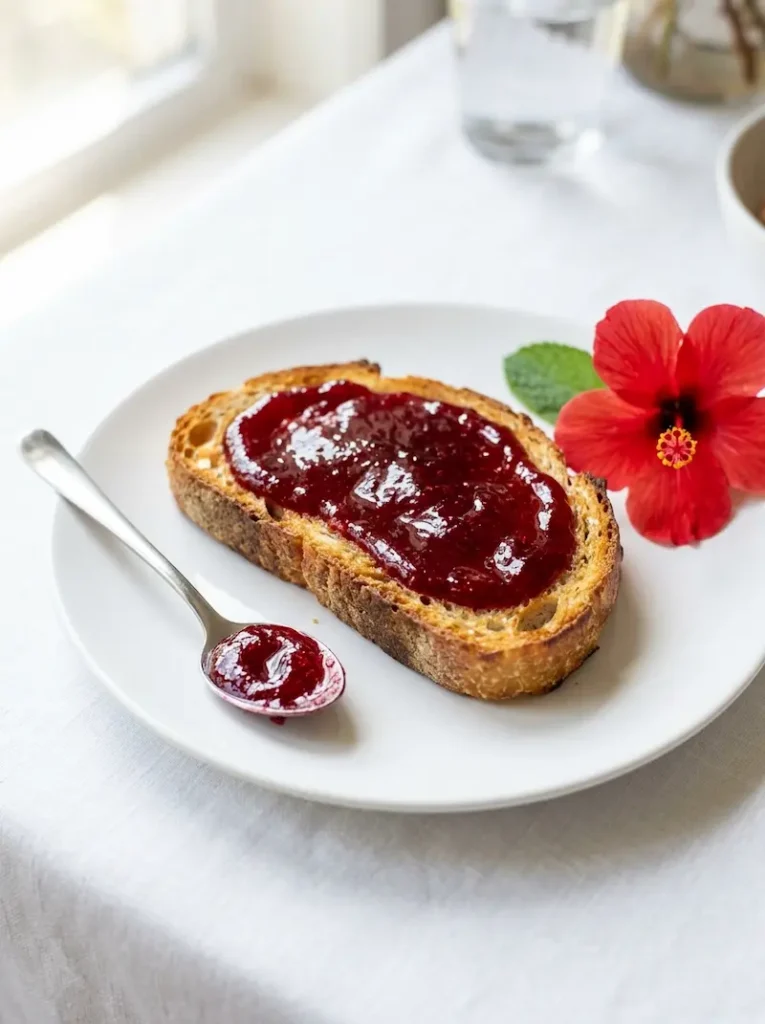
- Spread a generous layer on warm biscuits or scones as a morning treat.
- Use it as a filling in a simple jelly roll cake or swirl a spoonful into cheesecake batter.
- Brush warm jelly over fresh fruit tarts for a shiny glaze.
- Serve a spoonful of the spread with sharp cheddar, brie, or goat cheese.
- Stir a small spoon into hot water as a quick shortcut “tea and jelly” infusion.
If you like tea-infused recipes and herbal drinks, you might also enjoy the cozy fennel seed tea recipe, the beautiful blue butterfly pea tea, or other wellness drinks on FastFlavorBites that pair nicely with a slice of bread and this floral jelly.
Hibiscus Jelly vs Hibiscus Jam
People often use the words jelly and jam interchangeably, but there is a small difference. A jelly is typically made from strained tea or fruit juice, resulting in a clear, smooth gel with no visible pieces of fruit or petals. A jam, on the other hand, may include finely chopped calyces or fruit pulp so that the final preserve has more texture and visible pieces.
Both hibiscus jam and this jelly rely on the same plant for their signature color and tang, but the jam version usually feels more rustic and spoonable, while the jelly is more elegant and glossy. If you are drawn to a classic flower jelly recipe with a beautiful, transparent gleam, this clear version may be the better choice. If you want something closer to a fruit spread with bits of petal, a roselle jam might be more your style.
Hibiscus Jelly: Where To Buy and Why Make Your Own
If you do not want to make this preserve at home, you might wonder where to buy hibiscus-flavored jelly or hibiscus jam. Small batch versions for sale can sometimes be found at farmers markets, specialty tea shops, and online marketplaces that focus on artisanal preserves. Many roselle-growing regions also sell wild flower jelly or roselle-based spreads directly from local producers.
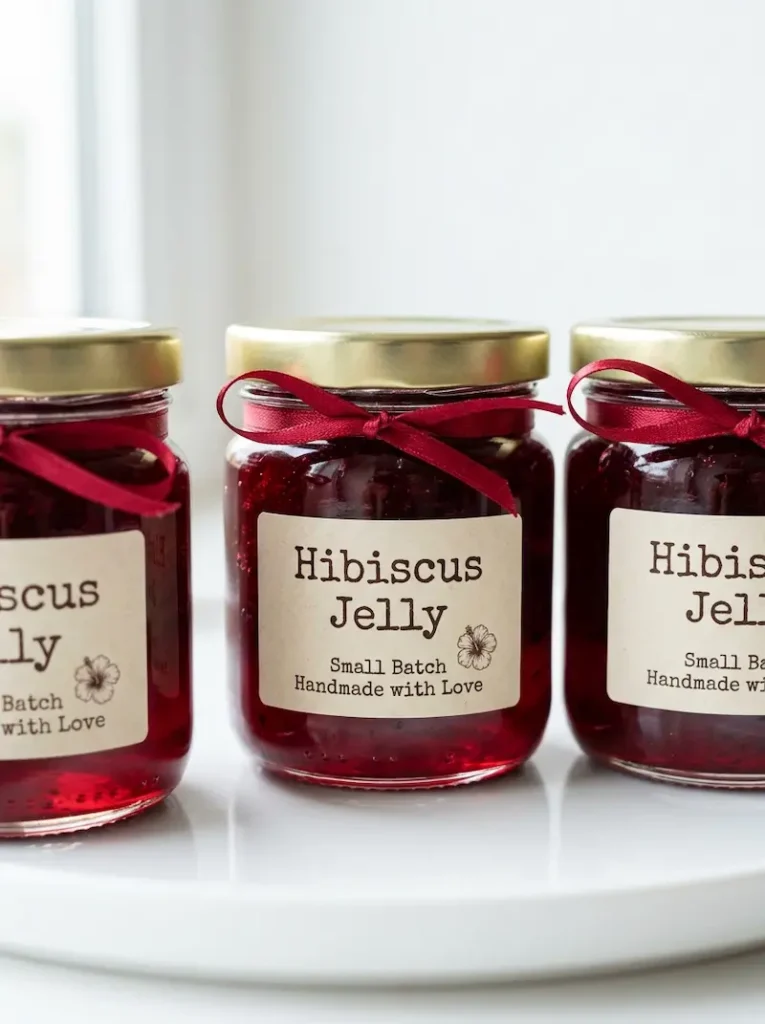
However, part of the charm of an old fashioned recipe like this is how inexpensive and simple it is to make at home once you have hibiscus petals or tea. Because dried hibiscus tea is widely available and roselle calyces can be frozen or dried, making your own jars lets you control the sugar level, flavor infusions, and whether you use organic ingredients. It is also easier to adapt for special diets than depending on whatever commercial jar happens to be in stock.
Health Questions About Hibiscus
Because hibiscus tea and this jelly both use hibiscus calyces, readers often have questions about the plant and health. Here is a quick look at common topics, based on traditional use and general nutrition information.
Does hibiscus help with itchy scalp?
In traditional herbal practices, hibiscus flowers and leaves have been applied topically in hair oils and masks to support scalp and hair health, particularly in cultures where the plant is widely grown. However, there is limited clinical research specifically focused on hibiscus for itchy scalp, and most evidence is anecdotal. If you have persistent scalp itching, it is better to speak with a dermatologist to rule out conditions such as dermatitis, fungal infection, or psoriasis before relying on hibiscus products.
Is hibiscus good for anemia?
Hibiscus calyces contain small amounts of vitamin C and various minerals, which may support overall dietary intake, but hibiscus is not considered a primary treatment for anemia. Iron-rich foods, vitamin C-rich fruits and vegetables, and medical treatment when needed are more central in managing anemia. While hibiscus tea or a spoonful of this jelly can be enjoyed as part of a balanced diet, hibiscus alone is not a substitute for proper anemia care.
What not to mix with hibiscus?
Hibiscus tea and concentrated hibiscus products can interact with certain medications and health conditions. Some sources note that hibiscus may slightly affect blood pressure and blood sugar, which could be a concern for people taking medications for hypertension or diabetes. Strong hibiscus preparations are also often discouraged during pregnancy and breastfeeding. Because of these potential interactions, people on prescription medications or with specific medical conditions should check with a healthcare provider before using large amounts of hibiscus tea, supplements, or very concentrated extracts.
Can hibiscus tea lower cortisol?
Hibiscus tea is naturally caffeine free and is often enjoyed as a calming evening drink, which can be part of a relaxing routine. However, direct evidence that hibiscus tea specifically lowers cortisol is limited, and most research has focused on blood pressure and antioxidant effects rather than hormone levels. It is more accurate to say that a quiet tea ritual, whether it includes hibiscus or another herbal tea, may support stress management overall, while the exact hormonal effects remain less clear.
Fun Extras: Jelly Roll and “Hibiscus Cat” Searches
Some people search for “hibiscus jelly roll by Moda,” which usually refers to fabric jelly rolls in hibiscus-themed colors rather than an edible dessert. If you want an actual jelly roll cake with this flavor, you can simply bake a thin sponge, spread a thin layer of the preserve, and roll it up into a spiral before dusting with powdered sugar.
Searches such as “hibiscus jelly cat” are often related to cute artwork, stickers, or internet memes, not a real food. It is important to keep this jelly firmly in the human food category and never feed sugary preserves or large amounts of hibiscus products to pets unless a veterinarian specifically approves it. If you are curious about more science-backed wellness recipes beyond this floral spread, explore the moringa recipes guide or the soothing ginger tea for weight loss article for other plant-based ideas.
Conclusion
Hibiscus jelly is a beautiful way to transform hibiscus or roselle flowers into something sweet, tart, and versatile. Whether you follow a simple tea-based method using dried petals, or an old fashioned roselle recipe with fresh calyces, you end up with a flower jelly that looks as good as it tastes. With just hibiscus tea, sugar, pectin, and a bit of lemon, you can make jars of this spread that elevate everyday toast, yogurt, and desserts.
Because hibiscus has become popular in teas and wellness drinks, it is natural to have questions about safety and health effects. As with most herbs, hibiscus and hibiscus-based foods are best enjoyed in moderation and in the context of a varied diet, especially if you have blood pressure, blood sugar, or pregnancy-related concerns. When treated as a culinary treat rather than a cure-all, this jelly offers a festive, flavor-packed way to use an ancient plant in a very modern kitchen.