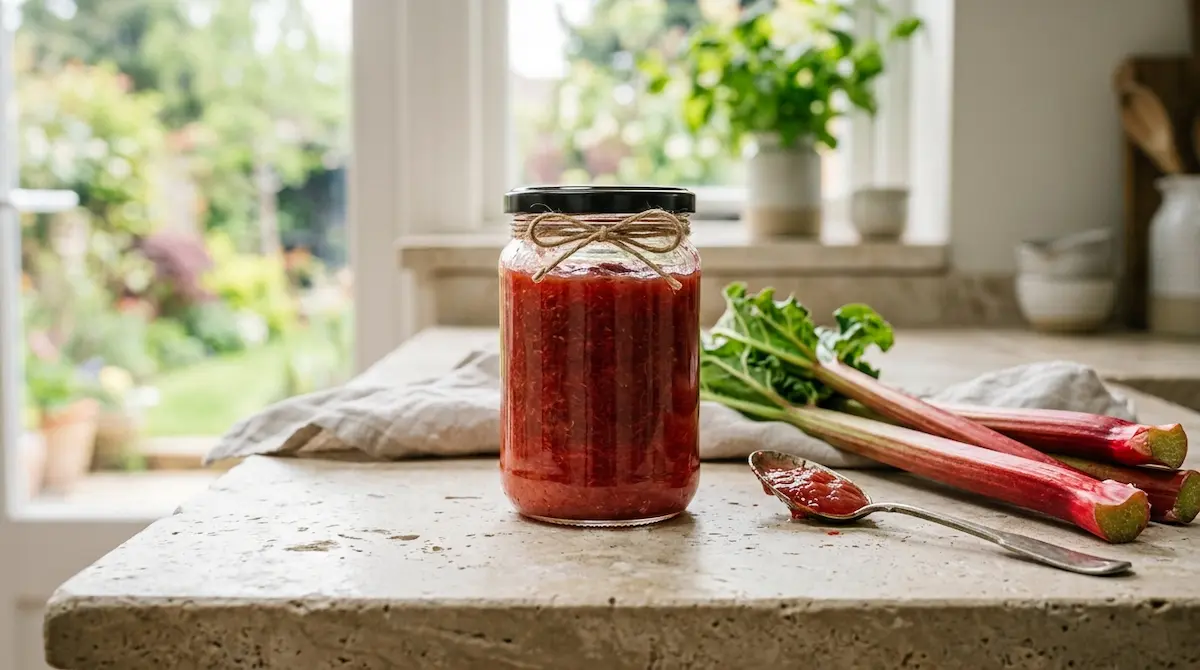
The first time I made rhubarb jam, I expected a thick, glossy spread and ended up with something closer to tart pink syrup. It tasted good, but it did not hold on toast and it definitely did not look like jam. After testing different sugar ratios, longer simmer times, and both fresh and frozen rhubarb, this version became the one I trust because it gives a soft, spoonable set without needing commercial pectin.
This rhubarb jam recipe is simple, practical, and built for real home kitchens. You only need rhubarb, sugar, lemon juice, and a little patience on the stove. If you have struggled with runny jam before, this guide shows exactly how to fix that, how to store the finished jars safely, and how to use the jam beyond the usual slice of toast.
Rhubarb has a sharp tart flavor that turns mellow and bright once it cooks with sugar. That contrast is what makes homemade rhubarb jam so good. It tastes fresher than most store bought jams, it keeps the character of the fruit, and it works for breakfast, baking, and dessert.
Why Rhubarb Jam Is Different From Other Fruit Jams
Rhubarb does not behave like strawberries, blueberries, or peaches when you cook it into jam. It contains a lot of water and much less natural pectin than many traditional jam fruits. That is the reason so many easy rhubarb jam recipes look promising at the beginning and end up thin after cooling.
Rhubarb also cooks down very quickly. Within minutes, the firm diced stalks soften into strands and then melt into a thick fruit base. That fast breakdown is helpful, but it can trick you into thinking the jam is finished before enough moisture has evaporated. In reality, the last stage of cooking is what determines whether the jam sets or stays loose.
According to the USDA SNAP Ed rhubarb guide, only the stalks are safe to eat, and good stalks should be fresh and not limp or curled. Starting with crisp rhubarb gives you better flavor and better texture in the pot. You can read that guide here: USDA SNAP Ed Rhubarb Guide.
Why This Rhubarb Jam Recipe Works
This recipe works because it respects what rhubarb needs. Instead of forcing a quick set with extra additives, it uses enough sugar to preserve the fruit, enough lemon juice to brighten and support the set, and enough cook time to drive off the extra water. That combination gives you a jam that spreads easily but still holds shape on a spoon.
Lemon juice matters more than many people think. It is not there only for flavor. Acid helps natural pectin do its job, and that is especially useful with rhubarb because rhubarb is naturally low in pectin. The lemon also keeps the finished jam from tasting flat or overly sweet.
The final key is temperature and timing. A hard boil can reduce the liquid too aggressively and make the jam catch on the bottom. A steady simmer gives you control, helps preserve the bright flavor, and makes it easier to stop cooking at the exact point when the jam is ready.
Ingredients for Homemade Rhubarb Jam
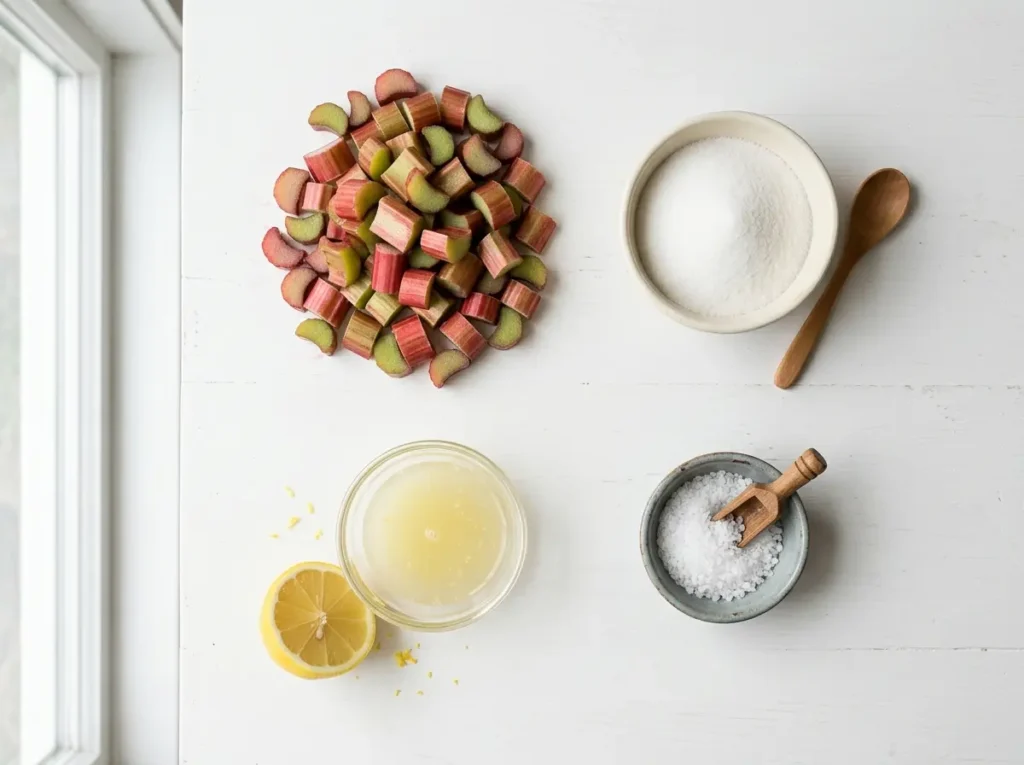
- 4 cups fresh rhubarb, trimmed and diced into half inch pieces
- 2 cups granulated sugar
- 2 tablespoons fresh lemon juice
- 1 small pinch of salt
That short ingredient list is part of the appeal. Rhubarb has enough personality on its own that it does not need much help. Sugar softens the tart edges, lemon sharpens the fruit flavor, and salt keeps the sweetness in balance.
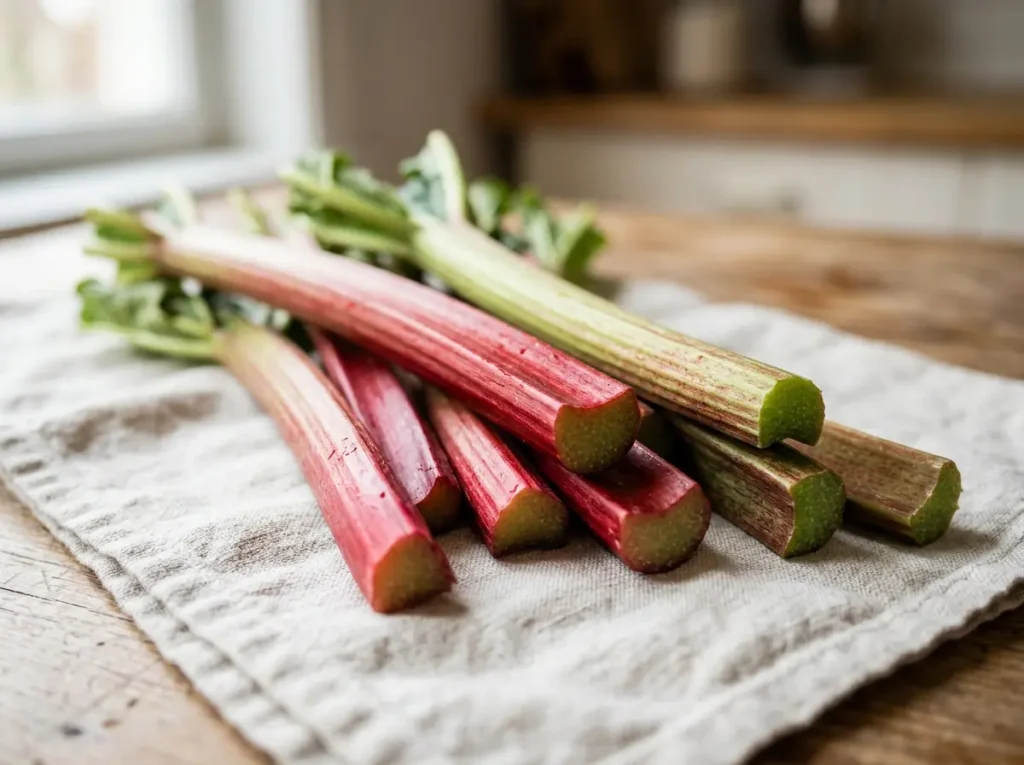
Choose firm stalks with no dried ends, bruising, or slimy spots. Red stalks often give a prettier pink jam, but green stalks work too and taste just as good. If your rhubarb is very mature and especially tart, you can increase the sugar by a few tablespoons, but it is better to start with the tested base recipe and adjust next time if needed.
Equipment You Need
You do not need special jam equipment to make a good small batch rhubarb jam, but the pot matters. Use a wide, heavy bottomed saucepan or Dutch oven. A wider pot gives the liquid more surface area so it evaporates more efficiently, which helps the jam thicken without overcooking the fruit.
You will also need a wooden spoon or silicone spatula, a small plate for set testing, and clean jars for storage. If you want to can the jam for shelf storage, prepare a deep pot with boiling water and proper canning jars and lids.
How to Make Rhubarb Jam Step by Step
Step 1: Prep the rhubarb. Wash the stalks, trim the ends, and dice them into even pieces about half an inch thick. Uniform size helps the fruit cook evenly and break down at the same pace.
Step 2: Macerate the fruit. Combine the rhubarb, sugar, lemon juice, and salt in your pot. Stir well and let the mixture sit for 30 minutes. This short rest starts pulling moisture out of the stalks, dissolves some of the sugar, and helps the fruit cook more evenly once it hits the heat.
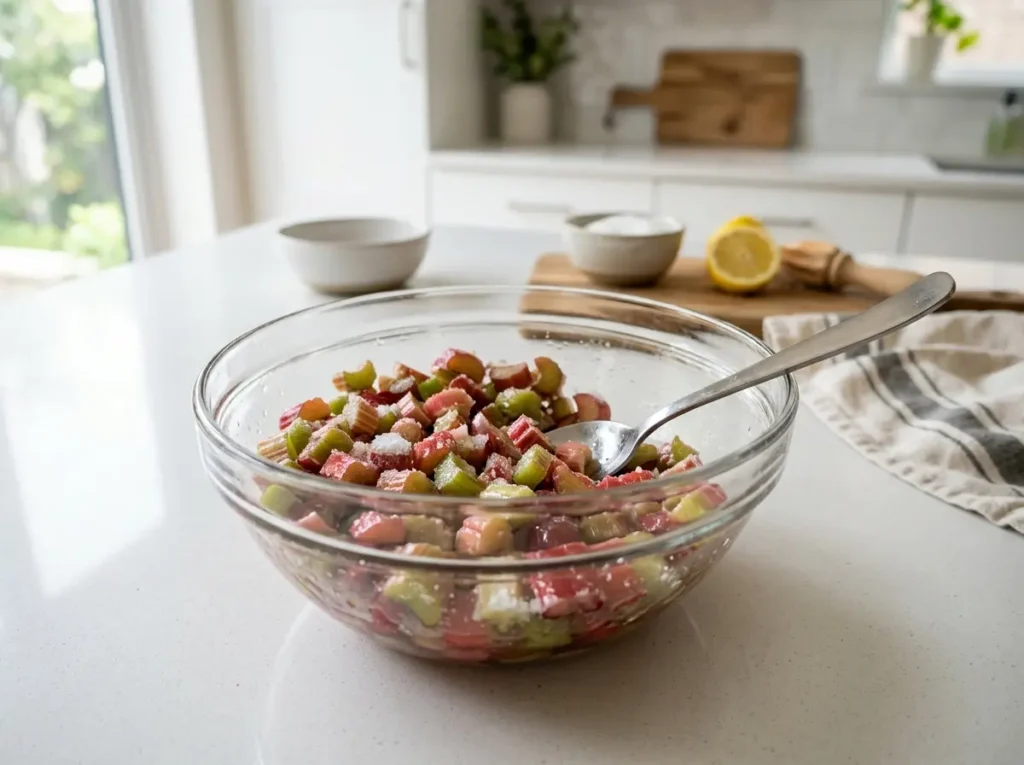
Step 3: Bring to a simmer. Set the pot over medium heat and stir often as the sugar melts and the rhubarb releases its juices. Once the mixture starts bubbling, lower the heat to maintain a steady simmer. Avoid walking away during this stage because sugary fruit can scorch faster than expected.
Step 4: Cook until reduced. Continue simmering for 25 to 35 minutes, stirring frequently. Early on, the mixture will look loose and watery. Later, the bubbles become slower and thicker, and the spoon will leave a visible trail across the bottom of the pot for a second before the jam closes back in.
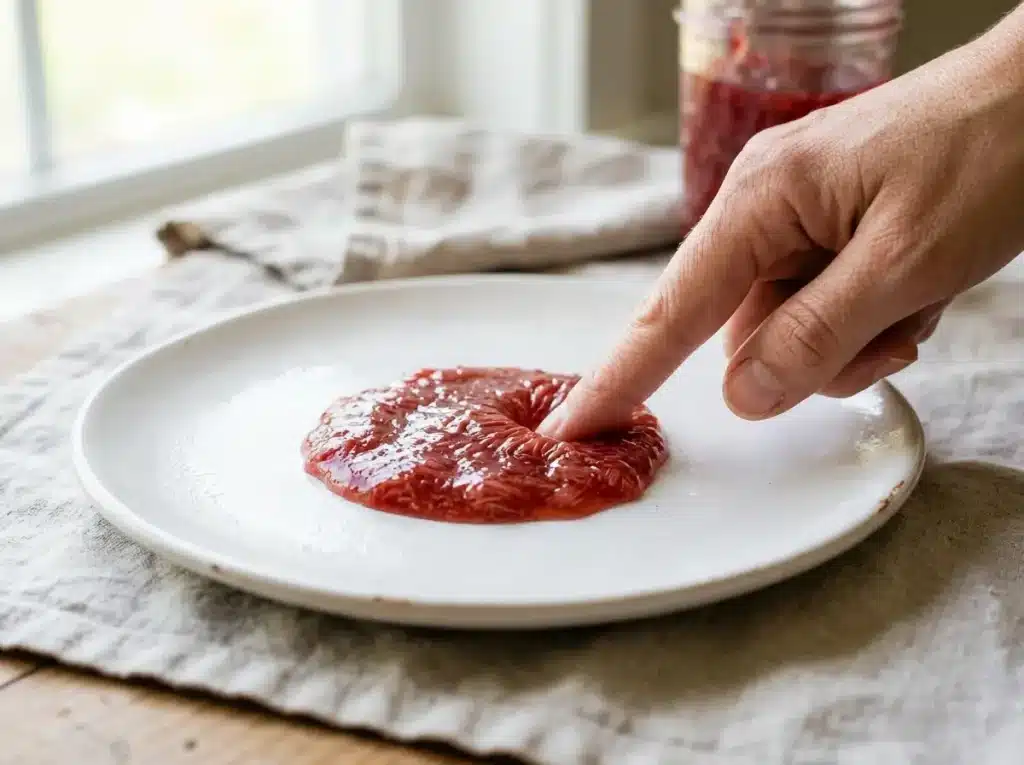
Step 5: Test the set. Spoon a little jam onto a chilled plate and wait 30 seconds. Push it gently with your finger. If the surface wrinkles and does not immediately run back into place, it is ready. If it still looks syrupy, continue cooking for another 3 to 5 minutes and test again.
Step 6: Jar the jam. Once the jam reaches the right consistency, ladle it into clean jars. If you are refrigerating it, let the jars cool before sealing and storing. If you are canning it, follow safe water bath processing steps.
How to Know When Rhubarb Jam Is Ready
This is the part that makes or breaks the recipe. Hot jam is always looser than cooled jam, so if you judge it too early, you will stop the cooking before the moisture has reduced enough. The chilled plate test is much more reliable than guessing by appearance alone.
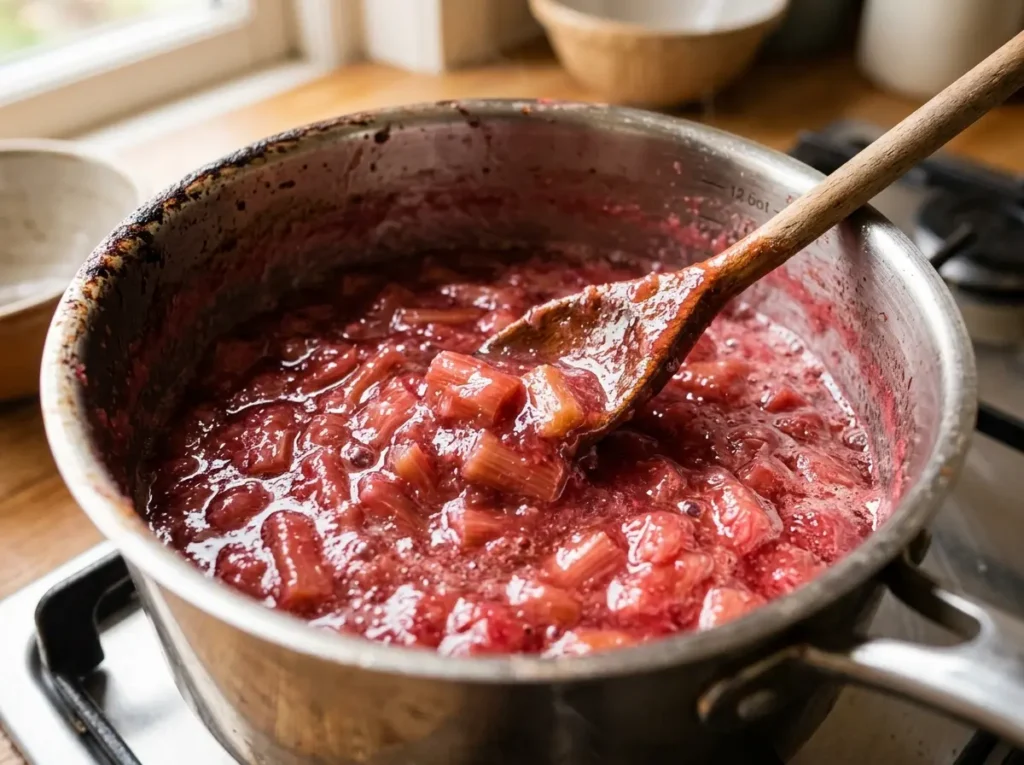
You can also watch the bubbles. Thin jam bubbles quickly and looks watery at the edges. As the mixture thickens, the bubbles become slower, glossier, and more concentrated. When you drag the spoon through the middle of the pot and the line holds briefly, that is a strong sign you are close.
Another clue is how the jam falls from the spoon. Early in cooking it pours off in a thin stream. Near the end it drops in thicker sheets. That change happens gradually, so stay attentive during the last 10 minutes.
Safe Canning Tips for Rhubarb Jam
If you want your rhubarb jam to be shelf stable, it needs proper canning treatment. A simple pour into jars is not enough for pantry storage. For research based home preservation instructions, use the National Center for Home Food Preservation, which provides tested guidance for fruit preserves and rhubarb based recipes: National Center for Home Food Preservation.
For this style of high acid preserve, a boiling water bath is the usual method. The jars need clean rims, proper headspace, and full processing time. After processing, let the jars cool undisturbed and check the seals only after they have rested.
If a lid does not seal, do not store that jar in the pantry. Move it to the refrigerator and use it first. A failed seal is not a disaster, but it does mean the jar is not shelf stable.
How to Choose Good Rhubarb for Jam
Many people think the deepest red rhubarb is always the best, but quality is not only about color. Freshness, tenderness, straight stalks, and lack of pithiness matter just as much. The USDA Agricultural Marketing Service explains that quality rhubarb should be well colored, fresh, tender, straight, clean, well trimmed, and not pithy. You can review the official standard here: USDA Rhubarb Grades and Standards.
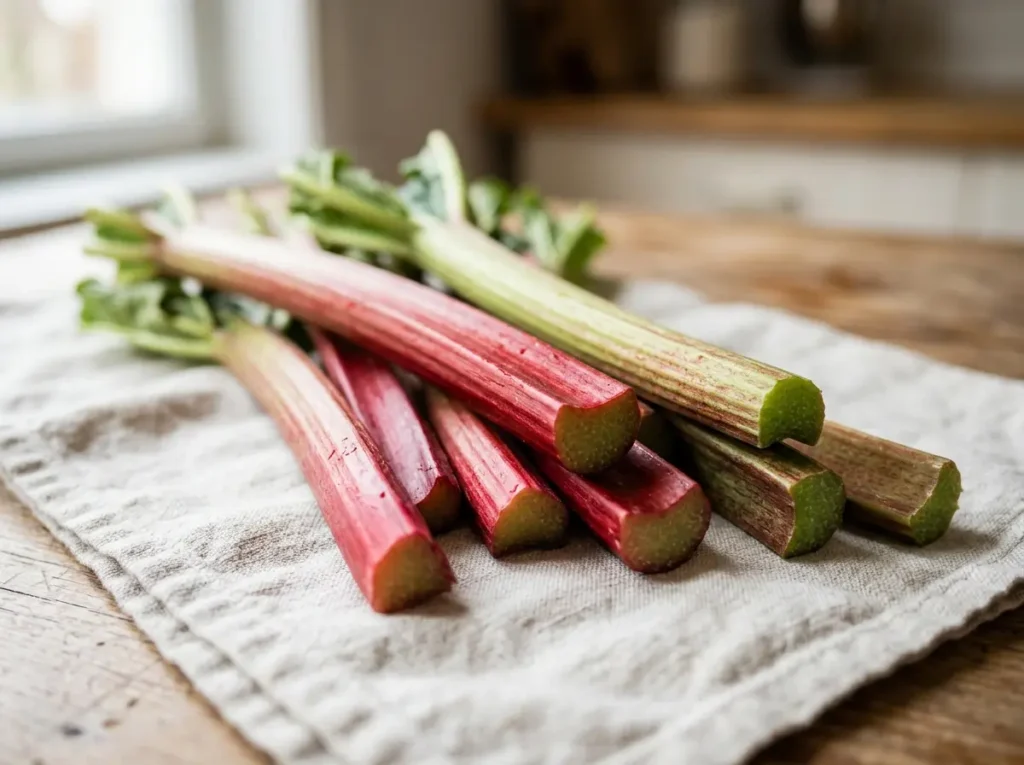
In practical kitchen terms, that means avoiding dried out stalks, floppy stalks, or stalks with rough woody strings running down the outside. Thin to medium stalks often cook into jam more evenly than very thick ones, though both can work.
If you harvest from your garden, use the stalks while they are fresh. Rhubarb loses quality as it sits, especially in warm conditions. The fresher the stalks, the brighter and cleaner the jam tastes.
Common Problems and How to Fix Them
Problem 1: The jam is too runny. This almost always means it needed more time on the stove. Return it to the pot, simmer a little longer, and test again on a chilled plate. Rhubarb holds a lot of water, so a few extra minutes often solve the issue.
Problem 2: The jam is too thick after cooling. This means the mixture cooked slightly past the ideal point. It still tastes good. Stir a spoonful or two into yogurt, warm it gently before serving, or loosen it with a tiny bit of hot water when reheating.
Problem 3: The jam tastes too tart. Rhubarb varies a lot. Some batches are sharper than others. Next time, add a little more sugar near the end of cooking after tasting, but do not overdo it at the beginning because too much sugar can flatten the fruit flavor.
Problem 4: The jam scorched on the bottom. This usually happens when the heat is too high or the pot is too thin. Move the unburned jam to a clean pot without scraping the bottom, then continue gently. Once burnt bits get stirred in, the flavor is hard to recover.
Can You Use Frozen Rhubarb?
Yes, frozen rhubarb works well in this recipe. Let it thaw first and drain off some excess liquid before cooking. If you pour all of that thawed liquid into the pot, your cook time gets longer and the set becomes less predictable.
Frozen rhubarb often breaks down even faster than fresh rhubarb, which can be helpful. The flavor is still excellent, especially if the rhubarb was frozen during peak season. This makes the recipe practical even when fresh stalks are not available.
Flavor Variations That Still Keep It Simple
Once you know the base recipe works, you can make small changes without losing the character of the jam. A little grated ginger adds warmth and spice. A vanilla bean or a splash of vanilla extract softens the tartness and gives the jam a dessert style flavor.
You can also pair rhubarb with strawberries or raspberries for a sweeter, rounder fruit profile. If you do that, keep the added fruit modest so the rhubarb still leads the flavor. Otherwise you move away from a true rhubarb jam and into a mixed fruit preserve.
Orange zest is another good option in small amounts. It lifts the aroma without changing the jam too much. Just avoid adding too many extras at once, especially the first time you make it. The best way to learn the set and flavor is to start simple.
How to Serve Rhubarb Jam
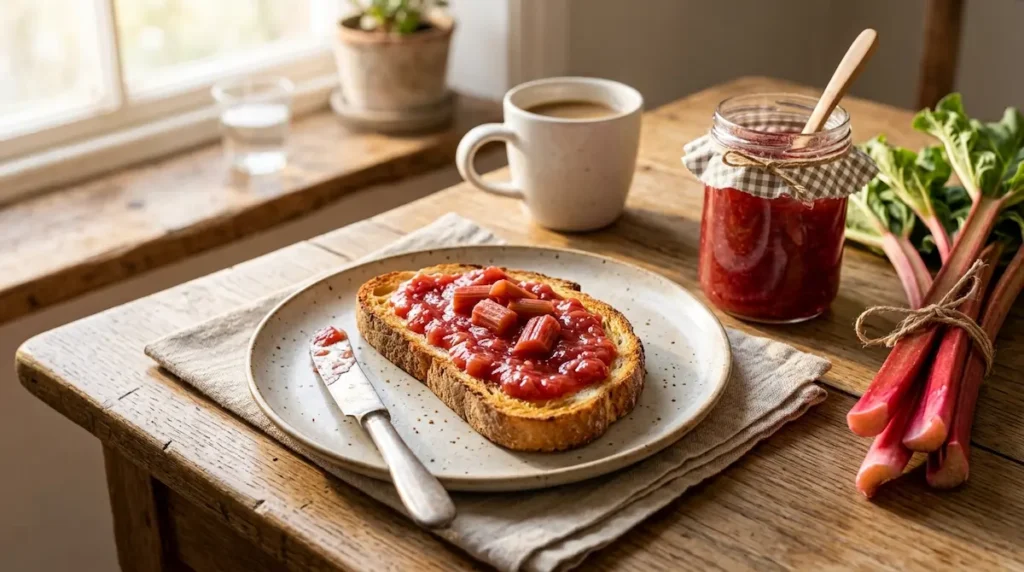
This jam belongs on more than toast. Spoon it over yogurt, swirl it into oatmeal, or spread it on a warm cottage cheese bagel for a sweet tart breakfast. It also works beautifully with weekend brunch recipes like this simple pancake recipe for two.
For baking, use it between cake layers, inside thumbprint cookies, or warmed slightly and brushed over pastries. It also pairs well with soft breads and simple homemade bakes like these gluten free banana nut bread muffins.
If you like sweet savory combinations, try a spoonful next to roast pork, turkey, or a cheese board. Rhubarb has enough acidity to cut through rich foods, which makes the jam more versatile than many sweeter berry jams.
Storage Guide
If the jam is not canned, store it in the refrigerator and use it within about 3 weeks for the best texture and flavor. Keep the jar tightly sealed and use a clean spoon each time to help it stay fresh.
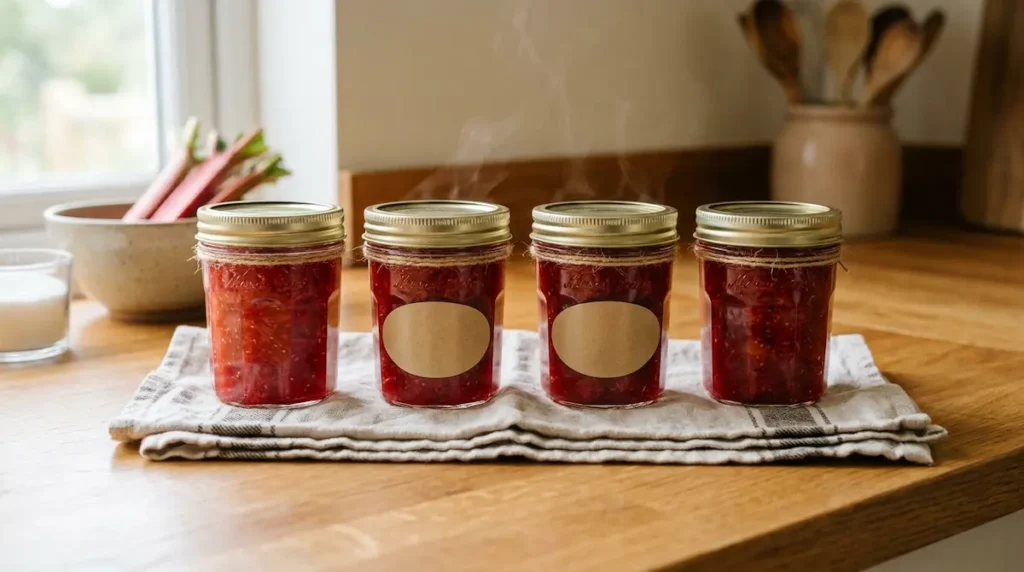
If the jam is properly canned and sealed, store it in a cool, dark place. Once opened, refrigerate it. Labeling each jar with the date is a small habit that makes it much easier to rotate older jars first.
You can also freeze rhubarb jam in freezer safe containers. Leave headspace so the jam can expand as it freezes. This is a good option if you want to make a larger batch without committing to full canning day prep.
Frequently Asked Questions
Does rhubarb jam need pectin?
No, rhubarb jam does not always need pectin. Rhubarb can set with the right balance of sugar, lemon juice, and simmer time, although some recipes use pectin for a firmer texture.
Why is my rhubarb jam not setting?
The most common reason is that it did not cook long enough. Rhubarb releases a lot of water, so the jam needs enough simmer time to reduce and thicken before it cools.
Can I use frozen rhubarb for jam?
Yes, frozen rhubarb works well if you thaw it first and drain excess liquid. That helps the jam cook down properly and keeps the final texture more predictable.
How long does homemade rhubarb jam last?
Refrigerated rhubarb jam usually lasts about 3 weeks. If it is properly canned and sealed, it can be stored in a cool pantry for much longer.
How do I know when rhubarb jam is ready?
Use the chilled plate test. Place a small spoonful on a cold plate, wait a few seconds, then push it gently. If it wrinkles and holds shape, the jam is ready.
Can I water bath can rhubarb jam?
Yes, rhubarb jam can be processed in a boiling water bath if the jars are filled correctly and processed for the proper time. Always follow tested home food preservation instructions.
What does rhubarb jam taste like?
Rhubarb jam tastes bright, tart, and lightly sweet with a fresh fruit flavor. It is less sugary than many berry jams and works well on toast, yogurt, or baked goods.
Conclusion
There is something deeply satisfying about turning fresh rhubarb into a jar of homemade jam that tastes bright, balanced, and just sweet enough. This recipe keeps the process simple while giving you the kind of set and flavor that make homemade preserves worth the effort. Whether you spread it on toast, spoon it over yogurt, or tuck a jar away for later, rhubarb jam is a small project that delivers a lot of reward. Once you make it successfully once, it becomes the kind of recipe you will want to repeat every year.