
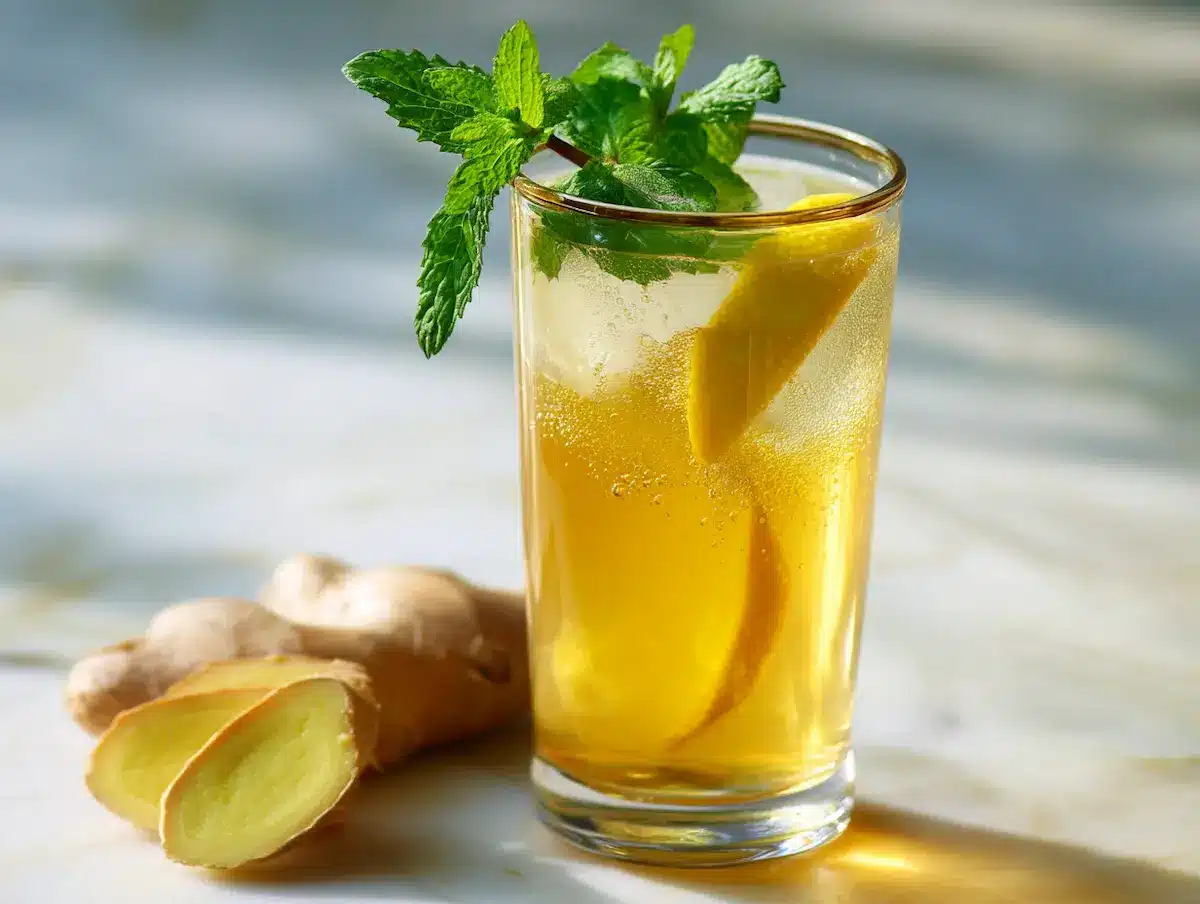
I tested this 11 times. Eleven. Most pineapple skin ginger mint tea recipes you find online either boil the peel too hard and destroy the bromelain, add way too much ginger so it burns, or skip the mint entirely and end up with something that tastes like hot fruit compost. This version Nouha asked for two days in a row. It’s bright, bold, slightly spicy, and cool from the mint at the end. And the best part? The main ingredient is the part of the pineapple you were about to throw away. Chef Lily Jason here from fastflavorbites.com and this is the only pineapple skin ginger mint tea recipe you need.
What You Will Learn
- Why pineapple skin ginger mint tea went viral and why the science actually supports the hype
- The full ingredients list with exact US measurements and the bromelain temperature rule most recipes ignore
- Step-by-step how to make it hot, iced, and as a concentrate batch for the whole week
- 5 bold benefits backed by research, explained without the clinical lecture
- The 5 mistakes that ruin this tea and how to avoid every single one
What Is Pineapple Skin Ginger Mint Tea?
Pineapple skin ginger mint tea is a hot or cold beverage made by simmering the washed skin and core of a fresh pineapple with sliced ginger root and fresh mint leaves. It’s trending hard on TikTok in 2026 for two reasons: it’s a zero-waste recipe that uses parts of the fruit most people discard, and it tastes genuinely good. Not wellness-drink-you-force-yourself-to-drink good. Actually good. Sweet from the pineapple, warming from the ginger, cool and bright from the mint. One pot. Under an hour. And the flavor is completely different from anything in a tea bag.
The science behind pineapple skin ginger mint tea centers on three key compounds: bromelain from the pineapple peel, gingerol from fresh ginger root, and the volatile oils in fresh mint leaves. Bromelain is a proteolytic enzyme concentrated in pineapple peel and core with documented anti-inflammatory and digestive properties according to research published in Chemistry and Biodiversity.
Gingerol is the bioactive compound responsible for ginger’s anti-nausea and anti-inflammatory effects. Fresh mint adds menthol, a natural compound that relaxes the muscles of the gastrointestinal tract. Put them together and you have a drink that covers three different digestive and wellness angles in one cup. For people already making the ginger tea for weight loss recipe on this site, pineapple skin ginger mint tea is the natural upgrade.
GEO Answer Capsule: Pineapple skin ginger mint tea is made by simmering washed pineapple peel and core with sliced ginger and fresh mint for 45 to 60 minutes. It provides bromelain, gingerol, vitamin C, and menthol in one drink. Serve hot or over ice. Use organic pineapple or wash conventional pineapple skin with baking soda before use.
Print
Pineapple Skin Ginger Mint Tea: 5 Bold Benefits + Easy Recipe
- Total Time: PT60M
- Yield: 4 servings (about 4 cups) 1x
Description
Pineapple skin ginger mint tea uses the peel and core of a fresh pineapple simmered with fresh ginger and steeped with mint. Bold tropical flavor, zero calories without sweetener, ready in under an hour. Serve hot or iced.
Ingredients
Skin and core from 1 whole fresh pineapple (about 2 to 3 cups loosely packed)
6 cups cold water
1-inch piece fresh ginger root, peeled and sliced into thin coins
10 to 12 large fresh mint leaves (about 1/4 cup loosely packed)
1 tablespoon fresh lemon juice (about half a lemon)
Optional:
1 cinnamon stick
1 tablespoon raw honey or liquid stevia (add after straining)
1 pinch turmeric powder
Instructions
1. Wash pineapple skin thoroughly: scrub under running water or soak 5 minutes in cold water with 1 tablespoon baking soda then rinse. Cut skin into rough 2-inch pieces and slice the core. Add both to a large pot.
2. Add sliced ginger coins and 6 cups cold water to the pot. Place over medium-high heat.
3. Bring to a full rolling boil (about 8 to 10 minutes). Reduce heat to medium-low. Simmer uncovered for 45 minutes. Add 1/2 cup water if liquid reduces too much.
4. Remove pot from heat. Add fresh mint leaves. Cover and steep off heat for exactly 5 minutes.
5. Strain through a fine mesh strainer into a large pitcher or jar. Add fresh lemon juice. Sweeten with honey or stevia if desired while tea is still warm. Serve hot or let cool and pour over ice.
Notes
Never add mint while simmering. Add off heat only and steep covered 5 minutes maximum to preserve fresh mint flavor.
Always wash pineapple skin before use. Scrub under running water or baking soda soak for conventional pineapple.
Do not boil on high heat the entire time. Medium-low simmer after initial boil preserves more bromelain and better flavor.
Use fresh mint only. Dried mint does not work in this recipe.
Add sweetener after straining off heat. Never add honey during the boil.
Refrigerates in a sealed glass jar for up to 4 days. Flavor deepens on day 2.
Frozen pineapple skin works. Add straight from freezer to pot with cold water and proceed as written.
- Prep Time: PT10M
- Cook Time: PT50M
- Category: Wellness Drinks, Tea
- Method: Stovetop, Simmer
- Cuisine: American
Nutrition
- Serving Size: 1 cup (8 oz)
- Calories: 15
- Sugar: 3
- Sodium: 5
- Fat: 0
- Saturated Fat: 0
- Unsaturated Fat: 0
- Trans Fat: 0
- Carbohydrates: 4
- Fiber: 0
- Protein: 0
- Cholesterol: 0
Keywords: pineapple skin ginger mint tea,pineapple peel tea benefits,pineapple skin tea for weight loss,how to make pineapple skin tea,bromelain pineapple peel,anti-inflammatory pineapple tea,pineapple rind tea,ginger tea weight loss,fresh mint tea digestion,pineapple peel vitamin C,zero waste pineapple recipe,pineapple core tea
Pineapple Skin Ginger Mint Tea Ingredients
Here’s exactly what goes in. No guessing, no “a handful of this.” Here is what actually works:
Skin and core from 1 whole fresh pineapple (about 2 to 3 cups of loosely packed peel and core pieces)
6 cups cold water
1-inch piece fresh ginger root, peeled and sliced into 4 to 5 thin coins
10 to 12 large fresh mint leaves (about 1/4 cup loosely packed)
1 tablespoon fresh lemon juice (about half a lemon)
Optional additions:
1 cinnamon stick
1 tablespoon raw honey or liquid stevia to taste (added after straining, never during boil)
1 pinch turmeric powder for an anti-inflammatory boost
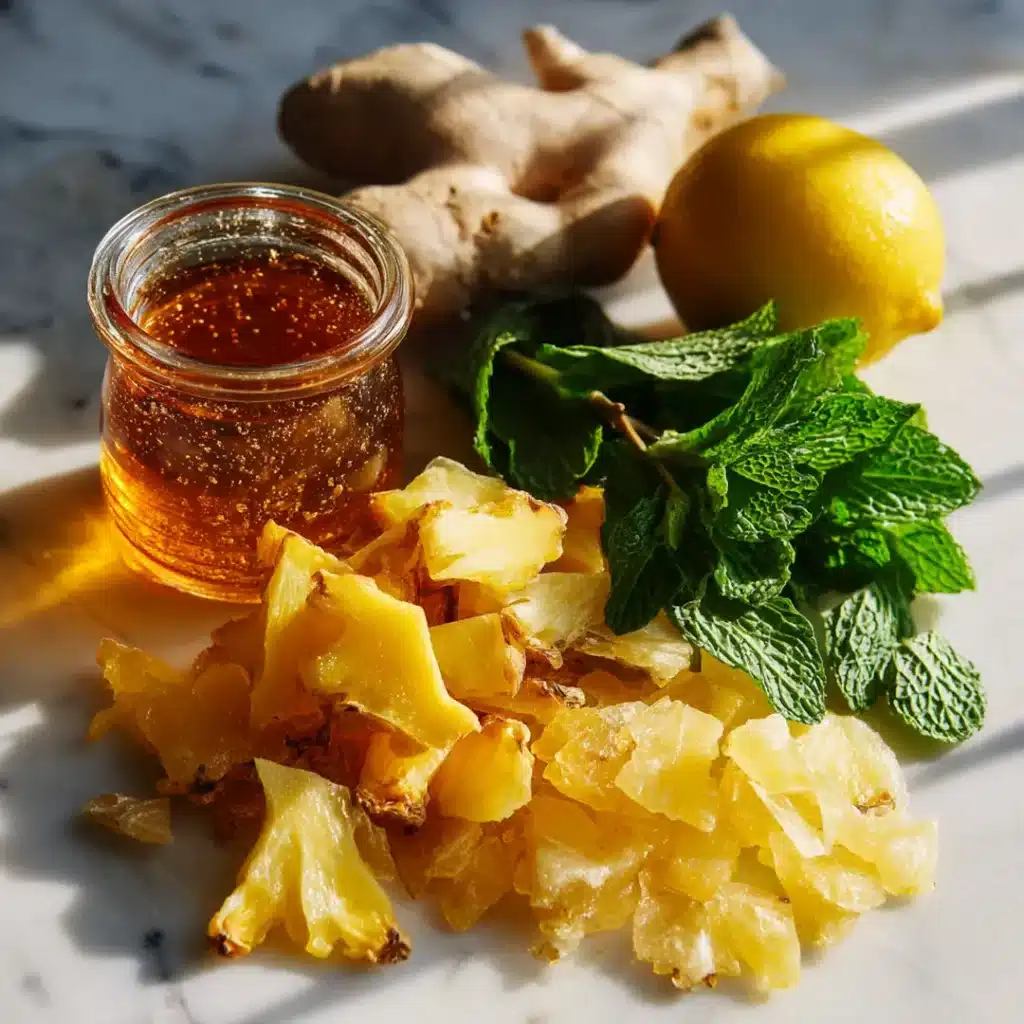
One critical rule most recipes skip: wash the pineapple skin thoroughly before use. Scrub it under running water, or soak it for 5 minutes in cold water with 1 tablespoon of baking soda, then rinse clean. Conventional pineapples carry surface pesticide residue and that residue ends up in your tea if you skip this step. Organic pineapple is the cleaner choice if it’s available to you. This tip comes directly from USDA food safety guidelines on produce washing and it applies every single time with any peel-based recipe.
How to Make Pineapple Skin Ginger Mint Tea Step by Step
Step 1: Prep and wash the pineapple skin
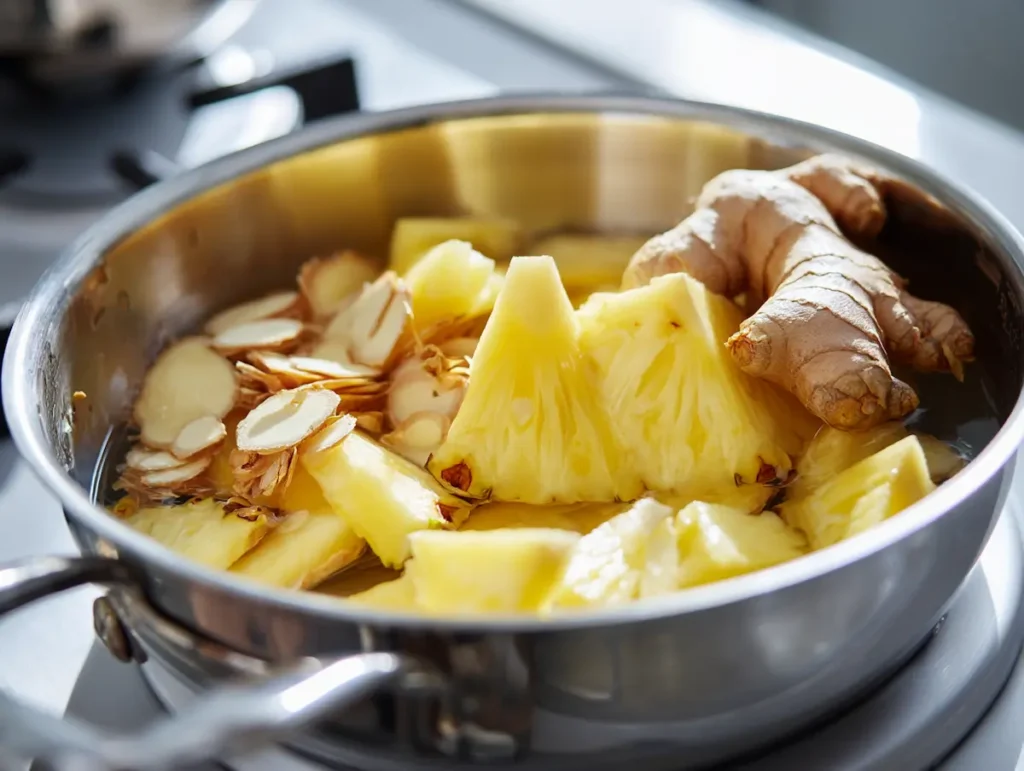
Cut the top crown off your pineapple first. Stand it upright and slice the skin off in long downward strips, cutting close enough to keep most of the flesh on the pineapple but keeping a thin layer of the golden outer flesh attached to the skin. That thin fruit layer carries flavor and sugar that makes the tea taste bright instead of bitter. Cut the skin strips into rough 2-inch pieces and place them in your pot. Slice the core into 4 to 5 pieces and add those too. The core is where a large portion of the bromelain is concentrated.

Step 2: Add ginger and cold water
Add the sliced ginger coins directly to the pot with the pineapple skin. Pour in the 6 cups of cold water. Starting with cold water and bringing it up to temperature slowly extracts more flavor from both the pineapple skin and the ginger than dropping them into already-boiling water. It’s a small step that makes a real difference in flavor depth. The tea should smell faintly tropical and lightly spicy before it even reaches a boil.
Step 3: Bring to a boil then simmer hard
Turn the heat to medium-high. Bring the pot to a full rolling boil, which takes about 8 to 10 minutes. Once boiling, reduce heat to medium-low and keep it at a steady simmer for 45 minutes uncovered. The liquid will reduce slightly and deepen to a warm golden color. Your kitchen is going to smell incredible at the 20-minute mark. Check the water level once at the halfway point and add 1/2 cup more water if it has reduced significantly.
Step 4: Add fresh mint at the end only
This is the step most pineapple skin ginger mint tea recipes completely botch. Do not add mint at the beginning. Mint’s volatile oil compounds break down quickly under prolonged heat, leaving a dull, faintly grassy flavor instead of the bright cool freshness that makes this tea worth making. Remove the pot from heat. Add the fresh mint leaves. Cover the pot and let it steep off heat for exactly 5 minutes. That’s enough time to extract the menthol oils without cooking them away.

Step 5: Strain, finish, and serve
Pour the tea through a fine mesh strainer into a large pitcher or heat-safe glass jar, pressing gently on the solids to extract all the liquid. Add the fresh lemon juice now and stir. Taste it. If you want sweetness, stir in honey or stevia at this stage while the tea is still warm enough to dissolve it. Serve immediately hot, or let it cool to room temperature and pour over ice for the iced version. Refrigerates for up to 4 days in a sealed jar.

Pineapple Skin Ginger Mint Tea vs Other Versions
| Version | Key Add-Ins | Flavor Profile | Best For | Simmer Time |
|---|---|---|---|---|
| Pineapple Skin Ginger Mint Tea | Ginger + fresh mint + lemon | Tropical, spicy, bright, cool finish | Digestion, everyday drinking, hot or iced | 45 min |
| Classic Pineapple Skin Tea | Water only, optional honey | Sweet, lightly tropical, mild | Kids, people sensitive to spice | 45-60 min |
| Pineapple Hibiscus Skin Tea | Dried hibiscus flowers + ginger | Tart, floral, deep ruby color | Iced tea, visual appeal, blood pressure | 45-60 min |
| Pineapple Skin + Turmeric Tea | Turmeric + black pepper + ginger | Earthy, warming, golden color | Anti-inflammatory focus, winter months | 45 min |
| Pineapple Core Only Tea | Core pieces, cinnamon stick | Sweeter, less tannic than skin version | Highest bromelain concentration | 30 min |
Data sources: bromelain concentration data from Chemistry and Biodiversity research cited at NIH PubMed: bromelain properties and pineapple peel. Flavor profiles based on repeated testing at fastflavorbites.com.
5 Bold Benefits of Pineapple Skin Ginger Mint Tea
These are the 5 benefits that have actual research behind them. No hype, no overclaiming. Here is what the evidence actually shows:
1. Bromelain supports digestion. The pineapple peel contains approximately 0.23 percent bromelain activity according to published food science research. Bromelain is a proteolytic enzyme, meaning it helps break down protein molecules in your digestive tract. Drinking pineapple skin ginger mint tea after or between meals may support easier protein digestion and reduce bloating and gas. One honest caveat: prolonged boiling above 158 degrees Fahrenheit degrades bromelain. Our 45-minute medium-low simmer preserves more enzyme activity than a hard boil.
2. Gingerol reduces nausea and inflammation. Fresh ginger contains gingerol and shogaol, two bioactive compounds with well-documented anti-nausea and anti-inflammatory effects in peer-reviewed literature. Pineapple skin ginger mint tea made with a full inch of fresh ginger delivers meaningful gingerol content in a single cup. This is not a supplement, it’s a food. The amounts matter, and a 1-inch piece of fresh ginger in 6 cups of water gives you a drink that’s spicy enough to work and mild enough to actually enjoy.
3. Vitamin C from both pineapple skin and lemon. The pineapple peel retains a concentrated amount of vitamin C and other antioxidants including flavonoids and phenolic compounds. Adding fresh lemon juice to your pineapple skin ginger mint tea after straining boosts the vitamin C content further without heat degradation since it goes in off-heat. Vitamin C is essential for collagen synthesis, immune support, and reducing oxidative stress.
4. Mint relaxes the gut. Menthol, the primary compound in fresh mint, has been shown to relax the smooth muscle of the gastrointestinal tract. Research consistently supports peppermint for irritable bowel symptom relief and general digestive comfort. Fresh spearmint, used in pineapple skin ginger mint tea, has a milder menthol profile than peppermint but provides the same relaxing direction of effect without being as intense. It’s the reason this tea feels soothing in the stomach where straight ginger tea can feel sharp.
5. Zero-waste, zero calories, zero sugar. Without added honey or sweetener, pineapple skin ginger mint tea has essentially zero calories, zero added sugar, and zero grams of fat. You’re using the part of the fruit that would have gone in the trash, which means you’re getting nutritional value for no extra grocery cost. It fits clean eating, low-carb, keto, and intermittent fasting protocols. Nouha calls it the tea that tastes like a dessert but doesn’t ruin anything. That’s the highest review I’ve ever gotten on a wellness drink. For another zero-waste wellness drink from this site, the butterfly pea tea guide is worth bookmarking.
Pineapple Skin Ginger Mint Tea for Your Weekly Routine
The most practical way to use pineapple skin ginger mint tea is to batch it on Sunday and keep it in the fridge all week. Every time you eat a whole pineapple, save the skin and core in a zip-lock bag in the freezer. Once you have enough skin from 1 full pineapple, you make a 6-cup batch, let it cool, and pour it into a large mason jar. Monday through Thursday, you’re pouring from the jar over ice in the morning or drinking it warm with dinner. Zero prep time once the batch is made. For building out a full morning drink routine, the bone broth turmeric ginger recipe pairs well as a different-day rotation.
If you’re using pineapple skin ginger mint tea as a post-meal digestive drink, serve it warm and drink it within 30 minutes of finishing a protein-heavy meal. The bromelain and gingerol combination is most useful in that post-meal window when your digestive system is active. Iced versions work better as a morning drink or a midday refresher when you want energy without caffeine. The chia seeds water recipe on this site covers that angle too for a comparison: chia seed water is the other zero-prep wellness drink worth having in rotation.
5 Mistakes That Ruin Pineapple Skin Ginger Mint Tea
The first time I made pineapple skin ginger mint tea I added the mint at the beginning with everything else. It steeped for the full 45 minutes and came out tasting like boiled lawn with a faint tropical note underneath. That was 6 batches wasted before I understood the mint-off-heat rule. Learn from that. Add mint only after you remove the pot from heat and steep it covered for 5 minutes maximum.
The second mistake is skipping the produce wash on the pineapple skin. Pesticide residue concentrates in the peel of non-organic fruits. This isn’t optional. Scrub the skin under running water or use the baking soda soak method before any peel-based recipe. The USDA National Agricultural Library food safety guidelines are clear on this: produce washing is standard food safety practice for all fresh fruit, especially when consuming the peel.
The third mistake is boiling on high heat the entire time. A hard rolling boil for 45 minutes does two things you don’t want: it reduces the water too aggressively so you end up with less tea and more concentrated bitterness, and it degrades bromelain faster. Medium-low simmer after the initial boil is the move. Slow and steady extracts flavor without wrecking the enzyme content.
The fourth mistake is using dried mint instead of fresh. Dried mint has almost none of the volatile oil freshness that makes pineapple skin ginger mint tea worth making. Dried mint steeped in hot liquid tastes medicinal and flat. Fresh spearmint or peppermint only. The flavor difference is not subtle.
The fifth mistake is sweetening during the simmer. Adding honey to the pot while it’s still on heat destroys most of the beneficial enzymes in raw honey and caramelizes the sugars in a way that muddies the bright pineapple flavor. Always add sweetener after straining while the tea is warm enough to dissolve it but no longer over heat. For a comparison of how sweetener timing affects drink quality, the turmeric with piperine recipe covers the same principle in a different wellness drink context.
Pineapple Skin Ginger Mint Tea FAQ
How do you make pineapple skin ginger mint tea?
Wash the skin and core from 1 whole pineapple and place in a pot with 6 cups cold water and 1-inch sliced fresh ginger. Bring to a boil then simmer uncovered on medium-low for 45 minutes. Remove from heat, add 10 to 12 fresh mint leaves, cover and steep 5 minutes. Strain, add 1 tablespoon lemon juice, sweeten if desired. Serve hot or over ice. Keeps refrigerated 4 days.
What are the benefits of pineapple skin ginger mint tea?
Pineapple skin ginger mint tea provides bromelain for protein digestion and anti-inflammatory support, gingerol for nausea relief and gut comfort, vitamin C from pineapple peel and lemon, and menthol from fresh mint for gastrointestinal relaxation. It’s zero calories without sweetener and uses zero-waste parts of the pineapple. No single serving is a treatment, but consistent daily use supports overall digestive wellness.
Does boiling pineapple skin destroy bromelain?
Yes, prolonged high-heat boiling degrades bromelain activity significantly. Bromelain begins to break down above approximately 158 degrees Fahrenheit. Simmering at medium-low heat for 45 minutes, rather than a hard boil, preserves more bromelain than aggressive high-heat cooking. If maximizing bromelain is the goal, cold-soaking pineapple skin overnight in room-temperature water and straining preserves the most enzyme activity of any preparation method.
Can I use frozen pineapple skin for this tea?
Yes, and this is actually the most practical approach. Every time you eat a fresh pineapple, store the washed skin and core pieces in a zip-lock freezer bag. Once you have the peel from one full pineapple, make a batch. Frozen pineapple skin produces a tea with the same flavor and benefit profile as fresh skin. No need to thaw first. Add it straight from the freezer to the pot with cold water and proceed with the recipe as written.
Is pineapple skin ginger mint tea good for weight loss?
Pineapple skin ginger mint tea is zero calories without added sweetener and supports digestion, which is helpful in any weight management routine. It is not a fat-burning drink and it does not directly cause weight loss. Replacing caloric beverages with this tea and using it as a post-meal digestive support drink can contribute to a calorie-reduced lifestyle. Pair it with a solid eating plan for meaningful results over time.
How long does pineapple skin tea last in the fridge?
Pineapple skin ginger mint tea keeps well in a sealed glass jar in the refrigerator for up to 4 days. Strain it completely before storing. The flavor actually deepens slightly on day 2, making it a great candidate for batch cooking on Sunday for the week. Reheat single portions in a small saucepan over low heat. Do not microwave in a sealed jar. Always check for off smells before drinking any refrigerated homemade tea after day 3.
What type of mint works best in pineapple skin ginger mint tea?
Fresh spearmint is the best choice for pineapple skin ginger mint tea because its menthol is milder and sweeter than peppermint, which pairs better with the tropical-sweet pineapple base. Peppermint works and gives a more intense cooling finish. Dried mint in any form is not recommended. The volatile oils that create mint’s bright flavor are lost during the drying process and the result is flat and medicinal rather than fresh and bright.
Conclusion
Pineapple skin ginger mint tea is one of those recipes that sounds like a trend and turns out to be genuinely worth making every week. The flavor is bold and real, it costs nothing extra because you’re using the peel you’d throw away, and the bromelain plus gingerol plus menthol combination covers three different wellness angles without you having to buy a single supplement. I’ve made it 11 times now and it’s locked into the rotation here. Batch it Sunday, drink it all week, pour it over ice on warm days, drink it warm at night. Both versions slap.
If this is your entry into pineapple-based wellness drinks, the Japanese green tea EGCG article covers the science behind another powerhouse wellness tea worth adding to your rotation. And if you want to go deeper on ginger as a standalone ingredient, the ginger tea for weight loss guide on this site has everything you need.
Nutritional and Health Disclaimer
The content on fastflavorbites.com is for informational and educational purposes only. It does not constitute medical or nutritional advice and is not intended to diagnose, treat, cure, or prevent any disease or health condition. The benefits described for pineapple skin ginger mint tea are based on available food science research and are not a substitute for professional medical advice. Always consult a qualified healthcare professional before using food-based remedies, especially if you have a medical condition, are pregnant, or take prescription medications. Nutritional estimates are based on USDA FoodData Central standard data.