
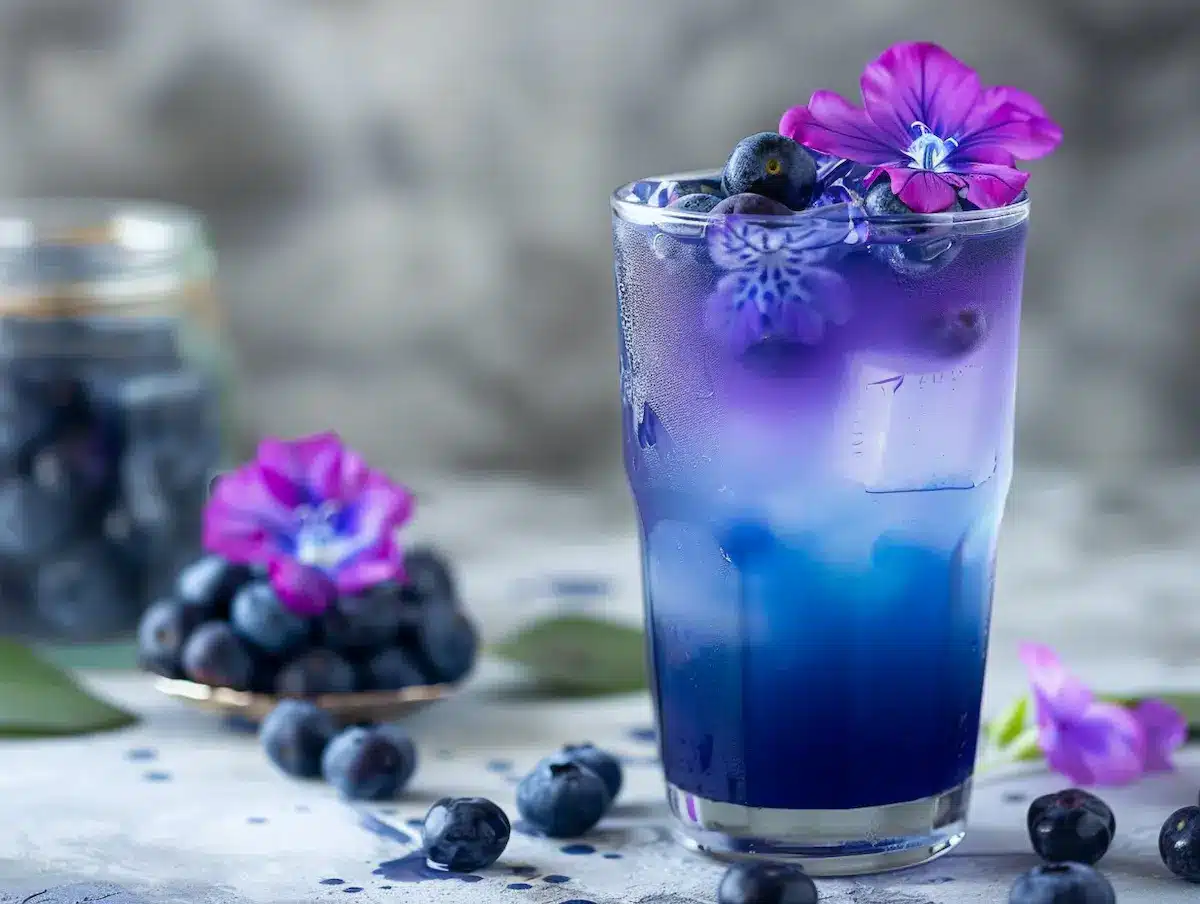
The first time I saw butterfly pea tea, I thought someone had Photoshopped the picture. How could a drink be that blue naturally? But here’s the thing: this stunning blue tea is completely real, made from just two ingredients, and takes less than 10 minutes to make. Even better? It changes color right before your eyes when you add a squeeze of lime. If that’s not kitchen magic, I don’t know what is.
I’ve been making butterfly pea flower tea for months now, and every single time, it feels like a small celebration. The vibrant blue color is mesmerizing, the process is ridiculously simple, and the health benefits are backed by actual science. Whether you’re looking for a caffeine-free afternoon drink, a wellness ritual, or just something that’ll make your Instagram followers stop scrolling, this butterfly flower tea delivers on all fronts.
In Thailand, where this drink originates, it’s called “nam anchan” and has been enjoyed for generations. Now it’s trending globally as people discover what the Thais have known all along: this isn’t just a pretty drink it’s a functional beverage with real benefits. And unlike some wellness teas that taste like grass clippings, this one is actually pleasant to drink.
What Is Butterfly Pea Tea? The Ancient Thai Blue Flower Tea
Butterfly pea tea (also called blue tea or blue flower tea) is an herbal infusion made from the dried flowers of the butterfly pea plant, scientifically known as Clitoria ternatea. These vibrant blue flowers have been used in traditional Thai and Ayurvedic medicine for centuries, valued for their antioxidant properties and natural color.
The plant gets its name from the shape of its petals, which resemble you guessed it a butterfly. According to botanical research, butterfly pea is also known as Asian pigeonwings, bluebellvine, and cordofan pea across different cultures. In Thailand, we call it “anchan” (อัญชัน), and it’s as common in Thai kitchens as basil is in Italian cooking.
What makes this butterfly pea flower tea special isn’t just the color though that deep sapphire blue is certainly attention-grabbing. It’s the versatility. You can drink it hot or cold, plain or sweetened, and it pairs beautifully with honey, lemon, lime, or even milk. Some people compare the butterfly pea tea taste to a very mild, slightly earthy green tea, but honestly, it’s so subtle that it takes on whatever flavors you add to it.
The Color-Changing Magic of Butterfly Pea Tea
Here’s where butterfly pea tea goes from “pretty drink” to “actual magic trick.” When you add something acidic lime juice, lemon juice, or even vinegar the blue tea transforms into a vibrant purple or pink color right before your eyes. I’m not exaggerating when I say guests literally gasp when I do this at the table.
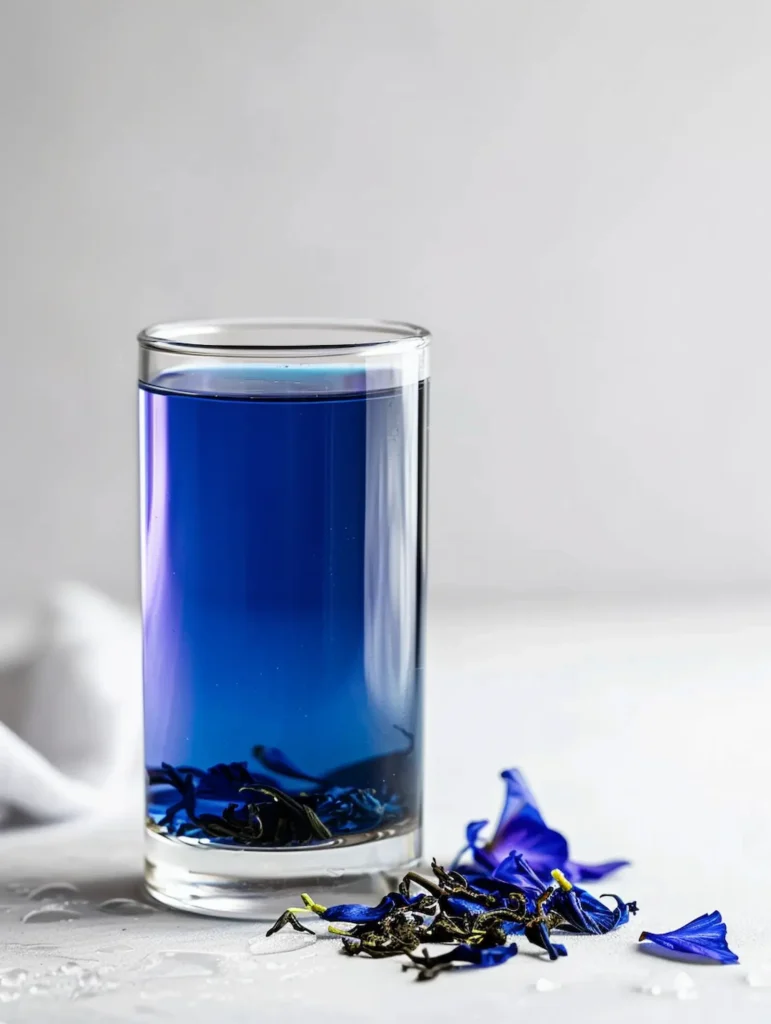
The science behind this is actually fascinating. Butterfly pea flowers contain natural pH-sensitive pigments called anthocyanins. These compounds are blue in neutral or alkaline solutions and turn pink or purple when exposed to acid. According to research published in the National Center for Biotechnology Information, anthocyanins are powerful antioxidants with anti-inflammatory and neuroprotective properties.
This color-changing property isn’t just a party trick it’s also why blue flower tea is used as a natural food coloring in desserts, rice dishes, and cocktails across Southeast Asia. You’re getting nature’s own edible dye with zero artificial ingredients. Pretty cool, right?
Butterfly Pea Tea Benefits: What the Science Says
Let’s talk about why you’d want to drink butterfly pea tea beyond the Instagram factor. These aren’t just folk medicine claims there’s actual research backing up the benefits of butterfly pea tea.
Rich in Antioxidants
The deep blue color of butterfly pea flower tea comes from anthocyanins, the same antioxidants found in blueberries and red wine. These compounds fight free radicals that cause cellular aging and inflammation. Studies show that butterfly pea benefits include protection against oxidative stress, which is linked to chronic diseases and premature aging.
Supports Brain Health
One of the most interesting butterfly pea flower tea benefits is its potential for cognitive enhancement. Traditional Ayurvedic medicine has long used butterfly pea as a brain tonic, and modern research is catching up. The plant contains compounds that may improve memory, reduce anxiety, and protect neurons from damage. Think of it as a gentle, natural way to support mental clarity without the jitters from caffeine.
Promotes Healthy Hair and Skin
Butterfly pea flowers are packed with bioflavonoids that support collagen production and blood circulation. In Thailand, people have traditionally used butterfly pea extract as a hair rinse to promote growth and prevent premature graying. While drinking the tea won’t transform your hair overnight, the antioxidants do support overall hair and skin health from the inside out.
Natural Stress Relief
There’s a reason blue pea tea is often served as an afternoon refresher in Thailand. The plant has adaptogenic properties that help the body manage stress. It’s not sedating like chamomile, but rather has a gentle calming effect that takes the edge off without making you drowsy. Perfect for those 3 PM moments when you need to reset but still have work to do.
Supports Healthy Blood Sugar
Some research suggests that butterfly pea tea benefits may include blood sugar regulation. The plant contains compounds that can help moderate glucose absorption, making it a smart choice for people managing their blood sugar levels. Pair it with balanced meals like chia seed water or protein-rich snacks for even better metabolic support.
What Does Butterfly Pea Tea Taste Like?
Let me be completely honest about the butterfly pea tea taste: on its own, it’s very mild. Some people describe it as slightly earthy or grassy, similar to a very light green tea. Others say it tastes like almost nothing, which is actually one of its strengths. This neutral flavor profile means it’s incredibly versatile you can customize it to taste like whatever you want.
I usually describe plain butterfly pea flower tea as “the flavor of blue” which sounds silly, but there’s really no strong dominant taste. It’s refreshing and clean without being bitter or astringent. The real flavor comes from what you add to it: honey for sweetness, lime for tang, ginger for spice, or milk for creaminess.
Think of blue tea as a blank canvas. The flowers give you the color and health benefits, but you’re the artist who decides on the final flavor. That’s why it works so well in everything from simple iced tea to elaborate lattes and cocktails.
What You’ll Need to Make Butterfly Pea Tea
The beauty of this butterfly pea tea recipe is its simplicity. You need exactly two ingredients for the basic version, and everything else is optional customization. Here’s what to gather:
Essential Ingredients for Blue Tea
1. Dried Butterfly Pea Flowers – You’ll need about 1/4 cup (or 10-15 whole flowers) for 2 cups of tea. You can use fresh flowers if you have access to them, but dried flowers are more concentrated and easier to source. The more flowers you use, the deeper the blue color. For a lighter shade, use fewer flowers; for that deep indigo Instagram-worthy blue, go generous with the petals.
2. Hot Water – Freshly boiled water is key. You want it just off the boil (around 200°F or 95°C) to properly extract the color and compounds from the flowers without destroying delicate antioxidants. Cold water won’t extract enough color or benefits.
Optional Add-Ins
This is where you make the butterfly pea tea your own:
- Sweetener – Honey, agave, simple syrup, or stevia work beautifully. Start with 1-2 teaspoons and adjust to taste.
- Citrus – Fresh lime or lemon juice (about 1 tablespoon per cup) for the color-changing effect plus a refreshing tang
- Ice – For iced blue pea tea, which is how I prefer it
- Milk – Any kind (dairy, oat, almond, coconut) for a butterfly pea latte
- Herbs – Fresh mint, lemongrass, or ginger for extra flavor layers
How to Make Butterfly Pea Tea – Step-by-Step
Making butterfly pea flower tea is genuinely easier than making regular tea. No special equipment needed, no complicated techniques. Here’s exactly how I do it:
Step 1: Boil the Water
Bring 2 cups of water to a boil in a kettle or saucepan. While it’s heating, get your butterfly pea flowers ready. If you’re using whole dried flowers, you can leave them whole or lightly crush them to release more color. I usually just toss them in as-is because I’m lazy and it works fine.
Step 2: Steep the Flowers
Pour the hot water over 1/4 cup of dried butterfly pea flowers in a heat-safe container (I use a large Pyrex measuring cup). The water will immediately start turning blue it’s honestly mesmerizing to watch. Use a spoon to gently press the flowers against the side of the container. This helps extract more color and beneficial compounds.
Step 3: Press and Extract
Here’s the secret to deep, vibrant blue tea: keep pressing those flowers for 3-5 minutes. Use the back of your spoon to mash them against the cup, releasing every bit of blue pigment. The longer you press and steep, the more intense the color becomes. For a lighter blue, stop after 2-3 minutes. For that deep royal blue, go the full 5 minutes.
Step 4: Strain
Strain the butterfly pea tea through a fine-mesh strainer to remove all the flowers. You can compost the used flowers or discard them. What you’re left with is a crystal-clear, brilliant blue tea that looks like liquid sapphire. At this point, you have pure, unsweetened blue flower tea ready to customize.
Step 5: Customize and Serve
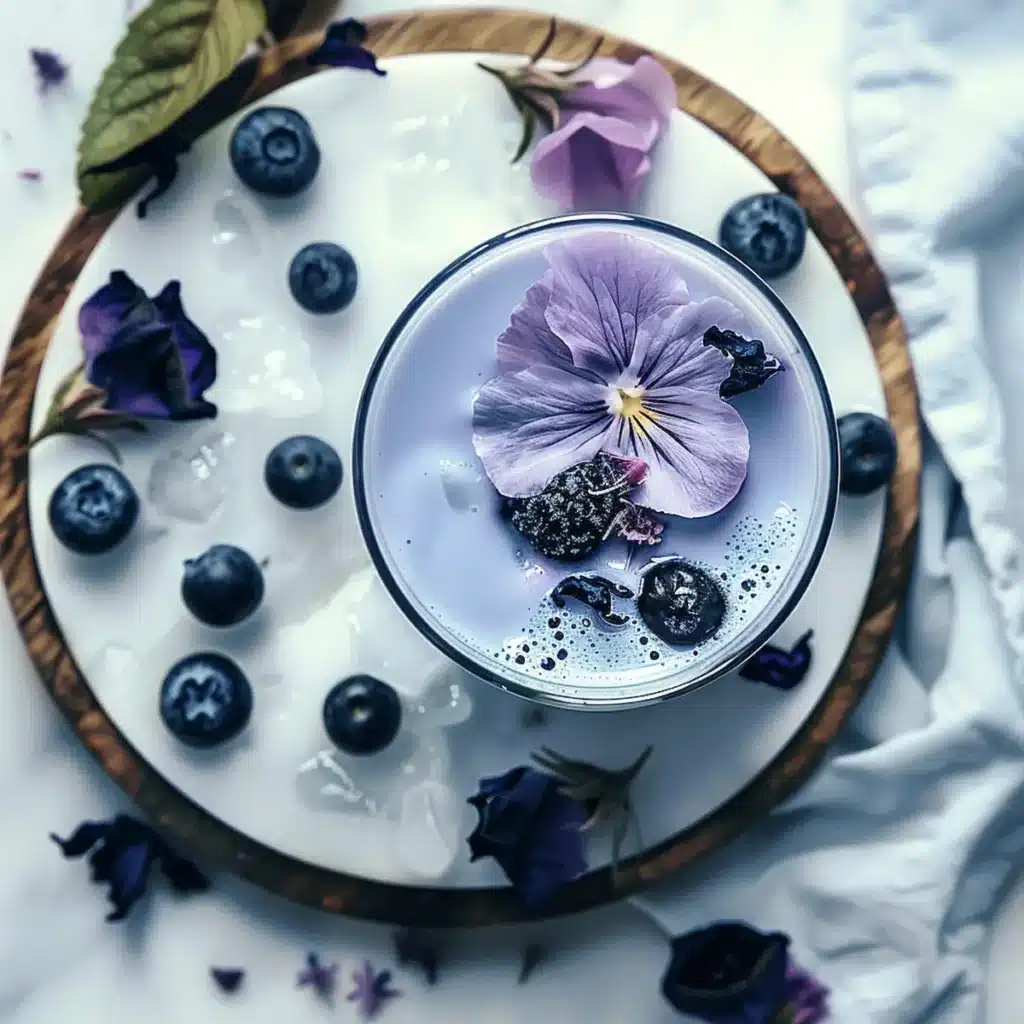
Now comes the fun part. If you want it sweet, add honey or your preferred sweetener while the tea is still hot (it dissolves better). For iced butterfly pea tea, let it cool to room temperature first, then pour over ice. For the color-changing effect, add lime or lemon juice right before serving and watch your guests’ reactions.
Butterfly Pea Tea Recipe Card
Print
Butterfly Pea Tea Recipe – The Magical Blue Tea That Changes Color
- Total Time: 7 minutes
- Yield: 2 servings 1x
Description
Butterfly pea tea (blue tea) is a stunning, naturally blue herbal drink made from butterfly pea flowers. This caffeine-free Thai beverage takes just 10 minutes to make and changes color to purple when you add lime or lemon juice. Rich in antioxidants with a mild, refreshing taste.
Ingredients
1/4 cup dried butterfly pea flowers (or 10–15 whole flowers)
2 cups water (freshly boiled)
Optional: 1-2 tsp honey, agave, or sweetener of choice
Optional: 1-2 tbsp fresh lime or lemon juice
Optional: Ice for serving
Optional: Fresh mint or ginger for extra flavor
Instructions
1. Boil 2 cups of water in a kettle or saucepan until it reaches a rolling boil.
2. Place 1/4 cup dried butterfly pea flowers in a heat-safe container (like a Pyrex measuring cup or teapot).
3. Pour the hot water over the flowers. The water will immediately begin turning blue.
4. Use the back of a spoon to gently press and mash the flowers against the container for 3-5 minutes. This extracts maximum color and beneficial compounds. The longer you press, the deeper the blue.
5. Strain the tea through a fine-mesh strainer to remove all flowers. Discard or compost the used flowers.
6. For hot tea: Add sweetener while hot and serve immediately.
7. For iced tea: Let cool to room temperature, then pour over ice.
8. For the color-changing effect: Add 1-2 tablespoons of lime or lemon juice per cup right before serving and watch it turn purple!
9. Store leftover tea in the refrigerator for up to 2-3 days in an airtight container.
Notes
Use high-quality, food-grade dried butterfly pea flowers for best results and vibrant color.
The more flowers you use, the deeper the blue. For lighter blue, use fewer flowers (2-3 tablespoons).
Fresh butterfly pea flowers can be used if available—use about double the amount (1/2 cup fresh vs 1/4 cup dried).
This tea is naturally caffeine-free and can be enjoyed any time of day.
For a latte version: Use 1/2 cup flowers to make concentrated tea, then mix with equal parts milk of choice.
Pregnant women should consult their doctor before consuming butterfly pea tea.
The tea tastes very mild on its own—feel free to customize with your favorite sweeteners and flavors.
- Prep Time: 2 minutes
- Cook Time: 5 minutes
- Category: Beverages, Drinks, Herbal Tea, Wellness Drinks
- Method: Steeping
- Cuisine: Thai, Asian, Wellness
Nutrition
- Serving Size: 1 cup (8 oz)
- Calories: 2
- Sugar: 0g
- Sodium: 24mg
- Fat: 0g
- Saturated Fat: 0g
- Unsaturated Fat: 0g
- Trans Fat: 0g
- Carbohydrates: 0g
- Fiber: 0g
- Protein: 0g
- Cholesterol: 0mg
Keywords: butterfly pea tea, blue tea, butterfly pea flower tea, butterfly flower tea, nam anchan, blue flower tea, how to make butterfly pea tea, butterfly pea tea recipe, blue pea tea, color changing tea
Delicious Variations of Butterfly Pea Tea You Need to Try
Butterfly Pea Lemonade (Nam Anchan Manow)
This is the most popular way to enjoy butterfly pea tea in Thailand, and for good reason. Make the basic tea as directed, let it cool, then add 2-3 tablespoons of fresh lime or lemon juice and 1-2 tablespoons of honey or simple syrup per cup. The citrus turns the tea from blue to purple and adds a refreshing sweet-tart flavor that’s absolutely addictive on hot days. Serve over ice with a lime wedge.
Butterfly Pea Latte
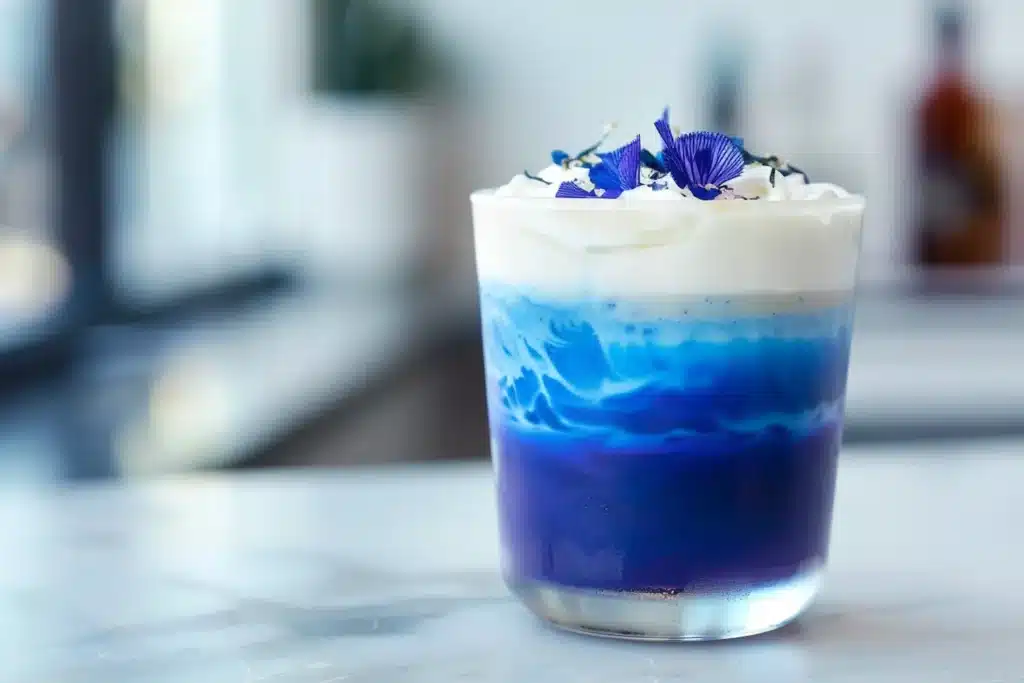
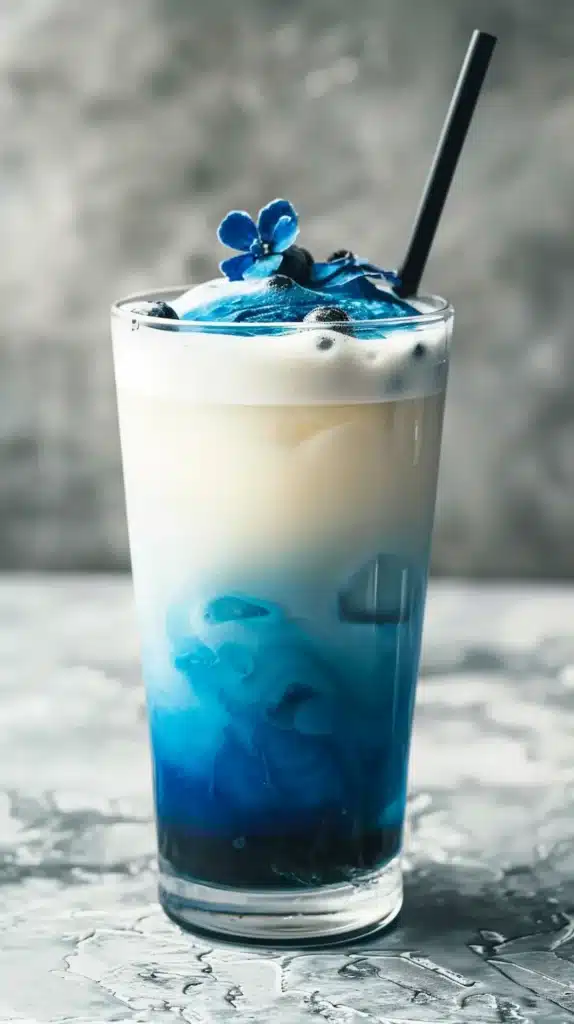
Make a concentrated version of the tea using double the flowers (1/2 cup per 2 cups water). Let it cool slightly, then mix equal parts blue tea concentrate with your favorite milk (I love oat milk for this). Add a touch of vanilla extract and sweetener. Serve over ice or gently warmed. The result is a creamy, subtly sweet drink with a beautiful pastel blue color. It’s like a fancy café drink you can make at home for pennies.
Butterfly Pea Tea with Ginger and Honey
While the tea is steeping, add a few slices of fresh ginger to the hot water along with the butterfly pea flowers. Strain, then sweeten with raw honey. This version is warming and soothing perfect for cooler weather or when you’re feeling under the weather. The ginger adds a spicy kick that complements the mild butterfly pea tea taste beautifully.
Sparkling Butterfly Pea Tea
Make the tea, let it cool completely, then top with sparkling water for a naturally blue mocktail. Add fresh mint, lime slices, and a touch of sweetener. It’s elegant enough for special occasions but simple enough for Tuesday afternoon. The bubbles make it feel celebratory, and the color makes it look like something from a high-end bar.
Where to Buy Butterfly Pea Flowers
Finding butterfly pea flowers is easier than you might think. Here’s where to look:
- Online – Amazon, specialty tea shops, and Asian grocery websites all carry dried butterfly pea flowers. Look for organic, food-grade flowers with vibrant blue color.
- Asian Markets – Thai, Vietnamese, and Indian grocery stores often stock dried butterfly pea flowers in the tea or dried herbs section
- Herbal Tea Shops – Specialty tea retailers are catching on to the trend and stocking butterfly pea tea
- Growing Your Own – Butterfly pea plants are actually easy to grow in warm climates (zones 10-11) or as annuals elsewhere. They’re climbing vines that produce beautiful blue flowers you can harvest fresh
When buying dried flowers, look for deep blue color without browning. They should smell fresh and slightly floral, not musty. A little goes a long way a 4-ounce bag will make dozens of cups of tea.
Storing and Keeping Your Butterfly Pea Tea Fresh
Once you’ve made a batch of butterfly pea flower tea, you can store it in the refrigerator for 2-3 days in an airtight container or sealed pitcher. The color might fade slightly over time, but the tea is still perfectly safe to drink. Just give it a stir before serving as some settling is natural.
If you’re planning to add lime or lemon juice, wait until right before serving. The citric acid will change the color immediately, and while the purple version is still drinkable after a day or two, the color won’t be as vibrant. For the best visual impact, always add citrus fresh.
Store dried butterfly pea flowers in an airtight container away from light and moisture. They’ll keep for 6-12 months without losing potency. If the flowers start to fade to gray or lose their blue color, they’re past their prime and won’t produce vibrant tea.
Frequently Asked Questions About Butterfly Pea Tea
Is Butterfly Pea Flower Poisonous?
No, butterfly pea flowers are completely safe and edible when sourced from reputable suppliers. They’ve been used in cooking and traditional medicine for centuries across Southeast Asia. However, pregnant women should consult their doctor before consuming butterfly pea tea, as there isn’t enough research on its effects during pregnancy.
What Is Butterfly Pea Tea Good For?
Butterfly pea tea benefits include antioxidant protection, cognitive support, stress relief, and potential blood sugar regulation. It’s also caffeine-free, making it suitable for any time of day. Many people drink it as part of their wellness routine, similar to chia seed water or ginger tea.
Does Butterfly Pea Tea Have Side Effects?
Butterfly pea tea side effects are rare and usually mild. Some people may experience digestive upset if they drink large quantities on an empty stomach. As with any herbal tea, start with a small amount to see how your body reacts. If you’re taking medications, especially for diabetes or blood pressure, consult your healthcare provider first.
Can I Buy Butterfly Pea Tea at Walmart?
Yes, butterfly pea tea Walmart availability has increased as the drink gains popularity. Check the tea aisle or order online through Walmart’s website. You can also find it at specialty tea shops, Asian markets, and through online retailers like Amazon.
What Does Butterfly Pea Tea Taste Like?
The butterfly pea tea taste is very mild and slightly earthy, similar to a light green tea. On its own, it’s quite neutral, which makes it perfect for customization. The real flavor comes from what you add honey, lime, milk, or other mix-ins. Think of it as a flavorful canvas rather than a bold statement tea.
How Do You Make Butterfly Pea Tea?
To make butterfly pea tea, steep 1/4 cup dried butterfly pea flowers in 2 cups of freshly boiled water for 3-5 minutes. Press the flowers with the back of a spoon to extract maximum color. Strain and serve hot or iced, plain or with your choice of sweetener and citrus.
Why Butterfly Pea Tea Deserves a Spot in Your Routine
Look, I get it there’s always some new “superfood” or trendy drink making the rounds. But butterfly pea tea isn’t just hype. It’s a traditional beverage that’s been enjoyed for centuries, now backed by modern research and made Instagrammable by its natural beauty. The fact that it’s caffeine-free, packed with antioxidants, ridiculously easy to make, and costs almost nothing per cup makes it a no-brainer addition to your beverage rotation.
I keep a jar of dried butterfly pea flowers in my pantry at all times now. On hot afternoons, I make a pitcher of butterfly pea lemonade. When I want something warming in the evening, I steep a cup with ginger and honey. And when friends come over, I love doing the color-changing trick it never gets old watching their faces light up as the blue turns purple.
This isn’t complicated wellness culture nonsense that requires expensive equipment or hard-to-find ingredients. It’s a simple, beautiful drink that makes you feel good, tastes pleasant, and adds a little magic to your day. And honestly, in a world that often feels overwhelming, a cup of bright blue tea that turns purple when you squeeze a lime into it? That’s the kind of small joy we all need more of.
If you make this butterfly pea tea recipe, let me know in the comments. What variation did you try? Did you do the color-changing trick? And if you’re growing your own butterfly pea plants, I want to hear about that too. This tea has become one of my favorite simple pleasures, and I hope it brings you the same quiet joy it brings me.