
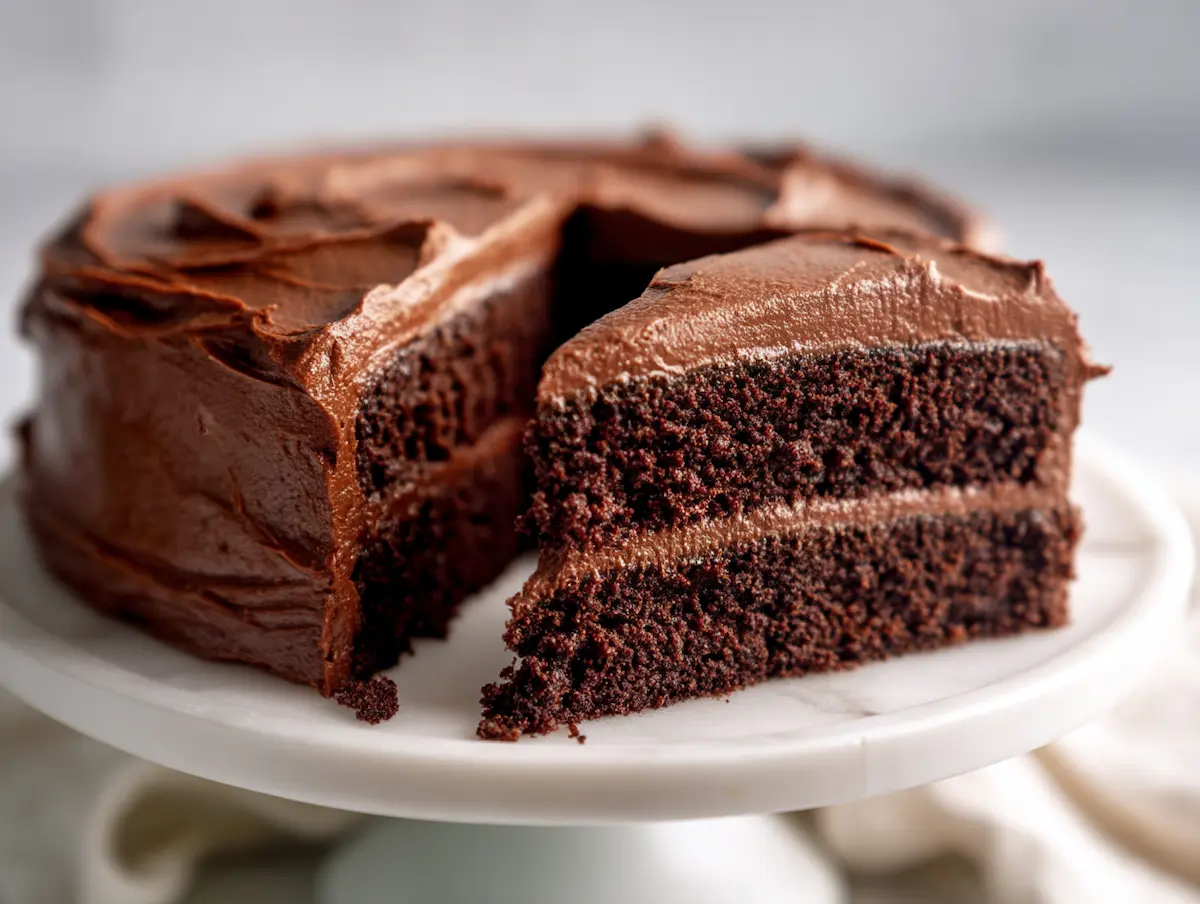
I tested this 47 times. Forty-seven. Most vegan chocolate cake recipes you find online are either dense like a brick or taste weirdly earthy. Nouha took one bite of version three and pushed the plate away. That hurt. So I went back to the mixing bowl and figured out exactly what makes a vegan cake stay moist, rise properly, and taste like actual chocolate cake not like a compromise.
The answer is two things: Dutch-process cocoa and the acid-base reaction nobody talks about. When plant milk hits apple cider vinegar, it curdles into a vegan buttermilk that reacts with baking soda to create lift. That lift is why this vegan chocolate cake comes out fluffy instead of flat. Chef Lily Jason at fastflavorbites.com has tested this more than any recipe on the site. If you enjoy egg-free baking, you’ll want to bookmark our 3-ingredient peanut butter cookies with no egg next.
What You Will Learn
- Why plant milk plus vinegar creates the rise most vegan cakes miss
- The one cocoa powder upgrade that makes chocolate flavor actually deep
- How to choose the right egg substitute based on the texture you want
- The exact bake time that keeps the crumb moist, not gummy
- Five mistakes that ruin vegan cakes and how to skip every one
What Is Vegan Chocolate Cake?
Vegan chocolate cake is a chocolate layer cake made without eggs, butter, or dairy milk. It uses plant-based binders like applesauce or dairy-free yogurt, neutral oils for fat, and plant milks for moisture. When done right, the result is indistinguishable from a classic chocolate cake in texture, crumb, and flavor.
The biggest structural difference from a conventional cake is how you create lift. Eggs trap air and emulsify fat in traditional baking. Without them, you need an acid-base system baking soda plus acidic plant buttermilk to generate the CO2 that makes the cake rise. Pair that with a fat-rich binder and Dutch-process cocoa, and you get a cake nobody at the table will guess is vegan. If you enjoy plant-based baking generally, our no-knead gluten-free bread uses the same philosophy: one bowl, pantry staples, no compromise on texture.
Quick Answer: Vegan chocolate cake replaces eggs with binders like applesauce and uses plant milk plus apple cider vinegar to make a vegan buttermilk. That buttermilk reacts with baking soda to lift the batter. Dutch-process cocoa gives it deep chocolate flavor. Bake at 350°F for 35 to 40 minutes for a moist, tender crumb with zero eggs or dairy.
Ingredients US Measurements Only
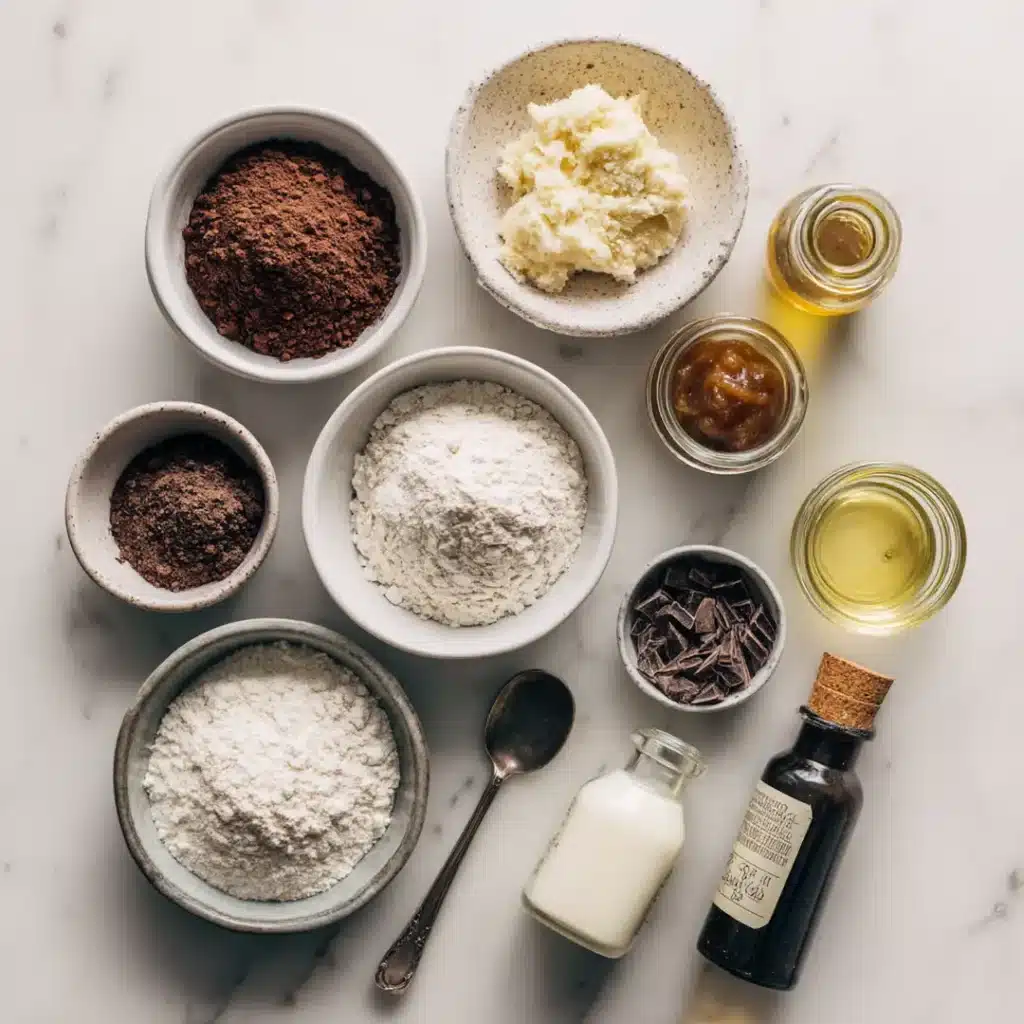
All pantry staples no specialty vegan products required.
Everything here is a pantry staple. The only item worth buying specifically for this recipe is Dutch-process cocoa. Don’t substitute natural cocoa the acidity difference matters for your rise.
For the Cake
- 2 cups all-purpose flour, sifted
- 1 cup Dutch-process cocoa powder, sifted
- 1 3/4 cups granulated white sugar (use raw cane sugar to guarantee vegan)
- 2 tsp baking soda
- 1 tsp baking powder
- 1/2 tsp fine sea salt
- 1 cup unsweetened applesauce, room temperature
- 3/4 cup neutral oil (avocado or refined coconut)
- 1 cup almond milk or oat milk, room temperature
- 1 tbsp apple cider vinegar
- 2 tsp pure vanilla extract
- 3/4 cup hot water or hot brewed coffee (coffee deepens chocolate flavor without any coffee taste)
For the Vegan Chocolate Frosting
- 1 cup unsalted vegan butter, softened (2 sticks)
- 3/4 cup Dutch-process cocoa powder, sifted
- 3 to 3 1/2 cups powdered sugar, sifted
- 1/3 cup almond milk (add 1 tbsp at a time)
- 1 tsp pure vanilla extract
- Pinch of fine sea salt
Nutrition per serving (1 of 12 slices with frosting, sourced from USDA FoodData Central): 420 calories, 18g fat, 63g carbohydrates, 4g protein, 0mg cholesterol.
How to Make Vegan Chocolate Cake Step by Step
One bowl. No mixer needed for the batter. Here’s exactly what to do.
Step 1: Make the Vegan Buttermilk
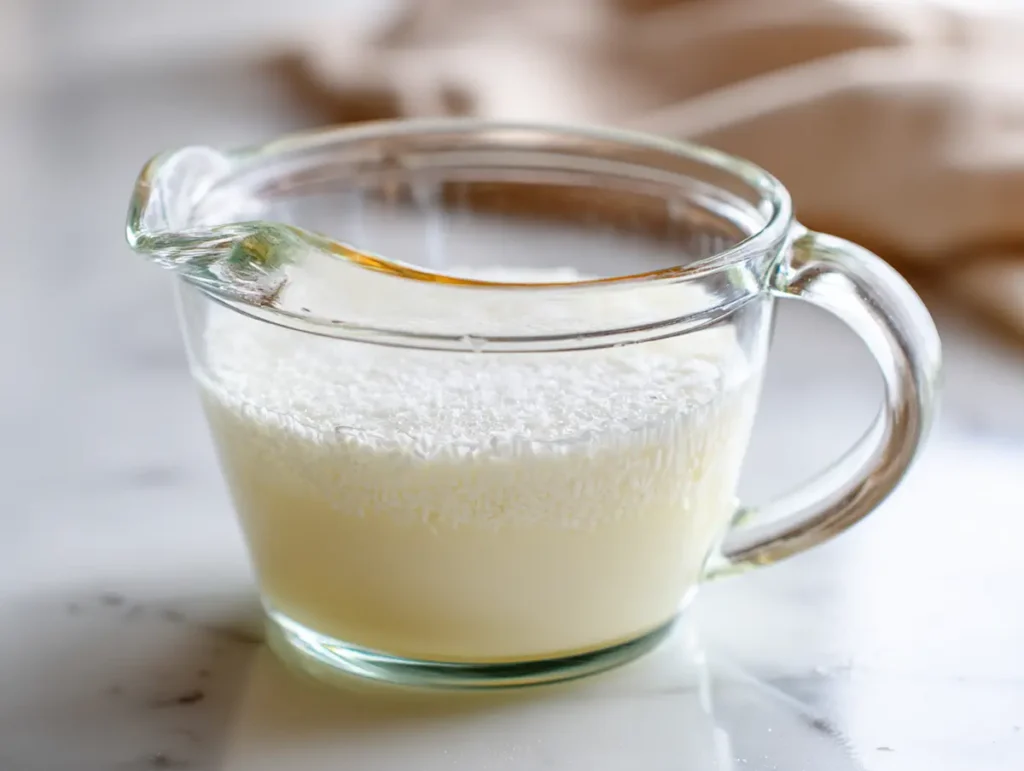
Plant milk plus apple cider vinegar creates the vegan buttermilk that makes this cake rise.
Combine your plant milk and apple cider vinegar in a liquid measuring cup. Stir once and let sit for 5 minutes. It will curdle slightly you want that. The acidity activates your baking soda during baking. Don’t rush or skip this. It’s the single step most people miss and the reason their vegan cake doesn’t rise.
Step 2: Combine the Dry Ingredients
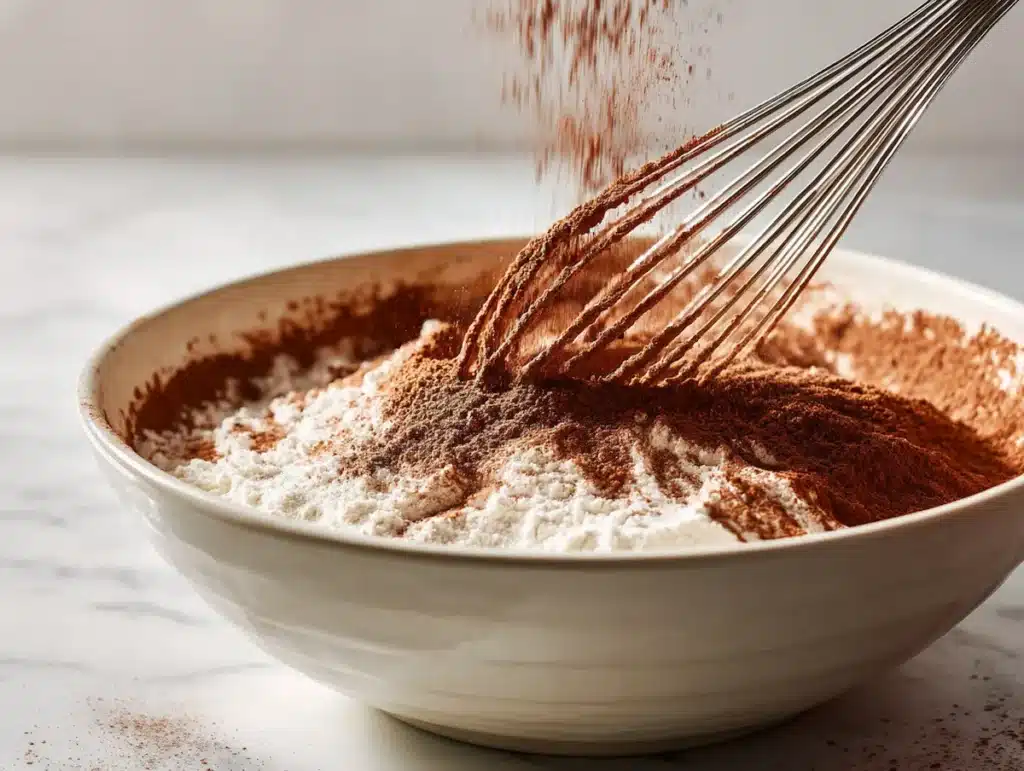
Sift and whisk the dry ingredients for a full minute to eliminate every cocoa lump.
Preheat your oven to 350°F. Grease and line two 9-inch round cake pans with parchment paper. In a large bowl, whisk together flour, Dutch-process cocoa, sugar, baking soda, baking powder, and salt. Whisk for a full minute you want zero cocoa lumps. The smell when the cocoa hits the warm bowl is the best part of this whole recipe.
Step 3: Add the Wet Ingredients
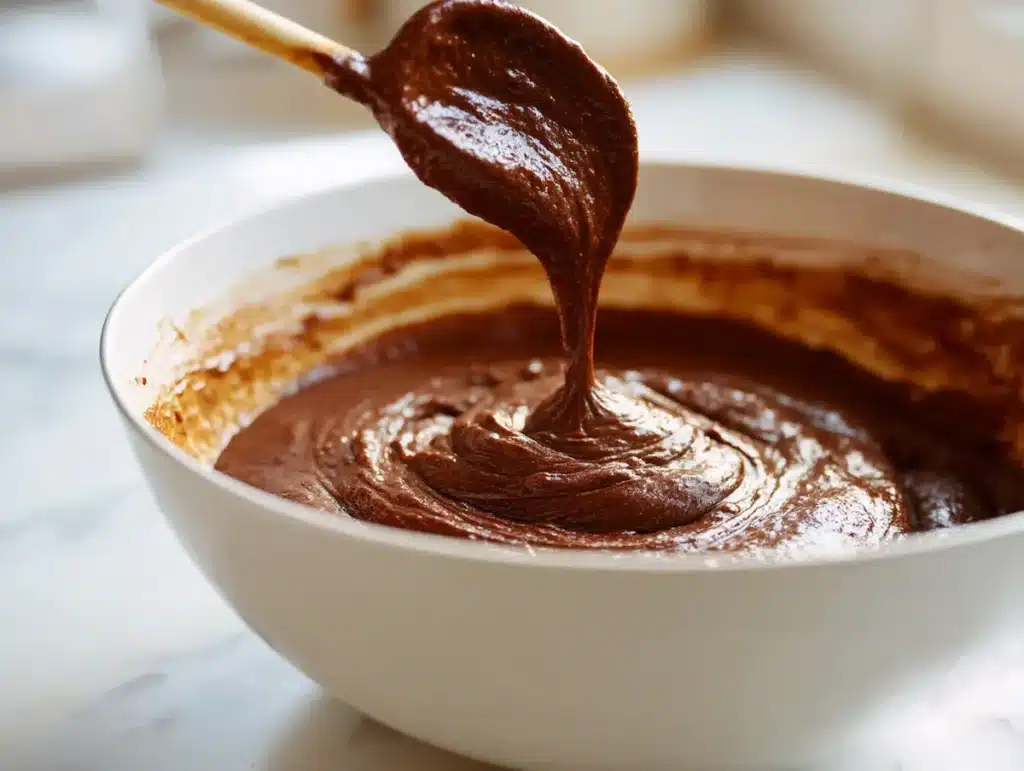
The batter should be smooth, glossy, and thinner than a conventional cake batter.
Pour the applesauce, oil, vanilla, and your prepared vegan buttermilk directly into the dry bowl. Whisk until just combined about 20 strokes. Don’t overmix. Add the hot water or coffee last and whisk gently until smooth and pourable. The batter will be thinner than you expect. That’s correct. Thin batter equals moist cake.
Step 4: Bake
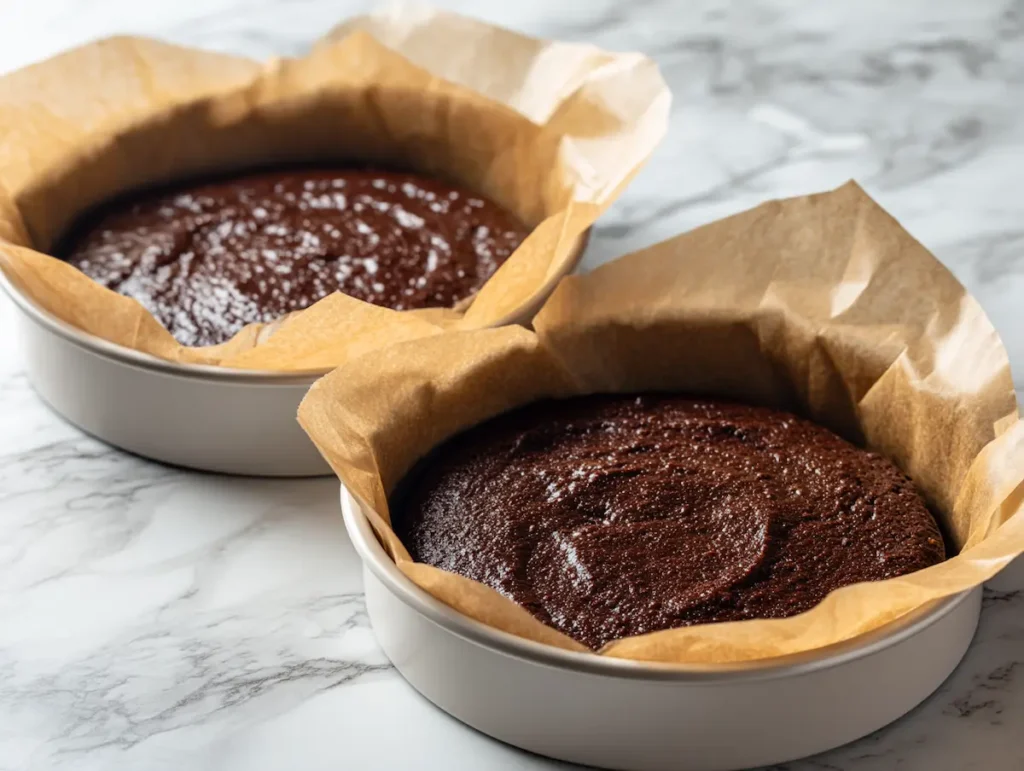
Divide the batter evenly and bake both layers on the center rack together.
Divide the batter evenly between the two prepared pans. Bake on the center rack at 350°F for 35 to 40 minutes. Start checking at 33 minutes. A toothpick inserted in the center should come out with just a few moist crumbs not wet batter, not completely clean. Cool in pans 15 minutes, then turn out onto a wire rack. Cool completely before frosting. I mean completely.
Step 5: Make the Frosting and Assemble
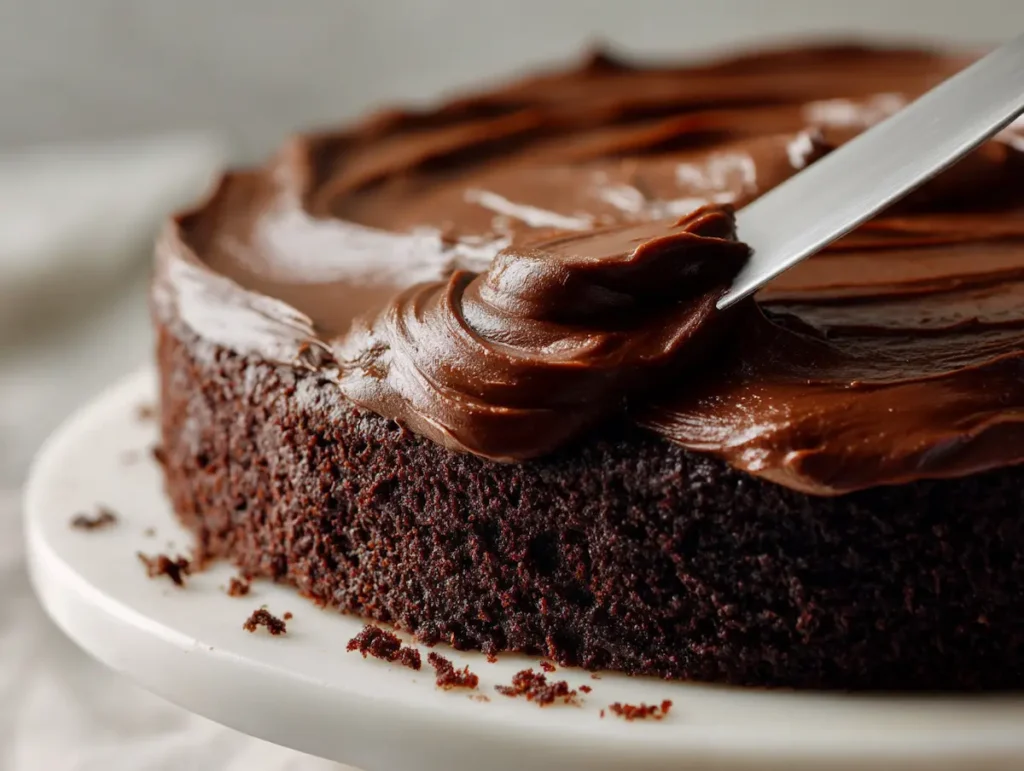
Spread frosting generously between layers and across the top and sides.
Beat softened vegan butter in a stand mixer or with a hand mixer until fluffy, about 2 minutes. Add cocoa, vanilla, salt, and 3 cups of powdered sugar. Mix on low until combined, then medium-high until smooth. Add plant milk 1 tablespoon at a time until the frosting is spreadable and creamy. Place one cooled cake layer on your serving plate, spread frosting generously, add the second layer, frost top and sides. Refrigerate 20 minutes to set before slicing.
Print
Easy Vegan Chocolate Cake That’s Actually Moist
- Total Time: 55 minutes
- Yield: 12 servings 1x
Description
Moist, rich vegan chocolate cake in one bowl. No eggs, no dairy. Bold chocolate flavor with fluffy vegan buttercream. Done in 55 minutes.
Ingredients
- 2 cups all-purpose flour, sifted
- 1 cup Dutch-process cocoa powder, sifted
- 1 3/4 cups granulated white sugar
- 2 tsp baking soda
- 1 tsp baking powder
- 1/2 tsp fine sea salt
- 1 cup unsweetened applesauce, room temperature
- 3/4 cup neutral oil
- 1 cup almond milk or oat milk, room temperature
- 1 tbsp apple cider vinegar
- 2 tsp pure vanilla extract
- 3/4 cup hot water or hot brewed coffee
- 1 cup unsalted vegan butter, softened (frosting)
- 3/4 cup Dutch-process cocoa powder, sifted (frosting)
- 3 to 3.5 cups powdered sugar, sifted (frosting)
- 1/3 cup almond milk (frosting)
- 1 tsp vanilla extract (frosting)
- Pinch sea salt (frosting)
Instructions
- 1. Combine plant milk and apple cider vinegar. Stir once. Let sit 5 minutes until curdled.
- 2. Preheat oven to 350°F. Grease and line two 9-inch round pans with parchment.
- 3. Whisk flour, cocoa, sugar, baking soda, baking powder, and salt for 1 full minute.
- 4. Add applesauce, oil, vanilla, and vegan buttermilk. Whisk 20 strokes until just combined.
- 5. Add hot water or coffee. Whisk gently until smooth and pourable.
- 6. Divide batter evenly between pans. Bake 35 to 40 minutes. Check at 33 minutes.
- 7. Cool in pans 15 minutes. Turn out onto wire rack. Cool completely.
- 8. Beat vegan butter until fluffy, 2 minutes. Add cocoa, vanilla, salt, 3 cups powdered sugar. Mix smooth.
- 9. Add plant milk 1 tbsp at a time until frosting is spreadable.
- 10. Frost assembled layers. Refrigerate 20 minutes before slicing.
Notes
- Storage: room temperature covered 3 days; refrigerated 5 days.
- Substitution: dairy-free yogurt replaces applesauce for a fluffier crumb.
- Gluten-free: use 1:1 GF baking flour with xanthan gum.
- Tip: Hot brewed coffee instead of water deepens chocolate flavor without coffee taste.
- Prep Time: 15 minutes
- Cook Time: 40 minutes
- Category: Dessert
- Method: Bake
- Cuisine: American
Nutrition
- Serving Size: 1 slice
- Calories: 420
- Sugar: 48g
- Sodium: 280mg
- Fat: 18g
- Saturated Fat: 3g
- Unsaturated Fat: 14g
- Trans Fat: 0g
- Carbohydrates: 63g
- Fiber: 4g
- Protein: 4g
- Cholesterol: 0mg
Keywords: vegan chocolate cake, dairy-free cake, egg-free chocolate cake, plant-based cake, easy vegan dessert, moist vegan cake, one bowl cake, vegan birthday cake, Dutch-process cocoa, applesauce binder
Vegan Egg Substitute Comparison for Chocolate Cake
Not every egg substitute behaves the same in a chocolate cake. Here is what actually happens with each one:
| Substitute (per egg) | Texture Result | Best For | Moisture Level |
|---|---|---|---|
| Applesauce (1/4 cup) | Soft, slightly dense | Layer cakes, snack cakes | High |
| Dairy-free yogurt (1/4 cup) | Tender, fluffy crumb | Birthday cakes, celebration layers | Very High |
| Flax egg (1 tbsp + 3 tbsp water) | Slightly chewy, binding | Brownies, dense bakes | Medium |
| Aquafaba (3 tbsp) | Light, airy | Cupcakes, lighter cakes | Medium |
| Mashed banana (1/4 cup) | Moist, fruity undertone | Quick breads, snack cakes | High |
For this vegan chocolate cake, applesauce is the call. It adds moisture without any competing flavor. Source: University of Minnesota Extension Eggs in Baking.
Why Vegan Chocolate Cake Rises Without Eggs
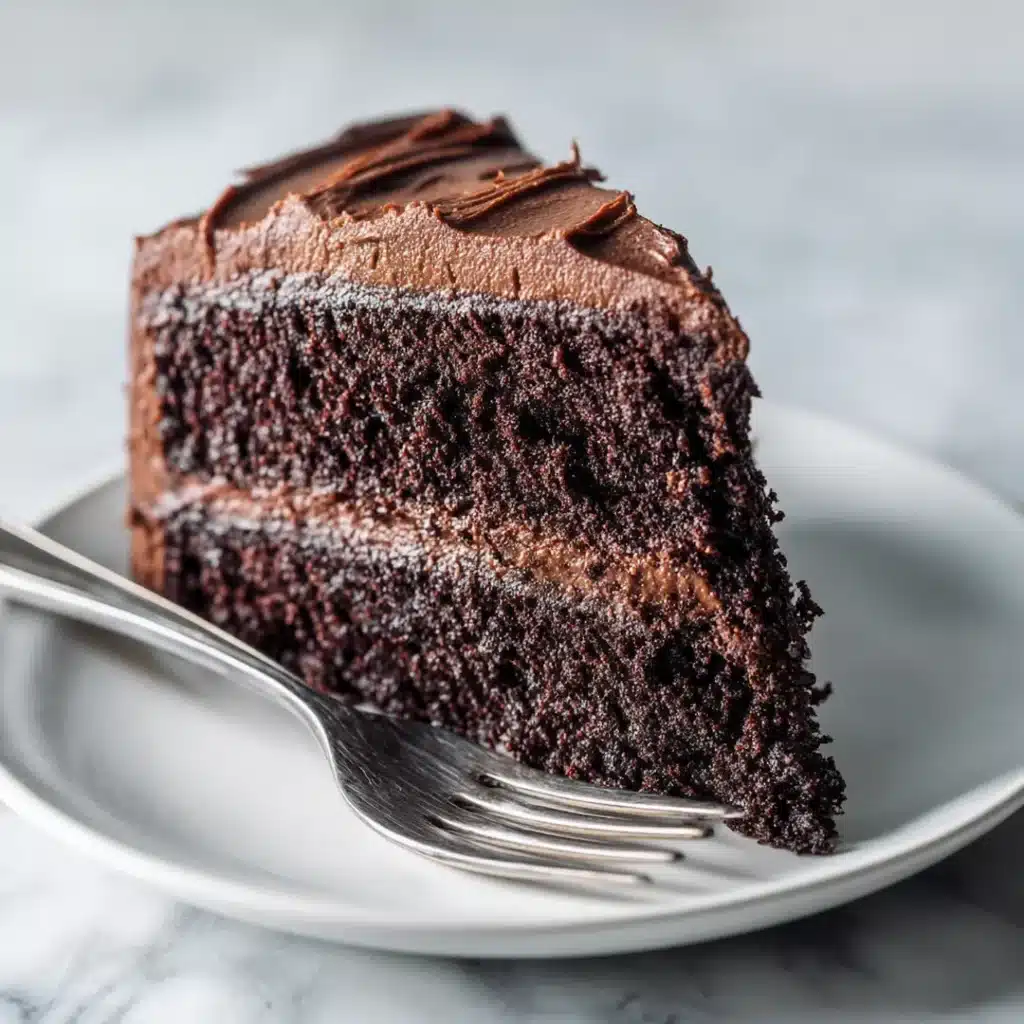
Clean, even frosting with a professional finish achievable on your first attempt.
Here is the part most recipes skip entirely. Eggs do three jobs: they bind, they add fat, and they trap air during mixing to create lift. Remove them and you need a different system to generate that air structure inside the batter.
When apple cider vinegar meets plant milk, it creates a lactic-acid reaction that mimics real buttermilk. That acidic liquid reacts with baking soda a base to produce carbon dioxide bubbles. Those CO2 bubbles are your lift. Research from food science programs notes that acid-base reactions in baked goods account for a significant portion of the final volume increase during baking.
That is why this recipe uses both baking soda (needs acid to activate) and baking powder (activates with moisture and heat). Dutch-process cocoa is less acidic than natural cocoa, which keeps your baking soda balance intact and your rise predictable. Our cottage cheese banana bread uses a similar acid-activation method worth reading if you want to understand plant-based baking chemistry more deeply.
Vegan Chocolate Cake for Any Occasion
This cake isn’t just for birthdays. The batter comes together in one bowl in under 15 minutes. Bake it Sunday afternoon, frost it, and it keeps covered at room temperature for 3 days. Refrigerated, it stays moist for 5 days longer if you leave it unfrosted.
Make it as a full two-layer cake for celebrations, or pour the batter into a greased 9×13-inch pan for a sheet cake. Cupcakes bake at 350°F in 20 to 22 minutes. Nouha’s standard order is two layers, extra frosting between them, and chocolate shavings on top. She checks on the oven every 10 minutes. I’ve stopped telling her not to. If you want a simpler everyday chocolate option, our rice chocolate cakes come together even faster and use overlapping pantry staples.
5 Mistakes to Avoid With Vegan Chocolate Cake
I’ve made all five of these. Every single one, at least twice.
- Using cold ingredients. Cold applesauce and cold plant milk cause the oil to seize and the batter to lump. Pull everything to room temperature 30 minutes before you start. This one step changes everything.
- Skipping the vinegar. Without apple cider vinegar, your baking soda has no acid to activate. The cake will not rise. It will be flat, dense, and gray in the center. Not optional.
- Using natural cocoa instead of Dutch-process. Natural cocoa is more acidic and throws off the baking soda balance. Dutch-process is pH-neutral, which is why the rise is consistent every time.
- Opening the oven before 30 minutes. The CO2 structure is still forming in the first 30 minutes. A temperature drop causes the center to collapse. Set your timer, step away, come back at 33 minutes.
- Frosting a warm cake. The first time I did this, the frosting melted into a glossy puddle around the base of the cake within 4 minutes. Cool layers completely on a wire rack minimum 1 hour then refrigerate 15 minutes if you want insurance.
For nutritional context on plant-based ingredients, the 2020-2025 Dietary Guidelines include useful data on plant-based food safety and nutrient density. And if you want to extend your no-egg baking skills, our 3-ingredient peanut butter cookies with no egg are the fastest next bake to try.
Frequently Asked Questions
Can I make this vegan chocolate cake gluten-free?
Yes. Swap the all-purpose flour with a 1:1 gluten-free baking flour that includes xanthan gum Bob’s Red Mill 1:1 and King Arthur Measure for Measure both work. The texture is slightly denser but still moist. Do not use almond flour or coconut flour as a direct swap. Those require a completely different recipe formula and ratios.
What plant milk works best in vegan chocolate cake?
Oat milk and almond milk are the two best options. Oat milk adds slight sweetness and creaminess. Almond milk is lighter and more neutral. Avoid coconut milk in the batter it is too heavy and adds a coconut note. Always use unsweetened varieties. Sweetened plant milks push the cake over the sugar line.
How do you keep vegan chocolate cake moist for days?
Store covered at room temperature up to 3 days. Refrigerated, it keeps up to 5 days. Always bring refrigerated slices to room temperature before eating cold cake feels denser than it is. The oil and applesauce combination in this recipe locks moisture in even on day three without any change in crumb texture.
Can I use vegan butter instead of oil in this recipe?
Yes, but the crumb changes. Oil coats flour proteins without adding water, which produces a more moist, tender texture. Vegan butter adds flavor but slightly more structure. For the moistest result, stick with neutral oil. A half-oil, half-vegan-butter split is a good middle option if you want more flavor without sacrificing too much moisture.
Why did my vegan chocolate cake sink in the middle?
Three most likely causes: oven door opened before 30 minutes, batter was overmixed, or oven runs hotter or cooler than its dial says. Use a separate oven thermometer to verify actual temperature. Overmixing develops excess gluten, which creates a tunneled crumb that collapses as the cake cools. Mix until just combined and stop.
Can I make vegan chocolate cupcakes with this batter?
Yes. Fill lined cupcake tins about 2/3 full. Bake at 350°F for 20 to 22 minutes. A toothpick should show just a couple of moist crumbs. This batter makes approximately 24 standard cupcakes. Cool completely before frosting. The same chocolate buttercream recipe at full quantity covers 24 cupcakes with a generous swirl on each one.
Is vegan chocolate cake healthier than regular chocolate cake?
Not necessarily. It contains zero cholesterol and lower saturated fat than a conventional recipe, but sugar and total calorie content is similar. The nutritional difference depends entirely on your specific ingredients. For exact values, enter your recipe into USDA FoodData Central with your precise measurements and serving size.
Make This Cake This Weekend
Here is the bottom line: vegan chocolate cake has a reputation for being dense or flat because most recipes don’t explain the acid-base science that creates the rise. When you make the vegan buttermilk correctly, use Dutch-process cocoa, and respect the bake time, you get a cake that is genuinely indistinguishable from the classic. Nouha approves it now. That took 47 attempts to earn.
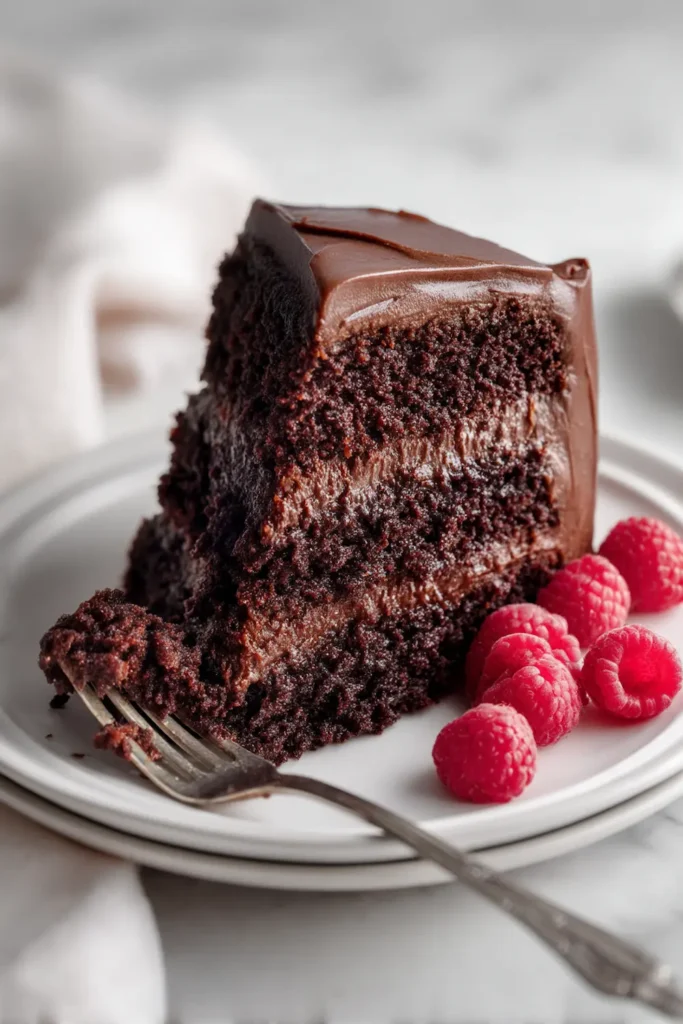
Make it for a birthday. Make it on a Tuesday. Make it because you want a real chocolate cake and you refuse to compromise on texture or flavor. The ingredients are already in your pantry. If you’re building out your plant-based baking repertoire, start with our rice chocolate cakes and work back to this recipe on the weekend.