
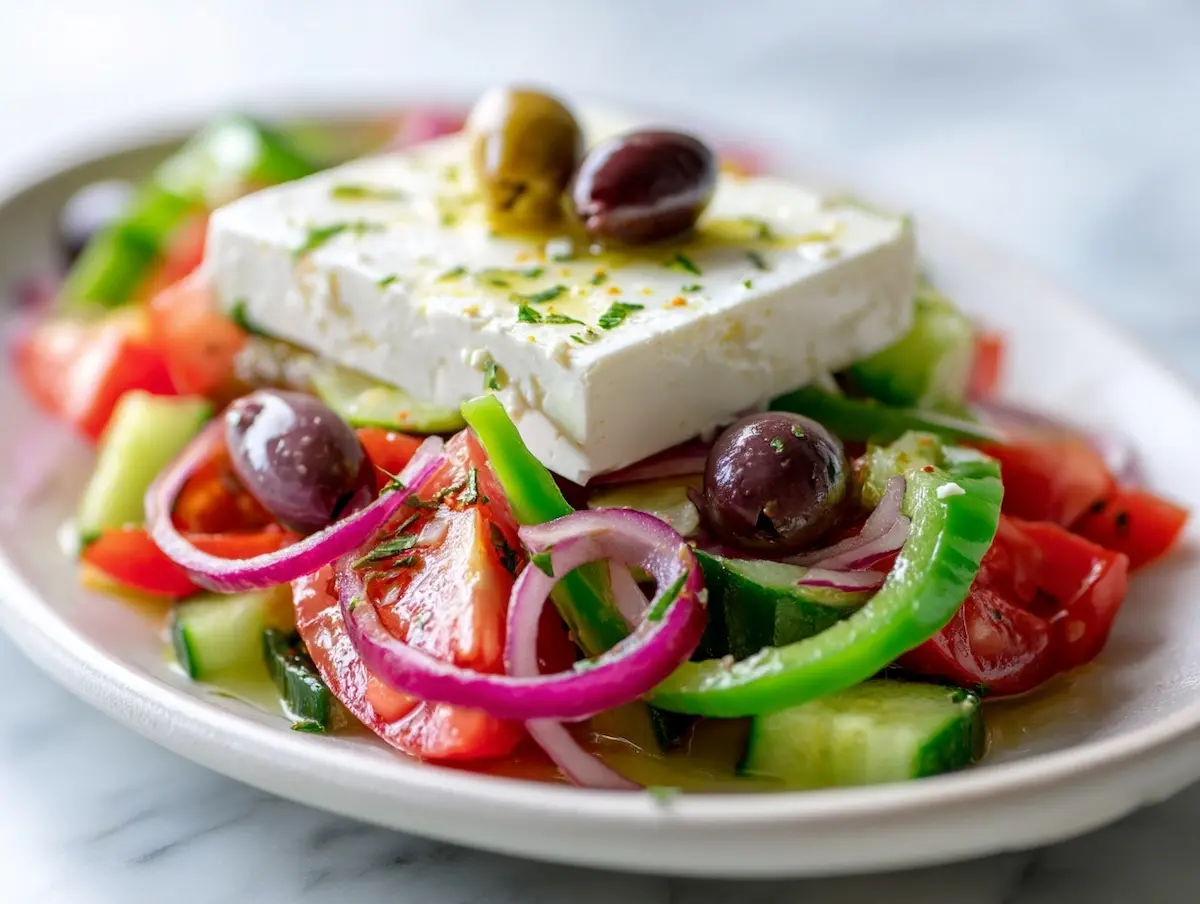
I have ordered greek salad in more restaurants than I can count, and most of them sneak in a giant pile of lettuce. Then I went to Athens, ordered horiatiki, and everything clicked. No lettuce, ridiculous tomatoes, a fat block of feta on top and enough olive oil that you want to drag bread through the bottom of the bowl.
Back home I wanted that same loud village salad but on a Tuesday night, not only when I can escape to the Mediterranean. So I tested versions with different tomato cuts, oil and vinegar ratios and even swapped olives. This is the 5‑step easy horiatiki salad that survived all of that and still lands on my table next to sheet pan quesadillas and burger bowls when I want fast flavor, not another boring side. What you will learn
Key Takeaways
- What makes horiatiki salad different from generic greek salad and why the lettuce has to go.
- The exact ingredient list and US measurements for a bold greek village salad at home.
- Five fast, repeatable steps that keep the tomatoes juicy and cucumbers crisp instead of soggy.
- A comparison table that helps you slot this salad into your weekly rotation with other big flavor meals.
- Practical tips for make ahead, leftovers and one mistake I made when I tried to shortcut the dressing.
What Is Horiatiki Salad?
Horiatiki salad is the traditional greek village salad built with chunky tomatoes, cucumber, green pepper, red onion, kalamata olives and a block of feta, dressed simply with olive oil, oregano and a little vinegar. There is no lettuce. The whole point is that you taste real summer vegetables, salty olives and creamy cheese instead of a mouthful of bland greens. In Greece this shows up on the table family style next to grilled meat or bread and is usually one of the first plates to disappear.
Horiatiki Salad Ingredients (US Measurements)
This is classic horiatiki with a fastflavorbites twist. Nothing fancy, just the right cuts and ratios so it tastes big and stays crunchy.
| Ingredient | Amount | Why it matters |
|---|---|---|
| Ripe tomatoes | 4 medium (about 1½ pounds), cut into wedges | Room temperature tomatoes bring sweetness and juice |
| English cucumber | 1 large, cut into ½ inch half moons | Thin skin means no peeling and no bitterness |
| Green bell pepper | 1 pepper, seeded and sliced into thin rings | Classic village salad bitterness and crunch |
| Red onion | ½ small, sliced very thin | Sharp bite that turns sweet after a quick ice bath |
| Kalamata olives | ½ cup, pitted | Briny punch that makes it taste like Greece |
| Feta cheese block | 7 to 8 ounces, in brine if possible | Salty and creamy, stays intact when served as a slab |
| Extra virgin olive oil | ¼ cup | Use the good stuff because you can taste it |
| Red wine vinegar | 1 to 2 tablespoons, to taste | Brightens everything without killing the fruitiness |
| Dried oregano | 1½ teaspoons, divided | Signature greek salad aroma |
| Kosher salt and black pepper | To taste | Go gently. Feta and olives already bring salt. |
If you want exact macros, plug these amounts into USDA FoodData Central and you will see most of the calories coming from heart friendly olive oil and feta with plenty of fiber from all the vegetables.
How to Make Horiatiki Salad Step by Step
This easy horiatiki salad takes about 15 minutes from first slice to feta on top and you do not turn on a single burner. The only place people usually wreck it is by over chopping or drowning it in dressing. Follow these five quick steps and you will keep the crunch and all the flavor.
Step 1: Prep the vegetables
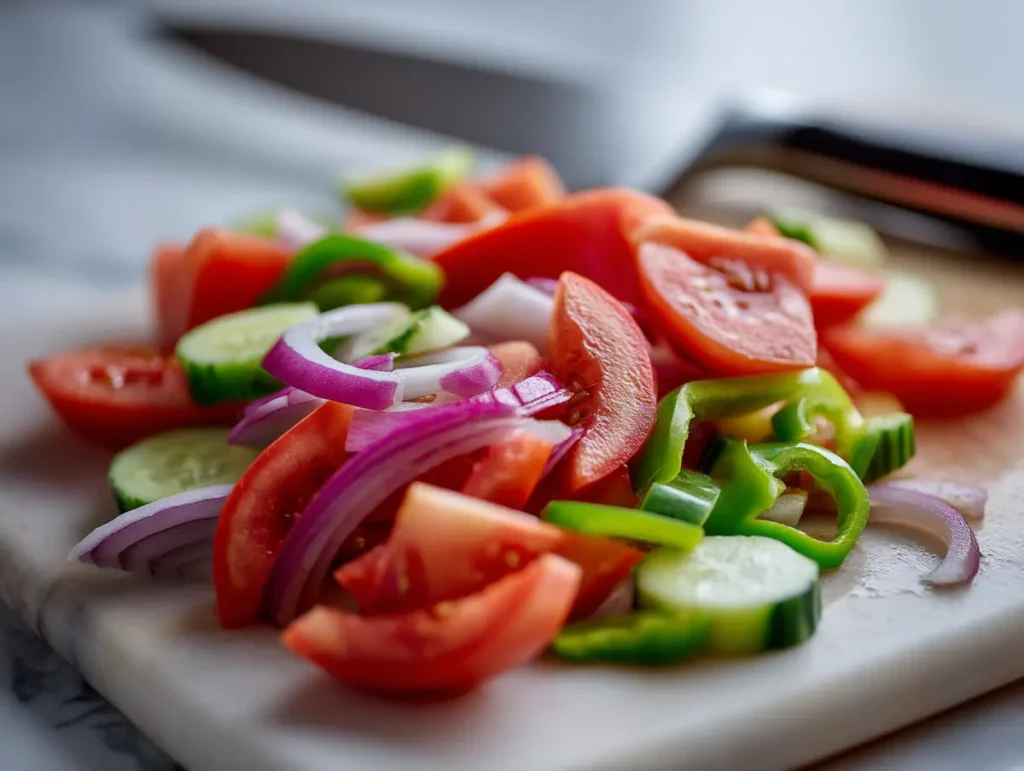
Cut the tomatoes into chunky wedges and let them sit in the bottom of your serving bowl so they can drop some juice. Slice the cucumber into half moons about ½ inch thick so they stay crisp but still soak up the dressing. Slice the green pepper into thin rings and the red onion into paper thin half moons, then toss the onion into a bowl of ice water for about 10 minutes to take away the harsh bite.
Step 2: Build the salad base
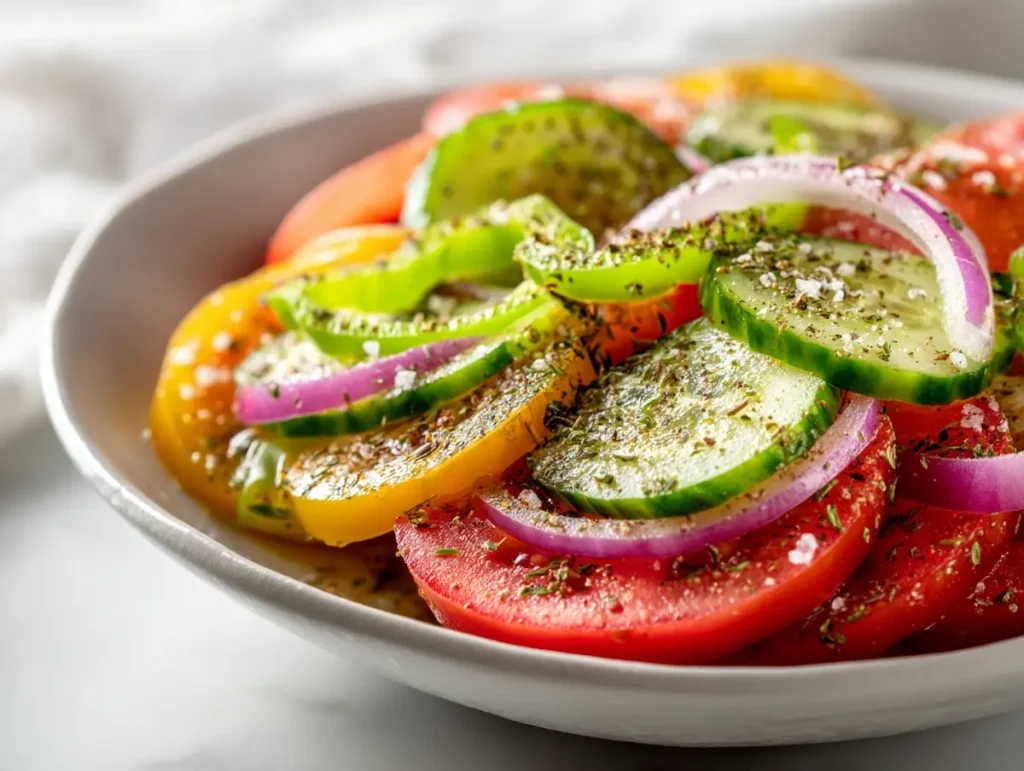
Drain the onion and pat it dry. Add it to the bowl with the tomatoes, cucumber and green pepper rings. Sprinkle everything with a generous pinch of kosher salt, several twists of black pepper and about one teaspoon of dried oregano. I season now instead of at the very end so a little tomato juice and salt create that almost tomatoey vinaigrette at the bottom.
Step 3: Add olives and whisk the dressing
Scatter the kalamata olives over the vegetables. In a small jar or glass measuring cup whisk together the olive oil and one tablespoon of red wine vinegar until it looks slightly thick and glossy. Taste and add up to one more tablespoon vinegar if you like things sharper. The dressing should taste a bit too salty and tangy at this stage because it is about to coat a whole pile of mild vegetables.
Step 4: Dress and toss just enough
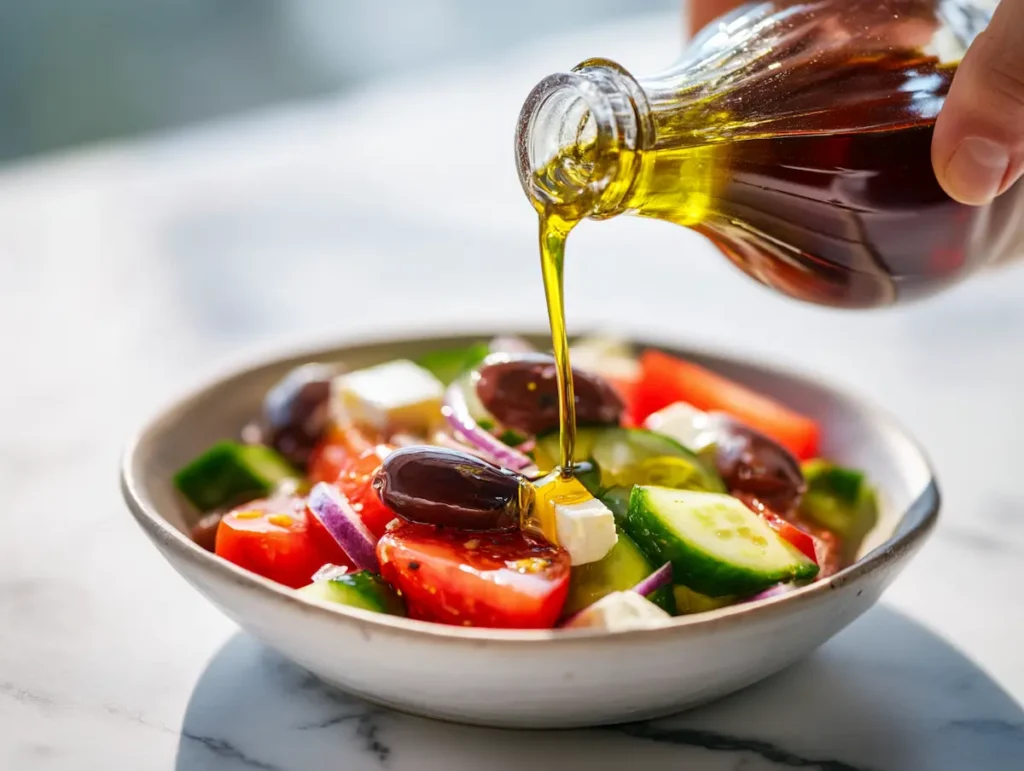
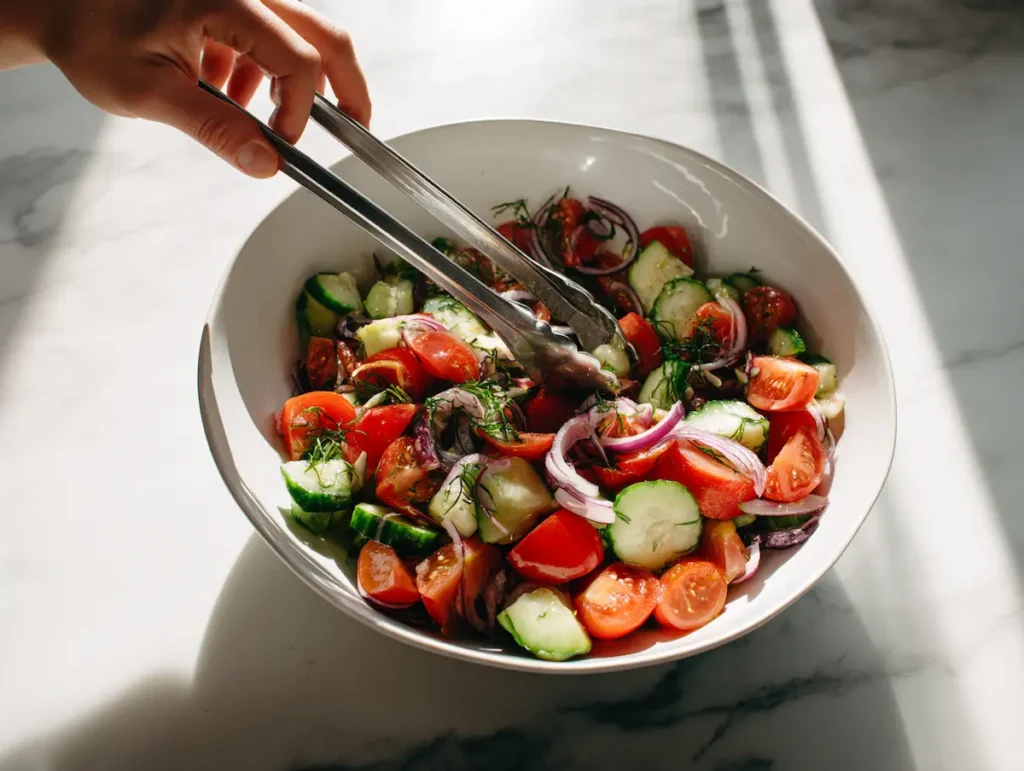
Pour the dressing all over the salad, making sure you hit the edges of the bowl, not just the center. Use tongs or your hands to toss the salad only two or three times so the vegetables are coated but the tomatoes do not break down. You should see a shiny coat on everything and a shallow pool of flavor at the bottom instead of a soupy mess.
Step 5: Finish with the feta block
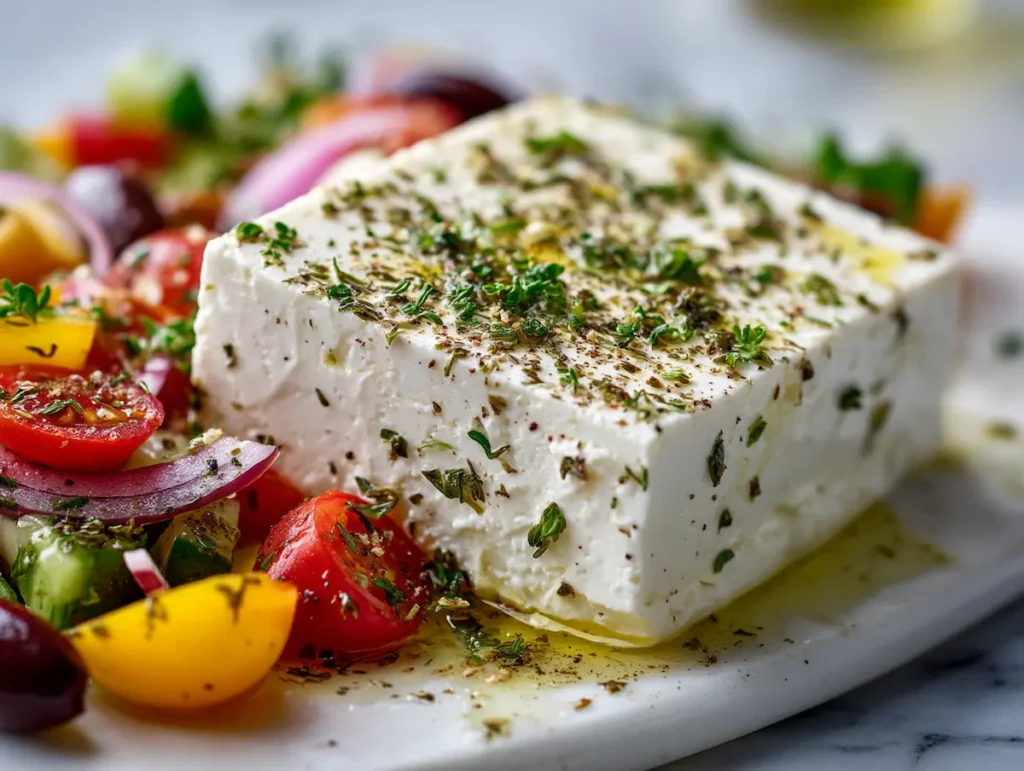
Set the feta block right on top of the salad in the middle. Drizzle a tiny extra splash of olive oil over the cheese and sprinkle on the remaining dried oregano. When you bring the bowl to the table people can break off as much feta as they want and swipe it through that tomato and olive oil situation at the bottom. That is the whole point of village salad.
5-Step Easy Horiatiki Salad (Greek Village Classic)
- Total Time: 15 minutes
- Yield: 4 servings
Description
Make horiatiki salad in 5 easy steps with tomatoes, cucumbers, olives and feta for a bold, no-lettuce greek village salad ready in 15 minutes.
Ingredients
4 medium ripe tomatoes, cut into wedges1 large English cucumber, sliced into 1/2 inch half moons1 green bell pepper, seeded and sliced into thin rings1/2 small red onion, very thinly sliced1/2 cup pitted kalamata olives7 to 8 ounces feta cheese block, preferably packed in brine1/4 cup extra-virgin olive oil1 to 2 tablespoons red wine vinegar, to taste1 1/2 teaspoons dried oregano, dividedKosher salt, to tasteFreshly ground black pepper, to taste
Instructions
1. Cut the tomatoes into chunky wedges and place them in a wide salad bowl so some juice collects on the bottom. Slice the cucumber into 1/2 inch half moons and add them to the bowl.
2. Slice the green bell pepper into thin rings and the red onion into very thin half moons. Soak the onion in a small bowl of ice water for about 10 minutes, then drain and pat dry.
3. Add the drained onion and pepper rings to the bowl with the tomatoes and cucumber. Sprinkle everything with a generous pinch of kosher salt, several twists of black pepper and about 1 teaspoon of the dried oregano.
4. Scatter the kalamata olives over the salad. In a small jar or measuring cup whisk together the olive oil and 1 tablespoon of red wine vinegar until slightly thick and glossy, then taste and add up to 1 more tablespoon vinegar if you like it sharper.
5. Pour the dressing evenly over the vegetables and toss gently just a few times until everything is lightly coated but the tomatoes are not crushed. Place the feta block on top, drizzle with a little extra olive oil and sprinkle with the remaining oregano before serving.
Notes
Storage: Leftover horiatiki salad keeps for about 1 day in the refrigerator. The vegetables will soften, so it is best piled on toast or stuffed into pita the next day.Substitutions: You can swap in cherry tomatoes for whole tomatoes and add yellow or orange bell pepper along with the green. Use any flavorful black olives if you cannot find kalamata.Fast flavor tip: To turn this into a full meal, toss in a can of drained chickpeas or white beans after you add the dressing so they soak up all the tomato and olive oil flavor.Related recipes on fastflavorbites.com: try it next to the burger bowl, corned beef and cabbage, or fast naan for a full spread.
- Prep Time: 15 minutes
- Cook Time: 0 minutes
- Category: Salad
- Method: No-Cook
- Cuisine: Mediterranean
Nutrition
- Serving Size: 1 portion (about 1 1/2 cups)
- Calories: 240
- Sugar: 6g
- Sodium: 640mg
- Fat: 20g
- Saturated Fat: 7g
- Unsaturated Fat: 12g
- Trans Fat: 0g
- Carbohydrates: 11g
- Fiber: 2g
- Protein: 7g
- Cholesterol: 30mg
Keywords: horiatiki salad, greek village salad, traditional greek salad, authentic horiatiki, horiatiki greek salad recipe, no lettuce greek salad, tomato cucumber feta salad, mediterranean salad recipe, kalamata olive salad, easy horiatiki salad
Horiatiki Salad vs Other Fast Flavor Meals
Fastflavorbites lives on bold recipes that hit hard without a ton of time. Here is where horiatiki slots in next to a few regulars from the site.
| Recipe | Main flavors | Active time | Best night to make it |
|---|---|---|---|
| Horiatiki salad | Tomato, cucumber, olives, feta, oregano | About 15 minutes | Hot nights when you want dinner that does not require the stove |
| Burger bowl | Seasoned beef, pickles, cheese, special sauce | 25 to 30 minutes | Takeout craving nights when you still want control over ingredients |
| Corned beef and cabbage | Slow simmered beef, cabbage, potatoes, mustard | Hands on 20 minutes plus simmer time | Weekends when you want a cozy pot on the stove and leftovers |
A Mediterranean style pattern that includes salads like this has been linked with better heart health and lower cardiovascular risk in large observational studies reviewed by the National Institutes of Health.
Why Horiatiki Salad Hits So Hard On Flavor
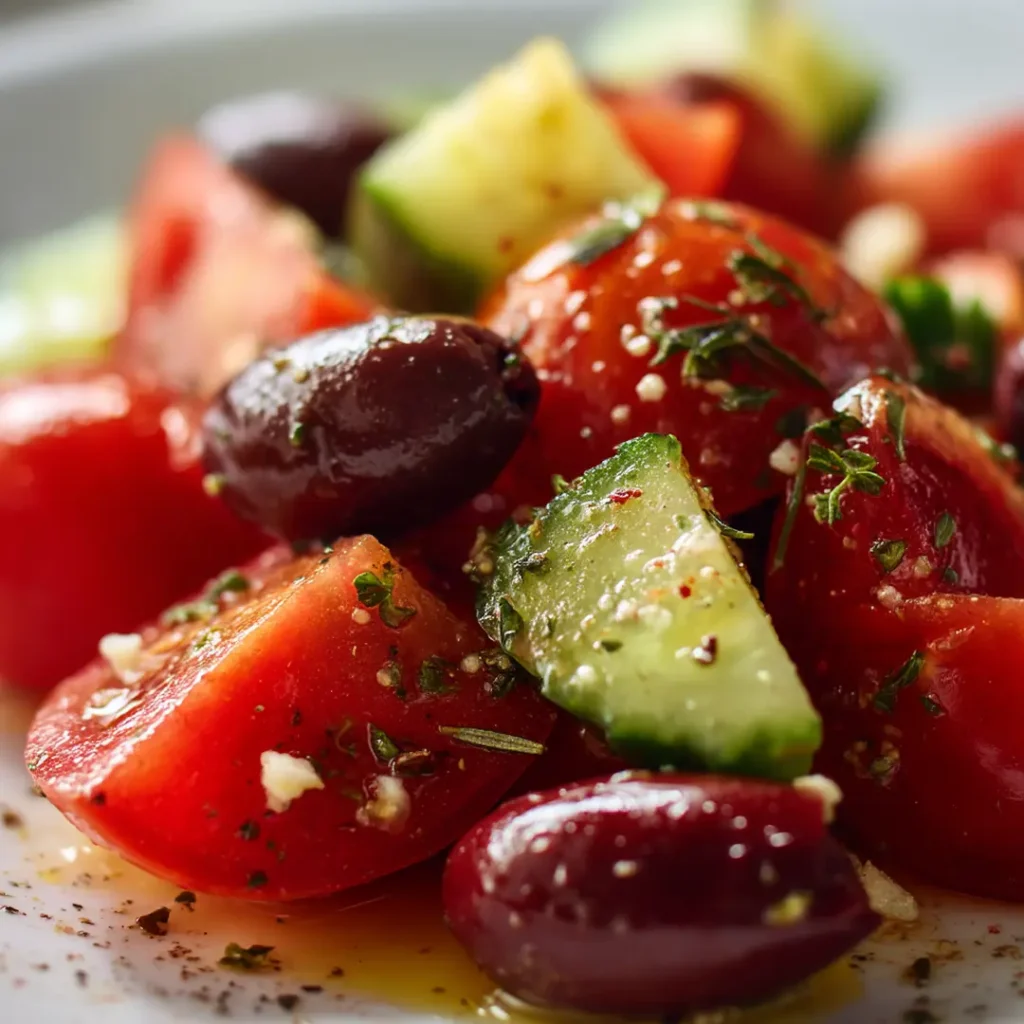
Horiatiki salad works because you get contrast in every bite: sweet tomatoes, cool cucumber, bitter pepper, salty feta, briny olives and rich olive oil. Nothing is shy. When you skip lettuce and cut everything into generous pieces, your teeth actually have something to do and your tongue gets all those different textures and temperatures at once.
From a nutrition angle you are looking at a bowl that is mostly vegetables plus a decent hit of healthy fats from olive oil and feta. A typical restaurant greek salad clocks around 200 to 350 calories per serving depending on how much dressing you drown it in, according to sample menus and university dining nutrition sheets such as the greek salad reference from Columbia University Dining. At home you get to control both the oil pour and the cheese size, which is nice if you are pairing this with something heavier like a burger bowl.
Horiatiki Salad for Weeknight Routines
On my own rotation this salad fills the “big crunchy thing” slot. If I already plan a main, I just scan the fridge for tomatoes, cucumber and feta and know dinner will feel complete. I will throw horiatiki next to sheet pan quesadillas, leftover corned beef, or anything grilled. It makes whatever else is on the table feel fresher and more intentional without extra work.
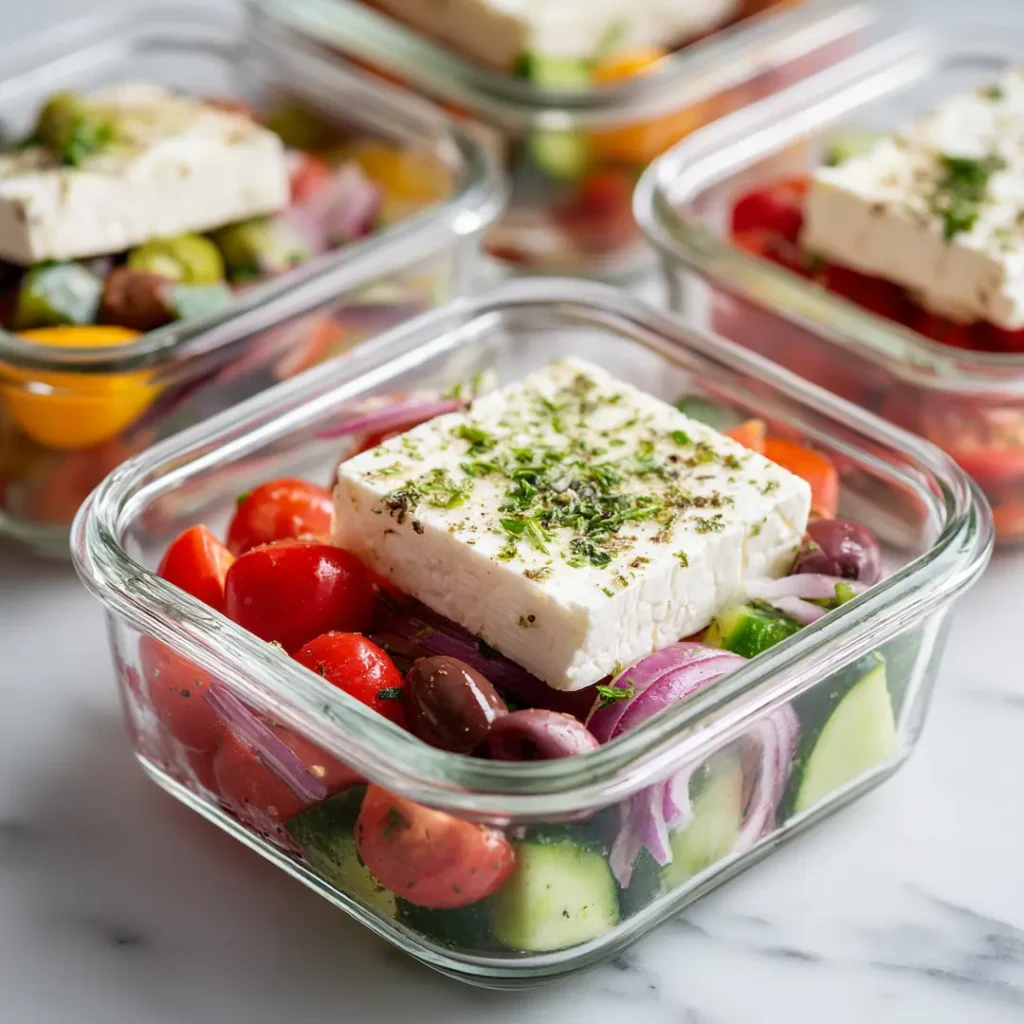
When I am really short on time I will prep part of the bowl in the morning. Tomatoes and cucumbers get chopped and stored in a container. At night I just slice fresh onion, crumble or add a block of feta and shake dressing in a jar. If you want a full fast flavor spread, you can add something fun like fast naan or a simple dessert such as simple pancakes for two after dinner and you are done.
5 Mistakes to Avoid With Horiatiki Salad
The first time I tried to recreate this at home I did what every sad side salad does. I grabbed a bag of lettuce, drowned it in bottled dressing and tossed a handful of feta crumbles on top. It tasted fine. It did not taste like Greece. Here are the mistakes I fixed.
- Adding lettuce to the bowl. Classic horiatiki does not use lettuce. It waters things down and steals space from all the good stuff. If your bowl looks mostly green, you are drifting back toward generic house salad territory.
- Cutting everything too small. Tiny dice go mushy fast and do not carry flavor. You want wedges and thick slices so every forkful hits with tomato juice, crunch and salt.
- Using pre crumbled feta. Crumbles are often dry and chalky. A block in brine stays creamy and lets people decide how much cheese they want in each bite.
- Overdressing the salad early. If you pour dressing on an hour before eating, the veggies leak water and sit in a salty puddle. Dress this within about 20 minutes of serving so it stays bright.
- Skipping real olive oil. This salad is basically a commercial for decent olive oil. If your bottle smells flat or old, grab a fresher one. You taste it in every bite and even nutrition sheets like the USDA data for oils remind us that most of the calories here come from that fat.
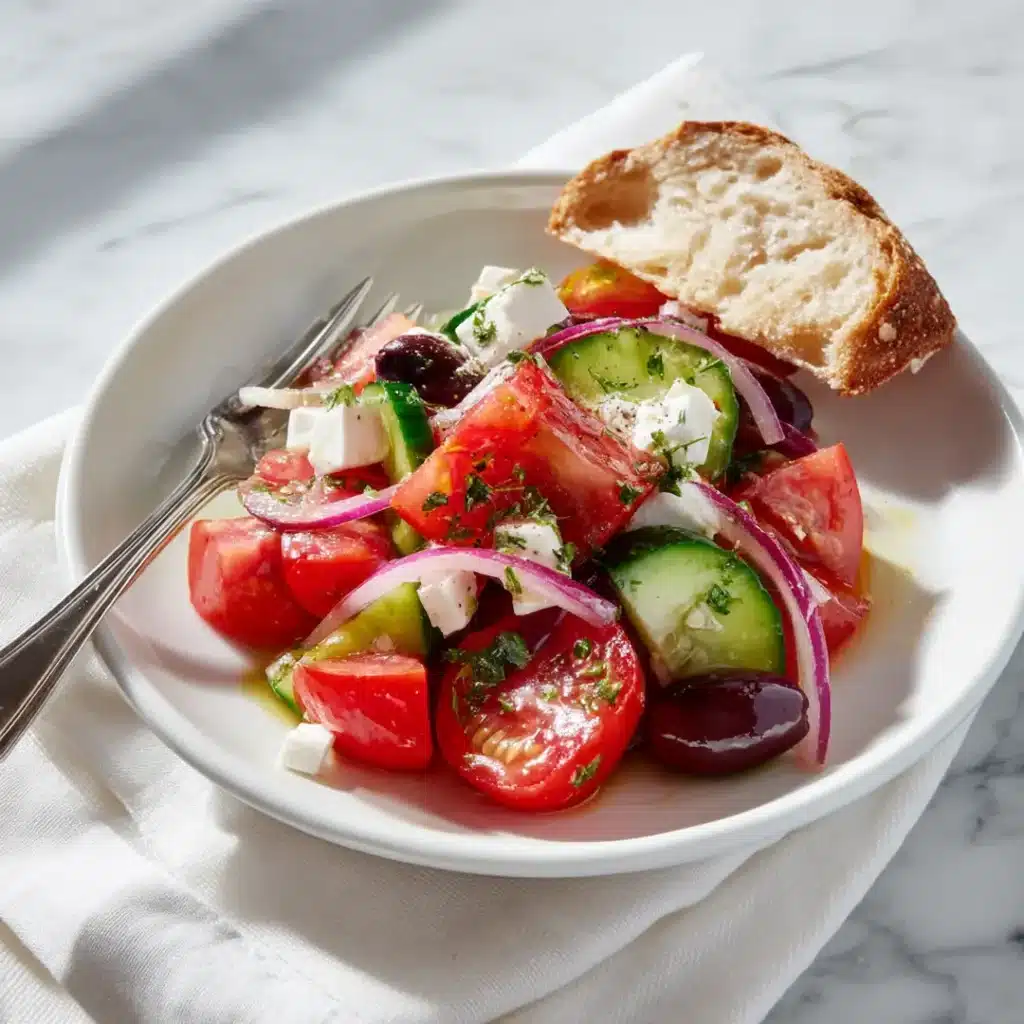
For general guidance on balance, the USDA MyPlate framework is a solid mental picture. Horiatiki basically knocks out the vegetable part of the plate in one colorful shot.
Fast flavor tip: If you want to turn this into a full meal without cooking more meat, toss in a can of drained chickpeas or white beans right after you add the dressing. They soak up the tomato and olive oil and make the bowl feel like dinner.
Frequently Asked Questions About Horiatiki Salad
What is the difference between horiatiki salad and greek salad?
Horiatiki salad is the traditional greek village version made with tomatoes, cucumber, green pepper, onion, olives and a block of feta with zero lettuce. Many restaurant greek salads add romaine or mixed greens and sometimes other toppings. If your bowl is mostly lettuce, you are not eating classic horiatiki.
Can I make horiatiki salad ahead of time?
You can prep the vegetables and even season them with salt and oregano a few hours early, then keep them covered in the fridge. Wait to add the olive oil, vinegar and feta until about fifteen to twenty minutes before serving. That timing keeps the cucumbers crisp and the tomatoes juicy instead of watery.
What kind of feta is best for horiatiki salad?
The best feta for horiatiki salad is a firm block packed in brine made from sheep or sheep and goat milk. It crumbles softly when you press your fork into it and carries more flavor than dry pre crumbled cheese. Skip low fat versions because they tend to taste chalky and bland here.
Can I add protein to horiatiki salad?
Yes, you can add grilled chicken, shrimp or even leftover steak sliced thin right on top of horiatiki salad. Chickpeas or white beans also work if you want a vegetarian option that still feels filling. Just add a splash more dressing so the extra ingredients do not taste dry.
How long does horiatiki salad last in the fridge?
Horiatiki salad is best within a few hours of tossing, but leftovers keep in the refrigerator for about a day. The vegetables will soften a bit which actually makes them perfect piled on toast or stuffed into warm pita. If you know you want leftovers, hold back some feta and add it fresh later.
Can I change the vegetables in horiatiki salad?
You can add extras like cherry tomatoes, yellow pepper or a little chopped parsley and it will still taste close to classic. I would not skip tomatoes, cucumber, onion or feta because they are the backbone of horiatiki salad. When in doubt change one thing at a time and see if you like the new balance.
Bringing Horiatiki Salad Into Your Own Kitchen
Once you make horiatiki salad this way a few times it stops being a recipe and just becomes how you cut summer vegetables. Ten or fifteen minutes of easy prep turns into a bowl that tastes like it belongs in a little seaside taverna, even if you are eating it next to corned beef or fast naan in your apartment kitchen. That is my favorite kind of fast flavor win.
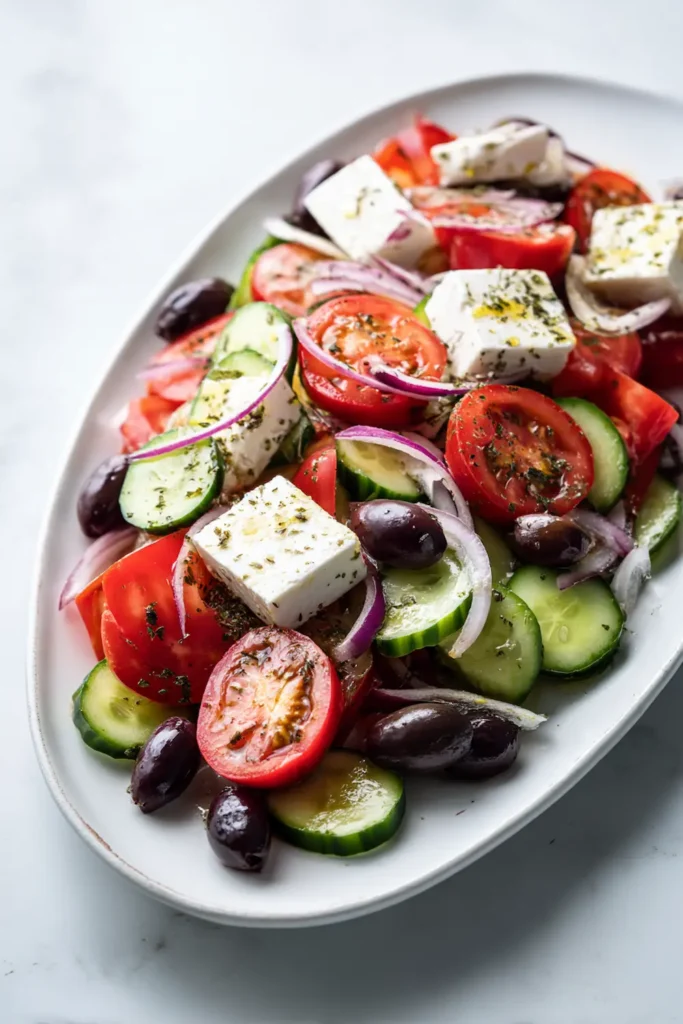
Next time you are planning a heavy main or building a spread around something like a burger bowl, plug this greek village salad into the vegetable slot and see how much lighter the whole plate feels. Then save it in your “no cook dinner” folder, because once tomatoes are good again you are going to want horiatiki salad on repeat.