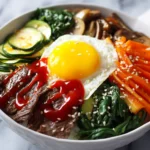
Description
Easy bibimbap recipe with five individually seasoned vegetables, marinated beef, homemade gochujang sauce, and a runny fried egg over short-grain white rice. Tested 30+ times by Chef Lily Jason.
Ingredients
Scale
- 1 1/2 cups short-grain white rice, rinsed until water runs clear
- 1 3/4 cups cold water
- 1/2 tsp kosher salt
- 2 cups fresh spinach, loosely packed (about 2 oz)
- 1 medium carrot (about 4 oz), julienned thin
- 1 small zucchini (about 5 oz), cut into thin half-moons
- 4 oz shiitake mushrooms, stems removed, sliced
- 1 cup bean sprouts
- 2 tbsp toasted sesame oil, divided across vegetables
- 2 cloves garlic, minced, divided
- 1 tsp soy sauce (for mushrooms only)
- Salt to taste for each vegetable
- 6 oz ribeye or sirloin, sliced very thin against the grain
- 1 1/2 tbsp soy sauce (for beef marinade)
- 1 tbsp toasted sesame oil (for beef marinade)
- 1 tsp granulated sugar
- 2 cloves garlic, minced (for beef marinade)
- 1/4 tsp black pepper
- 2 tbsp gochujang paste
- 1 tbsp toasted sesame oil (for sauce)
- 1 tbsp rice vinegar
- 1 1/2 tsp honey
- 1 tsp soy sauce (for sauce)
- 1 tsp garlic, minced (for sauce)
- 1 tsp toasted sesame seeds
- 1 to 2 tsp water, to thin sauce if needed
- 2 large eggs, fried sunny side up
- 1 tsp neutral oil for frying eggs
- Extra sesame seeds and sesame oil to serve
Instructions
- 1. Rinse short-grain white rice under cold water until nearly clear, 3 to 4 rounds. Cook with water and salt on stovetop or rice cooker. Keep covered and warm off heat when done.
- 2. Blanch spinach 30 seconds in boiling salted water. Squeeze out all water. Season with 1 tsp sesame oil, pinch of garlic, and salt. Blanch bean sprouts 1 minute, same seasoning. Saute carrots over medium-high heat 2 minutes. Salt zucchini 5 minutes to pull moisture, then saute 2 minutes. Cook mushrooms with 1 tsp soy sauce and sesame oil 3 minutes until deep golden. Set each vegetable in its own separate pile.
- 3. Mix soy sauce, sesame oil, sugar, garlic, and pepper. Add thinly sliced beef and marinate 15 minutes minimum. Cook in a very hot pan 2 to 3 minutes total until caramel crust forms on edges.
- 4. Whisk together gochujang, sesame oil, rice vinegar, honey, soy sauce, garlic, sesame seeds, and water until smooth. Taste and adjust heat with more gochujang or sweetness with more honey.
- 5. Scoop warm rice into a wide deep bowl. Arrange each vegetable in its own pinwheel section around the rim. Place beef in center. Fry egg sunny side up, yolk still runny, and set on top. Add gochujang sauce and drizzle of sesame oil. Mix everything hard until rice turns orange and every bite has a little of everything.
Notes
- Storage: cooked vegetables keep 4 days refrigerated in separate containers. Rice keeps 3 days.
- Substitution: swap beef for sliced chicken breast, ground beef, or pan-fried firm tofu for a vegetarian bibimbap.
- Gluten-free: replace all soy sauce with tamari for a fully gluten-free bibimbap recipe.
- Sauce tip: make double the gochujang sauce and refrigerate up to 7 days. Use on eggs, grain bowls, and noodles.
- Meal prep: prep and season all vegetables on Sunday and store separately. Assemble any weeknight in under 10 minutes.
- Prep Time: 20 minutes
- Cook Time: 20 minutes
- Category: Dinner
- Method: Stovetop
- Cuisine: Korean
Nutrition
- Serving Size: 1 bowl
- Calories: 620
- Sugar: 9g
- Sodium: 890mg
- Fat: 22g
- Saturated Fat: 5g
- Unsaturated Fat: 15g
- Trans Fat: 0g
- Carbohydrates: 72g
- Fiber: 6g
- Protein: 32g
- Cholesterol: 215mg
Keywords: bibimbap recipe, korean bibimbap, bibimbap bowl, bibimbap sauce, gochujang sauce, easy bibimbap, authentic bibimbap, beef bibimbap, vegetarian bibimbap, chicken bibimbap recipe, bibimbap rice, korean rice bowl, traditional bibimbap, homemade bibimbap, dolsot bibimbap