
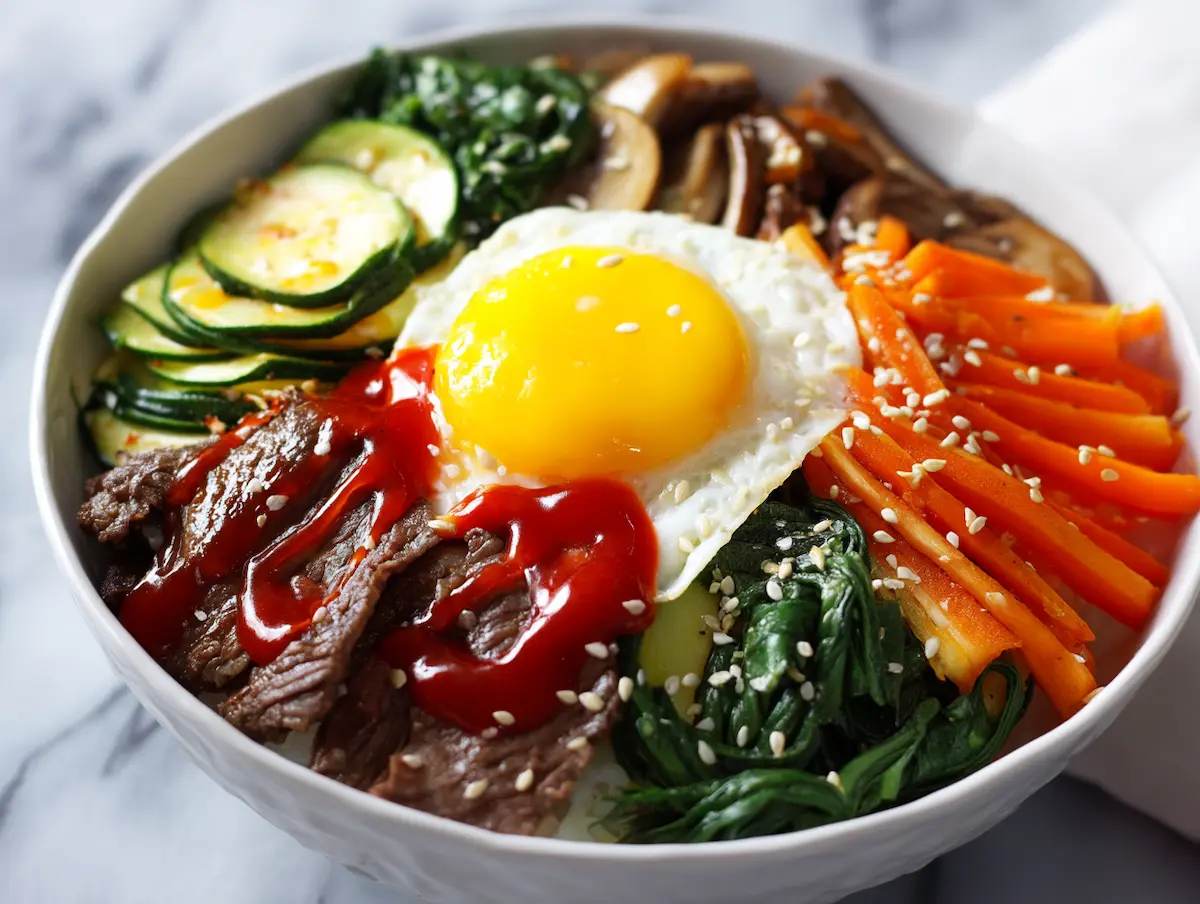
I tested this bibimbap recipe thirty-two times. Thirty-two.
Most bowls I made in the first ten rounds tasted flat. The vegetables were bland, the sauce was just spicy paste dumped on rice, and nothing felt like the real thing.
The turning point was learning to season every single vegetable separately and making the gochujang sauce from scratch instead of opening a jar.
That is the whole secret to a great bibimbap recipe. It is not complicated. It is deliberate. You treat each component like it matters on its own, you build the bowl in layers, and you mix everything together right before the first bite. At FastFlavorBites.com, Chef Lily Jason has put this bibimbap recipe through every variation from classic Korean bibimbap to easy weeknight shortcuts. Just like our tteokbokki recipe, the method matters more than the ingredient list.
Nouha approved this version on the first bite. No fluff, just flavor.
What You Will Learn
- Why seasoning each vegetable separately is the one step that changes everything in a bibimbap bowl
- How to make the bibimbap gochujang sauce from scratch in under 5 minutes
- The correct rice to use: short-grain white rice, not sticky or long-grain
- Three tested protein options: marinated beef, chicken, and fully vegetarian tofu
- Answers to the six most-searched US questions about bibimbap, including the egg, the sauce, and the rice base
What Is Bibimbap?
Bibimbap (비빔밥) is a Korean mixed rice dish. “Bibim” means to mix, and “bap” means rice.
The bowl holds warm short-grain white rice topped with individually seasoned vegetables, a cooked protein, a fried egg, and a gochujang-based sauce. You mix everything together at the table right before eating. That final mix is not optional. It is the dish.
It originated in Korea and is one of the country’s most recognized food exports. Each traditional bowl contains five or more distinct vegetable preparations, each cooked and seasoned separately before assembly.
According to the Dietary Guidelines for Americans, 2020–2025, adults should aim to fill half their plate with vegetables and fruits daily. One properly made bibimbap recipe, with five individually seasoned vegetables, a whole egg, and a fermented sauce, covers a significant portion of that in a single sitting.
Quick Answer
A bibimbap recipe is a Korean rice bowl where short-grain white rice is topped with individually seasoned vegetables, a cooked protein, a fried egg, and gochujang sauce. The dish is mixed together before eating.
It is a staple everyday Korean meal with deep cultural roots. To make it at home: season each vegetable separately, prepare the sauce fresh, top with a runny fried egg, and mix everything hard before the first bite.
Bibimbap Ingredients
These quantities make 2 servings. I prefer short-grain white rice because the slight stickiness holds the sauce to every grain. Long-grain falls apart when you mix.
The Rice Base
- 1 1/2 cups short-grain white rice, rinsed until water runs clear
- 1 3/4 cups cold water
- 1/2 tsp kosher salt
The Vegetables (Namul)
- 2 cups fresh spinach, loosely packed (about 2 oz)
- 1 medium carrot (about 4 oz), julienned thin
- 1 small zucchini (about 5 oz), cut into thin half-moons
- 4 oz shiitake mushrooms, stems removed, sliced
- 1 cup bean sprouts
- 2 tbsp toasted sesame oil, divided across vegetables
- 2 cloves garlic, minced, divided
- 1 tsp soy sauce (for mushrooms specifically)
- Salt to taste for each vegetable
The Protein (Beef Version)
- 6 oz ribeye or sirloin, sliced very thin against the grain
- 1 1/2 tbsp soy sauce
- 1 tbsp toasted sesame oil
- 1 tsp granulated sugar
- 2 cloves garlic, minced
- 1/4 tsp black pepper
The Bibimbap Gochujang Sauce
- 2 tbsp gochujang paste
- 1 tbsp toasted sesame oil
- 1 tbsp rice vinegar
- 1 1/2 tsp honey
- 1 tsp soy sauce
- 1 tsp garlic, minced
- 1 tsp toasted sesame seeds
- 1 to 2 tsp water, to thin if needed
To Finish the Bowl
- 2 large eggs, fried sunny side up
- 1 tsp neutral oil (for frying eggs)
- Extra sesame seeds and a drizzle of sesame oil to serve
For those avoiding gluten: standard soy sauce contains wheat. Swap in tamari for a gluten-free bibimbap recipe with no flavor difference. Our complete guide on whether soy sauce is gluten-free covers every option.
How to Make Bibimbap: Step by Step
Step 1: Cook the Rice
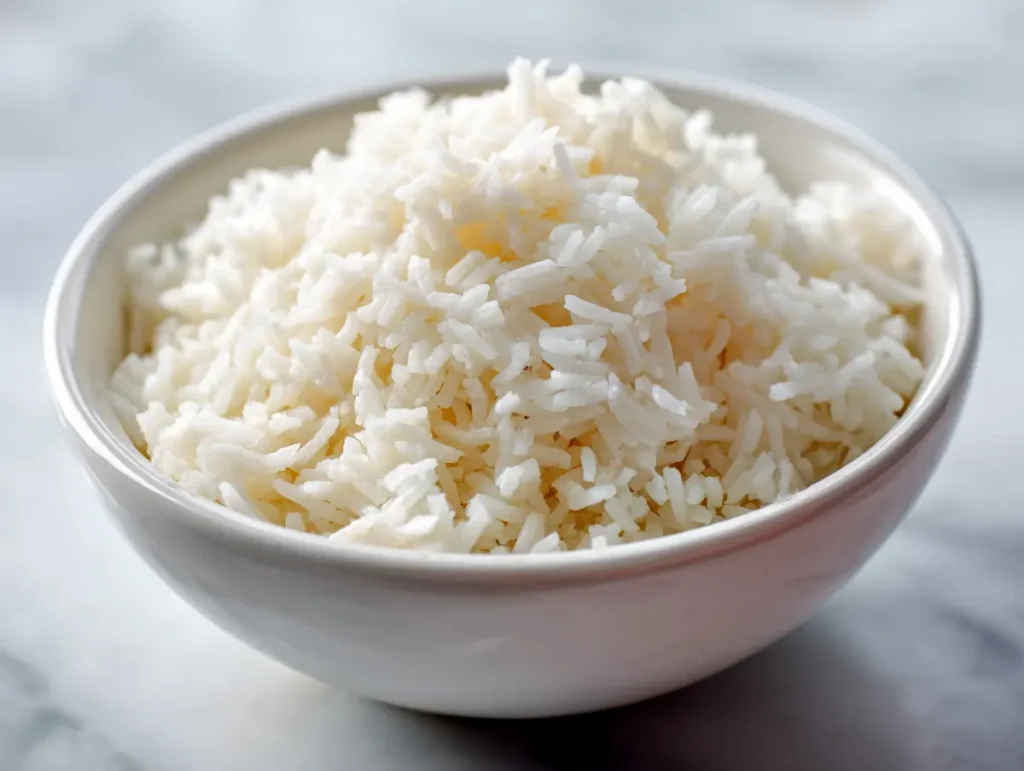
Rinse the short-grain rice under cold running water until the water is nearly clear. This takes 3 to 4 rinse rounds.
Cook on the stovetop or in a rice cooker using the water and salt. When done, keep it covered and warm off the heat. The rice should be slightly sticky and fragrant — that clean just-cooked smell that fills the kitchen in seconds.
Step 2: Season and Cook Each Vegetable Separately
This is the step I got completely wrong the first five times. I used to cook everything in one pan. The result was a soggy pile with no distinct flavor.
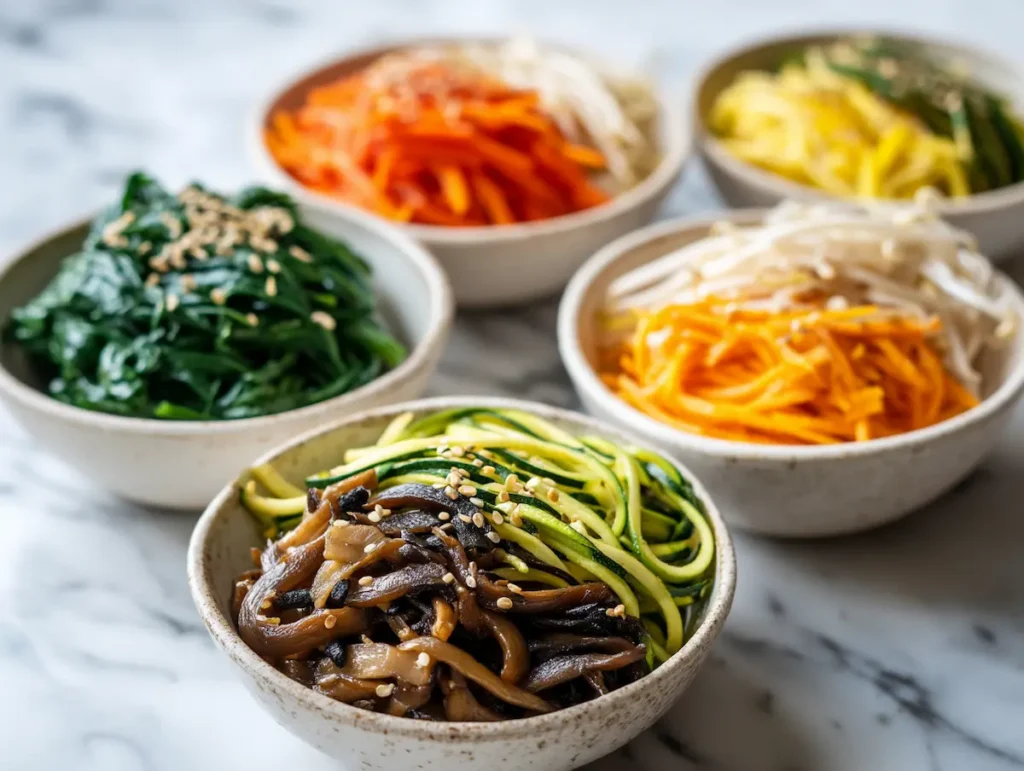
Now I treat each vegetable like its own small side dish. Blanch the spinach in boiling salted water for 30 seconds, then squeeze out every drop of water with your hands and toss with 1 tsp sesame oil, a pinch of minced garlic, and a small pinch of salt.
Blanch bean sprouts for 1 minute, same seasoning. Saute the carrots in a lightly oiled pan over medium-high heat for 2 minutes. Salt the zucchini for 5 minutes first to pull moisture, then saute 2 minutes until just tender.
Cook mushrooms with 1 tsp soy sauce and a drizzle of sesame oil for 3 minutes until deep golden. Set each one in its own separate pile on a plate.
Step 3: Marinate and Cook the Beef
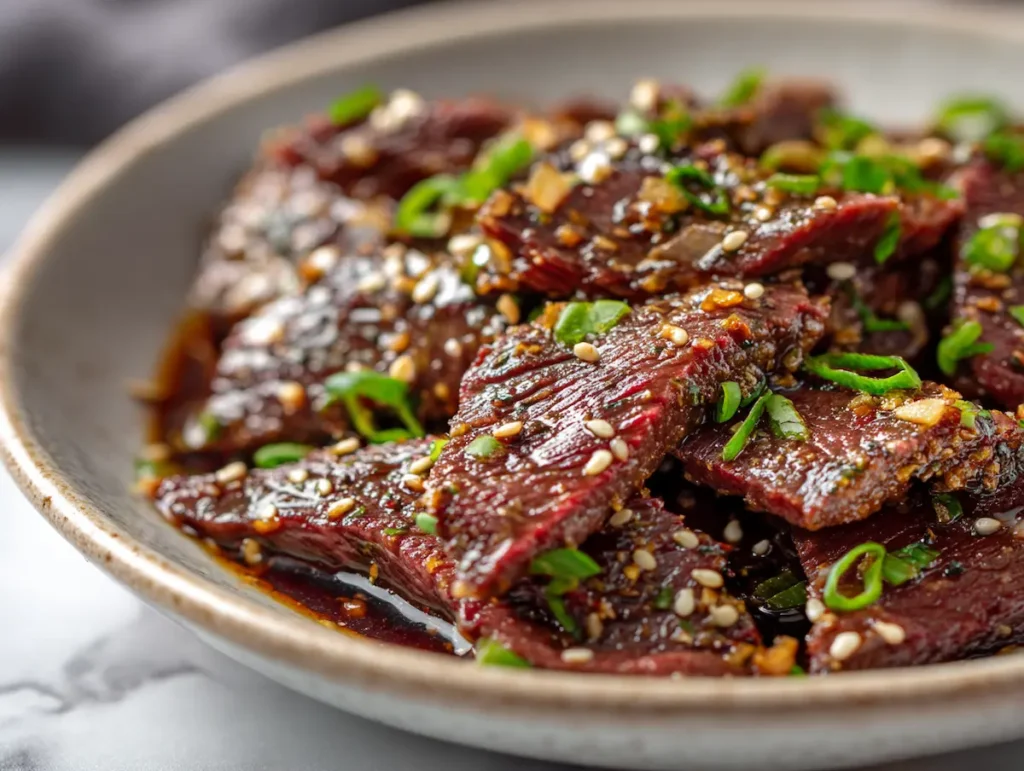
Combine the soy sauce, sesame oil, sugar, garlic, and black pepper in a bowl. Add the thinly sliced beef and let it sit for 15 minutes minimum.
Cook in a very hot pan for 2 to 3 minutes total. You want a slight caramel crust on the edges. That sweet-soy char is what makes the beef layer so good against the clean, bright vegetables around it.
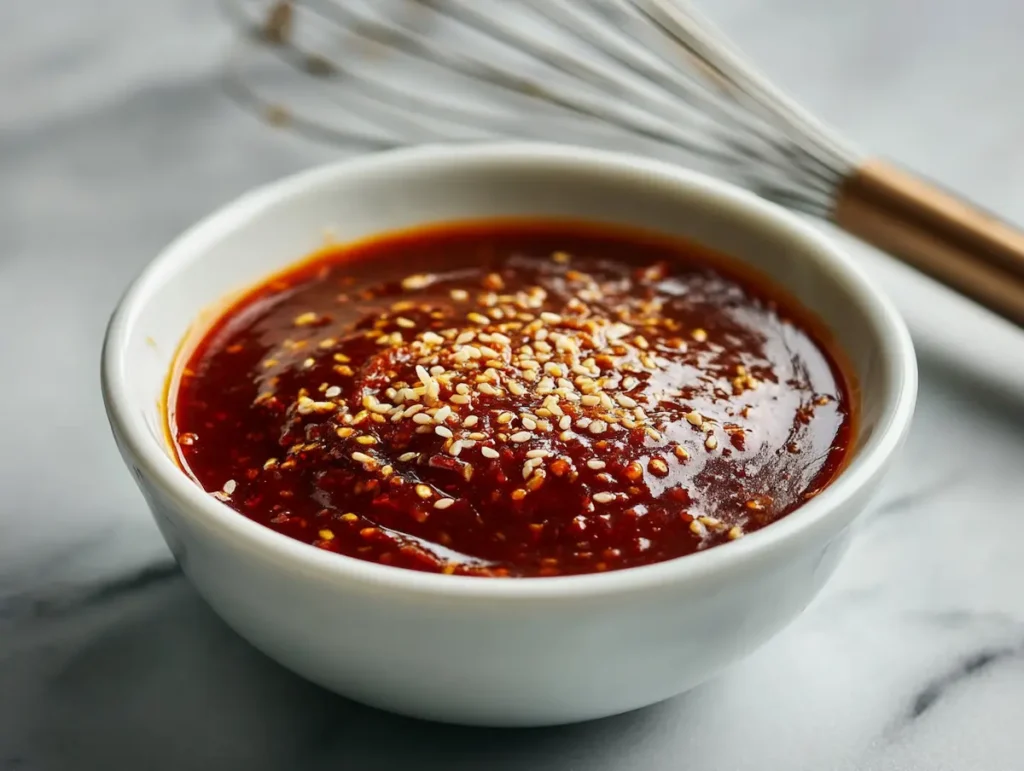
Step 4: Make the Bibimbap Sauce
Whisk all sauce ingredients together in a small bowl until smooth. Taste it. Adjust heat with more gochujang, sweetness with more honey.
I always make double the batch and keep the rest in the fridge. It lasts a full week and works on everything from rice to the gochujang eggs we make every Sunday morning.
Step 5: Assemble the Bowl, Add the Egg, and Mix
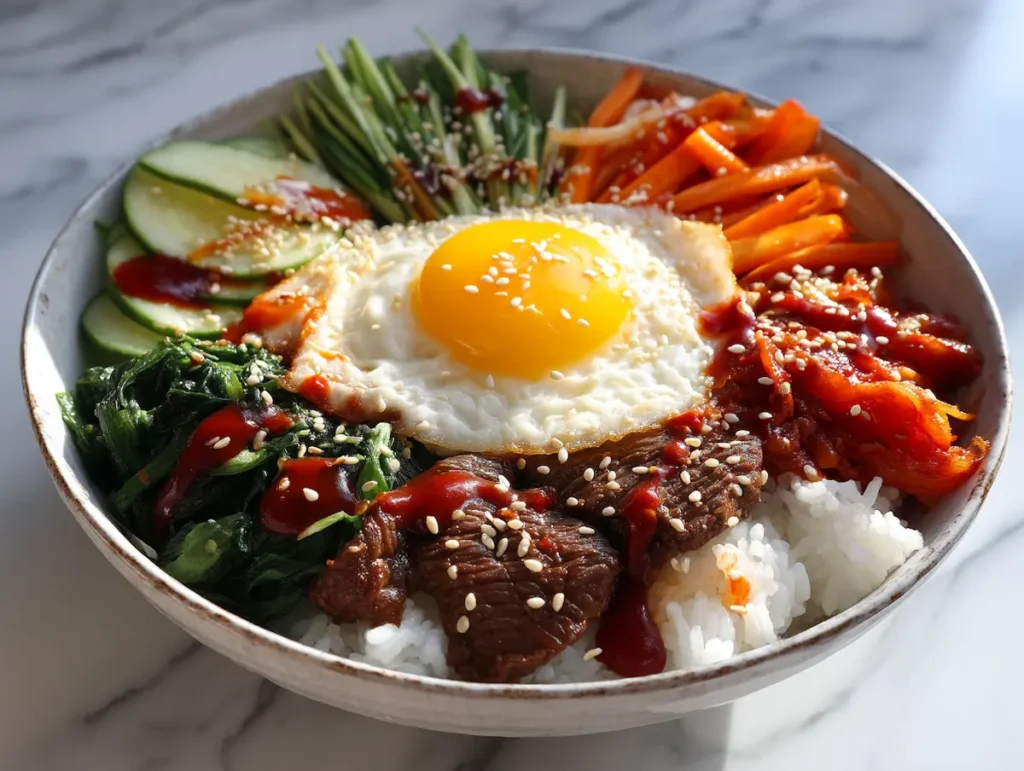
Scoop warm rice into a wide, deep bowl. Arrange each vegetable in its own section around the rim, pinwheel-style so every color is visible. Place the beef in the center.
Fry the egg sunny side up until the whites are just set but the yolk is still runny and glossy. Set it right on top of the bowl.
Add one or two spoonfuls of gochujang sauce and a drizzle of sesame oil. Then mix. Hard. Fold everything together until the rice turns slightly orange from the sauce, the yolk breaks and coats the whole bowl, and every single bite has a little of everything in it.
Easy Bibimbap Recipe
- Total Time: 40 minutes
- Yield: 2 servings 1x
Description
Easy bibimbap recipe with five individually seasoned vegetables, marinated beef, homemade gochujang sauce, and a runny fried egg over short-grain white rice. Tested 30+ times by Chef Lily Jason.
Ingredients
- 1 1/2 cups short-grain white rice, rinsed until water runs clear
- 1 3/4 cups cold water
- 1/2 tsp kosher salt
- 2 cups fresh spinach, loosely packed (about 2 oz)
- 1 medium carrot (about 4 oz), julienned thin
- 1 small zucchini (about 5 oz), cut into thin half-moons
- 4 oz shiitake mushrooms, stems removed, sliced
- 1 cup bean sprouts
- 2 tbsp toasted sesame oil, divided across vegetables
- 2 cloves garlic, minced, divided
- 1 tsp soy sauce (for mushrooms only)
- Salt to taste for each vegetable
- 6 oz ribeye or sirloin, sliced very thin against the grain
- 1 1/2 tbsp soy sauce (for beef marinade)
- 1 tbsp toasted sesame oil (for beef marinade)
- 1 tsp granulated sugar
- 2 cloves garlic, minced (for beef marinade)
- 1/4 tsp black pepper
- 2 tbsp gochujang paste
- 1 tbsp toasted sesame oil (for sauce)
- 1 tbsp rice vinegar
- 1 1/2 tsp honey
- 1 tsp soy sauce (for sauce)
- 1 tsp garlic, minced (for sauce)
- 1 tsp toasted sesame seeds
- 1 to 2 tsp water, to thin sauce if needed
- 2 large eggs, fried sunny side up
- 1 tsp neutral oil for frying eggs
- Extra sesame seeds and sesame oil to serve
Instructions
- 1. Rinse short-grain white rice under cold water until nearly clear, 3 to 4 rounds. Cook with water and salt on stovetop or rice cooker. Keep covered and warm off heat when done.
- 2. Blanch spinach 30 seconds in boiling salted water. Squeeze out all water. Season with 1 tsp sesame oil, pinch of garlic, and salt. Blanch bean sprouts 1 minute, same seasoning. Saute carrots over medium-high heat 2 minutes. Salt zucchini 5 minutes to pull moisture, then saute 2 minutes. Cook mushrooms with 1 tsp soy sauce and sesame oil 3 minutes until deep golden. Set each vegetable in its own separate pile.
- 3. Mix soy sauce, sesame oil, sugar, garlic, and pepper. Add thinly sliced beef and marinate 15 minutes minimum. Cook in a very hot pan 2 to 3 minutes total until caramel crust forms on edges.
- 4. Whisk together gochujang, sesame oil, rice vinegar, honey, soy sauce, garlic, sesame seeds, and water until smooth. Taste and adjust heat with more gochujang or sweetness with more honey.
- 5. Scoop warm rice into a wide deep bowl. Arrange each vegetable in its own pinwheel section around the rim. Place beef in center. Fry egg sunny side up, yolk still runny, and set on top. Add gochujang sauce and drizzle of sesame oil. Mix everything hard until rice turns orange and every bite has a little of everything.
Notes
- Storage: cooked vegetables keep 4 days refrigerated in separate containers. Rice keeps 3 days.
- Substitution: swap beef for sliced chicken breast, ground beef, or pan-fried firm tofu for a vegetarian bibimbap.
- Gluten-free: replace all soy sauce with tamari for a fully gluten-free bibimbap recipe.
- Sauce tip: make double the gochujang sauce and refrigerate up to 7 days. Use on eggs, grain bowls, and noodles.
- Meal prep: prep and season all vegetables on Sunday and store separately. Assemble any weeknight in under 10 minutes.
- Prep Time: 20 minutes
- Cook Time: 20 minutes
- Category: Dinner
- Method: Stovetop
- Cuisine: Korean
Nutrition
- Serving Size: 1 bowl
- Calories: 620
- Sugar: 9g
- Sodium: 890mg
- Fat: 22g
- Saturated Fat: 5g
- Unsaturated Fat: 15g
- Trans Fat: 0g
- Carbohydrates: 72g
- Fiber: 6g
- Protein: 32g
- Cholesterol: 215mg
Keywords: bibimbap recipe, korean bibimbap, bibimbap bowl, bibimbap sauce, gochujang sauce, easy bibimbap, authentic bibimbap, beef bibimbap, vegetarian bibimbap, chicken bibimbap recipe, bibimbap rice, korean rice bowl, traditional bibimbap, homemade bibimbap, dolsot bibimbap
Bibimbap Variations Compared
| Version | Protein | Prep Time | Best For | Difficulty |
|---|---|---|---|---|
| Classic Korean Bibimbap | Marinated beef, thinly sliced | 40 min | Weekend cooking, special meals | Medium |
| Easy Bibimbap Recipe | Ground beef or skip protein | 20 min | Weeknight dinner, meal prep | Easy |
| Vegetarian Bibimbap | Pan-fried firm tofu | 35 min | Plant-based, lighter meals | Easy |
| Chicken Bibimbap Recipe | Sliced marinated chicken breast | 35 min | Lower fat, milder flavor | Easy |
| Dolsot Bibimbap (Stone Bowl) | Beef, seafood, or vegetarian | 45 min | Crispy rice crust, restaurant-style | Advanced |
Prep times are tested averages from the FastFlavorBites kitchen. Nutritional data sourced from USDA FoodData Central.
Why a Traditional Bibimbap Recipe Is Worth the Effort
There is a nutritional reason this bowl has been eaten daily in Korea for centuries.
According to the US Dietary Guidelines for Americans, adults should target five or more servings of vegetables per day. One properly made bibimbap recipe, with five individually seasoned vegetables, a whole egg, and a fermented sauce, covers a significant portion of that in a single sitting.
I prefer this over most other rice bowls because it forces variety. You cannot make a lazy bibimbap recipe. Every vegetable gets its own attention.
That habit, once it becomes automatic, changes how you approach every other meal too. Nouha noticed it first. She started asking for more colors in every bowl we made after we locked this recipe in.
For anyone following a structured eating approach, this bibimbap recipe fits naturally. Our readers on the 90-30-50 meal plan use bibimbap as their go-to balanced dinner. High protein, complex carbohydrates, five vegetable servings, healthy fat from the egg and sesame oil. It checks every box.
Bibimbap for Your Weekly Meal Prep Routine
Here is what actually works for making this bibimbap recipe a weeknight reality.
Prep all the vegetables on Sunday. Cook and season each one, then store them in separate small containers in the fridge. They hold well for 4 days. Make a double batch of the sauce and refrigerate it.
Then any night of the week, you cook fresh rice in 18 minutes, quick-fry a protein, and assemble the bowl in under 10 minutes total.
For a faster shortcut, you can do a rice cooker version. Add zucchini and spinach directly to the cooked rice and let the residual steam soften them for 5 minutes. It is not the same depth as individually sauteed vegetables, but it works on a genuinely busy night.
Season by hand after. The sauce and the egg stay non-negotiable regardless of the shortcut.
Fermented Korean condiments like gochujang also contribute to gut health. Our piece on kimchi for weight loss covers the science of fermented Korean staples in more detail if you want to go deeper on that angle.
5 Mistakes to Avoid When Making Bibimbap
- Cooking all the vegetables together. This is the single biggest mistake I made early on. Everything merges into one indistinct flavor. Each vegetable needs its own pan time and its own seasoning. Even if it takes 20 extra minutes, it makes a completely different bowl.
- Using cold or leftover rice without reheating. Cold rice does not absorb the gochujang sauce. It stays in clumps and the bowl never fully comes together. If you are using leftover rice, reheat it with a splash of water until it is fully warm and slightly sticky again before building the bowl.
- Overcooking the egg yolk. I was afraid of a runny yolk in my early attempts. That was wrong. The runny yolk is not optional. It acts as a secondary sauce that binds the rice and vegetables when mixed. Cook sunny side up: whites fully set, yolk still glossy and liquid in the center.
- Making a timid bibimbap sauce. The gochujang sauce should taste bold and slightly intense on its own before it goes in the bowl. It will be diluted across the entire bowl when mixed. If the sauce tastes mild on the spoon, add more gochujang before serving.
- Not mixing hard enough at the table. Gentle mixing leaves pockets of plain, undersauced rice at the bottom. According to research from the USDA Agricultural Research Service on fermented food flavor development, gochujang releases greater flavor complexity when fully incorporated into warm food rather than sitting on top. Mix aggressively until the rice is uniformly coated and every bite contains rice, vegetable, protein, and sauce together.
Quick Tips That Actually Work
- Make double the gochujang sauce and refrigerate up to 7 days. Use it on eggs, grain bowls, and noodles.
- Salt zucchini 5 minutes before sauteing to pull moisture. Skipping this step makes it watery in the bowl.
- Freeze the beef for 20 minutes before slicing. It cuts cleaner and thinner when semi-frozen.
- A stone bowl (dolsot) heated with sesame oil creates a crispy nurungji rice crust at the bottom. Worth trying once you have the base bibimbap recipe down.
- Leftover bibimbap components work as a rice bowl base for the burger bowl recipe we make for fusion nights.
Frequently Asked Questions About Bibimbap
What type of rice serves as the base for traditional bibimbap?
Short-grain white rice is the traditional base for a bibimbap recipe. Its slightly sticky texture allows the gochujang sauce to coat every grain and lets the bowl mix evenly.
Long-grain rice does not hold together the same way and makes mixing difficult. Brown rice works as a healthy substitute but changes the texture noticeably. For the most authentic Korean bibimbap, rinse short-grain white rice thoroughly until the water runs clear before cooking.
Which ingredient is commonly placed on top of bibimbap?
A fried egg is the standard topping placed on top of a bibimbap recipe. It is cooked sunny side up so the yolk stays runny.
When you mix the bowl, the yolk breaks and acts as a secondary sauce that coats the rice and vegetables with richness. In traditional Korean preparations, a raw egg yolk is sometimes placed directly on the hot rice instead of a fully fried egg. Both are correct. The egg is not optional in an authentic bibimbap recipe.
What sauce is traditionally used when making bibimbap?
Gochujang is the traditional sauce used in a bibimbap recipe. It is a Korean fermented chili paste mixed with sesame oil, rice vinegar, garlic, and a sweetener like honey to create the bibimbap sauce.
The result is spicy, slightly sweet, tangy, and nutty all at once. It is not ketchup, not mayo, and not a generic hot sauce. Gochujang is available at most Asian grocery stores and increasingly at major US supermarkets. Make the sauce fresh for the best flavor in your bowl.
Is mayo traditionally used when making bibimbap?
No. Mayo is not traditionally used in a bibimbap recipe. The sauce is gochujang-based, not creamy or mayonnaise-based.
Mayo sometimes appears in modern fusion or fast-casual Korean bowl restaurants in the US, but it has no place in a traditional authentic bibimbap recipe. If you encounter a recipe calling for mayo, it is a Western adaptation. For the real dish, stick with the gochujang sauce made from chili paste, sesame oil, rice vinegar, garlic, and honey.
Is corn commonly placed on top of bibimbap?
No. Corn is not a traditional bibimbap recipe topping. Classic Korean bibimbap is topped with seasoned vegetables such as spinach, carrots, zucchini, mushrooms, and bean sprouts, along with a cooked protein and a fried egg.
Corn occasionally appears in modern Westernized variations, particularly in fast-casual Korean bowl restaurants in the United States, but it is not an authentic ingredient. Traditional bibimbap recipes from Korea do not include corn as a standard component.
What is the difference between easy bibimbap and authentic Korean bibimbap?
The main difference is vegetable preparation and time investment. An authentic Korean bibimbap recipe seasons each of five or more vegetables separately and uses thinly sliced marinated beef.
An easy bibimbap recipe simplifies this by using two or three vegetables instead of five, substituting ground beef, or using pre-prepped vegetables stored from earlier in the week. The gochujang sauce and the fried egg remain identical in both versions. Flavor-wise, the fully prepared traditional version is noticeably better. The easy version still beats most rice bowls you can make in 20 minutes.
Can I use chicken instead of beef in a bibimbap recipe?
Yes. A chicken bibimbap recipe uses the exact same marinade as beef: soy sauce, sesame oil, garlic, sugar, and black pepper.
Slice chicken breast thin and marinate for at least 20 minutes. Cook over high heat until slightly charred at the edges. The flavor is milder than beef but pairs well with the bold gochujang sauce. Chicken bibimbap is a great lower-fat option that keeps the overall bowl structure intact. The technique and all other components stay exactly the same.
Make It Once. Then Make It Every Week.
A great bibimbap recipe gets faster and better every single time you make it. The first time, you are learning the sequence. By the third time, you have your vegetable order down, your sauce ratio dialed in, and you know exactly how your eggs behave in your pan.
It stops being a project and starts being a Tuesday dinner.
Start with the beef version. Master the sauce. Then riff from there. Vegetarian one week, chicken the next. Whatever protein is in the fridge.
The bowl always works as long as you season each vegetable on its own and mix everything aggressively at the end. No fluff. Just flavor.
Try our tteokbokki recipe next for the same bold gochujang energy in a completely different Korean dish. Drop a comment below and tell us which protein variation you tried first.