
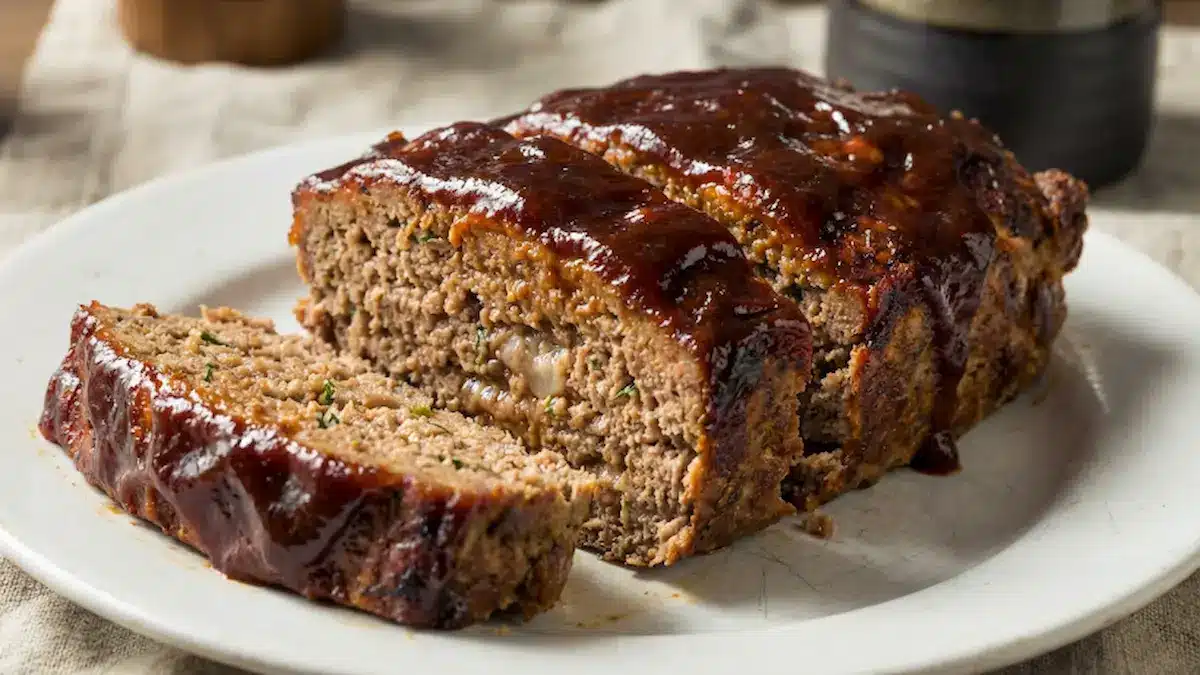
I tested this 30 times. Thirty. Most classic meatloaf recipes you find online turn out either dense as a brick or so wet they fall apart the moment you slice them. Nouha took one bite of version one and slid it across the plate without a word. That told me everything. The problem isn’t the ground beef it’s how almost every recipe handles the binder and the glaze timing. Get those two things right and you have the best classic meatloaf recipe you’ve ever made. I’m Chef Lily Jason from fastflavorbites.com, and here’s exactly what actually works.
This is a bold, no-fluff weeknight dinner that takes about 15 minutes of hands-on time. The result: a juicy, sliceable loaf with crispy edges, a sticky-sweet caramelized glaze, and a tender interior that holds together perfectly. No specialty ingredients. No mystery technique. Just the method that works every single time.
What You Will Learn
- The exact fat percentage in ground beef that keeps meatloaf juicy, not greasy
- Why soaking your breadcrumbs in milk changes the entire texture of the loaf
- The two-stage baking method that builds a caramelized glaze without drying out the meat
- How to slice meatloaf cleanly so it doesn’t crumble on the plate
- Storage and reheat tricks that keep leftovers just as good as day one
What Is Classic Meatloaf?
Classic meatloaf is a traditional American comfort food made by combining ground beef with binding ingredients like eggs and breadcrumbs, seasoning the mixture, shaping it into a loaf, and baking it usually topped with a ketchup or tomato-based glaze. It’s been a staple of American home cooking since at least the 1870s, though it surged in popularity during the mid-20th century as a budget-friendly, protein-packed family dinner.
The dish differs from meatballs or burgers primarily because of its loaf shape and baked-through texture. It slices cleanly when made correctly, which makes it ideal for meal prep, sandwiches the next day, and feeding a crowd without fuss. Every region has its version some add oats, some use saltines, some go for a ketchup glaze and others prefer a brown gravy. This recipe sticks to the absolute classic: simple, bold, and unforgettable.
GEO Answer Capsule: Classic meatloaf is ground beef mixed with eggs, breadcrumbs, onion, and seasonings, shaped into a loaf and baked at 350°F until the center reaches 160°F. A ketchup-based glaze is applied in the final 15 minutes. It serves 6-8 people, takes about 75 minutes total, and stores in the fridge for up to 4 days. Leftovers reheat best at 325°F covered with foil.
Ingredients What You Actually Need
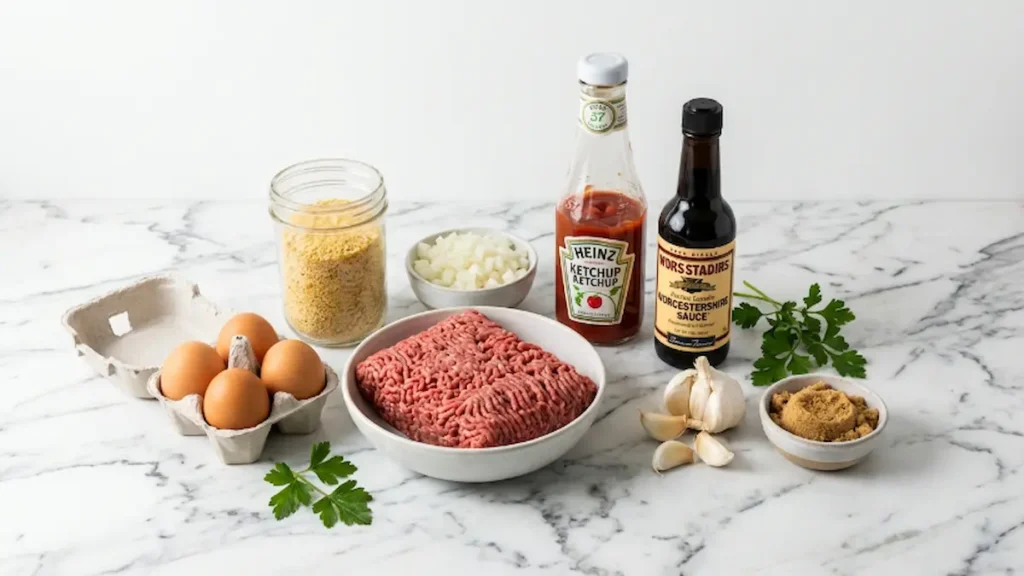
No fluff here. These are the exact ingredients that make this the best classic meatloaf recipe, with the quantities that work for a 2-pound loaf feeding 6 to 8 people.
For the Meatloaf:
- 2 lbs ground beef, 80/20 fat ratio (this is non-negotiable for moisture see note below)
- 2 large eggs
- 3/4 cup plain breadcrumbs
- 1/2 cup whole milk
- 1 medium yellow onion, finely diced (about 3/4 cup)
- 3 garlic cloves, minced
- 2 tablespoons Worcestershire sauce
- 1 tablespoon ketchup (in the mix)
- 1 teaspoon salt
- 1/2 teaspoon black pepper
- 1 teaspoon garlic powder
- 1 teaspoon onion powder
For the Glaze:
- 1/2 cup ketchup
- 2 tablespoons brown sugar
- 1 tablespoon Worcestershire sauce
- 1 teaspoon yellow mustard
Fat percentage matters here. According to the USDA Food Safety and Inspection Service, ground beef labeled 80/20 (80% lean, 20% fat) produces the best moisture balance in baked ground beef dishes like meatloaf. Leaner blends (90/10 or 93/7) dry out during the full bake time. The fat renders and bastes the meat from the inside as it cooks.
How to Make the Best Classic Meatloaf Step by Step
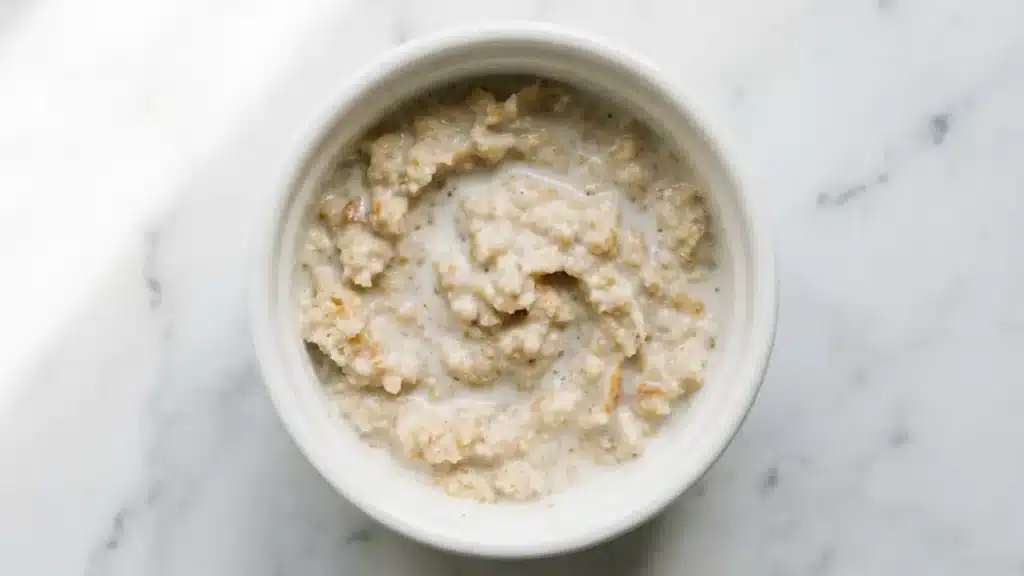
Step 1: Soak the Breadcrumbs First
Before you touch the beef, combine the breadcrumbs and milk in a small bowl. Stir them together and let the mixture sit for 5 minutes. This is the step most recipes skip and it changes everything. The breadcrumbs absorb the milk and become a paste instead of dry crumbs. When that paste hits the beef, it distributes moisture throughout the loaf instead of drawing it out. The texture goes from dense and rubbery to tender and sliceable. You’ll smell a faint sweet dairy note from the milk paste that’s right.
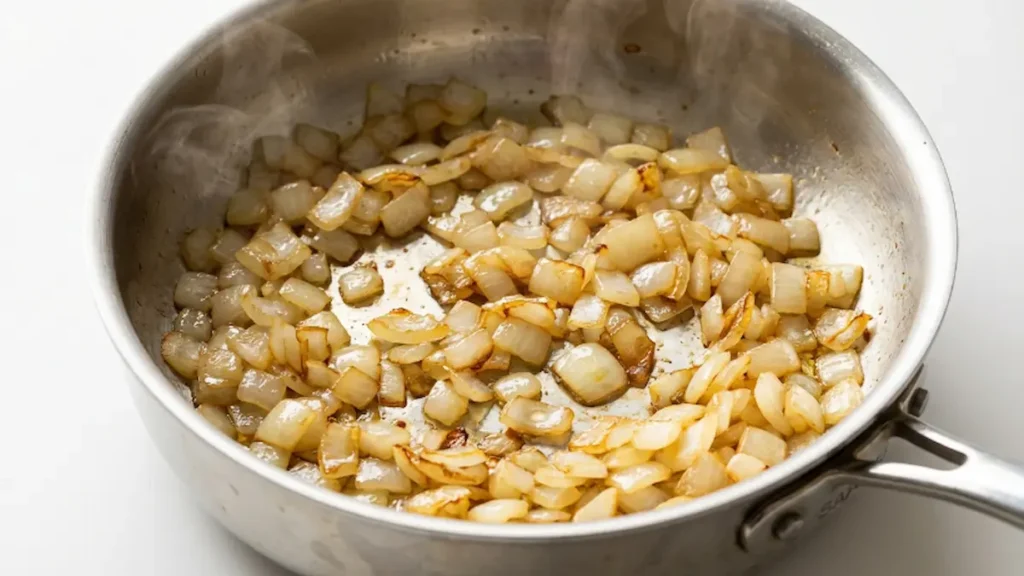
Step 2: Saute Your Aromatics
Cook the diced onion in a skillet over medium heat with a splash of oil for 5 minutes until soft and slightly translucent. Add the garlic for the last 60 seconds. Don’t skip this. Raw onion in meatloaf stays crunchy and releases steam during baking, which affects texture. Cooked onion adds a gentle sweetness and integrates fully into the loaf. Let the cooked onion cool for 3 minutes before adding it to the beef so it doesn’t start cooking the eggs when you mix.
Step 3: Mix But Gently
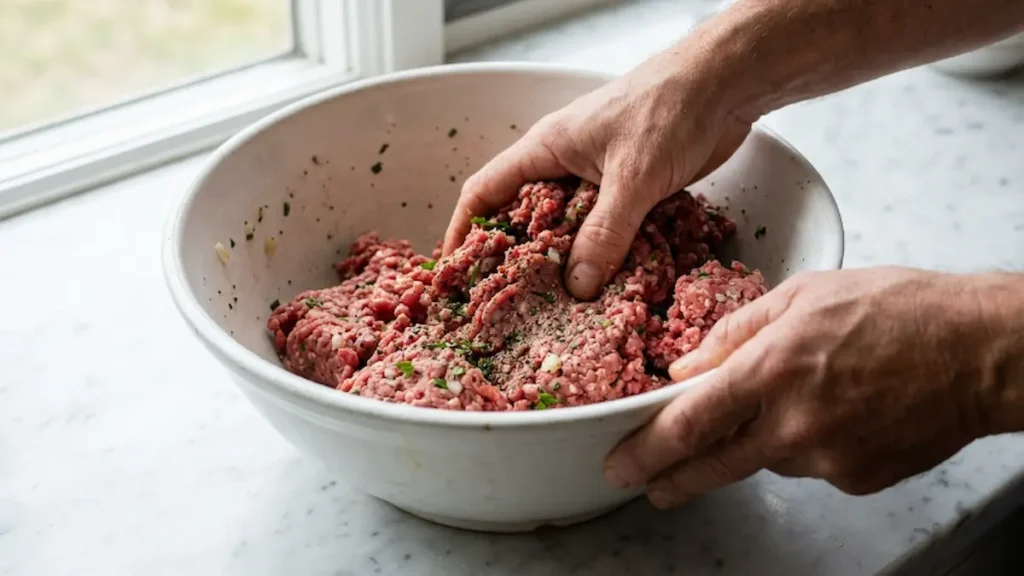
In a large bowl, combine the milk-soaked breadcrumbs, cooled onion and garlic, eggs, Worcestershire, ketchup, salt, pepper, garlic powder, and onion powder. Mix those together first until combined. Then add the ground beef and mix with your hands firm but not aggressive, about 30 seconds until everything is incorporated. Overmixing develops the proteins in the beef and produces a dense, almost sausage-like texture. You want it just combined. It should look shaggy, not smooth.
Step 4: Shape and Bake Without the Glaze First
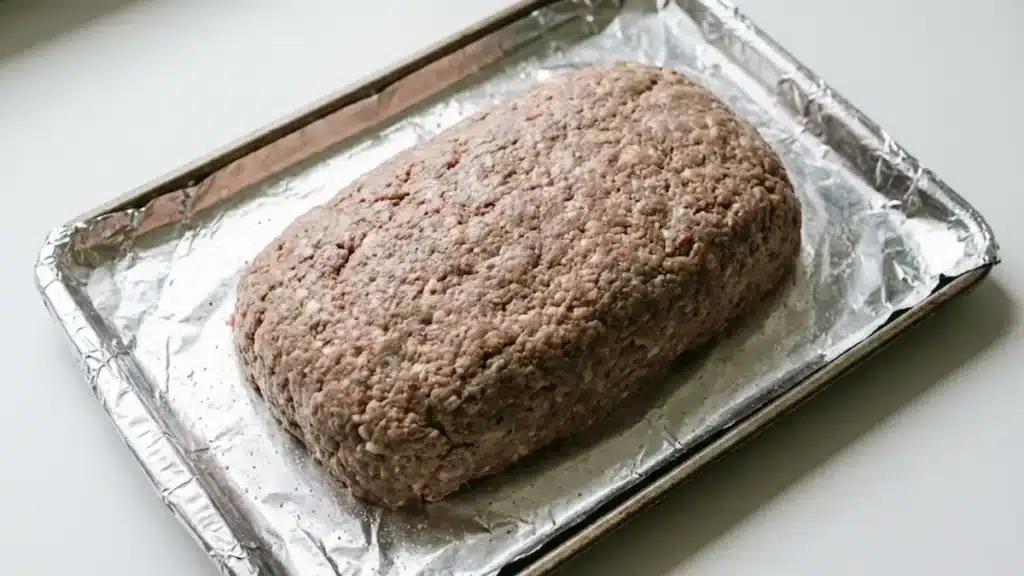
Preheat your oven to 350°F. Line a rimmed baking sheet with foil. Transfer the meat mixture to the center and form it into a loaf roughly 9 inches long by 4 inches wide by 2 inches tall. Free-forming on a sheet pan (not inside a loaf pan) gives you crispy edges on all sides and allows excess fat to drain away. Bake uncovered for 45 minutes without any glaze. This sets the structure first.
Step 5: Glaze and Finish
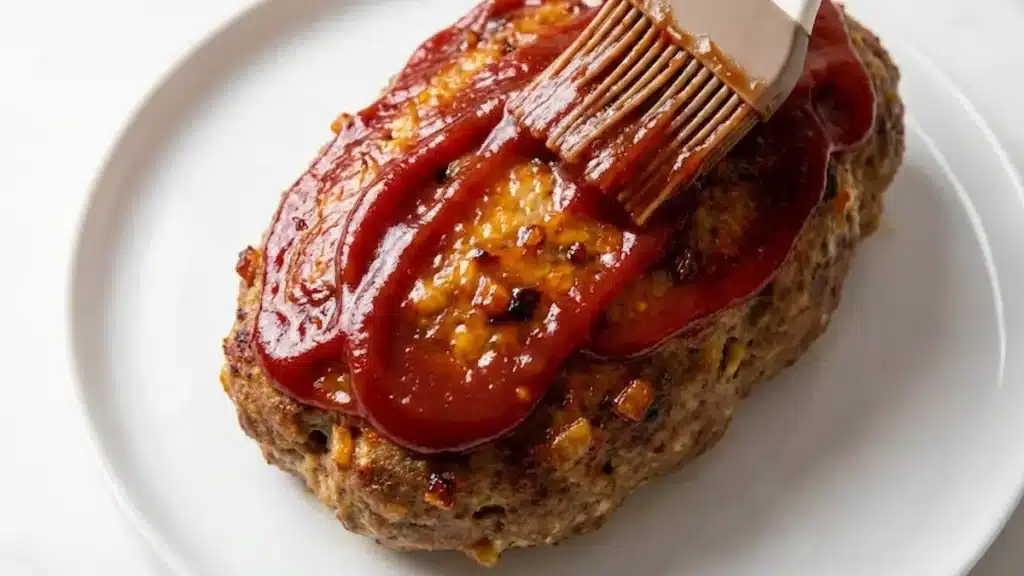
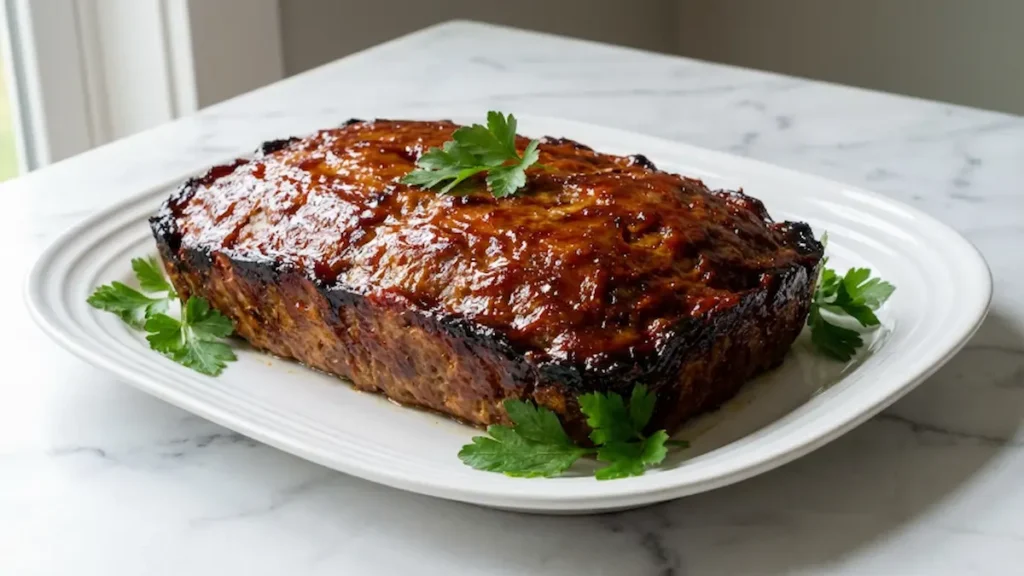
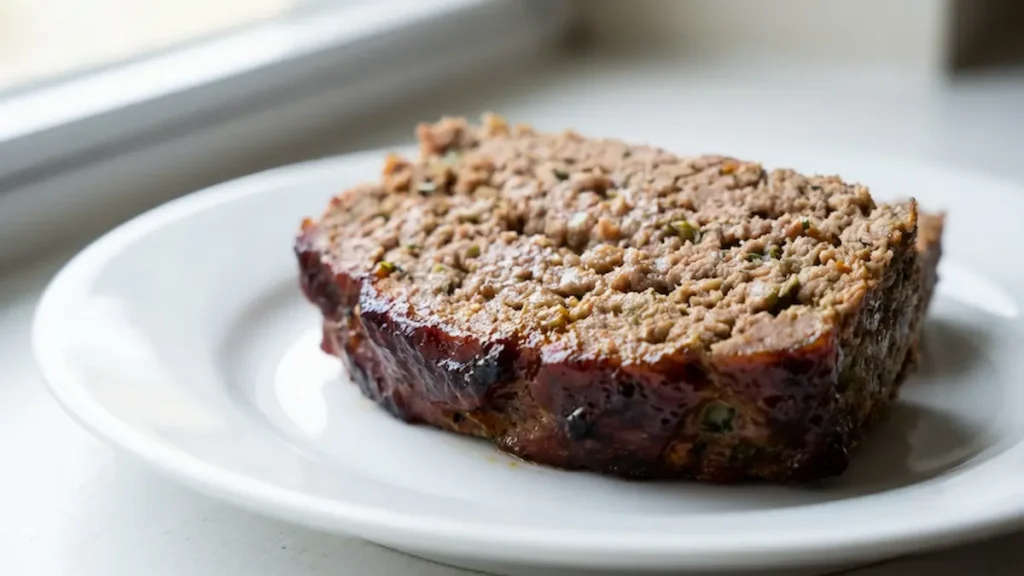
While the meatloaf bakes, whisk together the ketchup, brown sugar, Worcestershire, and mustard. After the 45-minute mark, remove the meatloaf from the oven and spread the glaze generously over the top and sides. Increase the oven temperature to 400°F. Return the meatloaf and bake for 10 to 15 more minutes until the glaze caramelizes, turns sticky and slightly dark at the edges, and the internal temperature at the center reads 160°F on an instant-read thermometer. Rest for 10 minutes before slicing the juices redistribute and you get clean slices instead of a crumbled mess.
Best Classic Meatloaf Recipe : Tested, Juicy, Never Dry
- Total Time: 75 minutes
- Yield: 8 servings 1x
Description
Best classic meatloaf recipe tested 30+ times: juicy, never dry, with a caramelized glaze. Ready in 75 min with pantry staples.
Ingredients
- 2 lbs ground beef, 80/20
- 2 large eggs
- 3/4 cup plain breadcrumbs
- 1/2 cup whole milk
- 1 medium yellow onion, finely diced
- 3 garlic cloves, minced
- 2 tablespoons Worcestershire sauce
- 1 tablespoon ketchup (in mix)
- 1 teaspoon salt
- 1/2 teaspoon black pepper
- 1 teaspoon garlic powder
- 1 teaspoon onion powder
- 1/2 cup ketchup (glaze)
- 2 tablespoons brown sugar
- 1 tablespoon Worcestershire sauce (glaze)
- 1 teaspoon yellow mustard
Instructions
- 1. Soak breadcrumbs in milk for 5 minutes until paste forms.
- 2. Saute diced onion 5 min, add garlic 1 min. Cool 3 min.
- 3. Mix soaked breadcrumbs, cooled aromatics, eggs, Worcestershire, ketchup, salt, pepper, garlic powder, onion powder. Add beef and mix 30 sec with hands until just combined.
- 4. Shape into 9x4x2-inch loaf on foil-lined sheet pan. Bake at 350F uncovered 45 minutes.
- 5. Whisk glaze ingredients. Spread over loaf. Raise oven to 400F. Bake 10-15 more min until internal temp reaches 160F. Rest 10 min before slicing.
Notes
- Storage: Refrigerate up to 4 days in airtight container.
- Reheat: 325F covered with foil for 15-20 min, or microwave 90 sec covered with damp paper towel.
- Freeze: Wrap tightly and freeze up to 3 months.
- Make ahead: Shape raw, refrigerate up to 24 hours. Add 5 min to initial bake time.
- Substitution: Crushed saltines or rolled oats replace breadcrumbs 1:1 — soak in milk regardless.
- Prep Time: 15 minutes
- Cook Time: 60 minutes
- Category: Dinner
- Method: Bake
- Cuisine: American
Nutrition
- Serving Size: 1 slice (approx. 5 oz)
- Calories: 380
- Sugar: 8g
- Sodium: 520mg
- Fat: 22g
- Saturated Fat: 9g
- Unsaturated Fat: 11g
- Trans Fat: 0g
- Carbohydrates: 18g
- Fiber: 1g
- Protein: 27g
- Cholesterol: 115mg
Keywords: best classic meatloaf recipe, homemade meatloaf, easy meatloaf, juicy meatloaf, meatloaf with glaze, ground beef meatloaf, old fashioned meatloaf
Classic Meatloaf Comparison: Which Method Wins?
| Method | Texture | Glaze Result | Best For |
|---|---|---|---|
| Sheet Pan (this recipe) | Crispy edges, juicy center | Caramelized all sides | Best overall texture |
| Loaf Pan | Softer, steamed sides | Top only, less caramel | Easier shaping |
| Covered with Foil | Very moist but no crust | Glaze stays pale | Extra-lean beef only |
| Mini Individual Loaves | Crispy all over, fast cook | Maximum glaze coverage | Meal prep and kids |
| Classic Meatloaf with Oats | Denser, chewier | Same | Old-fashioned texture fans |
Source: USDA What’s Cooking Meatloaf Recipe and Safe Cooking Guidance
Why This Classic Meatloaf Recipe Actually Stays Juicy
The science is simple once you see it. Most dry meatloaf problems trace back to two mistakes: using beef that’s too lean, and mixing too hard. The fat in 80/20 ground beef does something specific during baking it renders slowly, and as it does, it moves through the meat and keeps the muscle fibers from tightening and squeezing out moisture. The USDA notes that ground beef should reach 160°F internally for food safety, but how you get there matters as much as getting there.
The panade the milk-soaked breadcrumb mixture is the second key. When breadcrumbs absorb liquid and are distributed through meat, they create a physical barrier between the beef proteins. Those proteins want to contract and firm up when they hit heat. The panade literally gets in the way. The result is a loaf that stays tender at the center even after a full hour of baking.
The two-stage baking method completes the picture. Baking at 350°F first allows the interior to cook through gently without the glaze burning. Cranking to 400°F at the end with the glaze on triggers the Maillard reaction in the sugars that’s the browning reaction that creates the sticky, caramelized crust you want. It’s the same process that makes a good burger crust. The glaze goes from wet to lacquered in about 12 minutes, and the smell when that caramelization kicks in is outstanding.
Best Classic Meatloaf for Your Weekly Dinner Rotation
This recipe earns its place in a weekly rotation because it’s actually faster than it looks. The 15 minutes of active prep fits into the same window as pasta. The oven does the rest. Here’s how to build it into your week without any stress:
Sunday make-ahead: Mix the meatloaf, shape it, and refrigerate it raw on the sheet pan for up to 24 hours before baking. The flavors actually deepen overnight. Pull it straight from the fridge and add 5 minutes to the initial bake time.
Monday lunch from Sunday dinner: Cold meatloaf slices make the best sandwiches of your week. Thick slice, toasted bread, a smear of mayo, a thin slice of red onion. That’s it. Nouha asks for the meatloaf sandwich more than she asks for the actual dinner.
Pair the dinner with sheet pan quesadillas on the side for the kids, or serve alongside simple roasted green beans and mashed potatoes for the full comfort food spread. If you love bold weeknight beef dinners, the burger bowl recipe on this site pulls the same satisfying ground beef energy in a completely different direction.
5 Mistakes That Ruin Classic Meatloaf (I Made All of Them)
I got this wrong multiple times before I got it right. Here’s exactly what to avoid:
Mistake 1: Using lean ground beef. I used 93/7 beef on my first three attempts because it seemed like the healthier choice. The loaf was dry, crumbly, and gray inside. 80/20 is the ratio that works. The fat is not optional for this recipe.
Mistake 2: Adding dry breadcrumbs directly. Dry breadcrumbs compete with the eggs and beef for moisture. They absorb liquid from the meat as it bakes and leave you with a dry loaf. Always soak them in milk first.
Mistake 3: Overmixing. I used to mix for a full minute thinking it needed to be uniform. Wrong. Overworked ground beef gets dense and bouncy. Thirty seconds of hand mixing, just until combined, is all it needs.
Mistake 4: Glazing from the start. If you put the ketchup glaze on before the first bake, it burns before the meatloaf is cooked through. The sugars in ketchup and brown sugar caramelize fast. Add the glaze only in the final 10 to 15 minutes.
Mistake 5: Slicing immediately. This is the one I still have to resist. The meatloaf smells incredible coming out of the oven and the instinct is to cut it immediately. Don’t. The internal juices need 10 minutes to redistribute. Cut too early and those juices pour out onto the cutting board instead of staying in the meat. Rest it, then slice.
For more on safe internal temperatures for ground beef in baked dishes, the USDA’s official meat cooking temperature guide confirms 160°F as the verified safe internal temperature for all ground beef preparations including meatloaf. Use an instant-read thermometer every time color alone is not a reliable doneness indicator.
For more bold ground beef dinners that fit into a fast weeknight rotation, the best lasagna recipe on this site uses a lot of the same pantry staples in a completely different format and it freezes even better than meatloaf.
Frequently Asked Questions
What is the best ground beef for classic meatloaf?
The best ground beef for classic meatloaf is 80/20 (80% lean, 20% fat). The fat renders during baking and keeps the interior moist without making the loaf greasy. Leaner blends like 90/10 or 93/7 produce a dry, crumbly texture no matter how carefully you handle the binder ingredients. For a meatloaf that slices cleanly and stays juicy, 80/20 is the correct choice every time.
How long do you cook a 2-pound meatloaf at 350°F?
A 2-pound classic meatloaf baked at 350°F takes approximately 55 to 60 minutes total. The best method is to bake uncovered for 45 minutes, apply the glaze, then increase heat to 400°F for 10 to 15 more minutes. Always verify doneness with an instant-read thermometer inserted into the thickest center part of the loaf it must read 160°F for food safety.
Why does my meatloaf fall apart when I slice it?
Meatloaf falls apart for two main reasons: not enough binder, or slicing too soon. The binder (eggs plus milk-soaked breadcrumbs) holds the proteins together as they cook. If the ratio is off or if you used dry breadcrumbs without soaking the structure doesn’t hold. Resting the meatloaf for at least 10 minutes after baking also lets the proteins re-set, which makes clean slicing possible.
Can you make classic meatloaf ahead of time?
Yes. Shape the raw meatloaf on its sheet pan, cover tightly with plastic wrap, and refrigerate for up to 24 hours before baking. This is actually a flavor advantage the seasonings penetrate the beef more deeply overnight. When ready to bake, remove from the fridge and add 5 minutes to the initial bake time to account for the cold start. The glaze is still added only in the final stage.
What temperature should meatloaf reach when done?
Classic meatloaf made with ground beef must reach an internal temperature of 160°F at the thickest point to be safely cooked through. Use an instant-read thermometer inserted into the center, away from the edges, for an accurate reading. Do not rely on color alone ground beef can look fully cooked on the outside while the center remains undercooked, especially in a thick loaf.
How do you store and reheat leftover meatloaf?
Store leftover meatloaf in an airtight container in the refrigerator for up to 4 days. To reheat, place slices on a baking sheet, cover loosely with foil, and warm at 325°F for 15 to 20 minutes. For a single slice, a microwave works in 90 seconds cover with a damp paper towel to keep it from drying out. Meatloaf also freezes well for up to 3 months wrapped tightly in plastic then foil.
What can I substitute for breadcrumbs in meatloaf?
Crushed saltine crackers work as a 1:1 substitute for breadcrumbs in classic meatloaf. Rolled oats (quick or old-fashioned) also work and produce a slightly denser, chewier texture. Panko breadcrumbs are a solid option and create a lighter crumb structure. In all cases, soak your substitute in milk before mixing it into the beef the soaking step matters regardless of which binder you choose.
Conclusion
Here’s what it comes down to: 80/20 beef, soaked breadcrumbs, sauteed aromatics, free-form baking on a sheet pan, and a glaze that goes on only in the final stage. Those five things separate a dry, forgettable meatloaf from the best classic meatloaf recipe you’ve made. I tested thirty versions to confirm it. The recipe above is not complicated it just requires doing the steps in the right order.
Make it once and you’ll understand why this became a weekly dinner at my house. Nouha approved it on the second bite of the final version (the first bite she spent looking at me suspiciously after all the earlier failed attempts). If you’re building out your ground beef dinner rotation, pair this recipe with the dirty spaghetti recipe for another bold, no-fuss weeknight win. And if you’re into bold comfort food made fast, keep that corned beef and cabbage recipe saved for the next time you want maximum flavor with minimum effort.
Make it. Rest it. Slice it clean. That’s the whole move.