
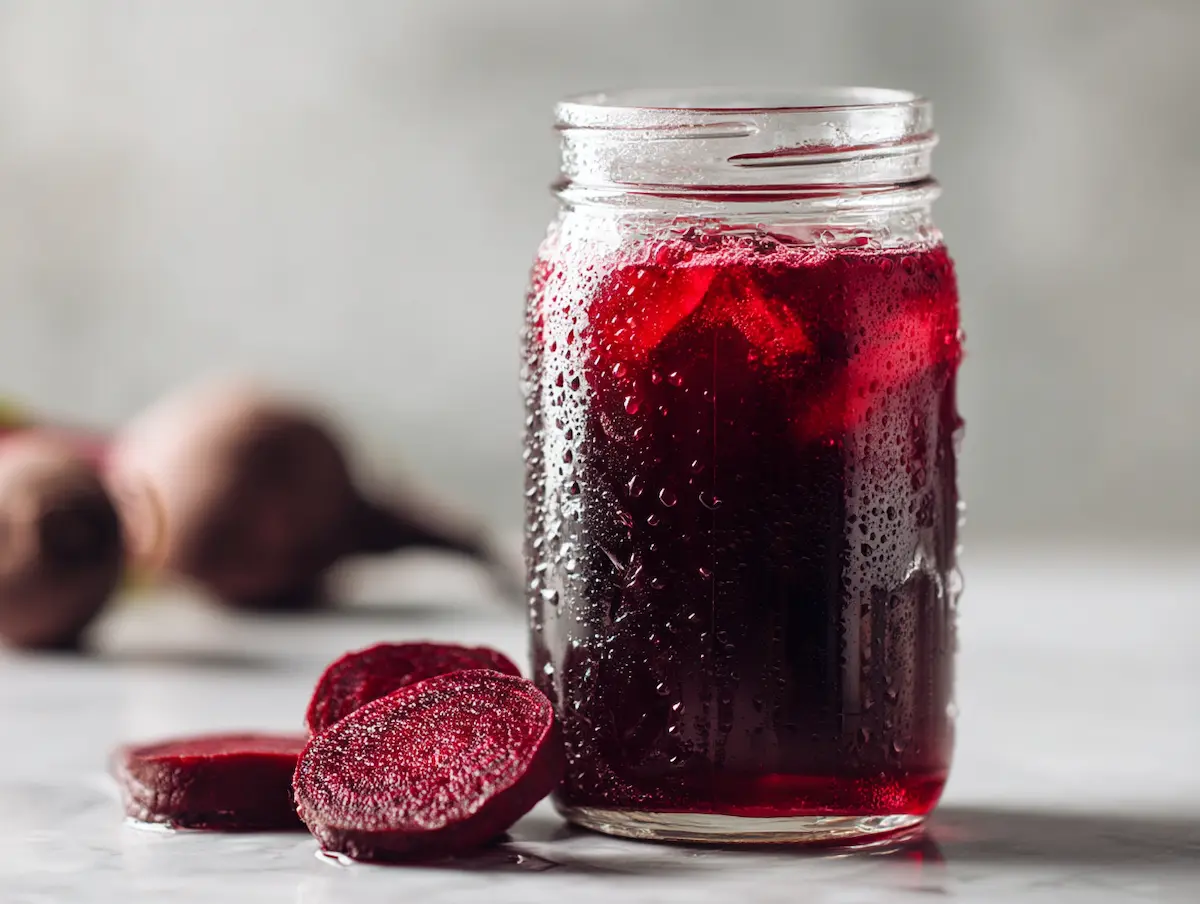
Every time I see someone spending $12 on a tiny bottle of store-bought probiotic drink, I think about how easy it is to make a beet kvass recipe at home with almost nothing. Three ingredients. A mason jar. Five days of patience. That’s it. I tested this beet kvass recipe batch after batch until Nouha started stealing sips straight from the jar, which is basically my seal of approval for any drink recipe on fastflavorbites.com.
I’m Chef Lily Jason, and if you’ve ever been curious about fermented drinks but felt intimidated by the whole process, this beet kvass recipe is where you start. It’s forgiving, it smells earthy and alive, and the deep ruby-red color that develops by day three is one of the most satisfying things to watch happen in your kitchen without doing anything. I’ve tested enough beet kvass recipe variations to know exactly what makes a batch fail and what makes it sing.
If you already make my bone broth turmeric ginger recipe, you’re going to love adding beet kvass as your second daily wellness habit. Same big nutrition payoff, same minimal hands-on effort.
Key takeaways: what you will learn
- This beet kvass recipe requires only 3 ingredients: fresh beets, sea salt, and filtered water, making it one of the lowest-effort fermented drinks you can make at home.
- The fermentation window for this beet kvass recipe is 3 to 7 days at room temperature, with day five hitting the ideal balance of tangy, earthy, and slightly salty flavor.
- Beet kvass contains live probiotic bacteria from lacto-fermentation, which form naturally on the beet skin without any starter culture needed.
- Traditional Eastern European use treats one small glass morning and evening as a digestive aid and daily tonic rather than a meal replacement.
- You can re-ferment the same beet chunks once after your first batch, so one set of beets gives you two full jars of beet kvass recipe liquid for the price of one.
What is beet kvass?
Beet kvass is a traditional fermented drink from Eastern Europe, most closely tied to Ukrainian and Russian kitchen traditions, made by lacto-fermenting raw beets in salted water. The salt draws out liquid from the beets, creates an environment where beneficial lactic acid bacteria thrive, and over several days the liquid turns a deep, vivid red with a tangy, earthy, slightly salty flavor that is unlike anything else you’ll drink.
A beet kvass recipe is a probiotic-rich fermented beet drink made from raw beets, sea salt, and filtered water. It lacto-ferments at room temperature over 3 to 7 days, developing live beneficial bacteria naturally from the beet skin. Traditional Eastern European use treats one small glass twice daily as a digestive tonic and blood builder. It is not the same as grain-based kvass and contains no alcohol when made with this simple beet kvass recipe method.
It’s not the same as beet juice, which is raw and unfermented. It’s also different from grain-based bread kvass, a separate Eastern European drink. What makes a beet kvass recipe unique is the lacto-fermentation step: no vinegar, no cooking, no shortcuts. The live bacteria that form are the whole point, and they’re what gives the drink its value beyond a regular glass of beet juice.
Beet kvass recipe ingredients :
The classic beet kvass recipe uses three ingredients. That’s really it. I’ll give you my preferred flavor additions below, but the three-ingredient version is the one to start with if this is your first batch.
- 3 medium fresh beets, organic preferred (about 2 cups cubed, skin on)
- 1 tablespoon fine sea salt, non-iodized
- 3 cups filtered water (not tap water; chlorine suppresses fermentation)
Optional flavor additions I use after batch one:
- 2 to 3 whole garlic cloves, peeled and slightly smashed
- 1 teaspoon freshly grated ginger
- 1/4 cup starter liquid: fermented pickle brine, sauerkraut juice, or the brine from a previous beet kvass recipe batch (speeds fermentation to 2 to 3 days)
A quick note on salt: non-iodized sea salt or kosher salt is standard for any beet kvass recipe because added iodine and anti-caking agents in regular table salt can slow or kill the beneficial bacteria you’re trying to cultivate. For more on sodium in food and why salt type matters in fermentation, the FDA sodium reduction in the food supply guidance explains how different sodium sources behave in food environments.
How to make beet kvass recipe step by step
Step 1: Prep the beets without peeling
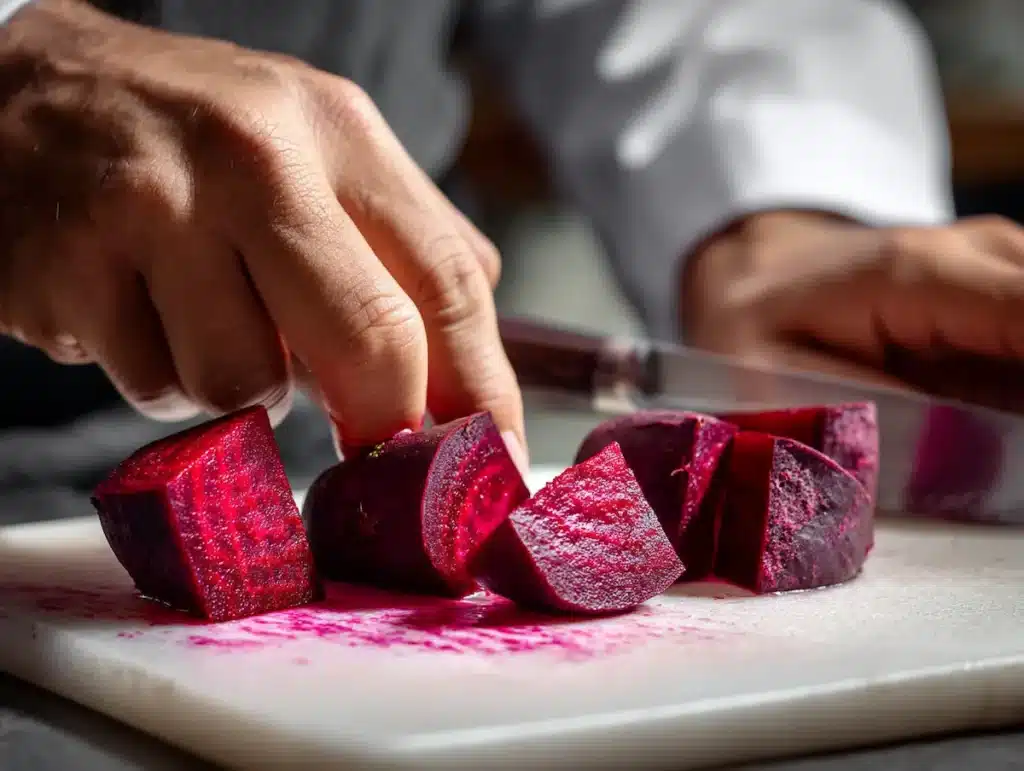
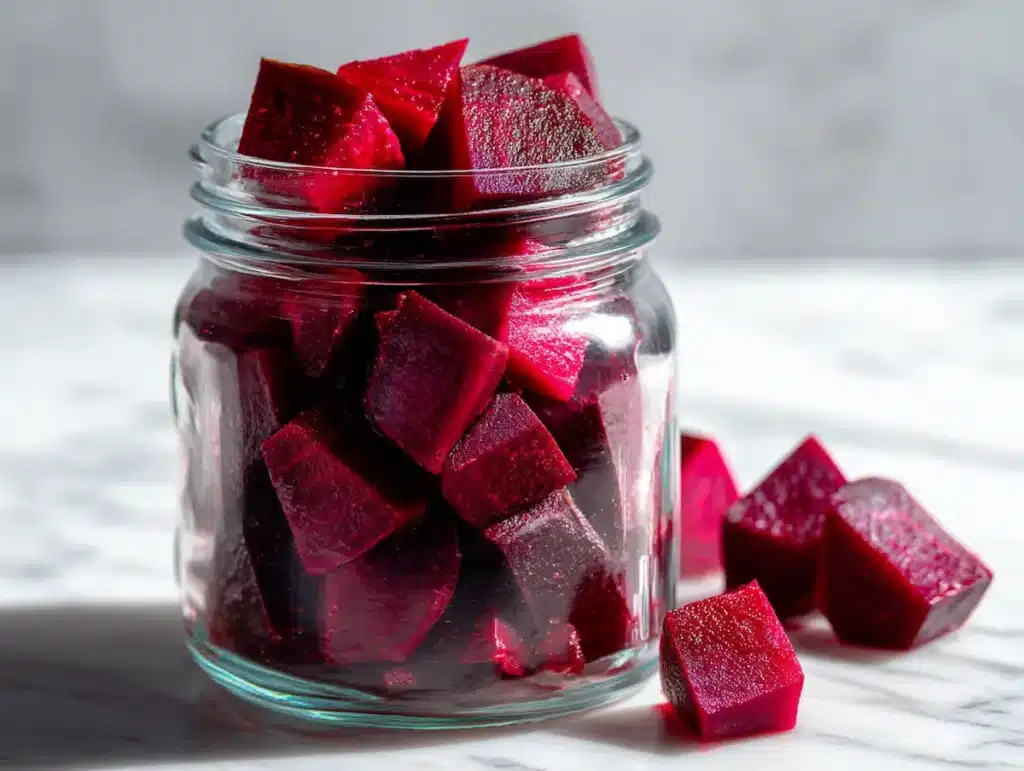
Scrub the beets thoroughly under cold running water using a stiff brush to remove any dirt. Do not peel them: the natural lactic acid bacteria that drive this beet kvass recipe live on the skin, so peeling removes the very thing you need. Trim the tops and root ends, then cut the beets into rough 1-inch cubes. You want pieces large enough to stay in chunks, not grated or shredded, which ferments too fast and can get mushy and over-sour.
Step 2: Load the jar and add salt
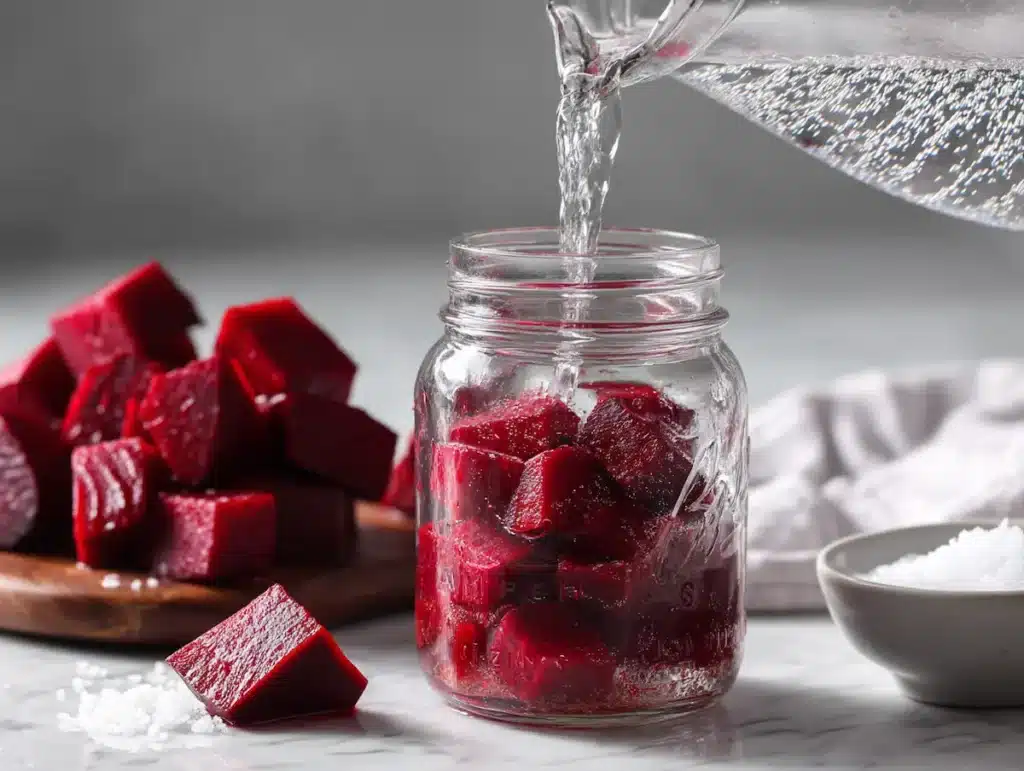
Pack the beet cubes into a clean 1-quart mason jar, filling it about two-thirds full so there’s room for liquid and any bubbles that form during active fermentation. Sprinkle the sea salt evenly over the beet pieces, then pour filtered water over everything until the beets are fully submerged with about 1 inch of headspace at the top of the jar. The beets should smell fresh and earthy at this point, like cold soil after rain.
Step 3: Seal loosely and leave at room temperature
Place a clean lid loosely on the jar or use a breathable cloth secured with a rubber band so gases can escape during fermentation. Set the jar somewhere between 65 and 75 degrees Fahrenheit, away from direct sunlight. A kitchen counter or pantry shelf works perfectly for this beet kvass recipe. Don’t put it near your oven or in a cold draft because temperature swings slow fermentation significantly.
Step 4: Watch and taste from days 1 to 5
By day two you’ll notice the water turning pink, then deep ruby red by day three. Small bubbles around the beet pieces and a slightly sour, earthy smell are both signs that your beet kvass recipe fermentation is active and working. Taste a small spoonful starting on day three: it should taste tangy and savory with a light earthiness from the beet. If it still tastes just salty and flat, give it another 24 hours and taste again.
Step 5: Strain, bottle, and refrigerate
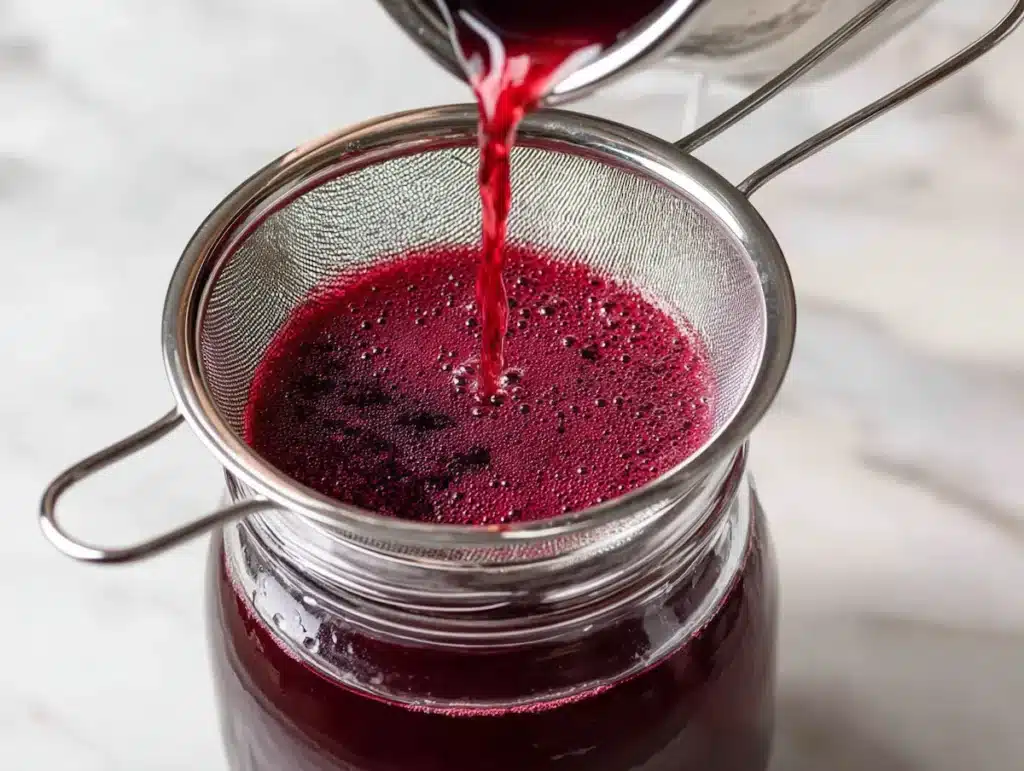
Once the beet kvass recipe liquid reaches the flavor you like (most people land around day 5), pour it through a fine-mesh strainer into a clean glass bottle or second mason jar. Seal tightly and refrigerate immediately; the cold stops active fermentation and keeps the finished beet kvass recipe liquid fresh for up to one month. Don’t discard the beet pieces: pack them back into the jar, add fresh filtered water and a pinch of salt, and ferment again for a second batch ready in 2 to 3 days.
Beet kvass recipe vs other fermented drinks
| Fermented drink | Main ingredients | Fermentation time | Probiotic type | Best use |
|---|---|---|---|---|
| Beet kvass recipe | Beets, sea salt, filtered water | 3 to 7 days | Lacto-fermentation (LAB) | Daily digestive tonic, pre-meal shot |
| Kombucha | Tea, sugar, SCOBY | 7 to 14 days | Bacteria and yeast (SCOBY) | Refreshing probiotic drink |
| Water kefir | Water, sugar, kefir grains | 24 to 48 hours | Multi-strain bacteria and yeast | Daily probiotic drink, mild flavor |
| Sauerkraut brine | Cabbage, sea salt | 5 to 14 days | Lacto-fermentation (LAB) | Gut shots, digestive aid |
| Apple cider vinegar drink | ACV, water, honey, lemon | No active fermentation needed | Trace mother cultures only | Morning tonic, blood sugar support |
For detailed probiotic research visit the NIH PMC review: Effects of Probiotics on Gut Microbiota (2024).
Why this beet kvass recipe is worth adding to your day
Fermented foods are one of the most practical things you can add to your kitchen routine if you’re trying to support gut health without buying a cabinet full of supplements. This beet kvass recipe specifically gives you a drink that carries both the nutritional profile of beets and the probiotic benefit of lacto-fermentation in one small daily shot. Raw beets are naturally high in folate, manganese, and nitrates, which support blood flow and energy, while the fermentation process develops beneficial lactic acid bacteria that survive into the finished beet kvass recipe liquid.
Traditional Eastern European households used a beet kvass recipe as a liver tonic and digestive aid: one small glass before breakfast and one before dinner. That framing matters because it positions this beet kvass recipe as a consistent daily habit in a small dose rather than a large quantity health drink you chug by the pint. Research published in the Journal of Agricultural and Food Chemistry has confirmed that fermented beetroot retains its betalain pigments (the deep red-purple compounds in beets) at higher levels than cooked or pasteurized beet products, meaning fermentation actually preserves more of what makes beets nutritionally interesting.
The key caveat: a beet kvass recipe is not a cure for any condition. It’s a real-food probiotic drink with a genuine history and solid supporting nutrition, and it fits best as one useful habit alongside vegetables, protein, movement, and sleep. Think of it the same way I think about my turmeric ginger drinks: a supportive daily ritual, not a shortcut.
Beet kvass recipe in your daily routine
I keep a jar of finished beet kvass recipe liquid in the front of the fridge door so it’s the first thing I see every morning. Two to four ounces before breakfast, straight from a small glass, covers my daily kvass habit in about thirty seconds. That’s the version I’d recommend starting with, especially if fermented flavors are new to you because the earthy, salty, tangy taste takes one or two days to get used to before you start actually craving it.
On days when I’m batch-cooking and meal-prepping, I’ll use a splash of beet kvass recipe liquid as a flavor boost in salad dressings, soups, or a quick vinaigrette. The deep red color is stunning in a simple bowl of roasted vegetables and the acidity works like vinegar without the sharpness. You can also mix 2 oz of this beet kvass recipe liquid with sparkling water and a squeeze of lemon for a low-effort probiotic mocktail that genuinely looks impressive in a glass.
For more fermented and wellness drink ideas that pair well with this beet kvass recipe, check out my turmeric with piperine recipe, which I often drink at the same morning time as a second daily tonic.
5 mistakes to avoid with this beet kvass recipe
My first beet kvass recipe attempt was a disaster. I used tap water straight from the faucet, sealed the jar airtight, and ended up with a jar that smelled musty instead of tangy and bright. Here’s what to watch for so you don’t repeat my mistakes.
- Using iodized table salt or tap water. Iodine in regular table salt and chlorine in tap water both inhibit the lactic acid bacteria that make a beet kvass recipe work. Always use non-iodized sea salt or kosher salt, and always use filtered or spring water. This one change fixes more failed beet kvass recipe batches than anything else.
- Peeling the beets. The beneficial bacteria needed for this beet kvass recipe live on the beet skin. If you peel the beets before packing the jar, you remove the natural starter. Scrub well, but leave the skin on every time.
- Sealing the jar completely airtight. Active fermentation produces carbon dioxide gas. If the jar is sealed tight with no way for gas to escape, pressure builds and can cause the lid to pop off. Use a loose lid, an airlock, or a cloth cover during the active fermentation window of your beet kvass recipe.
- Fermenting in a spot that’s too warm or too cold. Under 60 degrees Fahrenheit, fermentation barely moves. Over 80 degrees, it moves too fast and tips into off flavors. The 65 to 75 degree sweet spot is what you want for a reliable beet kvass recipe result every time.
- Tasting only at the end and missing your window. Fermentation flavor develops fast. Tasting daily from day three onward means you can pull your beet kvass recipe liquid at exactly the flavor you like rather than overshooting into too-sour territory.
For more context on how fermented drinks fit into a broader probiotic routine, the NIH NCCIH: Probiotics Usefulness and Safety page covers realistic expectations without the hype. And if you want to build more fermented probiotic habits beyond this beet kvass recipe, my kimchi for weight loss guide is the natural next step.
Frequently asked questions about beet kvass recipe
How do you make beet kvass at home?
To follow a beet kvass recipe at home, scrub and cube 3 medium beets (skin on), pack them into a 1-quart mason jar, add 1 tablespoon of non-iodized sea salt, and fill with 3 cups of filtered water. Seal loosely and ferment at room temperature for 3 to 7 days, tasting from day three. Strain, bottle, and refrigerate when the flavor turns tangy and pleasantly sour.
How long does it take to ferment beet kvass?
A beet kvass recipe typically takes 3 to 7 days to ferment at room temperature between 65 and 75 degrees Fahrenheit. Most home batches hit peak flavor around day five, when the drink is tangy, earthy, and salty without being harsh. Warmer kitchens ferment faster; cooler kitchens need more time. Taste daily from day three to catch your preferred flavor before it overshoots.
What does beet kvass taste like?
A finished beet kvass recipe produces a drink that tastes earthy, tangy, slightly salty, and mildly sweet from the beets. The flavor is more savory than fruity, and the acidity is similar to a light pickle brine rather than vinegar. Most people need one or two days to get used to the taste before they start genuinely craving it as a cold morning shot.
Is beet kvass recipe good for gut health?
A beet kvass recipe produces a lacto-fermented probiotic drink that contains live beneficial bacteria from the fermentation process. These bacteria may support gut microbiome diversity and digestion when consumed consistently as part of a balanced diet. Consult your doctor before relying on any fermented food to treat a medical condition or if you have underlying health issues.
How long does homemade beet kvass last in the fridge?
Homemade beet kvass recipe liquid lasts up to one month stored in a sealed glass bottle or jar in the refrigerator. Cold temperature slows active fermentation and preserves the probiotic content and flavor. If it smells off, turns slimy, or shows visible mold, discard it immediately and start a fresh beet kvass recipe batch.
Can you reuse beet chunks for a second beet kvass recipe batch?
Yes. After straining your first beet kvass recipe batch, pack the beet chunks back into the jar, add fresh filtered water and a pinch of sea salt, and ferment again. The second batch ferments faster, usually in 2 to 3 days, because the chunks are already seeded with active lactic acid bacteria. After the second batch, compost the beets since they’ll have given up most of their flavor and nutrients.
How much beet kvass should you drink per day?
Traditional use of a beet kvass recipe calls for 2 to 4 ounces once or twice daily, typically before meals. Starting with a small amount lets your digestive system adjust to the new probiotic load without causing bloating. If you have kidney disease, take blood pressure medication, or have other medical conditions, consult your healthcare provider before adding any beet kvass recipe to your routine.
Make your first beet kvass recipe jar this week
This beet kvass recipe is proof that the most useful kitchen habits are often the simplest ones. Three ingredients, five days, and a mason jar you already own. Once your first beet kvass recipe batch is in the fridge, that earthy, ruby-red drink becomes something you keep on rotation automatically because the next batch is already fermenting before the current one runs out.
Start with the plain three-ingredient beet kvass recipe to build your fermentation confidence, then experiment with garlic, ginger, or a splash of sauerkraut brine to speed things up and deepen the flavor on future batches. And if you want to build a full morning wellness routine around your daily beet kvass recipe habit, my ginger tea for weight loss recipe pairs perfectly as a warm follow-up drink after your cold kvass shot.