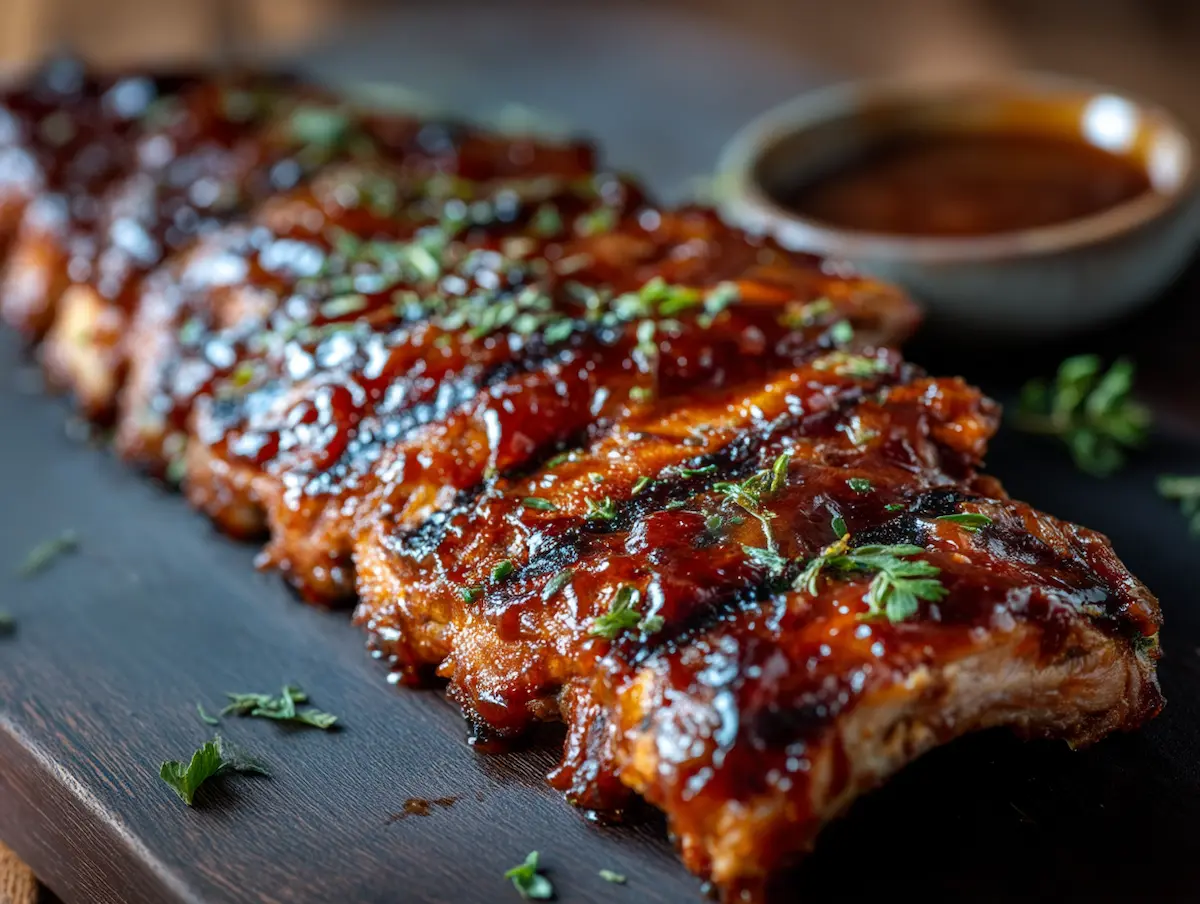
I have made ribs on a smoker, on a charcoal grill, wrapped in foil, unwrapped, marinated overnight, and dry-rubbed an hour before cooking. After all of that testing, the best barbecue ribs ever I have made in my kitchen come from one reliable method: low-and-slow in the oven first, then a quick finish on a hot grill with a sticky homemade glaze.
Chef Lily Jason here from fastflavorbites.com, and this is the exact rib recipe I come back to every single time, whether it is a Sunday family dinner or a backyard cookout with friends. No smoker required, no special equipment, just your oven, a grill, and a dry rub you can mix in two minutes.
If you already love bold, smoky flavors from recipes like our burger bowl recipe, these ribs are going to become your new weekend anchor dish.
Key Takeaways / What You Will Learn
The best barbecue ribs ever start with removing the membrane from the back of the rack so the dry rub and heat can penetrate the meat evenly.
A simple 6-ingredient dry rub applied the night before gives you deep, seasoned flavor all the way through the meat without any complicated marinating steps.
Cooking the ribs at 275°F in the oven for 2.5 to 3 hours breaks down the connective tissue and delivers the fall-off-the-bone texture before the grill even gets involved.
A 10-minute finish on a hot grill with homemade BBQ glaze caramelizes the surface into the sticky, charred crust that makes these the best barbecue ribs ever.
The USDA recommends cooking pork ribs to a minimum internal temperature of 145°F, but for tender fall-off-the-bone results, most pitmasters cook to 195°F to 203°F where the collagen fully breaks down.
What Makes the Best Barbecue Ribs Ever?
The best barbecue ribs ever come down to three things: the right cut, enough time at low heat, and a glaze applied at the right moment. Baby back ribs are the most forgiving cut for home cooks because they are leaner, cook faster than spare ribs, and have a naturally curved shape that sits well in a standard oven rack.
Low-and-slow cooking at 275°F gives the collagen in the ribs time to convert to gelatin, which is what creates that silky, almost butter-soft texture around the bone. Rushing this step with high heat tightens the muscle fibers and gives you chewy, dry ribs no matter how good your rub or glaze is.
The grill finish is not optional if you want real BBQ flavor at home. That direct high heat caramelizes the sugars in the glaze, builds a light char on the surface, and adds the smoky smell and taste that a plain oven simply cannot replicate on its own.
Best Barbecue Ribs Ever Ingredients
This recipe makes one full rack of baby back ribs, which serves 2 to 3 people as a main course.
For the ribs
1 full rack baby back pork ribs (about 2 to 2.5 pounds)
1 tablespoon yellow mustard (as a binder for the rub)
Dry rub (mix together in a small bowl)
2 tablespoons brown sugar
1 tablespoon smoked paprika
1 teaspoon garlic powder
1 teaspoon onion powder
1 teaspoon fine sea salt
1/2 teaspoon black pepper
1/2 teaspoon cayenne pepper (reduce to 1/4 teaspoon for less heat)
1/2 teaspoon dried oregano
BBQ glaze (stir together in a small saucepan)
1/2 cup ketchup
2 tablespoons apple cider vinegar
2 tablespoons brown sugar
1 tablespoon Worcestershire sauce
1 teaspoon smoked paprika
1/2 teaspoon garlic powder
1/2 teaspoon onion powder
1/4 teaspoon black pepper
1 pinch cayenne pepper
According to the USDA FoodData Central entry for pork baby back ribs, a 3-ounce serving of cooked pork ribs contains approximately 235 calories, 18 grams of protein, and 17 grams of fat, making them a protein-dense option best enjoyed as part of a balanced meal with vegetables and a light side.
How to Make the Best Barbecue Ribs Ever Step by Step
Step 1: Remove the Membrane
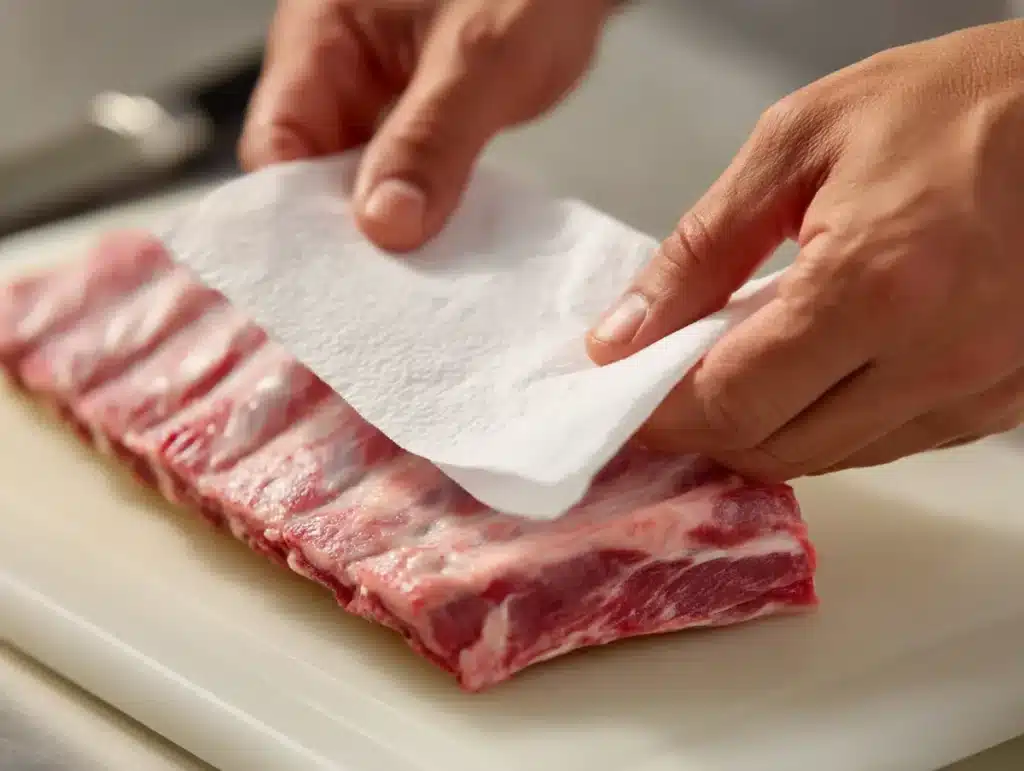
Lay the rack of ribs bone-side up on a clean cutting board and look for the thin, shiny membrane stretched across the back of the bones. Slide the tip of a butter knife or your finger under one corner of the membrane near the end bone, then grip it firmly with a paper towel and pull it off in one slow, steady motion.
This step takes about 30 seconds and makes a significant difference; the membrane is tough and rubbery, and it blocks the rub from reaching the meat and prevents the fat from rendering properly during cooking.
Step 2: Apply the Mustard and Dry Rub
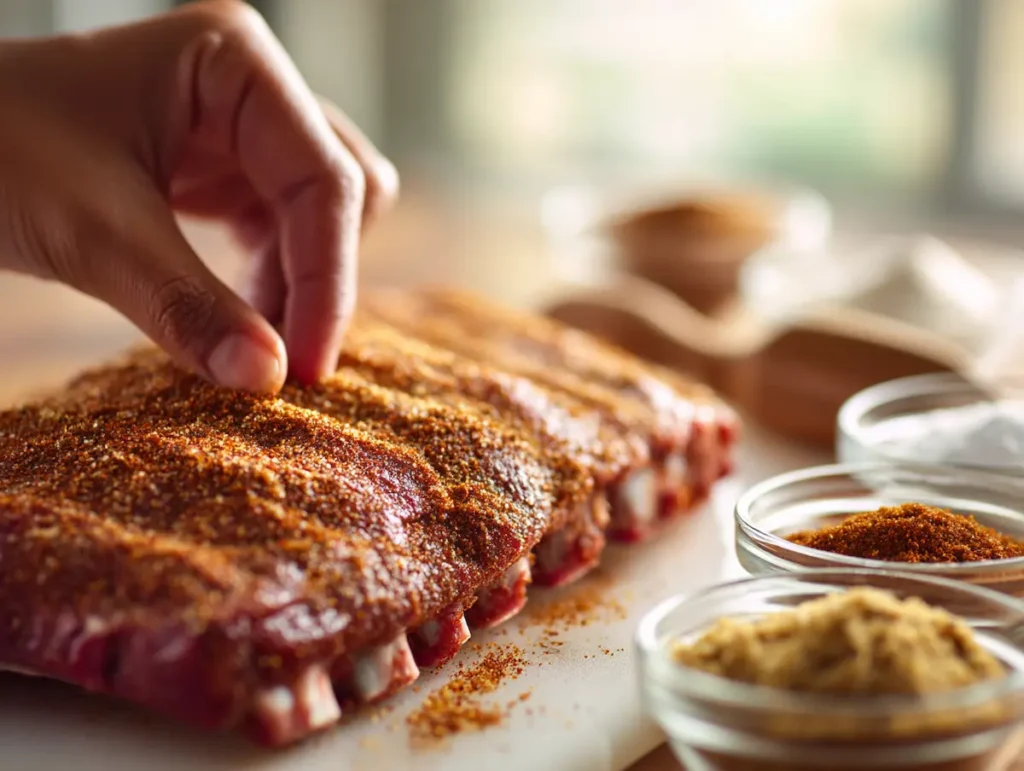
Pat the rack dry with paper towels on both sides, then brush a thin, even layer of yellow mustard over the entire surface, including the back. The mustard acts as a binder so the rub sticks firmly instead of falling off during cooking, and it does not add a mustard flavor once cooked.
Sprinkle the dry rub generously over both sides of the rack and press it in gently with your hands. Wrap the seasoned rack tightly in plastic wrap and refrigerate for at least 2 hours, or ideally overnight, to let the salt and spices work into the meat.
Step 3: Oven Low and Slow at 275°F
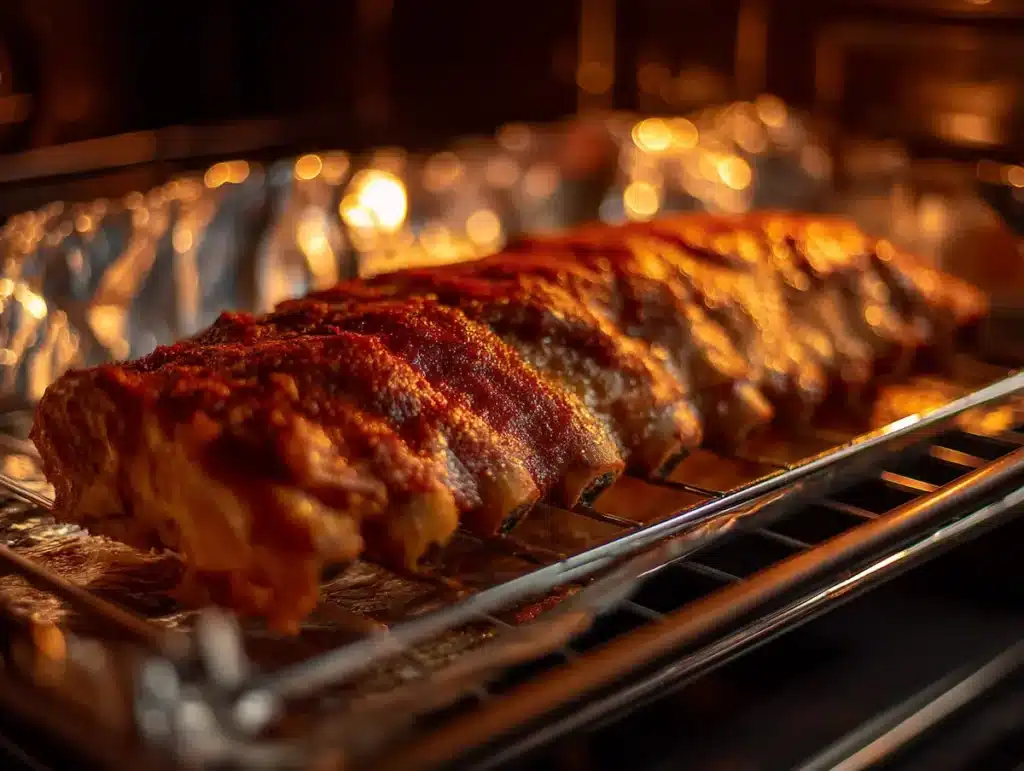
Preheat your oven to 275°F. Remove the ribs from the fridge and let them sit at room temperature for 30 minutes while the oven heats. Place the rack bone-side down on a wire rack set over a foil-lined baking sheet so air can circulate around the meat and the drippings catch below.
Tent a sheet of aluminum foil loosely over the ribs without pressing it tight against the meat, which creates a gentle steam environment that keeps the surface from drying out. Roast at 275°F for 2.5 hours for a slightly firmer bite, or 3 hours for ribs that are closer to falling off the bone.
Step 4: Make the BBQ Glaze
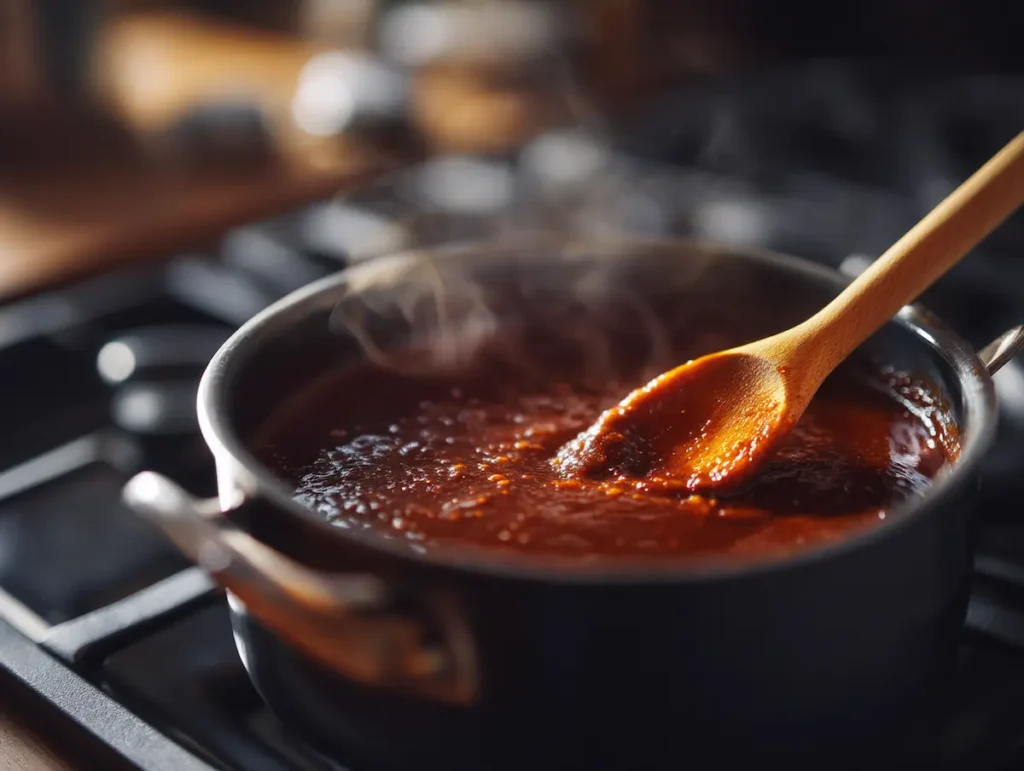
While the ribs are in the oven, combine all glaze ingredients in a small saucepan over medium-low heat. Stir well and simmer for 8 to 10 minutes until the sauce thickens slightly and the sugar fully dissolves. Taste and adjust: add more vinegar for tang, more brown sugar for sweetness, or more cayenne for heat.
Remove from heat and set aside; the glaze will thicken further as it cools, which is exactly what you want before brushing it onto the hot ribs.
Step 5: Rest and Check Internal Temperature
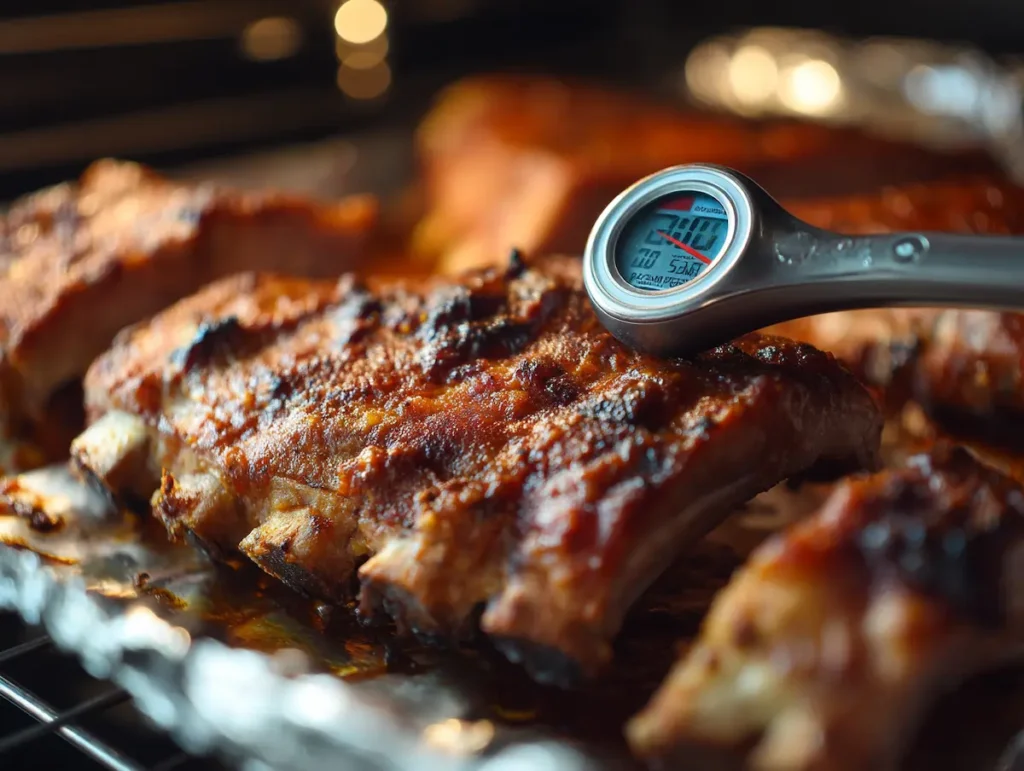
Pull the ribs from the oven and carefully remove the foil tent. The meat should have pulled back from the bone tips by about 1/4 to 1/2 inch, which is a reliable visual cue that they are ready for the grill. Use an instant-read thermometer to check the internal temperature between the bones; you are looking for 190°F to 203°F for fully tender, fall-off-the-bone results.
According to the USDA fresh pork safe handling guide, the safe minimum internal temperature for pork is 145°F with a 3-minute rest, but for ribs cooked low and slow the target is always higher to fully break down collagen into gelatin for tenderness. Let the ribs rest on the pan for 10 minutes before moving to the grill.
Step 6: Finish on a Hot Grill
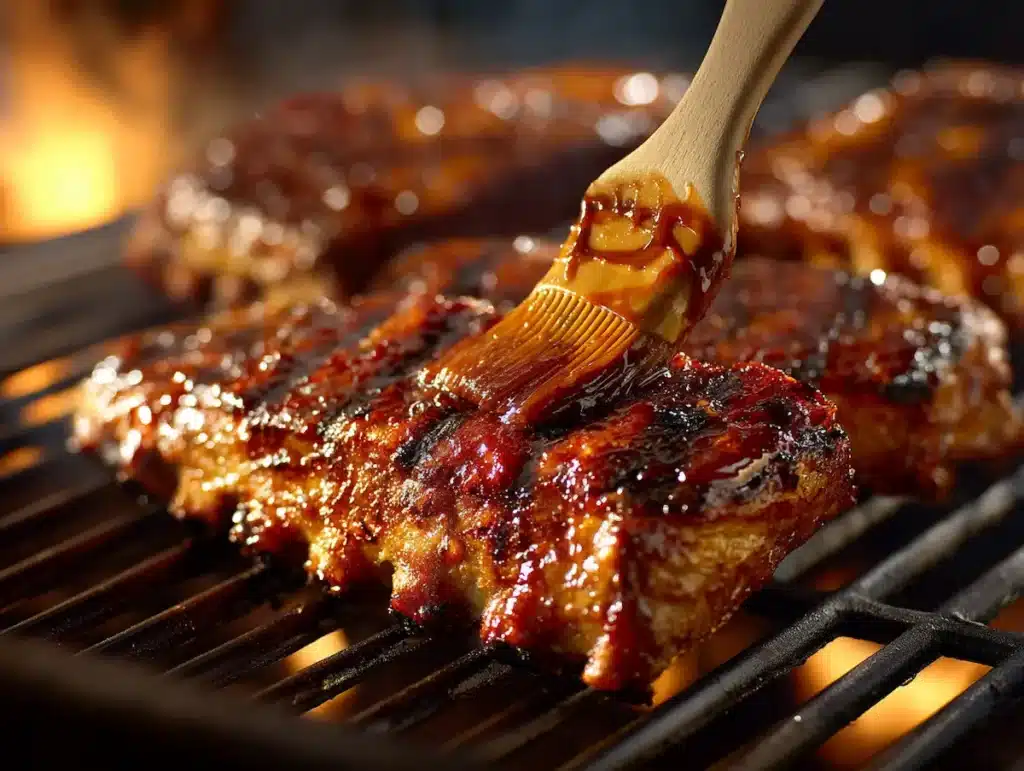
Preheat your grill to high heat, around 400°F to 450°F. Clean and oil the grates well. Place the oven-cooked rack bone-side down on the hot grill and brush the top generously with your BBQ glaze. Close the lid and grill for 3 minutes.
Flip carefully, brush the bone side with glaze, close the lid and grill another 2 to 3 minutes until the glaze is sticky, slightly charred, and deeply caramelized on both sides. Watch closely at this stage as the sugar in the glaze can burn quickly on high heat.
Step 7: Rest and Slice
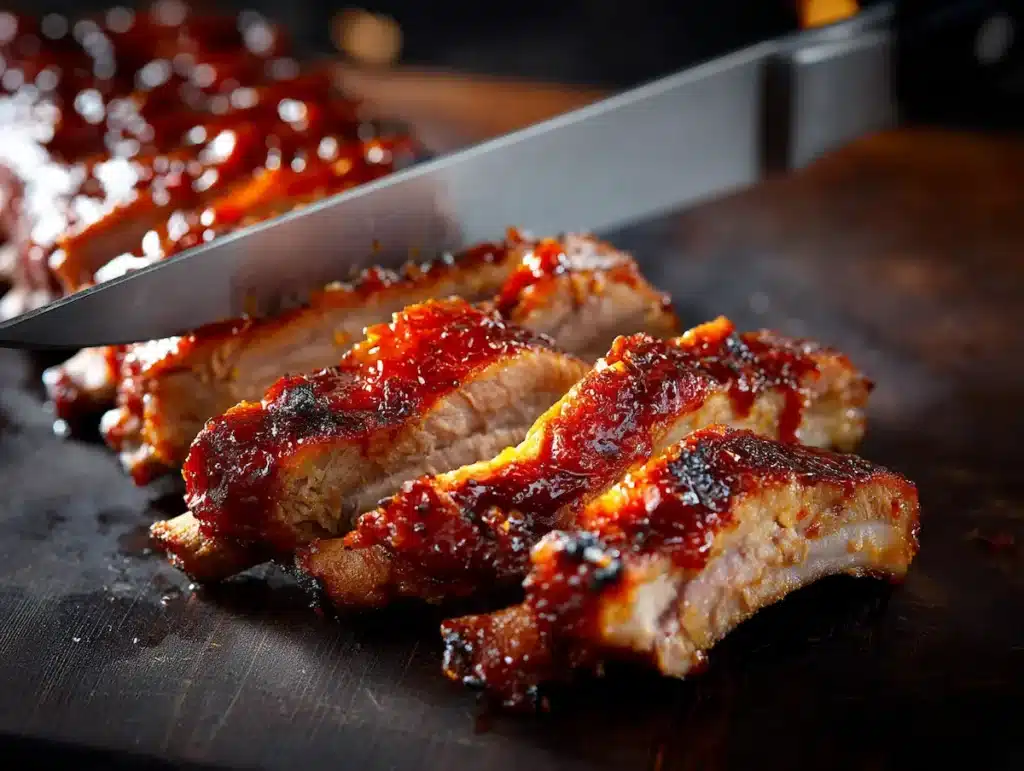
Transfer the finished rack to a clean cutting board and let it rest uncovered for 5 minutes before slicing. This short rest lets the juices redistribute inside the meat so they don’t all run out the moment you cut. Slice between the bones using a sharp chef’s knife and serve immediately while the glaze is still sticky and hot.
Best Barbecue Ribs Ever: Tested Fall-Off-The-Bone Method
- Total Time: 3 hours 35 minutes
- Yield: 2 to 3 servings
Description
The best barbecue ribs ever use a simple oven-to-grill method: baby back ribs with a 6-ingredient dry rub cooked low and slow at 275°F, then finished on a hot grill with a sticky homemade BBQ glaze for fall-off-the-bone results every time.
Ingredients
1 full rack baby back pork ribs (about 2 to 2.5 pounds)
1 tablespoon yellow mustard (binder)
Dry rub:
2 tablespoons brown sugar
1 tablespoon smoked paprika
1 teaspoon garlic powder
1 teaspoon onion powder
1 teaspoon fine sea salt
1/2 teaspoon black pepper
1/2 teaspoon cayenne pepper
1/2 teaspoon dried oregano
BBQ glaze:
1/2 cup ketchup
2 tablespoons apple cider vinegar
2 tablespoons brown sugar
1 tablespoon Worcestershire sauce
1 teaspoon smoked paprika
1/2 teaspoon garlic powder
1/2 teaspoon onion powder
1/4 teaspoon black pepper
1 pinch cayenne pepper
Instructions
1. Remove the membrane from the bone side of the rack by sliding a butter knife under one corner and pulling it off with a paper towel.
2. Pat the rack dry, brush both sides with yellow mustard, then apply the dry rub generously on all surfaces. Wrap in plastic wrap and refrigerate 2 hours or overnight.
3. Remove from fridge 30 minutes before cooking. Preheat oven to 275°F. Place rack bone-side down on a wire rack over a foil-lined baking sheet.
4. Tent loosely with foil and roast at 275°F for 2.5 to 3 hours until meat pulls back from bone tips and internal temperature reaches 190°F to 203°F.
5. While ribs roast, combine all BBQ glaze ingredients in a small saucepan over medium-low heat. Simmer 8 to 10 minutes until slightly thickened. Set aside.
6. Remove ribs from oven, discard foil tent, and rest on pan for 10 minutes.
7. Preheat grill to high heat (400°F to 450°F). Place ribs bone-side down, brush top with glaze, close lid, grill 3 minutes. Flip, brush bone side, grill 2 to 3 minutes more until glaze is caramelized and slightly charred.
8. Rest on cutting board 5 minutes, slice between bones, and serve immediately.
Notes
Store leftover ribs wrapped in foil in the fridge for up to 3 days. Reheat at 275°F for 20 to 25 minutes, then re-glaze and broil 2 minutes.
No grill? Finish under a hot oven broiler for 3 to 4 minutes per side instead.
For a spicier version, increase cayenne to 1 teaspoon in both the rub and the glaze.
For a Korean twist, add 1 teaspoon gochujang powder to the dry rub.
Use St. Louis spare ribs with the same method but extend oven time to 3.5 to 4 hours.
- Prep Time: 15 minutes
- Cook Time: 3 hours 10 minutes
- Category: Main Course
- Method: Oven then Grill
- Cuisine: American
Nutrition
- Serving Size: 3 to 4 ribs
- Calories: 480
- Sugar: 14g
- Sodium: 620mg
- Fat: 28g
- Saturated Fat: 10g
- Unsaturated Fat: 16g
- Trans Fat: 0g
- Carbohydrates: 18g
- Fiber: 1g
- Protein: 36g
- Cholesterol: 115mg
Keywords: best barbecue ribs ever,best BBQ ribs recipe,fall off the bone ribs,homemade BBQ ribs,baby back ribs recipe,dry rub ribs,oven to grill ribs,BBQ rib glaze,homemade BBQ sauce ribs,tender pork ribs,best rib rub recipe,low and slow ribs
Baby Back Ribs vs St. Louis Ribs vs Beef Ribs — Which Is Best?
Baby back ribs come from the upper back of the pig near the spine, are leaner and shorter, and cook in about 3 hours at 275°F. They are the most tender cut and the best choice for this oven-to-grill method.
St. Louis spare ribs come from the lower belly area, are flatter, meatier, and fattier than baby backs, and need 3.5 to 4 hours at 275°F for the same tender result. They are a great choice if you want more meat per bone and a richer flavor.
Beef ribs are significantly larger, bolder in flavor, and take 5 to 6 hours at 275°F or longer on a smoker. They require a different rub profile with less sugar and more salt and black pepper to complement the beef fat.
For this recipe, baby back ribs win on ease, speed, tenderness, and flavor balance, which is why competition cooks and home cooks alike consistently pick them when they want the best barbecue ribs ever on a weeknight or weekend timeline.
Why This Oven-to-Grill Method Beats Smoker-Only Every Time at Home
A dedicated smoker produces incredible results, but it requires maintaining a steady temperature for 5 or more hours, which is not realistic for most home cooks on a Tuesday evening or a casual Sunday afternoon. The oven-to-grill method gives you precise, controllable low-and-slow heat in the first phase and genuine high-heat char and smoke in the second phase.
The oven controls the internal cooking environment so the ribs reach the right temperature slowly and evenly every time, regardless of weather, wind, or grill hot spots. The grill then does in 6 minutes what a smoker does in an hour: it builds the bark, caramelizes the glaze, and adds the smoke aroma that makes these the best barbecue ribs ever.
If you enjoy bold flavors from other grilled or slow-cooked dishes, you will notice the same layering technique in recipes like our corned beef and cabbage recipe, where slow cooking first and high-heat finishing creates a depth of flavor that one method alone never matches.
Best Dry Rub Tips for the Best Barbecue Ribs Ever
The dry rub is where most homemade rib recipes fail because people either under-season or only rub the top side. Apply the rub to every surface of the rack including the back and the curved ends so every bite is equally seasoned.
Brown sugar is the backbone of a great rib rub because it caramelizes under heat and forms the foundation of the bark. Smoked paprika adds color and a gentle smokiness that deepens as the ribs cook. Salt draws moisture to the surface and then back into the meat, which is why overnight resting gives you noticeably more flavorful ribs than a quick one-hour rub.
If you want to experiment with bolder spice profiles, the same principle applies in dishes like our gochujang eggs where a fermented chili paste rub creates a deeply layered flavor that plain seasoning never achieves. You can add a teaspoon of gochujang powder to your rib rub for a Korean-style BBQ twist that works beautifully with the glaze.
5 Mistakes to Avoid With the Best Barbecue Ribs Ever
Even a great recipe can go wrong at a few critical steps. Here are the five mistakes I see most often and exactly how to fix each one.
Mistake 1: Skipping the membrane removal
The membrane on the back of the rack is the single biggest reason home ribs come out tough and chewy. It blocks heat and seasoning from reaching the meat and turns rubbery during cooking. Always remove it before applying any rub or moisture.
Mistake 2: Cooking at too high a temperature
Ribs need low and slow heat to convert collagen into gelatin. Cooking at 350°F or above tightens the muscle fibers before the collagen has time to break down, leaving you with ribs that look done on the outside but are tight and chewy at the bone. Stay at 275°F the entire oven phase.
Mistake 3: Skipping the rest before grilling
Moving ribs directly from the oven to the grill without resting means the internal juices are still boiling and will run out the moment you slice. A 10-minute rest on the pan before grilling keeps the meat juicy all the way through.
Mistake 4: Applying the glaze too early on the grill
Brushing the glaze on when the grill is still cold or before the surface has dried slightly causes the sauce to steam instead of caramelize, giving you a wet, sticky coating instead of a proper lacquered bark. Wait until the grill is fully hot and the rib surface is slightly dry before the first brush of glaze.
Mistake 5: Not checking internal temperature
Color and time are guides but not guarantees. An instant-read thermometer is the only reliable way to know your ribs are at the right temperature for safety and texture. The CDC food safety and BBQ guide recommends always using a food thermometer with any grilled meat to prevent undercooking and foodborne illness.
What to Serve With the Best Barbecue Ribs Ever
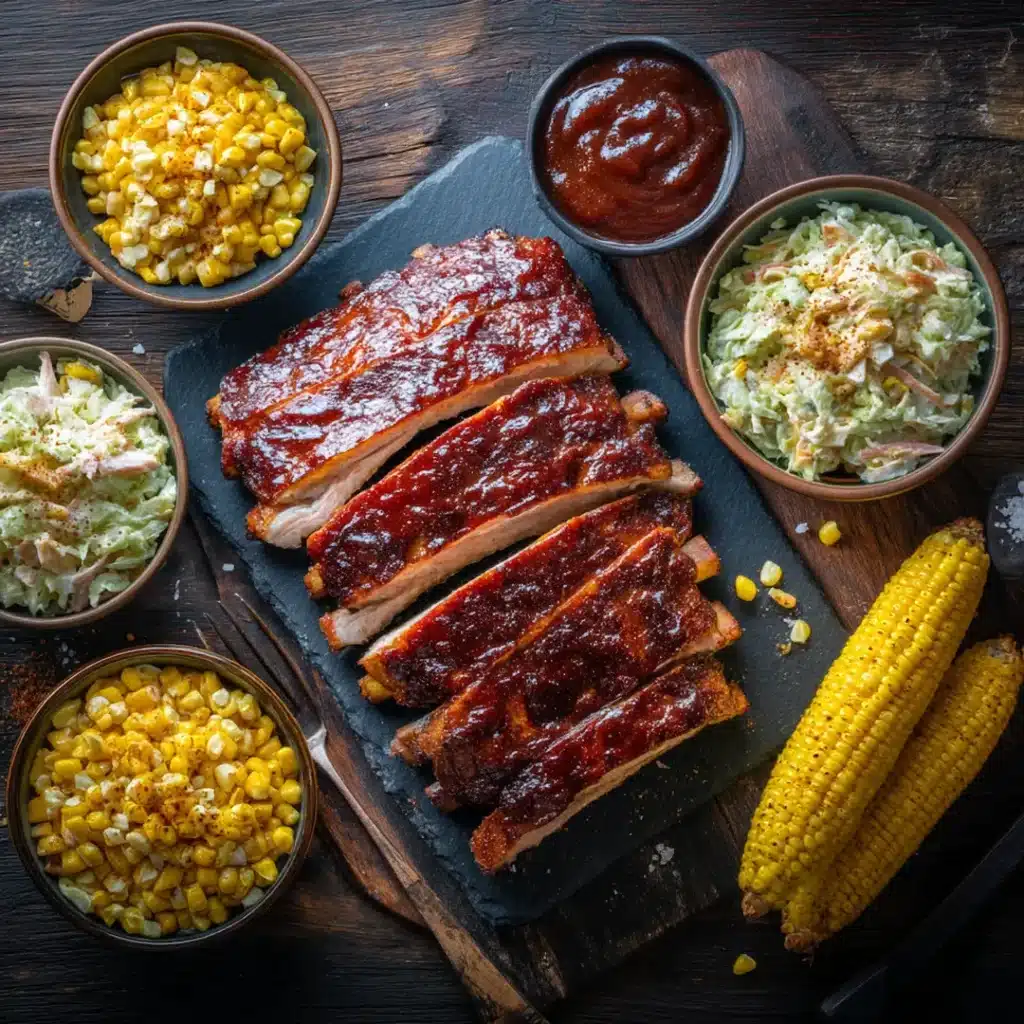
The best barbecue ribs ever need sides that can stand up to their bold, smoky, sticky flavor without competing with it. Classic options like creamy coleslaw, baked beans, and buttered corn on the cob work because they offer cool, creamy, or sweet contrast to the char and spice of the ribs.
For a fresher, lighter pairing, a simple cucumber and herb salad or a grain bowl with pickled vegetables gives the table a bright counterpoint to the richness of the pork. If you want a fun fusion evening, our sheet pan quesadillas make a great BBQ-night side when you pull the leftover rib meat and tuck it inside with cheese and grilled peppers.
For a complete flavor-forward table that mixes bold proteins with bright sides, the flavor principles in our tteokbokki recipe show how balancing sweet, spicy, and sticky glazes across multiple dishes makes an entire meal feel cohesive and intentional.
Frequently Asked Questions About the Best Barbecue Ribs Ever
How long do you cook baby back ribs in the oven for the best results?
For the best barbecue ribs ever, cook baby back ribs bone-side down at 275°F for 2.5 to 3 hours with a loose foil tent over the top. The lower end gives a slight firmness at the bone, while 3 full hours produces ribs that are very close to falling off the bone before the grill finish. Always check internal temperature between the bones, targeting 190°F to 203°F for full tenderness.
Should you wrap ribs in foil for the oven?
For this recipe, use a loose foil tent rather than a tight wrap. A tight foil wrap, often called the Texas crutch, steams the ribs very aggressively and can make the texture slightly mushy, especially for baby back ribs which are already leaner than spare ribs. A loose tent keeps the moisture in the oven environment without steaming the surface, which gives you better bark development before the grill finish.
What internal temperature should the best barbecue ribs ever reach?
For food safety, the USDA sets the minimum internal temperature for pork at 145°F with a 3-minute rest. However, for truly tender fall-off-the-bone ribs, you need to reach 190°F to 203°F so the collagen fully converts to gelatin. At lower temperatures the ribs are safe to eat but will feel tight and chewy rather than silky and tender at the bone.
Can you make the best barbecue ribs ever without a grill?
Yes, you can finish the ribs under a hot oven broiler set to high instead of a grill. Place the oven-rested rack on a foil-lined baking sheet, brush generously with glaze, and broil on the top rack for 3 to 4 minutes per side, watching closely to avoid burning the sugar. The broiler won’t add the same smoke flavor as a grill but it will caramelize the glaze into a proper sticky crust.
How do you store and reheat leftover barbecue ribs?
Wrap leftover ribs tightly in foil or place in an airtight container and refrigerate for up to 3 days. To reheat, place the foil-wrapped ribs in a 275°F oven for 20 to 25 minutes until warmed through, then brush with a fresh layer of glaze and finish under the broiler for 2 minutes to re-caramelize the surface. Avoid microwaving ribs if possible, as it makes the glaze watery and the meat chewy.
What is the best dry rub for barbecue ribs?
The best dry rub for barbecue ribs balances sweet, smoky, salty, and spicy in every bite. Brown sugar provides the caramelizing base, smoked paprika adds color and smokiness, garlic and onion powder build savory depth, and cayenne adds just enough heat to balance the sweetness. Apply it generously on all sides the night before cooking for the deepest flavor penetration.
Conclusion
The best barbecue ribs ever are not about having the most expensive equipment or the most complex technique. They come from understanding three things: the right cut, the right temperature, and the right timing for your glaze. Baby back ribs at 275°F for 3 hours in the oven, finished with a homemade glaze on a hot grill, is the method that delivers competition-level results in a home kitchen every single time.
Once you make these once and see how predictable and repeatable the method is, it becomes the recipe you reach for every time someone says they want ribs. Pair them with your favorite sides, a cold drink, and one of the bold flavor companions on fastflavorbites.com, and you have a meal that nobody at the table will forget.
Food Safety Disclaimer: Always use a calibrated instant-read thermometer to check the internal temperature of pork before serving. The USDA recommends a minimum internal temperature of 145°F for pork with a 3-minute rest. For fall-off-the-bone rib texture, cook to 190°F to 203°F. Wash hands, surfaces, and utensils thoroughly after handling raw meat. Never place cooked ribs back on a surface that held raw meat without cleaning first. For full guidance visit the USDA FSIS website.